Popular Documentary Movies on Kanopy - Page 167
All Services
Free Services
 Netflix
 Amazon Prime Video
 Apple iTunes
 Apple TV Plus
 Disney Plus
 Google Play Movies
 Paramount Plus
 Hulu
Hulu
 HBO Max
 YouTube
 fuboTV
 Peacock
 Peacock Premium
 Amazon Video
 The Roku Channel
 AMC+
AMC on Demand
AMC+
AMC on Demand
 Kocowa
 Hoopla
 The CW
 Vudu
Vudu
 Starz
Starz
 Showtime
 PBS
PBS
 Pantaflix
 FXNow
FXNow
 Tubi TV
 Kanopy
 Comedy Central
 Crunchyroll
 Microsoft Store
 Redbox
 Sun Nxt
 ABC
ABC
 DIRECTV
 Crackle
 Fandor
 Plex
Plex
Netflix
Amazon Prime Video
Apple iTunes
Apple TV Plus
Disney Plus
Google Play Movies
Paramount Plus
Hulu
HBO Max
YouTube
fuboTV
Peacock
Peacock Premium
Amazon Video
The Roku Channel
AMC+
AMC on Demand
Kocowa
Hoopla
The CW
Vudu
Starz
Showtime
PBS
Pantaflix
FXNow
Tubi TV
Kanopy
Comedy Central
Crunchyroll
Microsoft Store
Redbox
Sun Nxt
ABC
DIRECTV
Crackle
Fandor
Plex

The First Year
2001
The First Year
2001
star 7This fascinating documentary chronicles the emotional turmoil of five Los Angeles schoolteachers charged with educating inner-city youth, making it clear that the teachers helping these disadvantaged children are real heroes.Seize the Summit
2024
Seize the Summit
2024
4 young strangers, all war refugees, unite to take on the challenge of summiting Mt. Kilimanjaro, one of the seven summits and the highest peak in Africa. They have been brought together by the charity INARA to shed light on the impact of war on children. The mountain always has a lesson, and often not what we think or expect it to be. Not all will make it to the summit, some will be forced to face dormant personal demons. This is a story of physical and emotional adventure, the rollercoaster of life, and the possibilities that emerge when we stand together.Fifi Howls from Happiness
2013
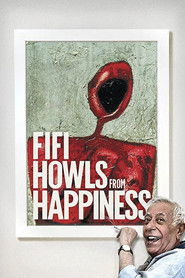
star 6.8Bahman Mohassess was a celebrated artist at the time of the Shah. Trained in Italy, he created sculptures and paintings in his homeland. But audiences often took offence at the pronounced phalli on his mostly naked bronze figures and his work was regularly censored. All traces of him were lost after the revolution. It was said he destroyed his remaining paintings and disappeared.Dark Days
2000
Dark Days
2000
star 7.2A cinematic portrait of the homeless population who live permanently in the underground tunnels of New York City.Riveted: The History of Jeans
2022
star 5Riveted: The History of Jeans reveals the fascinating and surprising story of this iconic American garment. At any given moment, half the people on the planet are wearing them. They have become a staple of clothing the world over, worn by everyone from presidents and supermodels to farmers and artists. More than just an item of apparel, America’s tangled past is woven into the indigo blue fabric. From its roots in slavery to its connection to the Wild West, youth culture, the civil rights movement, rock and roll, hippies, high fashion and hip-hop, jeans are the canvas on which the history of American ideology and politics is writ large.The Falconer
2020
The Falconer
2020
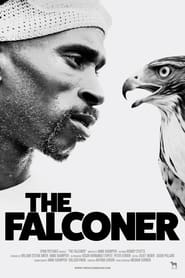
This intimate portrait film follows master falconer Rodney Stotts on his mission to build a bird sanctuary and to provide access to nature for his stressed community. The Falconer weaves his present-day mission with the story of his past, both of which are deeply rooted in issues of social and environmental injustice. Stotts’s worldview in a nutshell: nature heals. In a forgotten corner of our nation’s capital, he takes the time to break through to those too often dismissed as “hard to reach.” This is a story of second chances: for injured birds of prey, for an abandoned plot of land, for a group of teenagers who have dropped out of high school, and for the falconer himself.The Waldheim Waltz
2018
The Waldheim Waltz
2018
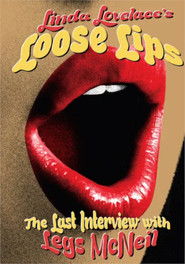
star 7.8Ruth Beckermann documents the process of uncovering former UN Secretary General Kurt Waldheim’s wartime past. It shows the swift succession of new allegations by the World Jewish Congress during his Austrian presidential campaign, the denial by the Austrian political class, the outbreak of anti-Semitism and patriotism, which finally led to his election.Loose Lips - Her Last Interview
2013
star 4.5Before Linda Lovelace's untimely death in 2002, the sex superstar sat for a no-holds barred interview with pop-culture historian Legs McNeil for his book, The Other Hollywood: The Uncensored Oral History of the Porn Film Industry. Fortunately McNeil hired a film crew to record the historic event as Linda recounted the making of ""Deep Throat,"" the most successful X-rated film in history, how she introduced oral sex to America, her turbulent relationship with manager/husband Chuck Traynor, her role (and exploitation by) the anti-porn movement that she helped launch with her bestselling book, Ordeal, in 1980, and her subsequent return to pornography in 2001. With additional comments by Marilyn Chambers, FBI Agent Bill Kelly, Chuck Traynor.Robinson in Ruins
2010
Robinson in Ruins
2010
star 6.8The eagerly awaited sequel to Patrick Keiller's London and Robinson in Space is a beautifully photographed cinematic essay on our current environmental and economic predicament, narrated by Vanessa Redgrave. Timely, provocative and studded with surreal humour, Robinson in Ruins reveals hidden histories and surprising visions (from the opium poppy fields of Oxfordshire to what seems to be a talking post box), making us consider the world around us afresh.Homo Sapiens
2016
Homo Sapiens
2016
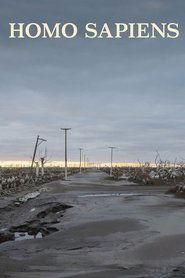
star 7.1HOMO SAPIENS is visionary documentarian Nikolaus Geyrhalter's exploration of the finiteness and fragility of human existence, the end of the industrial age, and what it means to be a human being. What will remain of our lives after we're gone? Empty spaces, ruins, cities, increasingly overgrown with vegetation, crumbling asphalt: the areas we currently inhabit, now abandoned and decaying, gradually reclaimed by nature. Comprised of a succession of eerily depopulated, dystopian landscapes from across the world, HOMO SAPIENS offers an at once mesmerizing and chilling vision of what a posthuman future might look like.Fanny: The Right to Rock
2021
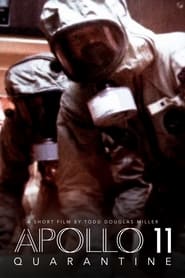
star 6.2The untold story of a Filipina American founded, California garage band that morphed into the ferocious rock group Fanny, the first all female band to release an LP with a major label. Adored by David Bowie, the band's groundbreaking impact in music has been lost in the mists of time... until now. Fifty years later, bandmates reunite with a new record deal and a second chance to right the wrongs of history.Apollo 11: Quarantine
2021
star 6Summer 1969. The astronauts of Apollo 11 successfully land and walk on the moon. The crew will now quarantine for 21 days following contact with lunar material.Haunters: The Art of the Scare
2017
star 6.2A heart-warming and heart-stopping documentary about people who sacrifice everything to create the most popular and polarizing haunted houses for Halloween - from boo-scare mazes to a controversial new subculture of extreme terror experiences.Jaguar Beach
2025
Jaguar Beach
2025
In a remote region on the Pacific coast of Costa Rica, a lush landscape characterized by volcanoes meets tropical dry forest. Right there is a very special beach where two completely different species meet: Sea turtles meet jaguars. This has spectacular consequences for both sides and their environment. The two animals form an alliance that is as surprising as it is unintentional. The predator suddenly becomes a protector.2e: Twice Exceptional
2015
'2E: Twice Exceptional' follows the personal journeys of a handful of middle school and high school students in Los Angeles who have been identified as 'twice exceptional' -- gifted or highly gifted individuals with learning disabilities or differences. They are geniuses, mavericks and dreamers -- Malcolm Gladwell's budding 'outliers.' Among them may be the next Einstein, Mozart or Steve Jobs... if they can survive the American school system and their own eccentricities.Pink Saris
2010
Pink Saris
2010
star 4.6Sampat Pal Devi, founder of India’s Gulabi (“Pink”) Gang and fearless defender of the rights of untouchable women, challenges husbands, fathers-in-law and policemen in this immersive study by acclaimed documentarian Kim Longinotto. More than a profile of an everyday heroine, the film captures the courage and sacrifice necessary for social progress.Aggie
2020
Aggie
2020
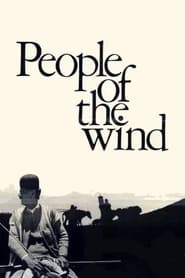
star 1An exploration of the nexus of art, race, and justice through the story of art collector and philanthropist Agnes Gund who sold Roy Lichtenstein’s painting “Masterpiece” in 2017 for $165 million to start the Art for Justice Fund to end mass incarceration.People of the Wind
1976
People of the Wind
1976
star 5The Bakhtiari migration is one of the most hazardous tests of human endurance known to mankind. Every year, 500,000 men, women and children — along with one million animals — struggle for eight grueling weeks to scale the massive Zagros Mountains — a range which is as high as the Alps and as broad as Switzerland — to reach their summer pastures.The Steel Road
1929
The Steel Road
1929
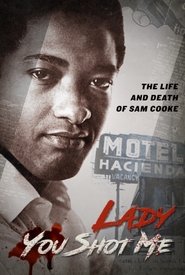
star 5.8Bold and exhilarating documentary account of the building of the Turkestan-Siberian railway, presented as a heroic triumph of Soviet progress over natural adversity.Lady, You Shot Me: The Life and Death of Sam Cooke
2014
star 5.5Sam Cooke died at the age of 33 on December 11, 1964, at the Hacienda Motel, at 9137 South Figueroa Street, in Los Angeles, California. Answering separate reports of a shooting and of a kidnapping at the motel, police found Cooke's body, clad only in a sports jacket and shoes but no shirt, pants or underwear. He had sustained a gunshot wound to the chest, which was later determined to have pierced his heart. The motel's manager, Bertha Franklin, said she had shot Cooke in self-defense after he broke into her office residence and attacked her. Her account was immediately questioned and disputed by acquaintances.