Popular Documentary Movies on Kanopy - Page 311
All Services
Free Services
 Netflix
 Amazon Prime Video
 Apple iTunes
 Apple TV Plus
 Disney Plus
 Google Play Movies
 Paramount Plus
 Hulu
Hulu
 HBO Max
 YouTube
 fuboTV
 Peacock
 Peacock Premium
 Amazon Video
 The Roku Channel
 AMC+
AMC on Demand
AMC+
AMC on Demand
 Kocowa
 Hoopla
 The CW
 Vudu
Vudu
 Starz
Starz
 Showtime
 PBS
PBS
 Pantaflix
 FXNow
FXNow
 Tubi TV
 Kanopy
 Comedy Central
 Crunchyroll
 Microsoft Store
 Redbox
 Sun Nxt
 ABC
ABC
 DIRECTV
 Crackle
 Fandor
 Plex
Plex
Netflix
Amazon Prime Video
Apple iTunes
Apple TV Plus
Disney Plus
Google Play Movies
Paramount Plus
Hulu
HBO Max
YouTube
fuboTV
Peacock
Peacock Premium
Amazon Video
The Roku Channel
AMC+
AMC on Demand
Kocowa
Hoopla
The CW
Vudu
Starz
Showtime
PBS
Pantaflix
FXNow
Tubi TV
Kanopy
Comedy Central
Crunchyroll
Microsoft Store
Redbox
Sun Nxt
ABC
DIRECTV
Crackle
Fandor
Plex

Gough Whitlam: In His Own Words
2002
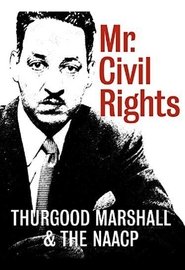
To commemorate the life and time of Australia's twenty-first prime minister, Gough Whitlam, SBS will pay tribute by airing his final ever TV interview. In this documentary, at 86 years of age, Gough shares his revelatory views on 50 years of public life in an in-depth conversation with John Faulkner. Looks at Whitlam's early parliamentary life and his role in the 1960s and the 1970s as Labor's Deputy Leader and then Leader, taking the ALP to power after a record 23 years of Liberal government.Mr. Civil Rights: Thurgood Marshall and the NAACP
2014
Civil rights attorney Thurgood Marshall's triumph in the 1954 Brown v. Board of Education Supreme Court decision to desegregate America's public schools completed the final leg of a journey of over 20 years laying the groundwork to end legal segregation. He won more Supreme Court cases than any lawyer in American history, making the work of civil rights pioneers like the Rev. Martin Luther King, Jr. and Rosa Parks possible.Philip Johnson: Diary of an Eccentric Architect
1997
This documentary depicts Johnson at work and the importance of the architectural act, the actual construction, and how the buildings interact with their environment — in this case, the autumn leaves or snow of New Canaan.Urban Roots
2011
Urban Roots
2011
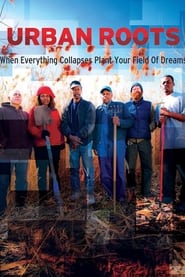
star 6URBAN ROOTS is a documentary that tells the story of the spontaneous emergence of urban farming in the city of Detroit. Detroit, once an industrial powerhouse of a lost American era, is a city devastated by the loss of half its population due to the collapse of manufacturing. By the looks of it, the city has died. But now, against all odds, in the empty lots, in the old factory yards, and in-between the sad, sagging blocks of company housing, seeds of change are taking root.Beyond Elections: Redefining Democracy in the Americas
2008
From the communal councils of Venezuela to constitutional assemblies, grassroots movements and cooperatives, filmmakers Silvia Leindecker and Michael Fox explore the many incarnations of democracy across the Americas. The documentary examines democracy in nations such as Brazil, Colombia and Canada, and features interviews with journalists, cooperative and community members, elected representatives, academics and activists.Genetically Modified Food: Panacea or Poison
2005
In the last thirty years global demand for food has doubled. In a race to feed the planet, scientists have discovered how to manipulate DNA, the blueprint of life, and produce what they claim are stronger, more disease-resistant crops. However, fears that genetically modified food many not be safe for humans or the environment has sparked violent protest.Gold Star Children
2011
Gold Star Children
2011
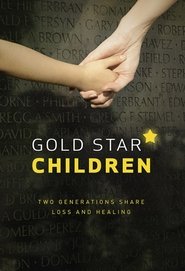
A cross-generational story of how the gold star children of Vietnam are mentoring the gold star children from the wars in Iraq and Afghanistan. It is a one hour film of resilience, hope and the power of sharing.Made in India
2010
Made in India
2010
star 6This eye-opening doc explores the phenomena of "outsourcing" surrogate mothers to India. Weaving together personal stories within a growing international industry, the film reveals the clash of reproductive technology and choice from a global perspective.An American Journey: In Robert Frank's Footsteps
2009
star 5.7Paying tribute to Swiss photographer Robert Frank's groundbreaking 1958 book The Americans, French filmmaker Philippe Seclier retraces Frank's footsteps across America with camera in hand, capturing images of contemporary America 50 years later.End of the Rainbow
2007
End of the Rainbow
2007
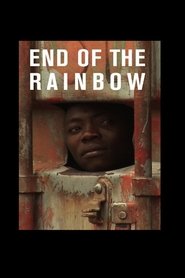
A large multinational and industrial gold mining company has arrived in a remote area of Guinea, West Africa. This desperately poor region has a long history of economic reliance on gold. This film is a melancholic portrait of the changes brought by the mine, and of the universal human desire for a better life. How do local people respond to the opportunities and economic divisions the mine creates? How do the local jobseekers and expatriate staff, attracted by gold and the possibilities it offers, understand one another? In case of difficulties, the mine calls in the military. Conflict over the mine's presence is escalating. The gold will be dug from the ground, but at what cost? End of the Rainbow reveals a world that is changing forever, and intimately portrays the people who are grappling to respond to those changes.To Be Heard
2011
To Be Heard
2011
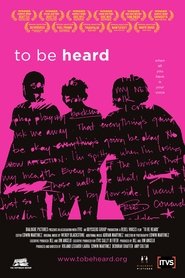
A verité film intimately shot over four years, To Be Heard is the story of three teens from the South Bronx whose struggle to change their lives begins with writing poetry. As writing and reciting become vehicles for their expressions of love, friendship, frustration, and hope, these three youngsters emerge as accomplished self-aware artists, who use their creativity to alter their circumstances.The Last to Know
1981
The Last to Know
1981
Via New Day Films: "Nearly one half of the estimated ten million alcoholics in the country are women, yet their special problems are totally ignored. Concealed by families, protected by friends and physicians, these women are kept invisible. They themselves are often The Last to Know. This extraordinary film speaks directly to these women by sensitively focusing on four intimate stories and shows how the medical community, the media and the values of society at large actually perpetuate alcoholism and prescription drug abuse in women."The Matter of Angels & Demons
2009
star 8This probing analysis of the popular Dan Brown novel Angels and Demons explores the many contentious issues raised by the book - like the politics of the Catholic church, and the perceived conflict between science and religion.Master Qi and the Monkey King
2010
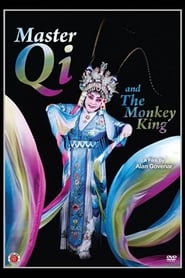
Master Qi and the Monkey King explores the life and work of the preeminent master of Chinese Opera living in the United States. Qi Shu Fang was a household name in China due to her feature role in one of the Cultural Revolution Opera films, and traveled the world to show off her mastery of the art form. The film explores the reasons why Ms. Qi, her husband and a whole troupe of Chinese Opera performers have moved to the United States to transplant their art form to a foreign culture.Electric Edwardians - The Films Of Mitchell And Kenyon
2005
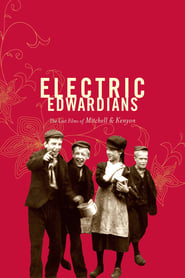
Archive footage, recently discovered, shot by the Edwardian documentary film-makers Sagar Mitchell and James Kenyon. Selected from a total of 28 hours of material, this compilation is grouped into five sections: 'Youth and Education'; 'The Anglo-Boer War'; 'Workers'; 'High Days and Holidays' and 'People and Places'. It includes footage of ordinary people going about their everyday business, from the factory gates to football matches, and is set to a specially commisioned score by the Shieffield-based duo In the Nursery.China's Stolen Children
2007
star 7Ten years after the policy-changing and award-winning film, The Dying Rooms, the same team returns to a very different China where the infamous One Child Policy has had the horrific side effect of a boom in stolen children. With extraordinary access to devastated parents desperately searching for their stolen son; a man who brokers the deals and has sold his own offspring; and prospective parents grappling with giving up their soon-to-be-born daughter through lack of options, we are brought face to face with the crisis that such a stringent government policy has created among China's poorest people.Holes in My Shoes
2006
Holes in My Shoes
2006
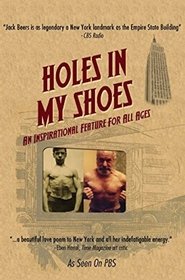
star 6.394-year-old New Yorker, Jack Beers, has broken the age barrier full force. He can do what most young men can, and his diverse lifetime achievements would take many to accomplish. The film begins with Mayor Bloomberg acknowledging Jack, we see Jack's name on the marquee of Radio City Music Hall, and at 94 he rips a telephone book into 4 pieces with his hands. Jack was raised in poverty in Manhattan, was a strongman, built Radio City Music Hall, at The Manhattan Project he invented something that shortened WW2, erected the Empire State Building spire, was a professional dog trainer, was a film actor in 200+ films, beat terminal illnesses, and today rides 5 miles on a stationary bike. He's "goin' for 100!"Militainment, Inc.: Militarism & Pop Culture
2007
star 7.8Militainment, Inc. offers a fascinating, disturbing, and timely glimpse into the militarization of American popular culture, examining how U.S. news coverage has come to resemble Hollywood film, video games, and "reality television" in its glamorization of war. Mobilizing an astonishing range of media examples - from news anchors' idolatry of military machinery to the impact of government propaganda on war reporting - the film asks: How has war taken its place in the culture as an entertainment spectacle? And how does presenting war as entertainment affect the ability of citizens to evaluate the necessity and real human costs of military action?