Popular Documentary Movies on Kanopy - Page 238
All Services
Free Services
 Netflix
 Amazon Prime Video
 Apple iTunes
 Apple TV Plus
 Disney Plus
 Google Play Movies
 Paramount Plus
 Hulu
Hulu
 HBO Max
 YouTube
 fuboTV
 Peacock
 Peacock Premium
 Amazon Video
 The Roku Channel
 AMC+
AMC on Demand
AMC+
AMC on Demand
 Kocowa
 Hoopla
 The CW
 Vudu
Vudu
 Starz
Starz
 Showtime
 PBS
PBS
 Pantaflix
 FXNow
FXNow
 Tubi TV
 Kanopy
 Comedy Central
 Crunchyroll
 Microsoft Store
 Redbox
 Sun Nxt
 ABC
ABC
 DIRECTV
 Crackle
 Fandor
 Plex
Plex
Netflix
Amazon Prime Video
Apple iTunes
Apple TV Plus
Disney Plus
Google Play Movies
Paramount Plus
Hulu
HBO Max
YouTube
fuboTV
Peacock
Peacock Premium
Amazon Video
The Roku Channel
AMC+
AMC on Demand
Kocowa
Hoopla
The CW
Vudu
Starz
Showtime
PBS
Pantaflix
FXNow
Tubi TV
Kanopy
Comedy Central
Crunchyroll
Microsoft Store
Redbox
Sun Nxt
ABC
DIRECTV
Crackle
Fandor
Plex

No Sad Songs
1985
No Sad Songs
1985
star 2.7Jim Black, a 37-year-old Canadian talks about the AIDS that is killing him. He talks about his life and his friends and how his brother's family has rejected him. Catherine Hunt is a Canadian woman whose brother is dying of AIDS. These personal stories are presented with excerpts from a series of performances by Canadian musicians and performance artists in order to give the viewer a bigger picture of the impact of this disease.Laramie Inside Out
2004
Laramie Inside Out
2004
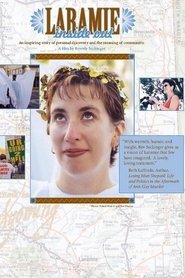
star 1A Laramie local travels back home to document how the Matthew Shepard tragedy has changed her home town.The Children of Chabannes
1999
star 4.8From 1939 to 1942, in the village of Chabannes in central France, more than 400 Jewish children were hidden, schooled, and ultimately saved through the heroic efforts of the school's director and teachers and of Jewish rescue organizations that first got the children there, and then, as war closed around them, got all but a handful out safely. In 1996, two aged teachers and the children and their families reunite. Lisa Gossels, whose father and uncle were among the children, records it. Survivors' comments, photos and drawings from the war, footage of the school and town, and a celebration of the heroism and leadership of the school's director, Felix Chevrier, comprise the film.Mind the Closing Doors
2025
In the Moscow Metro, a choir is formed from employees—cashiers, train drivers, and station workers—learning to sing under the guidance of an enthusiastic conductor. For a contest, the conductor discovers the opera “Flood”, which is going to be performed for the first time. The opera tells the story of the last day before the world’s end. Following a triumphant premiere, the choir sets off on its first tour, only to face a real catastrophe.Whoopee!
1929
Whoopee!
1929
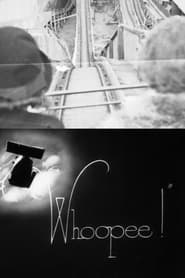
Short film from the British Pathé collection about an amusement park in Germany - various rides are seen, including a Helter Skelter. Was an item in Eve's Film Review issue number 459.The Will to See
2021
The Will to See
2021
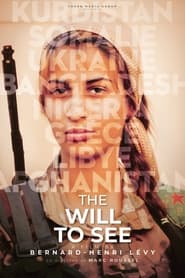
star 9An old-time war reporter, philosopher and writer, BernardHenri Lévy is sent by a group of newspapers (Paris Match, La Repubblica, The Wall Street Journal, Der Stern, and others) to bear witness and report from places in the world where suffering and misery is at its peak: where wars are going on under our noses, the world’s fate is being determined, and no one, it seems, is paying attention. An unflinching look at the most urgent humanitarian crises around the globe.Robert Shaw: Man of Many Voices
2016
A small-town California boy planned to be a minister like his father, but instead became the greatest conductor of choral music the world has ever known. With no formal musical training, he moved from stunning early success in popular music to legendary interpretations of classical music's great choral masterpieces.Tnorala - Baby Falling
2007
Tnorala is the Aboriginal name for Gosse's Bluff, a dramatic meteorite impact crater set in a vast plain 175km west of Alice Springs. This significant dreaming site for Western Arrernte people is steeped in mystery and tragedy. The story of its creation and the events that occurred there are narrated to the camera by Aunty Mavis Malbunka, one of the traditional story-tellers for the place.Unknown Male Number 1
2017
How far would you go in pursuit of justice? The tragic murder of 13-year old Yara Gambiarasio near her home in northern Italy in 2010 sparked the most high-profile and shocking murder investigation in recent Italian history. This documentary follows the tenacious and emotionally-invested lead prosecutor in her case as she seeks justice.Waking the Green Tiger
2011
Seen through the eyes of activist, farmers and journalists, Waking the Green Tiger follows an extraordinary campaign to stop a huge dam project on the Upper Yangtze river in southwestern China. Featuring astonishing archival footage never seen outside China, and interviews with a government insider and witnesses, the documentary also tell the history of Chairman Mao's campaigns to conquer nature in the name of progress. An environmental movement takes root when a new environmental law is passed, and for the first time in China's history, ordinary citizens have the democratic right to speak out and take part in government decisions. Activist test this new freedom and save a river. The movement they trigger has the potential to transform China.My Name Is Pedro
2020
My Name Is Pedro
2020
star 10This film explores what public education meant to South Bronx Latino maverick educator, Pedro Santana, and what he, in turn, meant to public education.Halving the Bones
1996
Halving the Bones
1996
A Japanese-American woman seeks to understand her heritage through the experiences of her immigrant mother and grandmother.Living At Risk
1985
Living At Risk
1985
Originally broadcast on PBS, the film features the Barrios, a middle-class family both activated and fractured by the conflict. Instead of fleeing their country, the siblings are guided by a religious and socialist desire to help those most vulnerable and destitute, mostly peasants in the rural areas.Painted Nails
2016
Painted Nails
2016
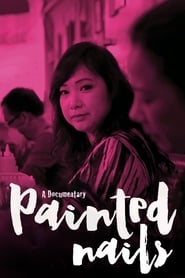
star 6It won't take long to fall in love with the subject of Painted Nails, Van Hoang, a Vietnamese nail salon owner who serves an ethnically diverse group of working class women with acrylic nails and intricate airbrush designs. Through the course of the film, Van unintentionally becomes a contemporary Norma Rae or Erin Brockovich. Painted Nails brings us unprecedented insight into the personal nature of the political movement to regulate one of the fastest growing industries in the U.S. Major loopholes in the federal law dating back to 1938 allow the 50-billion-dollar cosmetics industry to put unlimited amounts of chemicals into personal care products with no required testing, monitoring of health effects, or labeling requirements. (via Kanopy)Auto de Resistência
2018
Auto de Resistência
2018
star 6.8A documentary about the Rio de Janeiro police killings praticed as so-called "self-defense acts". The film follows people who deal with those deaths in their daily lives, showing how Brazil's Federal Government deals with these cases, from the police investigations to the courtrooms.Otaiya: Japan's Hidden Christians
1997
In the sixteenth century Portuguese Catholic missionaries introduced Christianity to Japan. The religion flourished for about fifty years, but by 1614 the Tokugawa government issued an edict that outlawed Christianity and expelled the missionaries from Japan. About 150,000 believers went underground and continued to practice their religion in secret. These people are known as the "Hidden Christians". Otaiya, meaning "Big Evening" is the Hidden Christian version of Christmas Eve. Through the occasion of this ceremony, the film tells the story of Japan's Hidden Christians. Made with the cooperation of contemporary Hidden Christians on the remote island of Narushima, the film features the only two remaining priests in the Goto Islands.Leftovers
2017
Leftovers
2017
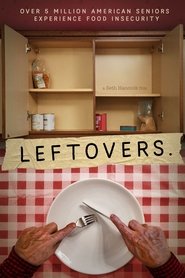
star 6.5A journey across the country to understand why senior citizens are the fastest growing group of people going hungry in America. This journey will change your thinking about aging.The Show of Shows: 100 Years of Vaudeville, Circuses and Carnivals
2015
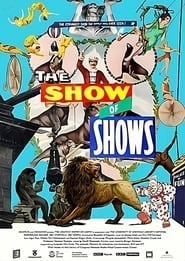
star 7This film tells the story of itinerant circus performers, cabaret acts and fairground attractions, showing rarities and never-before seen footage of fairgrounds, circus entertainment, freak shows, variety performances, music hall and seaside entertainment, chronicled from the 19th and 20th century. We will see early shows that wowed the world and home movies of some of the greatest circus families. Director Benedikt Erlingsson takes us back to the days when the most outlandish, skillful and breathtaking acts traveled the world. This rich visual archive has been created with exclusive access to The University of Sheffield’s National Fairground Archive and is accompanied by an epic new score by Georg Holm and Orri Páll Dýrason of Sigur Rós, in collaboration with Hilmar Örn Hilmarsson and Kjartan Dagur Holm.Everyday Heroes: Addressing Youth, Race and National Service
2001
A behind-the-headlines look at a diverse group of young adults who give a year of their lives through a San Francisco area AmeriCorps program to tutor and mentor needy kids. Despite their good intentions, they are confronted by a host of obstacles, including a racial divide that threatens to thwart their efforts. While documenting a year both turbulent and exhilarating, the film reveals the hopes and dreams, successes and setbacks of a group of individuals--potentially tomorrow's leaders-- searching for their place in the world and trying, against odds, to make a difference.Eye on the Guy: Alan B. Stone & the Age of Beefcake
2006
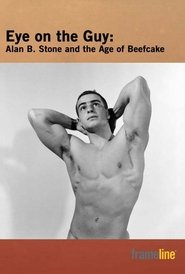
star 3.7Alan B. Stone: astute businessman, quiet suburbanite - and master of the homoerotic pin-up. Eye on the Guy: Alan B. Stone & the Age of Beefcake explores the little-known world of Montreal's physique photography scene - a distinct gay subculture that emerged in the '50s and '60s - through the life and work of one of its most creative figures. Before the first wave of gay liberation, and long before Calvin Klein's poster boys marched into public view, Stone was taking hundreds of erotic photos of men and running an international mail-order business from his Montreal basement.