Popular Documentary Movies on Kanopy - Page 43
All Services
Free Services
 Netflix
 Amazon Prime Video
 Apple iTunes
 Apple TV Plus
 Disney Plus
 Google Play Movies
 Paramount Plus
 Hulu
Hulu
 HBO Max
 YouTube
 fuboTV
 Peacock
 Peacock Premium
 Amazon Video
 The Roku Channel
 AMC+
AMC on Demand
AMC+
AMC on Demand
 Kocowa
 Hoopla
 The CW
 Vudu
Vudu
 Starz
Starz
 Showtime
 PBS
PBS
 Pantaflix
 FXNow
FXNow
 Tubi TV
 Kanopy
 Comedy Central
 Crunchyroll
 Microsoft Store
 Redbox
 Sun Nxt
 ABC
ABC
 DIRECTV
 Crackle
 Fandor
 Plex
Plex
Netflix
Amazon Prime Video
Apple iTunes
Apple TV Plus
Disney Plus
Google Play Movies
Paramount Plus
Hulu
HBO Max
YouTube
fuboTV
Peacock
Peacock Premium
Amazon Video
The Roku Channel
AMC+
AMC on Demand
Kocowa
Hoopla
The CW
Vudu
Starz
Showtime
PBS
Pantaflix
FXNow
Tubi TV
Kanopy
Comedy Central
Crunchyroll
Microsoft Store
Redbox
Sun Nxt
ABC
DIRECTV
Crackle
Fandor
Plex

Deus ex Machina: The Philosophy of 'Donnie Darko'
2016
star 6.2The feature-length documentary about the making of the cult film favourite, "Donnie Darko".Boulevard! A Hollywood Story
2021
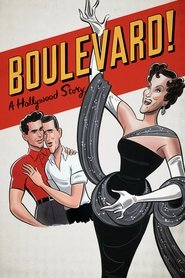
star 6.2In the mid-1950s, Dickson Hughes and Richard Stapley, young composers and romantic partners, are hired by legendary silent film star Gloria Swanson to write a musical based on her film Sunset Boulevard, directed by Billy Wilder in 1950.Once Were Brothers: Robbie Robertson and The Band
2020
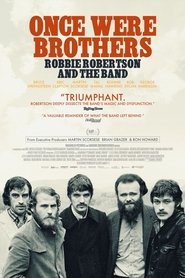
star 6.9A confessional, cautionary, and occasionally humorous tale of Robbie Robertson's young life and the creation of one of the most enduring groups in the history of popular music, The Band.Out of Print
2014
Out of Print
2014
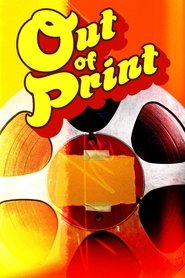
star 5.7A documentary exploring the importance of revival cinema and 35mm exhibition - seen through the lens of the patrons of the New Beverly Cinema - a unique and independent revival cinema in Los Angeles.Spine Tingler! The William Castle Story
2007
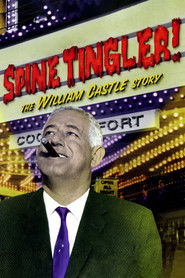
star 7.8Chronicles the last great American showman, filmmaker William Castle, a master of ballyhoo who became a brand name in movie horror with his outrageous audience participation gimmicks.The Vasulka Effect
2020
The Vasulka Effect
2020
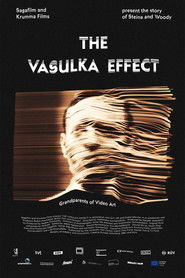
star 2.3The opening of The Vasulka Effect couldn’t be more apt: Steina Vasulka addresses her husband Woody through various TV screens. He does the same and replies. A perfect image of the relationship between the free-spirited, groundbreaking pioneers of video art. After meeting in Prague in the early 1960s, they relocated from Czechoslovakia to New York, where they later founded The Kitchen, their legendary art and performance gallery.A Glitch in the Matrix
2021
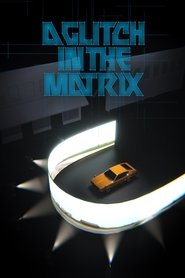
star 5.3Are we in fact living in a simulation? This is the question postulated, wrestled with, and ultimately argued for through archival footage, compelling interviews with real people shrouded in digital avatars, and a collection of cases from some of our most iconoclastic figures in contemporary culture.Double Solitaire
1998
Double Solitaire
1998
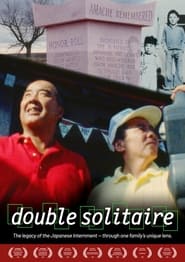
The filmmaker's father and uncle, Norm and Stan, are third generation Japanese Americans. They are "all American" guys who love bowling, cards and pinball. Placed in the Amache internment camp as children during World War II, they don't think the experience affected them that much. But in the course of navigating the maze of her father's and uncle's pursuits while simultaneously trying to inquire about their past, the filmmaker is able to find connections between their lives now and the history that was left behind.Show Me Lisbon
2015
Show Me Lisbon
2015
The best way to discover a city is through its people. 'Show Me Lisbon' reveals the city as seen by thirteen locals, or lisboetas - who were either born there or moved there by choice and who are of different generations, areas and backgrounds. The result is a dynamic, relaxed and realistic portrait of Lisbon that looks at themes such as what it means "to be a lisboeta", the light, the river, the food, the sounds, the history, the ethnic mixes, fado and the city's facades. The artist Joana Vasconcelos, the musician Rodrigo Leao, the writer Richard Zenith, the fado singer Carminho, the street artist Vhils and the historian Jose Sarmento Matos, alongside the knife sharpeners, fishwives, old ladies of Alfama and the festival singers who show the city as it is lived in its traditional quarters. Show me Lisbon is the follow-up to Show me Rio and the second film in the Show me Cities series.Donor Unknown
2011
Donor Unknown
2011
star 1All JoEllen Marsh knew about her biological father was that he was Donor 150; but she wanted to know anything and everything she could about her father’s genealogy. Thanks to a social networking website called the Donor Sibling Registry designed specifically for donor offspring, that becomes a possibility. Marsh slowly unravels Donor 150′s side of her family tree; meeting, one-by-one, her new-found siblings and discovering a plethora of uncanny genetic similarities. (Donor 150 must have had some damn strong genes!) Marsh and her siblings would like to meet the man from whom these common genes were inherited. A New York Times article about Marsh caught Donor 150′s eye, and the rest is history…Hitler Versus Picasso
2018
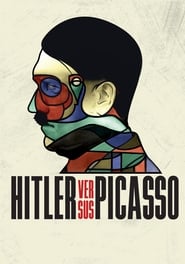
star 7.3In 1937 the Nazi regime held two exhibitions in Munich: one to stigmatize “Degenerate Art” (which they systematically looted and destroyed) and one, personally curated by Hitler, to glorify “Classic Art”. This immersive new documentary reveals the Nazi’s complicated relationship with classical and modern art, displaying an incredible number of masterpieces by Botticelli, Klee, Matisse, Monet, Chagall, Renoir and Gauguin amongst others, intertwined with human stories from the most infamous period of the twentieth century. A state-of-the-art detective story exploring the Nazis’ obsession with creative expression, Hitler versus Picasso combines history, art and human drama for an unforgettable cinema experience.Hubert Selby Jr: It/ll Be Better Tomorrow
2006
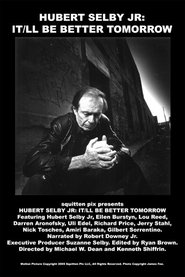
star 6.4An exploration into the life and art of the renowned author of "Last Exit To Brooklyn" and "Requiem For A Dream." Hubert Selby Jr., a self-described "scream looking for a mouth," against all odds, reached international acclaim with his controversial novels. His is a classic story of the great American novelist, overcoming tuberculosis, drug addiction and financial ruin, Selby eventually triumphed in his life and penned seven of the most remarkable and distinctly American books ever written.Cinerama Holiday
1955
Cinerama Holiday
1955
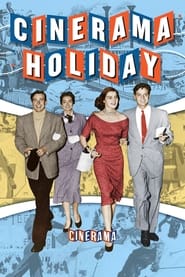
star 7.7Two couples, one from St. Louis and one from Switzerland, each go to the other's country and travel around.Domestic Violence
2001
Domestic Violence
2001
star 6.4DOMESTIC VIOLENCE shows the Tampa, Florida police responding to domestic violence calls and the work of The Spring, the principal shelter in Tampa for women and children. Sequences with the police include police response, intervention, and attempted resolution of domestic violence calls. Sequences at the shelter include intake interviews, individual counseling sessions, anger management training, group therapy, staff meetings, conversations among clients and between clients and staff, and school activities, therapy, and counseling for children at the shelter.Secrets of the Tribe
2010
Secrets of the Tribe
2010
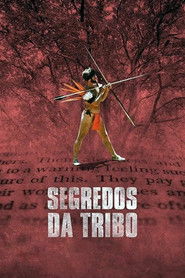
star 6.9What happens when western anthropologists descend on the Amazon and make one of the last unacculturated tribes in existence, the Yanomami, the most exhaustively filmed and studied tribe on the planet? Despite their "do no harm" creed and scientific aims, the small army of anthropologists that has studied the Yanomami since the 1960s has wreaked havoc among the tribe – and sparked a war within the anthropology community itself.Jesus Camp
2006
Jesus Camp
2006
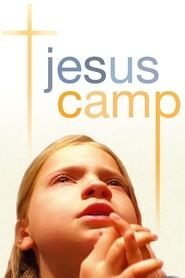
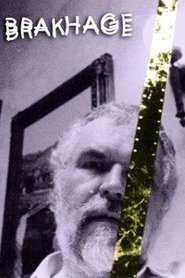
star 7Jesus Camp is a Christian summer camp where children hone their "prophetic gifts" and are schooled in how to "take back America for Christ". The film is a first-ever look into an intense training ground that recruits born-again Christian children to become an active part of America's political future.Brakhage
1998
Brakhage
1998
star 7BRAKHAGE explores the depth and breadth of the filmmaker’s genius, the exquisite splendor of his films, his magic personal charm, his aesthetic fellow travelers, and the influence his work has had on generations of other creators. While touching on significant moments in Brakhage’s biography, the film celebrates Brakhage’s visionary genius, and explores the extraordinary artistic possibilities of cinema, a medium mostly known only for its commercial applications in the form of narratives, cartoons, documentaries, and advertising. BRAKHAGE combines excerpts from Brakhage’s films and films of other avant-garde filmmakers (eg, George Kuchar, Jonas Mekas, Willie Varela, Bruce Elder, and others); interviews with Brakhage, his friends, family, colleagues, and critics; archival footage of Brakhage spanning the past thirty-five years; and location shooting in Boulder, Colorado and New York.Risk
2017
Risk
2017
star 6.6Capturing the story of WikiLeaks founder Julian Assange with unprecedented access, director Laura Poitras finds herself caught between the motives and contradictions of Assange and his inner circle in a documentary portrait of power, betrayal, truth and sacrifice.Generation Wealth
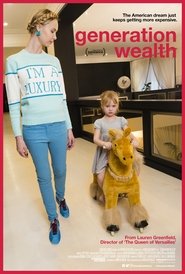
2018
Generation Wealth
2018
star 6.5Over the past 25 years, Lauren Greenfield's documentary photography and film projects have explored youth culture, gender, body image, and affluence. Underscoring the ever-increasing gap between the haves and the have-nots, portraits reveal a focus on cultivating image over substance, where subjects unable to attain actual wealth instead settle for its trappings, no matter their ability to pay for it.Not a War Story
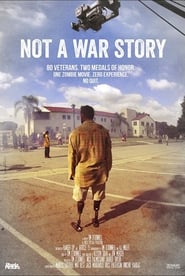
2017
Not a War Story
2017
star 5Hollywood collides with a group of veterans who are tired of the typical PTSD and valor-portrayed movies and decide to make an original dark humor zombie apocalypse film all on their own.