Popular History Movies on Kanopy - Page 33
All Services
Free Services
 Netflix
 Amazon Prime Video
 Apple iTunes
 Apple TV Plus
 Disney Plus
 Google Play Movies
 Paramount Plus
 Hulu
Hulu
 HBO Max
 YouTube
 fuboTV
 Peacock
 Peacock Premium
 Amazon Video
 The Roku Channel
 AMC+
AMC on Demand
AMC+
AMC on Demand
 Kocowa
 Hoopla
 The CW
 Vudu
Vudu
 Starz
Starz
 Showtime
 PBS
PBS
 Pantaflix
 FXNow
FXNow
 Tubi TV
 Kanopy
 Comedy Central
 Crunchyroll
 Microsoft Store
 Redbox
 Sun Nxt
 ABC
ABC
 DIRECTV
 Crackle
 Fandor
 Plex
Plex
Netflix
Amazon Prime Video
Apple iTunes
Apple TV Plus
Disney Plus
Google Play Movies
Paramount Plus
Hulu
HBO Max
YouTube
fuboTV
Peacock
Peacock Premium
Amazon Video
The Roku Channel
AMC+
AMC on Demand
Kocowa
Hoopla
The CW
Vudu
Starz
Showtime
PBS
Pantaflix
FXNow
Tubi TV
Kanopy
Comedy Central
Crunchyroll
Microsoft Store
Redbox
Sun Nxt
ABC
DIRECTV
Crackle
Fandor
Plex

Martin Luther: The Idea that Changed the World
2017
star 7The year 2017 marks the 500th anniversary of one on the most important events in Western civilization: the birth of an idea that continues to shape the life of every American today. In 1517, power was in the hands of the few, thought was controlled by the chosen, and common people lived lives without hope. On October 31 of that year, a penniless monk named Martin Luther sparked the revolution that would change everything. He had no army. In fact, he preached nonviolence so powerfully that — 400 years later — Michael King would change his name to Martin Luther King to show solidarity with the original movement. This movement, the Protestant Reformation, changed Western culture at its core, sparking the drive toward individualism, freedom of religion, women's rights, separation of church and state, and even free public education. Without the Reformation, there would have been no pilgrims, no Puritans, and no America in the way we know it.Sacco and Vanzetti
2006
Sacco and Vanzetti
2006
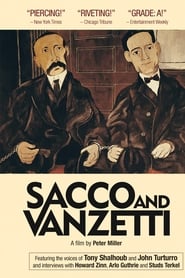
star 7SACCO AND VANZETTI is an 80-minute-long documentary that tells the story of Nicola Sacco and Bartolomeo Vanzetti, two Italian immigrant anarchists who were accused of a murder in 1920, and executed in Boston in 1927 after a notoriously prejudiced trial. It is the first major documentary film about this landmark story.Vita Activa: The Spirit of Hannah Arendt
2015
star 7.4The life and work of German political philosopher of Jewish descent Hannah Arendt (1906-75), who caused a stir when she coined a subversive concept, the banality of evil, in her 1963 book on the trial of Nazi war criminal Adolph Eichmann (1906-62), held in Israel in 1961, which she covered for the New Yorker magazine.Atomic People
2024
Atomic People
2024
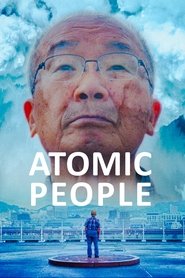
star 8.6Combining personal accounts with archive footage, this film features the voices of some of the only people left on earth to have survived a nuclear bomb.When Liberty Burns
2020
When Liberty Burns
2020
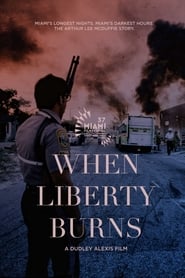
An in-depth analysis on the 40th Anniversary of the life and untimely death of Arthur Lee McDuffie at the hands of Miami Dade police officers.Shusenjo: The Main Battleground of the Comfort Women Issue
2019
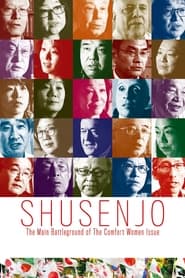
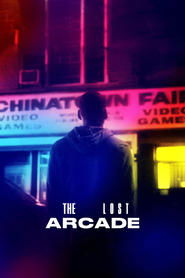
star 7.4A Japanese-American director digs deep into the controversial 'comfort women' issue to settle the debate on whether the women were paid prostitutes or sex slaves, and reveals the motivations and intentions of the main actors pushing to revise history in Japan.The Lost Arcade
2015
The Lost Arcade
2015
star 7Chinatown Fair opened as a penny arcade on Mott Street in 1944. Over the decades, the dimly lit gathering place, known for its tic-tac-toe playing chicken, became an institution, surviving turf wars between rival gangs, changing tastes and the explosive growth of home gaming systems like Xbox and Playstation that shuttered most other arcades in the city. But as the neighborhood gentrified, this haven for a diverse, unlikely community faced its strongest challenge, inspiring its biggest devotees to next-level greatness.Who Will Burry The Dead?
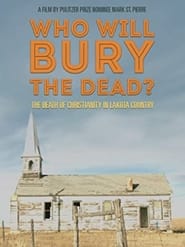
2016
This documentary offers a deep, candid, and historical look at the Christian experience of America's largest and best-known tribes: the Dakota and Lakota. Its exploration into Native American history also takes a hard and detailed look at President Ulysses S. Grant's Peace Policy of 1873, which was, in effect, a "convert to Episcopalianism or starve" edict put forth by the American government in direct violation of its Constitution. The devastation it had on the values of the people affected were dramatic and extremely long-lasting. Grant's policy was finally ended over 100 years later by the Freedom of American Indian Religions Act in 1978. Interlaced with extraordinarily candid interviews, this documentary presents an insider's perspective of how the Dakota and Lakota were estranged from their religious beliefs and their long-standing traditions.Beaufort
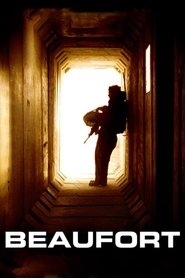
2007
Beaufort
2007
star 6.3BEAUFORT tells the story of LIRAZ LIBERTI, the 22 year-old outpost commander, and his troops in the months before Israel pulled out of Lebanon. This is not a story of war, but of retreat. This is a story with no enemy, only an amorphous entity that drops bombs from the skies while terrified young soldiers must find a way to carry out their mission until their very last minutes on that mountaintop.1982
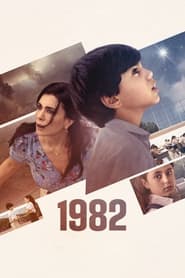
2020
1982
2020
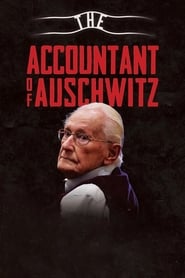
star 6.6On the eve of an invasion in 1982 Lebanon, an 11-year-old boy at a mountain school is determined to express his feelings to a classmate. As tension builds across the country, the day takes an unexpected turn, reflecting the fragile line between innocence and conflict. Through a child's eyes, the film explores the impact of war, the power of love, and the resilience of the human spirit.The Accountant of Auschwitz
2018
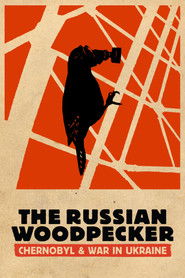
star 7Oskar Gröning, known as the "Accountant of Auschwitz," was charged with the murder of 300,000 Jews. When he took the stand in 2015, at the age of 94, his trial made headlines worldwide.The Russian Woodpecker
2015
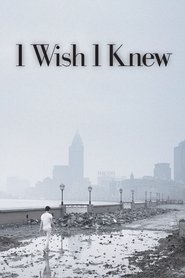
star 6.3As his country is gripped by revolution and war, a Ukrainian victim of the Chornobyl nuclear disaster discovers a dark secret and must decide whether to risk his life and play his part in the revolution by revealing it.I Wish I Knew
2010
I Wish I Knew
2010
star 6.7Focuses on the people, their stories and architecture spanning from the mid-1800s, when Shanghai was opened as a trading port, to the present day.Facing Nolan
2022
Facing Nolan
2022
star 7.4In the world of Major League Baseball no one has created a mythology like Nolan Ryan. Told from the point of view of the hitters who faced him and the teammates who revered him, Facing Nolan is the definitive documentary of a Texas legend.No God, No Master
2014
No God, No Master
2014
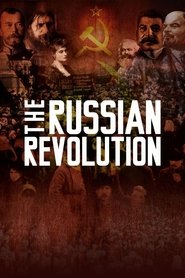
star 5.9A plot to overthrow the United States government is uncovered in New York City in the summer of 1919 when William Flynn, a field agent for the Bureau of Investigation, is sent to investigate a bomb threat that has targeted some of America's most powerful politicians and leaders of commerce, New York millionaire John D. Rockefeller, Sr. among them. Flynn's investigation takes him on a journey into the underworld of homegrown terrorism and introduces him to a competitive culture of violence and murder. Greed, power, and politics are at the center of the story and Flynn must distinguish the villains from the merely discontented. Along the way, he discovers that terrorism has many faces and that a determination of guilt or innocence often lies in the psychology of fear that constricts individuals at every level of society. Sedona International Film Festival.The Russian Revolution
2017
star 6.3Starting in 1881 this film shows the personal battle between Lenin's Ulyanov family and the royal Romanovs that eventually led to the Russian revolution.Mparntwe Sacred Sites
2004
This documentary focuses on the sacred sites in and around Mparntwe (Alice Springs) in central Australia, and the struggle of the Arrernte people to identify, document and preserve these sites in the face of rapid urban expansion and property development.The Johnstown Flood
2003
The Johnstown Flood
2003
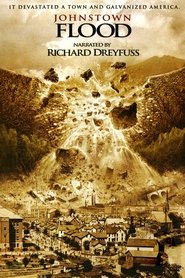
star 6On a stormy day in May of 1889, the South Fork Dam impounding Conemaugh Lake exploded, unleashing a 40-foot wall of water. The bustling industrial city of Johnstown, PA, in the valley below was reduced to a wasteland, killing more than 2,200. This heavily dramatized documentary reviews the factors that led to the dam's collapse, while dramatic reenactments and survivors' personal testimonies detail the horror.Home Front
2020
Home Front
2020
star 5.7Burgundy, France. Solange's 60th birthday celebrations are violently interrupted by her estranged brother, Bernard. His outburst will reawaken painful memories and reveal untold stories of the Algerian War.Forbidden Films
2014
Forbidden Films
2014
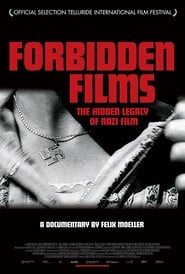
star 6.5Between 1933 and 1945 roughly 1200 films were made in Germany, of which 300 were banned by the Allied forces. Today, around 40 films, called "Vorbehaltsfilme", are locked away from the public with an uncertain future. Should they be re-released, destroyed, or continue to be neglected? Verbotene Filme takes a closer look at some of these forbidden films.