Popular Documentary Movies on Pantaflix - Page 450
All Services
Free Services
 Netflix
 Amazon Prime Video
 Apple iTunes
 Apple TV Plus
 Disney Plus
 Google Play Movies
 Paramount Plus
 Hulu
Hulu
 HBO Max
 YouTube
 fuboTV
 Peacock
 Peacock Premium
 Amazon Video
 The Roku Channel
 AMC+
AMC on Demand
AMC+
AMC on Demand
 Kocowa
 Hoopla
 The CW
 Vudu
Vudu
 Starz
Starz
 Showtime
 PBS
PBS
 Pantaflix
 FXNow
FXNow
 Tubi TV
 Kanopy
 Comedy Central
 Crunchyroll
 Microsoft Store
 Redbox
 Sun Nxt
 ABC
ABC
 DIRECTV
 Crackle
 Fandor
 Plex
Plex
Netflix
Amazon Prime Video
Apple iTunes
Apple TV Plus
Disney Plus
Google Play Movies
Paramount Plus
Hulu
HBO Max
YouTube
fuboTV
Peacock
Peacock Premium
Amazon Video
The Roku Channel
AMC+
AMC on Demand
Kocowa
Hoopla
The CW
Vudu
Starz
Showtime
PBS
Pantaflix
FXNow
Tubi TV
Kanopy
Comedy Central
Crunchyroll
Microsoft Store
Redbox
Sun Nxt
ABC
DIRECTV
Crackle
Fandor
Plex

Cinematógrafo 1900
1979
Cinematógrafo 1900
1979
star 4.5Tribute to Segundo de Chomón. Semi-documentary featuring short films and appearances by actors who explain his works, such as Inma de Santis, Jesús Gúzman, and Ana Mariscal.The Lost Forest
2020
The Lost Forest
2020
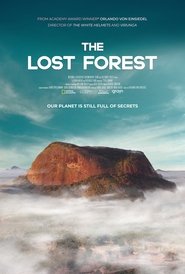
How would natural habitats develop without human interference? In this documentary we follow an international team of scientists and explorers on an extraordinary mission in Mozambique to reach a forest that no human has set foot in. The team aims to collect data from the forest to help our understanding of how climate change is affecting our planet. But the forest sits atop a mountain, and to reach it, the team must first climb a sheer 100m wall of rock.Minamata Mandala
2021
Minamata Mandala
2021
After years of dumping industrial wastes from the factory to the ocean, Chisso Chemical Corporation contaminated the area of a small Japanese fishing village with excessive amounts of methylmercury. This highly toxic chemical bioaccumulated in fishes of the local water, which when consumed by the local populace resulted in mercury poisoning. In 1977, Minamata disease certification criteria was set by a strange method that tried not to recognize the rights of environmental disease patients. However, an Osaka court won the case for some patients because of a newly developed theory by medical doctors’ recent experiments and proofs. For decades, these patients struggled within the Japanese judicial system for their rights to receive compensation as victims of environmental disease. Those different aspects of these patients’ lives have been filmed by director Hara for the last 15 years, inspired by the late director Tsuchimoto’s documentary MINAMATA: THE VICTIMS AND THEIR WORLD (1971).Facing Suicide
2022
Facing Suicide
2022
star 5FACING SUICIDE combines the poignant personal stories of people impacted by suicide with profiles of scientists at the forefront of research to reveal new insights into one of America’s most pressing mental health crises. Shining a light on this difficult topic can destigmatize suicide while revealing that there is help as well as hope for those at risk and their loved ones.Lampião da Esquina: Lighting Up Brazilian Press
2016
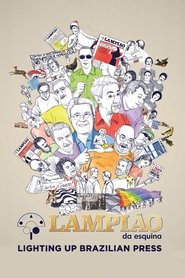
star 8Inspired by the US paper “Gay Sunshine”, in April of 1978 appeared in Brazil – during the dictatorship – the newspaper “O Lampião”, depicting the point of view of gays on various issues, including sexuality. A group of journalists and writers from Rio de Janeiro and São Paulo joined the project, fueling a publication that paved the way for the press at the time, addressing controversial issues at the period, such as racism, abortion, drugs and prostitution.All These Sleepless Nights
2016
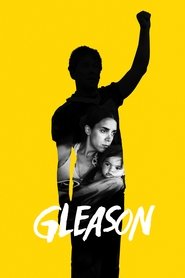
star 6.3What does it mean to be awake in a world that seems satisfied to be asleep? Kris and Michal push their experiences of life and love to a breaking point as they restlessly roam the city streets in search of answers, adrift in the euphoria and uncertainty of youth.Gleason
2016
Gleason
2016
star 8.4At the age of 34, former New Orleans Saints defensive back Steve Gleason was diagnosed with ALS and given a life expectancy of two to five years. Weeks later, Gleason found out his wife, Michel, was expecting their first child. A video journal that began as a gift for his unborn son expands to chronicle Steve’s determination to get his relationships in order, build a foundation to provide other ALS patients with purpose, and adapt to his declining physical condition—utilizing medical technologies that offer the means to live as fully as possible.The Incredible Machine
1975
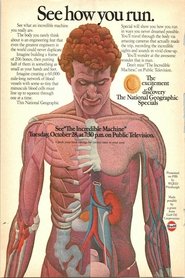
star 7The Incredible Machine [also known as Man: The Incredible Machine] is a 1975 American documentary film directed by Irwin Rosten and Ed Spiegel. It follows a "ourney" inside the human body, using advanced technology of microscopic photography and sound, including scenes of heat radiation, color x-rays, and camera exploration of a living human heart. The film is famous for including some of the first pictures ever taken inside the human body and presented on film, using some of the earliest film that medical researchers had taken inside the human digestive tract and bloodstream. It ranked as the most-watched program in Public Broadcasting Service until 1982. It was nominated for an Academy Award for Best Documentary Feature.Auto*Mat
2009
Auto*Mat
2009
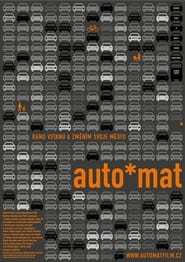
A film of many styles, combining a documentary with animation, jazzing up the time principle by provoking situations, tells a personal story of the director-biker as well as the journey of Auto*Mat initiative from poetic demonstrations against cars to constructive component of a living civic society.I Love You All Very Much...
1988
A documentary film about the work of Dinara Asanova, director at the Lenfilm film studio.The Mayo Clinic
2018
The Mayo Clinic
2018
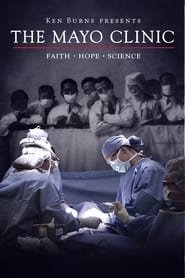
star 7The Mayo Clinic tells the story of a unique medical institution that has been called a "Medical Mecca," the "Supreme Court of Medicine," and the "place for hope where there is no hope." The Mayo Clinic began in 1883 as an unlikely partnership between the Sisters of Saint Francis and a country doctor named William Worrall Mayo after a devastating tornado in rural Minnesota. Since then, it has grown into an organization that treats more than a million patients a year from all 50 states and 150 countries. Dr. Mayo had a simple philosophy he imparted to his sons Will and Charlie: "the needs of the patient come first." They wouldn't treat diseases...they would treat people. In a world where healthcare delivery is typically fragmented among individual specialties, the Mayo Clinic practices a multi-specialty, team-based approach that has, from its beginnings, created a culture that thrives on collaboration.Directed by Andrei Tarkovsky
1988
star 7.6This documentary offers a rare glimpse of the legendary Soviet filmmaker, Andrei Tarkosvky, at work. Tarkovsky made only seven films in his brief, but brilliant, career; Michal Leszczylowski's respectful movie chronicles him at work on his last film, The Sacrifice. Offering insight into Tarkovsky's working methods and transcendental aesthetics, the movie is a compelling account of the difficulties of film production. In the case of an uncompromising and visionary filmmaker like Tarkovsky, the practical problems of filmmaking are only magnified, as cast and crew struggle to realize the ambitious concepts in Tarkovsky's mind.Bikers, Blondes and Blood
1993
A documentary showing previews for, and footage from, exploitation films featuring motorcycles and motorcycle gangs.Tea Man
2011
Tea Man
2011
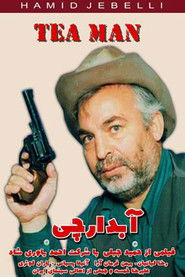
This film is about the interest of a person named Ahmed in cinema. Ahmed has been very interested in cinema since his childhood. He started working in cinema as a teenager because of his interest. Ahmed is currently a famous tea man in Iranian cinema.Before Words
2014
Before Words
2014
Every time the task of drawing a circle is performed, it results in a unique shape, a slightly different 'version' than the previous and next attempt. BEFORE WORDS is loosely based on Margaret Tait's unrealised script VIDEO POEMS FOR THE 90s. The video is an attempt at following a set of simple instructions, to observe through another artist's words and ideas in order to arrive at something personal.Jeans: A Faded Blue Planet
2010
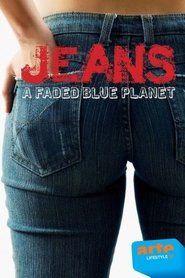
star 6A legendary garment, mass-produced, which witnessed the Industrial Revolution and clad cowboys on the western frontier, is now a fashion statement worldwide for men and women, young and old: an icon of modernity which has lasted for 150 years. With flying colors, the jeans have sailed through early marketing, the Internet, the world of collectors, the end of the Cold War, and now globalization. Their eternal popularity begs a question: Why?Wilderness Calling
1969
Wilderness Calling
1969
A young boy from the Dakota prairies grows up heeding the "call of the wilderness." He hunts for pheasant in the Illinois cornfields; ducks and geese in the northern lakes; deer in the Dakota Bad Lands; mountain sheep, goats, caribou, moose, and mountain lions in British Columbia and the Yukon; and brown bears on the Alaskan peninsula. He fishes in British Columbia's mountain streams for grayling and along the Bering Sea coast for trout. The film includes footage of swans, eagles, cnd ptarmigans; a beaver colony repairing a dam; battling rams; and sheep at rest in the mountains.Carmencita
2019
Carmencita
2019
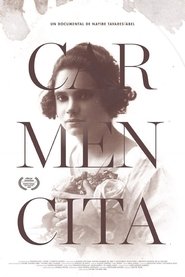
Documentary short film based on the private diary of Nayibe Tavares-Abel's great-grandmother from 1919. Includes stopmotion animation and a silent fiction film in 16mm.Where Has Misawa Chiren Gone?
2011
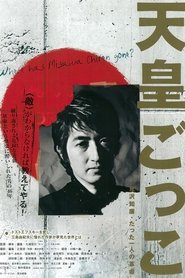
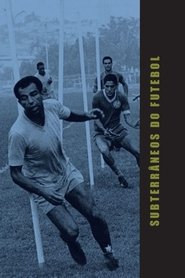
Documentary on author, dissident and right-wing terrorist Misawa Chiren.Subterrâneos do Futebol
1965
star 8.5The practices of football in Brazil and the issues surrounding the sport. Press, players as a commodity, the popular passion, the practice on the fields of várzea. The statements of Luiz Carlos de Freitas, a young promise of Palmeiras, and Feola's coach, as well as an interview with Pelé.