Popular Documentary Movies on Pantaflix - Page 470
All Services
Free Services
 Netflix
 Amazon Prime Video
 Apple iTunes
 Apple TV Plus
 Disney Plus
 Google Play Movies
 Paramount Plus
 Hulu
Hulu
 HBO Max
 YouTube
 fuboTV
 Peacock
 Peacock Premium
 Amazon Video
 The Roku Channel
 AMC+
AMC on Demand
AMC+
AMC on Demand
 Kocowa
 Hoopla
 The CW
 Vudu
Vudu
 Starz
Starz
 Showtime
 PBS
PBS
 Pantaflix
 FXNow
FXNow
 Tubi TV
 Kanopy
 Comedy Central
 Crunchyroll
 Microsoft Store
 Redbox
 Sun Nxt
 ABC
ABC
 DIRECTV
 Crackle
 Fandor
 Plex
Plex
Netflix
Amazon Prime Video
Apple iTunes
Apple TV Plus
Disney Plus
Google Play Movies
Paramount Plus
Hulu
HBO Max
YouTube
fuboTV
Peacock
Peacock Premium
Amazon Video
The Roku Channel
AMC+
AMC on Demand
Kocowa
Hoopla
The CW
Vudu
Starz
Showtime
PBS
Pantaflix
FXNow
Tubi TV
Kanopy
Comedy Central
Crunchyroll
Microsoft Store
Redbox
Sun Nxt
ABC
DIRECTV
Crackle
Fandor
Plex

The Unnameable Dance
2022
The Unnameable Dance
2022
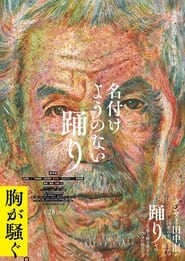
The Unnameable Dance shows the life and dance of Tanaka Min, an elderly dancer in his 70s, in a multifaceted and dynamic manner.Inquiry: The Great British Housing Disaster
1984
star 6.6David Jones investigates how 1960s council housing came to be built so poorly that thousands later needed to be demolished.Sanrizuka: Heta Village
1973
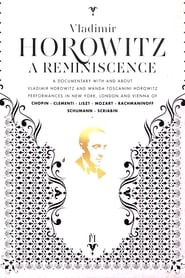
star 6.2Shinsuke Ogawa documentary about the life of the farmers in Heta Village opposing their resettlement due to the construction of Narita Airport.Horowitz: A Reminiscence
1993
star 7Wanda Horowitz reminisces about her husband, the great pianist Vladimir Horowitz, with clips from his television appearances.The Mayo Clinic
2018
The Mayo Clinic
2018
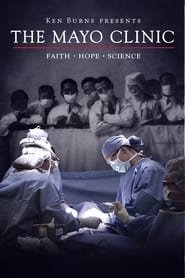
star 7The Mayo Clinic tells the story of a unique medical institution that has been called a "Medical Mecca," the "Supreme Court of Medicine," and the "place for hope where there is no hope." The Mayo Clinic began in 1883 as an unlikely partnership between the Sisters of Saint Francis and a country doctor named William Worrall Mayo after a devastating tornado in rural Minnesota. Since then, it has grown into an organization that treats more than a million patients a year from all 50 states and 150 countries. Dr. Mayo had a simple philosophy he imparted to his sons Will and Charlie: "the needs of the patient come first." They wouldn't treat diseases...they would treat people. In a world where healthcare delivery is typically fragmented among individual specialties, the Mayo Clinic practices a multi-specialty, team-based approach that has, from its beginnings, created a culture that thrives on collaboration.Sidney Poitier: One Bright Light
2000
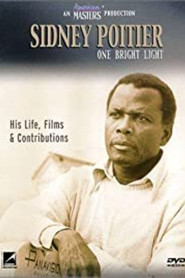
star 6Actor/director Sidney Poitier discusses his life and career. He tells of his upbringing in Jamaica; the difficulties he encountered in New York City at the start of his career; his involvement in the US civil-rights movement; and efforts to end apartheid in South Africa. Friends and acquaintances, as well as other performers, give their insights about what makes him so special.The Wonderful World of Dogs
1990
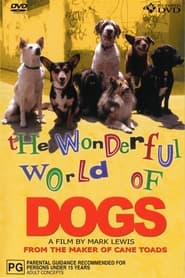
A woman obsessed by dogs crapping on her small piece of lawn. A pelican hungry enough to eat a small Chihuahua. A dog who enjoys dressing up in women’s clothing. And another with a penchant for rubber… Discover the wonderful world of dogs… barkers, bullies, crappers, and roamers. Meet Boris, Pebbles, Piglet, Molly and the delinquent dog, Fugly. Meet the people – the devoted dog-lovers and those less enthusiastic about the canine breed. The Wonderful World of Dogs looks at the myths and obsessions surrounding the domestic dog and their doting owners. A story about dogs who just want to be dogs and people who want their dogs to be just like people.Foo Fighters - Everywhere But Home
2003
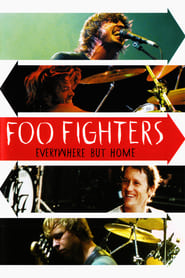
star 7.4Foo Fighters have established themselves as a premier alternative rock band, offering a mixture of bittersweet harmonies and full-on rock anthems. Their formidable live act is second to none, and EVERYWHERE BUT HOME cements their reputation with a combination of stadium shows, festival appearances, and intimate acoustic performances. Endearing behind the scenes footage illustrates the goofy natureIceland Divide
0000
Love Letters
2015
Love Letters
2015
Actors Tony Lo Bianco and Marilyn Chris, and editor Stan Warnow, discuss the 1970 film THE HONEYMOON KILLERS.Memento
1966
Memento
1966
star 4A film about Jewish cemeteries in East Berlin, based on a screenplay by Günter Kunert, with text by Rabbi Martin Riesenburger. There are shots of gravestones and inscriptions – deported, murdered, perished; in Auschwitz or Theresienstadt. Commentary reminds us of the victims – "in 1933, 160,564 Jewish citizens lived in Berlin; in 1945, 3,500".Nessuno siamo perfetti
2015
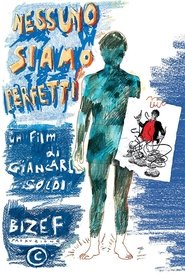
star 7A loving portrait of reclusive comic-book writer Tiziano Sclavi, creator of Dylan DogReunion
1946
Reunion
1946
star 6.8Live footage from concentration camps after the liberation, and the complex transport and lodging of masses of prisoners of war and other deported people back to their home countries, at the end of World War II. A 45min 35mm print also exists (shown at Cinémathèque française in 2023).Walker
2012
Walker
2012
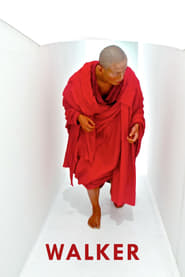
star 6.1In 2012, the Hong Kong International Film Festival invited Tsai Ming-Ling to make the opening short film. Having grown up with Hong Kong's popular culture, Tsai Ming-Liang decided to pay homage by making a "Walker" film, contrasting the Walker's slowness with the frenzied pace of Hong Kong's cosmopolitan life. The film ends with a song by Hong Kong actor and singer Samuel Hui, who was Tsai Ming-Liang's idol during his youth. The film was invited to be the closing short film for the Cannes Film Festival in 2012.Zug
1990
Obsessed with Light
2023
Obsessed with Light
2023
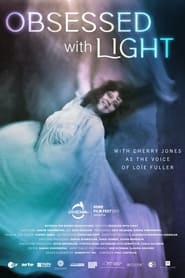
star 8Loïe Fuller, stage name of Marie Louise Fuller: the American actress and dancer trained in burlesque, circuses and variety shows who, in the 1890s, signed by the Folies Bergère of Paris, became a star. She was portrayed by Toulouse-Lautrec, loved by the symbolists, the inspiration for Art Nouveau, in her shows she combined dance, spirals of fabric and light, reflected from behind or from below through the glass floor that she had created. She transformed into the "Fairy of Light", was taken up (especially in her Serpentine Dance) by Georges Méliès and Alice Guy and influenced René Clair's early films.El Quijote desde la platea
2019
star 4.5How Don Quixote de la Mancha, the immortal character created by Miguel de Cervantes in 1605, has been depicted in cinema, television, cartoons, theater, opera, ballet and other artistic disciplines. An adventure that began more than four hundred years ago in the pages of a book and is far from coming to an end.Scars Of Nanking
2017
Scars Of Nanking
2017
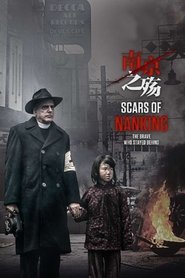
star 6During the brutal invasion of China in 1937 by Imperial Japanese forces, tens of thousands of civilians and prisoners of war are murdered and women raped in what is known simply as "The Rape of Nanking." This docudrama is a stirring account of a small band of courageous American missionaries who choose to stay in Nanking to try and protect a quarter million vulnerable Chinese civilians who are trapped in a city ruled by a savage, out of control army. Their stories are brought vividly to life through actual real-time letters and diaries as they bear witness to one of the worst wartime atrocities in history.