Popular Documentary Movies on Tub Tv - Page 366
All Services
Free Services
 Netflix
 Amazon Prime Video
 Apple iTunes
 Apple TV Plus
 Disney Plus
 Google Play Movies
 Paramount Plus
 Hulu
Hulu
 HBO Max
 YouTube
 fuboTV
 Peacock
 Peacock Premium
 Amazon Video
 The Roku Channel
 AMC+
AMC on Demand
AMC+
AMC on Demand
 Kocowa
 Hoopla
 The CW
 Vudu
Vudu
 Starz
Starz
 Showtime
 PBS
PBS
 Pantaflix
 FXNow
FXNow
 Tubi TV
 Kanopy
 Comedy Central
 Crunchyroll
 Microsoft Store
 Redbox
 Sun Nxt
 ABC
ABC
 DIRECTV
 Crackle
 Fandor
 Plex
Plex
Netflix
Amazon Prime Video
Apple iTunes
Apple TV Plus
Disney Plus
Google Play Movies
Paramount Plus
Hulu
HBO Max
YouTube
fuboTV
Peacock
Peacock Premium
Amazon Video
The Roku Channel
AMC+
AMC on Demand
Kocowa
Hoopla
The CW
Vudu
Starz
Showtime
PBS
Pantaflix
FXNow
Tubi TV
Kanopy
Comedy Central
Crunchyroll
Microsoft Store
Redbox
Sun Nxt
ABC
DIRECTV
Crackle
Fandor
Plex

Marcus Garvey: Toward Black Nationhood
1984
A documentary, combining archival material and live interviews with Marcus Garvey, Jr., and others, which introduces the life and work of the pioneer Black nationalist leader Marcus Garvey.Legacy
2024
Legacy
2024
Is there a mental health crisis in agriculture in Colorado? Farming and ranching has become increasingly difficult over the years. An industry that is typically viewed as romantic, hardworking, and "salt-of-the earth" is actually a job full of tremendous stress outside of anyone's control. Combine that with the enormous generational pressure to continue the family farm, and you have a large group of people that are suffering silently. How do we take care of those that are taking care of us?I Hate Jane Austen
2017
I Hate Jane Austen
2017
While it may be universally acknowledged that she’s one of the great English writers, Giles Coren breaks down his many reasons for hating Jane Austen.Bad Girls of Japan
2015
Bad Girls of Japan
2015
Are bad girls casualties of patriarchy, a necessary evil, or visionary pioneers? By tracing the concept of the bad girl in Japan as a product of specific cultural assumptions and historical settings, Bad Girls of Japan maps new roads and old detours in revealing a disorderly politics of gender. The essays explore deviancy in richly diverse media. Mountain witches, murderers, performance artists, cartoonists, schoolgirls, and shoppers gone wild are all part of the terrain.ONE IN A MILL10N
2025
ONE IN A MILL10N
2025
star 8In 2015, with the greeting "ONE IN A MILL10N, TWICE!", a new K-pop group stepped onto the world stage. From chart-topping anthems like "CHEER UP," "TT," "What is Love?," "FANCY," and "Feel Special," TWICE captured hearts far beyond Korea, becoming a global phenomenon. This documentary follows their decade-long journey—countless hours of dedication, the dazzling spotlight of worldwide tours, and candid reflections on their growth, friendship, and even their dreams for the future. For ten years, brighter than any stage light, 'ONCE' has been at the very heart of their story. Through never-before-seen interviews and the heartfelt process of preparing a 10th anniversary celebration, the film reveals what TWICE has truly meant to one another—and to the fans who have walked beside them. On their 10th anniversary, 〈ONE IN A MILL10N〉 comes to the screen, revealing the true reason behind the existence of TWICE—a group like no other.Fin de concession
2010
Fin de concession
2010
star 6.8Pierre Carles questions the privatization of the leading French televisions channel : is it not scandalous that the TFI-Bouygues concession has been automatically renewed since 1987 ? Taking up the anti-television fight he initiated with "Pas vu Pas pris", his first film, he confronts the people responsible for the news who have always avoided tackling this taboo subject. But the investigation does not go as planned : the old dinosaurs and young guardians now how to handle this media critic. To find his "fighting spirit" again, Carles calls to arms his friends and changes methods : Henceforth, no more concessions !School Town King
2020
School Town King
2020
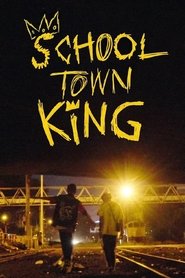
star 7.3It follows two teenage rappers in Bangkok who use their musical talent to navigate their difficult circumstances.Girl Groups: The Story of a Sound
1982
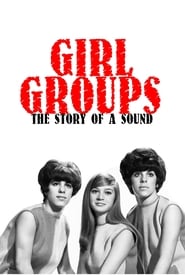
star 7.5A look back at the girl-group craze of the 60's through archival footage and interviews with those involved.56 Up
2012
56 Up
2012
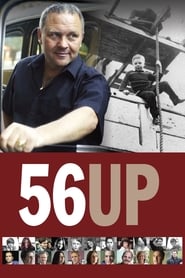
star 7.2When a cross-section of seven-year-olds were interviewed for 7 Up in 1964 it was immediately evident that their social backgrounds influenced their attitudes towards life. While the upper class children were confident and self-assured, those from middle and working class backgrounds were resigned to a challenging life of hard work. This premise was put to the test every seven years when the same group were interviewed about the progression of their lives. 49 years in the making, the changes that occurred to the original 14 make for fascinating television and are in many ways the stories of all our lives. From success and disappointment, marriage and childbirth, to poverty and illness, nearly every facet of life has been captured on film. Now, at the age of 56, the group are once more brought together and, with the benefit of hindsight, assess whether their lives have been ruled by circumstance or self-determination.Seven Women: Meg Lam
1976
Seven Women: Meg Lam
1976
The sixth episode of Patrick Tam’s anthology series “Seven Women” (1976), which adapted from Pat Flower’s “The Tape Recorder”SEAMUS
2024
SEAMUS
2024
Containing interviews with Coleman’s family, teachers, coaches, and teammates, SEAMUS tells the story of how the Irish right-back became an Everton legend in his own right.Mr. SOUL!
2018
Mr. SOUL!
2018
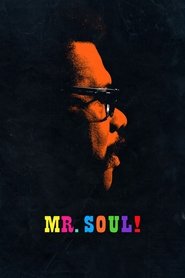
star 7On the heels of the Civil Rights Movement, one fearless black pioneer reconceived a Harlem Renaissance for a new era, ushering giants and rising stars of black American culture onto the national television stage. He was hip. He was smart. He was innovative, political, and gay. In his personal fight for social equality, this man ensured the Revolution would be televised. The man was Ellis Haizlip. The Revolution was soul!Marc Jacobs & Louis Vuitton
2007
star 7From Japan to America, the LV sign dominates the fashion scene. And, one man alone designs the Louis Vuitton creations the exceptional Marc Jacobs. With unprecedented access to one of the world's hottest and busiest designers, Loïc Prigent offers an intimate and revealing portrait of the reclusive Marc Jacobs and the world of haute couture. Whether in the offices and workrooms of Paris and New York, the back of his car, or backstage at a fashion show, we see a genius at work. Jacobs endures unimaginable pressure to chart new paths in fashion as he straddles the demands of the Louis Vuitton conglomerate and his own Marc Jacobs label.F. C. Gundlach - Meister der Modefotografie
2018
Franz Christian Gundlach, known as F. C. Gundlach, influenced an entire generation of photographers, such as Andreas Mühe and Kristian Schuller. Wim Wenders interprets Gundlach as a "visionary of photography". For F. C. Gundlach, who was born in 1926 in Heinebach in northern Hesse, Paris marked the start of his career: he had his first exhibition there in 1951. He quickly rose to become a star photographer. He moved to Hamburg and made his mark on fashion photography with fashion spreads for women's magazines such as "Film und Frau" and "Brigitte".Arda Turan: Confrontation
2024
star 4.6Arda Turan shares the most intimate details of his well-known personal life, starting on the streets of Bayrampaşa and leading up to Ali Sami Yen, Vicente Calderon and finally to Camp Nou.L'escalier
2022
L'escalier
2022
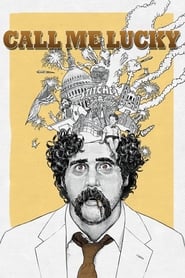
A director has been filming his staircase which he has been climbing to the 6th floor for twenty years.Call Me Lucky
2015
Call Me Lucky
2015
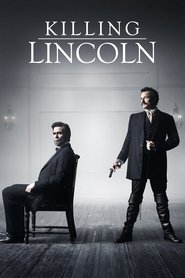
star 7An inspiring, triumphant and wickedly funny portrait of one of comedy’s most enigmatic and important figures, CALL ME LUCKY tells the story of Barry Crimmins, a beer-swilling, politically outspoken and whip-smart comic whose efforts in the 70s and 80s fostered the talents of the next generation of standup comedians. But beneath Crimmins’ gruff, hard-drinking, curmudgeonly persona lay an undercurrent of rage stemming from his long-suppressed and horrific abuse as a child – a rage that eventually found its way out of the comedy clubs and television shows and into the political arena.Killing Lincoln
2013
Killing Lincoln
2013
star 5.8April 14, 1865. One gunshot. One assassin hell-bent on killing a tyrant, as he charged the 16th President of the United States. And in one moment, our nation was forever changed. This is the most dramatic and resonant crime in American history—the true story of the killing of Abraham Lincoln.Lorelei Lee
2009