Top Rated Documentary Movies - Page 132
All Services
Free Services
 Netflix
 Amazon Prime Video
 Apple iTunes
 Apple TV Plus
 Disney Plus
 Google Play Movies
 Paramount Plus
 Hulu
Hulu
 HBO Max
 YouTube
 fuboTV
 Peacock
 Peacock Premium
 Amazon Video
 The Roku Channel
 AMC+
AMC on Demand
AMC+
AMC on Demand
 Kocowa
 Hoopla
 The CW
 Vudu
Vudu
 Starz
Starz
 Showtime
 PBS
PBS
 Pantaflix
 FXNow
FXNow
 Tubi TV
 Kanopy
 Comedy Central
 Crunchyroll
 Microsoft Store
 Redbox
 Sun Nxt
 ABC
ABC
 DIRECTV
 Crackle
 Fandor
 Plex
Plex
Netflix
Amazon Prime Video
Apple iTunes
Apple TV Plus
Disney Plus
Google Play Movies
Paramount Plus
Hulu
HBO Max
YouTube
fuboTV
Peacock
Peacock Premium
Amazon Video
The Roku Channel
AMC+
AMC on Demand
Kocowa
Hoopla
The CW
Vudu
Starz
Showtime
PBS
Pantaflix
FXNow
Tubi TV
Kanopy
Comedy Central
Crunchyroll
Microsoft Store
Redbox
Sun Nxt
ABC
DIRECTV
Crackle
Fandor
Plex

The Trials of Henry Kissinger
2002
star 6.9This riveting documentary depicts former Secretary of State Henry Kissinger as a warmonger responsible for military cover-ups in Vietnam, Cambodia and East Timor, as well as the assassination of a Chilean leader in 1970. Based on a book by journalist Christopher Hitchens, the film includes interviews with historians, political analysts and such journalists as New York Times writer William Safire, a former Nixon speechwriter.La Rabbia
1963
La Rabbia
1963
star 7Documentary footage (from the 1950s) and accompanying commentary to attempt to answer the existential question, Why are our lives characterized by discontent, anguish, and fear? The film is in two completely separate parts, and the directors of these respective sections, left-wing Pier Paolo Pasolini and conservative Giovanni Guareschi, offer the viewer contrasting analyses of and prescriptions for modern society. Part I, by Pasolini, is a denunciation of the offenses of Western culture, particularly those against colonized Africa. It is at the same time a chronicle of the liberation and independence of the former African colonies, portraying these peoples as the new protagonists of the world stage, holding up Marxism as their "salvation", and suggesting that their "innocent ferocity" will be the new religion of the era. Guareschi's part, by contrast, constitutes a defense of Western civilization and a word of hope, couched in traditional Christian terms, for man's future.Audition
1964
Audition
1964
star 6.4Two closely related episodes. Youths make problems for two local orchestras about to compete nationally, and in a talent competition a young girl gets stage fright, while another lies to her boss to compete.Bond Girls Are Forever
2002
star 5.7Through vintage film clips of past Bond movie epics, and with the participation of several former "Bond Girls" as interviewees (among them Dr. No's Ursula Andress and Diamonds Are Forever's Jill St. John), the documentary traces the evolution of the typical James Bond heroine from decorative damsel in distress to gutsy (but still decorative) participant in the action.WWE: The Rise + Fall of ECW
2004
star 7.3The Rise + Fall of ECW is a 2004 direct-to-video documentary produced by World Wrestling Entertainment. It chronicles the history of Philadelphia-based professional wrestling promotion Extreme Championship Wrestling.Afrique 50
1950
Afrique 50
1950
star 6.8The first French anti-colonialist film, derived from an assignment in which the director was to document educational activities by the French League of Schooling in West Africa. Vautier later filmed what he actually saw: “a lack of teachers and doctors, the crimes committed by the French Army in the name of France, the instrumentalization of the colonized peoples.” For his role in the film, Vautier was imprisoned for several months. The film was banned from public screening for more than 40 years.Tom Petty and the Heartbreakers: Runnin' Down a Dream
2007
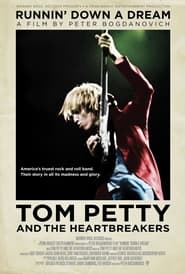
star 7.6Directed by Peter Bogdanovich and packed with rare concert footage and home movies, this documentary explores the history of Tom Petty and the Heartbreakers, including Petty's famous collaborations and notorious clashes with the record industry. Interviews with musical luminaries including Jackson Browne, George Harrison, Eddie Vedder, Roger McGuinn, Jeff Lynne, Dave Stewart and Petty himself shed some revelatory vision.Jimi Plays Monterey
1987
Jimi Plays Monterey
1987
star 7.4Jimi Hendrix's debut American set at 1967's Monterey Pop Festival is generally considered one of the most radical and legendary live shows ever. Virtually unknown to American audiences at the time, even though he was already an established entity in the UK, Hendrix and his two-piece Experience explode on stage, ripping through blues classics "Rock Me Baby" and Howlin' Wolf's "Killing Floor," interpreting and electrifying Bob Dylan's "Like a Rolling Stone," debuting songs from his yet-to-be-released first album and closing with the now historic sacrificing/burning of his guitar during an unhinged version of "Wild Thing" that even its writer Chip Taylor would never have imagined. Hendrix uses feedback and distortion to enhance the songs in whisper-to-scream intensity, blazing territory that had not been previously explored with as much soul-frazzled power.Examined Life
2008
Examined Life
2008
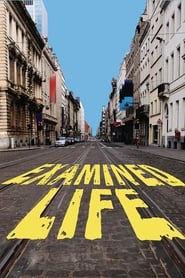
star 6.5Examined Life pulls philosophy out of academic journals and classrooms, and puts it back on the streets. Offering privileged moments with great thinkers from fields ranging from moral philosophy to cultural theory, Examined Life reveals philosophy's power to transform the way we see the world around us and imagine our place in it.Look, Up in the Sky! The Amazing Story of Superman
2006
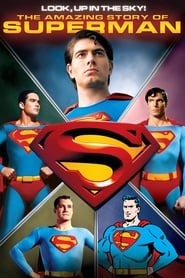
star 7.5The history of the comic book superhero, Superman, in his various media incarnations.The Rape of Europa
2007
The Rape of Europa
2007
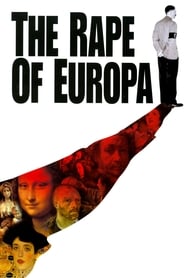
star 7.4World War II was not just the most destructive conflict in humanity, it was also the greatest theft in history: lives, families, communities, property, culture and heritage were all stolen. The story of Nazi Germany's plundering of Europe's great works of art during World War II and Allied efforts to minimize the damage.Alien Planet
2005
Alien Planet
2005
star 7.1The dynamic meeting of solid science and futuristic simulation culminates in a dramatic exploration to another inhabited planet seven light years away. Alien Planet creates a realistic depiction of creatures on another world, where life is possible, if not provable, according to scientists' theories. Take this fascinating journey created by state-of-the-art animation and photo-realistic effects.Gallipoli
2005
Gallipoli
2005
star 7.1The Gallipoli campaign of World War I was so controversial & devastating, it changed the face of battle forever. Using diaries, letters, photographs and memoirs, acclaimed director, Tolga Ornek, traces the personal journeys of Australian, New Zealand, British and Turkish soldiers, from innocence and patriotism to hardship and heartbreak.Faces of Death IV
1990
Faces of Death IV
1990
star 3.6Follows the same pattern of the other Faces of Death movies. In this one we see many staged and not so staged looking deaths ranging from bungee jumping accidents and magic tricks gone bad.Cirque du Soleil: Alegria
2001
star 7.8Alegría is a mood, a state of mind. The themes of the show, whose name means "jubilation" in Spanish, are many. Power and the handing down of power over time, the evolution from ancient monarchies to modern democracies, old age, youth - it is against this backdrop that the characters of Alegría play out their lives. Kings' fools, minstrels, beggars, old aristocrats and children make up its universe, along with the clowns, who alone are able to resist the passing of time and the social transformations that accompany it.Germany in Autumn
1978
Germany in Autumn
1978
star 6.2The film does not have a plot per se; it mixes documentary footage, along with standard movie scenes, to give the audience the mood of Germany during the late 1970s. The movie covers the two-month time period during 1977 when a businessman was kidnapped and later murdered by the left-wing terrorists known as the RAF-Rote Armee Fraktion (Red Army Fraction). The businessman had been kidnapped in an effort to secure the release of the original leaders of the RAF, also known as the Baader-Meinhof gang. When the kidnapping effort and a plane hijacking effort failed, the three most prominent leaders of the RAF, Andreas Baader, Gudrun Ensslin, and Jan-Carl Raspe, all committed suicide in prison. It has become an article of faith within the left-wing community that these three were actually murdered by the state.The Disenchantment
1976
The Disenchantment
1976
star 7.5This film is a documentary about the poet Leopoldo Panero. His widow and his sons talk about death in general in this special case, and also about their own family problems.Trainwreck: The Cult of American Apparel
2025
star 6.2Featuring tell-all interviews with insiders and former staff, this exposé traces American Apparel's journey from fashion phenomenon to financial flop.Hayao Miyazaki and the Heron
2024
star 7.8A documentary that chronicles the making of The Boy and the Heron, filmed with exclusive access to Studio Ghibli across an astonishing seven years.The Doomsday Cult of Antares de la Luz
2024
star 6.6Almost 10 years after being charged with a heinous crime, former members of a Chilean cult share their haunting experiences.