Top Rated Documentary Movies - Page 379
All Services
Free Services
 Netflix
 Amazon Prime Video
 Apple iTunes
 Apple TV Plus
 Disney Plus
 Google Play Movies
 Paramount Plus
 Hulu
Hulu
 HBO Max
 YouTube
 fuboTV
 Peacock
 Peacock Premium
 Amazon Video
 The Roku Channel
 AMC+
AMC on Demand
AMC+
AMC on Demand
 Kocowa
 Hoopla
 The CW
 Vudu
Vudu
 Starz
Starz
 Showtime
 PBS
PBS
 Pantaflix
 FXNow
FXNow
 Tubi TV
 Kanopy
 Comedy Central
 Crunchyroll
 Microsoft Store
 Redbox
 Sun Nxt
 ABC
ABC
 DIRECTV
 Crackle
 Fandor
 Plex
Plex
Netflix
Amazon Prime Video
Apple iTunes
Apple TV Plus
Disney Plus
Google Play Movies
Paramount Plus
Hulu
HBO Max
YouTube
fuboTV
Peacock
Peacock Premium
Amazon Video
The Roku Channel
AMC+
AMC on Demand
Kocowa
Hoopla
The CW
Vudu
Starz
Showtime
PBS
Pantaflix
FXNow
Tubi TV
Kanopy
Comedy Central
Crunchyroll
Microsoft Store
Redbox
Sun Nxt
ABC
DIRECTV
Crackle
Fandor
Plex

Double Play: James Benning and Richard Linklater
2013
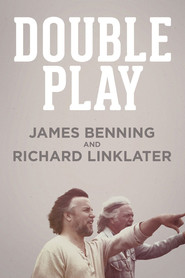
star 6.4In 1985, former oil rig worker Richard Linklater began a film screening society in Austin, Texas, that aimed to show classic art-house and experimental films to a budding community of cinephiles. Eventually incorporating as a nonprofit, the newly branded Austin Film Society raised enough money to fly in their first out-of-town filmmaker: James Benning. Accepting the invitation, Benning met Linklater and the two began to develop a personal and intellectual bond, leading to many future encounters. Starting in the 1960s, Benning had been creating low budget films mostly on his own, while Linklater had just begun to craft his first shorts. The filmmakers have remained close even as their careers have diverged. After the cult success of Slacker, Linklater went on to make films with Hollywood support. Benning, meanwhile, has stayed close to his roots and is mainly an unknown figure in mainstream film culture.The Patriot Game
1979
The Patriot Game
1979
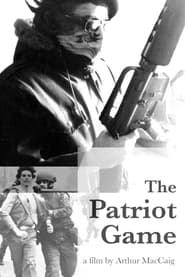
star 6.7Recounts Ireland's history from British colonization to the territory's division in 1922, then from 1968 details a decade of events through images and eyewitness accounts of killings and such massacres as the infamous "Bloody Sunday" as the IRA argues their cause.A Little Monastery in Tuscany
1988
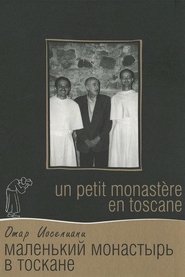
star 4.8It is a brief documentary which records the life of five Augustinian monks in the little monastery of Castelnuovo dell'Abate, a Tuscan village, as well as the everyday life of people in the small town, from farmers to meat-hackers, from wine-makers to wild boar hunters.The Special Need
2014
The Special Need
2014
star 628 year old Enea is looking for love - physical love that is. But as the autist he is, living in Italy, this is anything but easy. So he and his best friends Carlo and Alex set out on a journey through Europe and eventually find a lot more than they are looking for.Juan, I Forgot I Don't Remember
1999
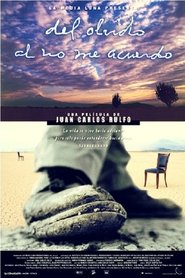
star 5.7Juan Carlos Rulfo, the son of the acclaimed Mexican writer and photographer Juan Rulfo, travels to the plains of Jalisco in search of information on his father. What starts as a tribute to a great artist, however, becomes a meditation on aging and how it's affecting the history of a generation of great Mexican literature.One Direction: All the Way to the Top
2013
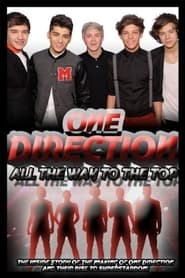
star 6.8One Direction: All The Way To The Top tells the story of the British Irish boy band formed on British talent TV show, the X Factor. Their debut album Up All Night topped charts worldwide and the band became the first British group to debut at number one on the US charts. From being five individual X Factor hopefuls, we see the band become our generation's answer to the Beatles. Including interviews with the band, music industry experts and fans from around the world, we take an intimate look inside the wold of One Direction and discover how they have become one of the biggest breakthrough band of our time.The Boxing Kangaroo
1896
The Boxing Kangaroo
1896
star 4.5The Boxing Kangaroo is an 1896 British short black-and-white silent documentary film, produced and directed by Birt Acres for exhibition on Robert W. Paul’s peep show Kinetoscopes, featuring a young boy boxing with a kangaroo. The film was considered lost until footage from an 1896 Fairground Programme, originally shown in a portable booth at Hull Fair by Midlands photographer George Williams, donated to the National Fairground Archive was identified as being from this film.Dad Made Dirty Movies
2011
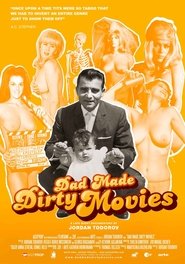
star 6.6Chronicles Stephen C. Apostolof's rise from Eastern-European fugitive to producer and director of sexploitation films in the 60's and 70's, his turbulent relationship with infamous Ed Wood and his downfall in the late 70's with advent of hardcore pornography.The Pig Farm
2011
The Pig Farm
2011
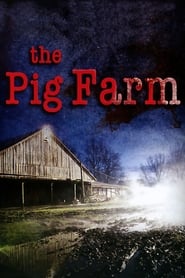
star 5.8The life and murders of one of the worst serial killers in history, Robert Pickton who went unchallenged for decades.Faith Connections
2013
Faith Connections
2013
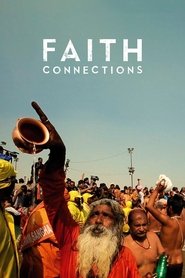
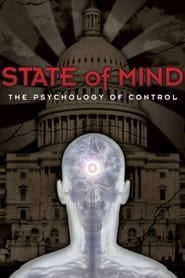
star 4.5A filmmaker's insight into the biggest gathering on earth -the Kumbh Mela.State of Mind: The Psychology of Control
2013
star 7.3Are we controlled? This film reveals that much of what we believe to be truth has been deception, implanted in our consciousness by societal forces.The Light Penetrates the Dark
1931
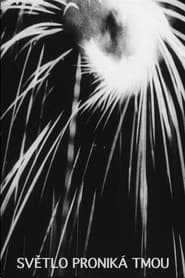
star 5.3Zdenek Pešánek created the first public kinetic sculpture, for the power station in Prague. This short experimental film focuses on a kinetic sculpture by Zdenek Pešánek. For a period of eight years it issued beams of light from the outside wall of a transformer station at Prague’s power utility before its destruction in 1939. Though genuine, these shots seem abstract to us. They are a rhythmically assembled ode to the light-creating devices and phenomena of electricity. Light arcs, coils, bulbs and various luminous elements support the alternation of positive and negative film images, creating an impressive universe of light and shade. In the 1920s, Pešánek had obtained financial support for his work with electric kinetic light art. In the 1930s, he was the first sculptor to use neon lights. He built several kinetic light pianos, and published a book titled “Kinetismus” in 1941. —http://www.centerforvisualmusic.orgFortini/Cani
1977
Fortini/Cani
1977
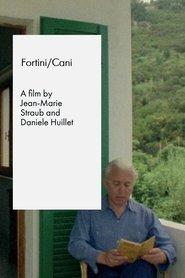
star 5.3The film is a sort of presentation of Franco Fortini's book 'I Cani del Sinai'. Fortini, an Italian Jew, reads excerpts from the book about his alienation from Judaism and from the social relations around him, the rise of Fascism in Italy, the anti-Arab attitude of European culture. The images, mostly a series of Italian landscape shots, provide a backdrop that highlights the meaning of the text. - Fabrizio SabidussiHigh-Rise
2009
High-Rise
2009
star 6.7Penthouse residents of Rio de Janeiro, São Paulo and Recife open up their homes to reveal their thoughts on social inequality, politics, and the world that surrounds them. As well as discussing more intimate subjects such as their desires, fears, insecurities, prejudices and personal histories. This is a film about height, status and power.How to Sell a Banksy
2012
How to Sell a Banksy
2012
star 4.8Banksy’s work now reportedly changes hands for millions. But he puts up his street art for free. Have you ever wondered what would happen if you got your hands on one of these? Does it mean you’ve found a winning lottery ticket or just scraped some worthless crap off a wall? Going up against the Art Establishment, Critics, Auction Houses, Gallery Owners and Authentication Boards in a quest for the elusive meal ticket, two filmmakers unwittingly gatecrash the murky and protective world of Banksy. “HOW TO SELL A BANKSY” raises questions of ownership, authentication and the true value of art itself. Through all the chaos and incompetence comes a modern-day, true-story, crime-theft, comedy-caper.Fire in the Night
2013
Fire in the Night
2013
star 6.5A re-examination of the events that led to the Piper Alpha oil-drilling platform—at the time the largest and oldest in the North Sea oilfield—exploding on the night of 6 July 1988, killing 167 men. The documentary includes testimonies from rescuers and some of the 61 survivors, many of whom were forced to jump hundreds of feet into a flaming, oil-covered sea, and discovers what the physical and psychological legacy of the disaster has meant for those involved.Commandment Keeper Church, Beaufort South Carolina, May 1940
1940
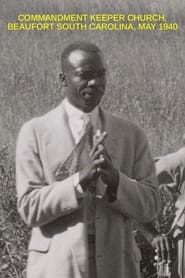
star 6.4Field recordings of religious services in a South Carolina Gullah community. Commandment Keeper Church, Beaufort South Carolina, May 1940 is a 1940 short documentary film which shows religious services taking place in a South Carolina Gullah community. In 2005, Commandment Keeper Church was selected for preservation in the United States National Film Registry by the Library of Congress as being "culturally, historically, or aesthetically significant".Aim High In Creation!
2013
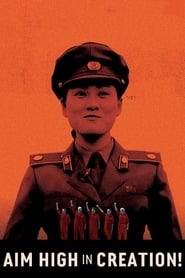
star 5.9A revolutionary film about the cinematic genius of North Korea's late Dear Leader Kim Jung-IL, with a groundbreaking experiment at its heart - a propaganda film, made according to the rules of his 1987 manifesto. Through the shared love of cinema, AIM HIGH IN CREATION! forges an astonishing new bond between the hidden filmmakers of North Korea and their Free World collaborators. Revealing an unexpected truth about the most isolated nation on earth: filmmakers, no matter where they live, are family.Sophia de Mello Breyner Andresen
1972
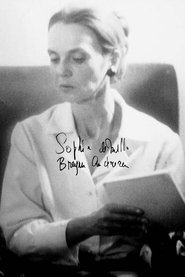
star 6“I think my film represents above all the proof to those who want to understand and accept it, that poetry can’t be filmed, that it is useless to try” - João César MonteiroAmerica as Seen by a Frenchman
1960
star 6.4At the end of the 1950s, French documentarian François Reichenbach spent eighteen months traveling the United States, documenting its diverse regions, their inhabitants, and their pastimes. The result is a journey through a multitude of different Americas, filtered through a French sensibility.