Top Rated Documentary Movies - Page 471
All Services
Free Services
 Netflix
 Amazon Prime Video
 Apple iTunes
 Apple TV Plus
 Disney Plus
 Google Play Movies
 Paramount Plus
 Hulu
Hulu
 HBO Max
 YouTube
 fuboTV
 Peacock
 Peacock Premium
 Amazon Video
 The Roku Channel
 AMC+
AMC on Demand
AMC+
AMC on Demand
 Kocowa
 Hoopla
 The CW
 Vudu
Vudu
 Starz
Starz
 Showtime
 PBS
PBS
 Pantaflix
 FXNow
FXNow
 Tubi TV
 Kanopy
 Comedy Central
 Crunchyroll
 Microsoft Store
 Redbox
 Sun Nxt
 ABC
ABC
 DIRECTV
 Crackle
 Fandor
 Plex
Plex
Netflix
Amazon Prime Video
Apple iTunes
Apple TV Plus
Disney Plus
Google Play Movies
Paramount Plus
Hulu
HBO Max
YouTube
fuboTV
Peacock
Peacock Premium
Amazon Video
The Roku Channel
AMC+
AMC on Demand
Kocowa
Hoopla
The CW
Vudu
Starz
Showtime
PBS
Pantaflix
FXNow
Tubi TV
Kanopy
Comedy Central
Crunchyroll
Microsoft Store
Redbox
Sun Nxt
ABC
DIRECTV
Crackle
Fandor
Plex

Grazing the Sky
2013
Grazing the Sky
2013
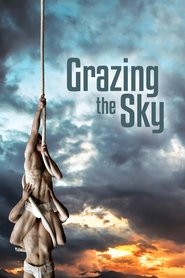
star 6.2Grazing the Sky is a compelling look at the lives of trapeze artists and other circus performers. The film was shot for over two years covering 11 countries, including the Americas, Europe and the Near East. It follows the nomadic lives of circus performers. The audience follows 10 protagonists as they try to reach perfection and meet their lofty goals. The documentary sheds light on the contemporary circus world, and focuses on performers who devote themselves to the greatest show on earth.The March
2013
The March
2013
star 4.9The March is the feature documentary narrated by Denzel Washington about the renowned and historic 1963 March on Washington for Jobs and Freedom.The Yellow Cruise
1934
The Yellow Cruise
1934
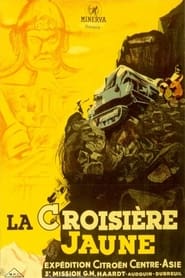
star 6.4The Yellow Cruise is a French documentary film initially directed by André Sauvage and taken over by Léon Poirier following the intervention of André Citroën. The film was presented in Paris in 1934. André Sauvage was hired by the Pathé-Natan company to follow the yellow cruise through Asia. In 1931 and 1932, forty-two men, including Pierre Teilhard de Chardin, scholars and doctors traveled thirty thousand kilometers on the Silk Road through the Middle and Far East, in caterpillar propellants. Together, despite the bad weather, the difficulties of the terrain, the mechanical failures and the political conflicts, they reached Beijing on February 12, 1932. André Citroën who asked to see the film, dissatisfied with the result, bought it from Bernard Natan and entrusted the editing by Léon Poirier, who had filmed La Croisière Noire in Africa in 1926. This film will mark the break in the film career of André Sauvage.Seeds of Destiny
1946
Seeds of Destiny
1946
star 6.5Oscar winning postwar propaganda film in support of the United Nations Relief and Rehabilitation Administration. Strident but poignant, focusing on children. The film surveys the Nazi/Japanese atrocities, post-war devastation and the early relief efforts. This film was responsible for raising over $200,000,000, making it a top moneymaking film. Preserved by the Academy Film Archive in 2005.Among Men: Gay in East Germany
2012
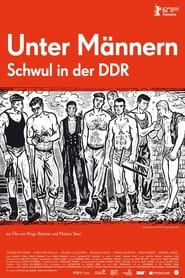
star 4.8More than two decades ago, a country in Europe existed that marked the border to a different political and economic system, yet was the very heart of the continent. This country called the German Democratic Republic, made Socialism a reality and was home to 17 million people. Born in the deep eastern provinces, Ringo Rösener witnessed East Germany's collapse as a nation. Ringing in the new millennium, he leaves his hometown of Anklam to live out his homosexuality – something he had never dared to do. Would an openly gay life even have been possible in the real Socialist system? Ringo Rösener meets six gay men who lived in the GDR. Some of them speak openly about their sexuality for the first time in their lives. Little by little, they open up, share their stories, and talk about their lives in the supposedly uniform state.Sam Peckinpah's West: Legacy of a Hollywood Renegade
2004
star 7.8An account of the life and work of American film director Sam Peckinpah (1925-84), a tortured artist whose genius and inner demons changed the Western genre forever.Jack Smith and the Destruction of Atlantis
2007
star 6.6In this entrancing documentary on performance artist, photographer and underground filmmaker Jack Smith, photographs and rare clips of Smith's performances and films punctuate interviews with artists, critics, friends and foes to create an engaging portrait of the artist. Widely known for his banned queer erotica film Flaming Creatures, Smith was an innovator and firebrand who influenced artists such as Andy Warhol and John Waters.Inside Fighting China
1942
star 5This wartime newsreel from 1942 documents the efforts of China to deal with Japanese aggression.Storm
1943
Storm
1943
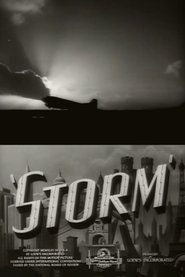
star 6.1A look at how the weather bureau tries to warn farmers and businessmen about approaching large storms. Although some precautions can be taken to lessen their impact, storms have to run their course, and there is really not much we can do about them.Wrestling
1961
Wrestling
1961
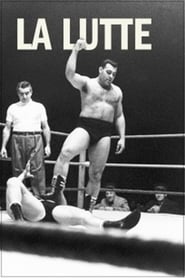
star 6.4A candid-camera view of professional wrestling as seen in the Montréal Forum, where some of the biggest bouts are staged, and in back-street wrestling parlours where the warriors practice their art.Torpedo Squadron
1942
Torpedo Squadron
1942
star 5.5John Ford splices together footage of Torpedo Squadron 8, all but one of whom were later shot down and killed in the Battle of Midway. Preserved by the Academy Film Archive in partnership with Twentieth Century Fox Film Corporation in 2007.Getting Gilliam
2005
Getting Gilliam
2005
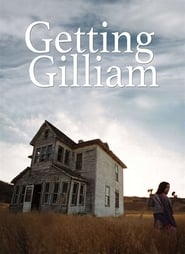
star 6.8This documentary follows director Terry Gilliam through the process of making his film Tideland.Girls Winding Armatures
1904
star 3.6Numerous women sit in rows at machines where they appear to be winding some type of wire and tooling it onto machines. Two young men push spools of this wire down the aisle. Supervisors, male and female, walk down the aisle and observe the women's work, stopping for a while at one woman's station.Constantinople, panorama des rives du Bosphore
1897
star 4.6Panorama of Constantinople from the river.Jango
1984
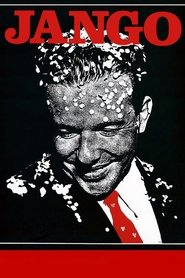
Jango
1984
star 6.9The story of João "Jango" Goulart, the Brazilian left-wing president deposed by the military.Supervention
2013
By the Lake
1994
By the Lake
1994
star 5.8Bokanowski returns to the complex - and mind-bending - optical array of pinholes, mirrors, prisms, and refractive substrates of his earlier film, La Plage to create the whimsical and playful Au bord du lac. The film is composed of mundane, everyday scenes of recreation and leisure on an idyllic, sunny day at a park that overlooks a lake - rowing a boat, playing a game of volleyball, rollerskating, bicycling, reading a newspaper, sunbathing, riding on horseback, or strolling on the promenade - shot through optical distortions to create fractured and knotted images that resemble embellished, gothic fairytale illustrations or appear to resolve into morphing, geometric patterns of fluid motion. Evoking the vibrant colors and sun-soaked palette of an invigorated Vincent van Gogh in Arles, Bokanowski transforms the quotidian into an infinitely mesmerizing dynamic kaleidoscope of shape-shifting textures and self-reconstituting objects of organic, abstract art.Happy Birthday to John
1997
star 4.8On October 9, 1972, the Everson Museum of Art in Syracuse hosted an exhibition of John Lennon and Yoko Ono’s work, designed by Fluxus artist George Maciunas. That same day, friends including Ringo Starr, Allen Ginsberg, and Paul Krassner gathered to celebrate Lennon’s birthday. Jonas Mekas’s film records the event in both image and sound, capturing the spirit of the moment and the community around Lennon and Ono.Free Spirits
2013
Free Spirits
2013
star 6.9Free Spirits tells the colorful story of the Spirits of St. Louis – an entertaining and at times controversial team featuring stars like Marvin "Bad News" Barnes and James "Fly" Williams with an upstart sportscaster named Bob Costas calling the play-by-play.