Top Rated Documentary Movies on Kanopy - Page 104
All Services
Free Services
 Netflix
 Amazon Prime Video
 Apple iTunes
 Apple TV Plus
 Disney Plus
 Google Play Movies
 Paramount Plus
 Hulu
Hulu
 HBO Max
 YouTube
 fuboTV
 Peacock
 Peacock Premium
 Amazon Video
 The Roku Channel
 AMC+
AMC on Demand
AMC+
AMC on Demand
 Kocowa
 Hoopla
 The CW
 Vudu
Vudu
 Starz
Starz
 Showtime
 PBS
PBS
 Pantaflix
 FXNow
FXNow
 Tubi TV
 Kanopy
 Comedy Central
 Crunchyroll
 Microsoft Store
 Redbox
 Sun Nxt
 ABC
ABC
 DIRECTV
 Crackle
 Fandor
 Plex
Plex
Netflix
Amazon Prime Video
Apple iTunes
Apple TV Plus
Disney Plus
Google Play Movies
Paramount Plus
Hulu
HBO Max
YouTube
fuboTV
Peacock
Peacock Premium
Amazon Video
The Roku Channel
AMC+
AMC on Demand
Kocowa
Hoopla
The CW
Vudu
Starz
Showtime
PBS
Pantaflix
FXNow
Tubi TV
Kanopy
Comedy Central
Crunchyroll
Microsoft Store
Redbox
Sun Nxt
ABC
DIRECTV
Crackle
Fandor
Plex

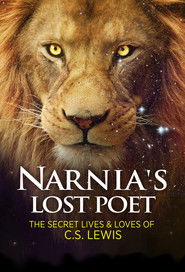
Narnia's Lost Poet: The Secret Lives and Loves of C.S. Lewis
2013
star 6.9C.S. Lewis's biographer A.N. Wilson goes in search of the man behind Narnia, a highly secretive man whose personal life was marked by the loss of the three women he most loved.Almost There
2015
Almost There
2015
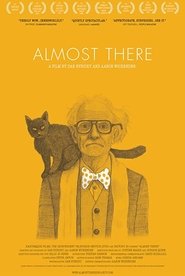
star 6.8A coming-of-(old)-age story about Peter Anton, an elderly "outsider" artist living in isolated and crippling conditions whose world changes when two filmmakers discover his work and storied past. Shot over eight years, ALMOST THERE documents Anton's first major exhibition and how the controversy it generates forces him to leave his childhood home. Each layer revealed reflects on the intersections of social norms, elder care, and artistic expression.Kingdom of Shadows
2015
Kingdom of Shadows
2015
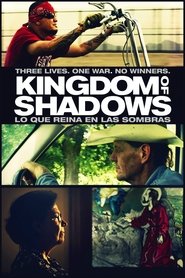
star 6KINGDOM OF SHADOWS follows three people grappling with the hard choices and destructive consequences of the U.S.-Mexico “drug war”. Filmmaker Bernardo Ruiz weaves together the seemingly disconnected stories of an activist nun in deeply scarred Monterrey, Mexico, a U.S. Federal agent on the border, and a former Texas smuggler to reveal the human side of an often-misunderstood conflict that has resulted in the “disappearance” of more than 23,000 people in Mexico—a growing human rights crisis that only recently has made international headlines.A Space Program
2015
A Space Program
2015
star 6.2The artist Tom Sachs and his team of bricoleurs build a handmade space program and send two female astronauts to MarsFamous Nathan
2015
Famous Nathan
2015
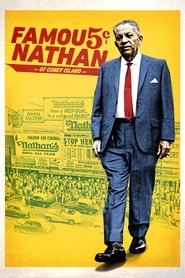
star 5.8A Coney Island-inspired, densely-layered visually dynamic documentary portrait of the life and times of the original Nathan's Famous, created in 1916 by filmmaker Lloyd Handwerker's grandparents, Nathan and Ida Handwerker. 30 years in the making, Famous Nathan interweaves decades-spanning archival footage, family photos and home movies, an eclectic soundtrack and never-before-heard audio from Nathan: his only interview, ever as well as compelling, intimate and hilarious interviews with the dedicated band of workers, not at all shy at offering opinions, memories and the occasional tall tale.In Football We Trust
2015
In Football We Trust
2015
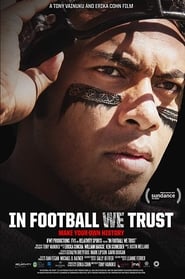
star 5.8‘In Football We Trust’ captures a snapshot in time amid the rise of the Pacific Islander presence in the NFL. Presenting a new take on the American immigrant story, this feature length documentary transports viewers deep inside the tightly-knit Polynesian community in Salt Lake City, Utah. With unprecedented access and shot over a four-year time period, the film intimately portrays four young Polynesian men striving to overcome gang violence and near poverty through American football. Viewed as the "salvation" for their families, these young players reveal the culture clash they experience as they transform out of their adolescence and into the high stakes world of collegiate recruiting and rigors of societal expectations.Edison
2015
Edison
2015
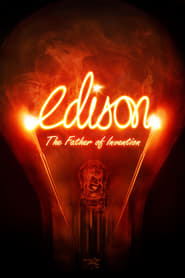
star 7.2By the time he died in 1931, Thomas Alva Edison was one of the most famous men in the world. The holder of more patents than any other inventor in history, Edison had achieved glory as the genius behind such revolutionary inventions as sound recording, motion pictures, and electric light. Born on the threshold of America's burgeoning industrial empire, Edison's curiosity led him to its cutting edge. With just three months of formal schooling, he took on one seemingly impossible technical challenge after another, and through intuition, persistence, and a unique team approach to innovation, invariably solved it. Driven and intensely competitive, Edison was often neglectful in his private life and could be ruthless in business. Challenged by competition in the industry he'd founded, Edison launched an ugly propaganda campaign against his rivals, and used his credibility as an electrical expert to help ensure that high-voltage electrocution became a form of capital punishment.I Am the People
2016
I Am the People
2016
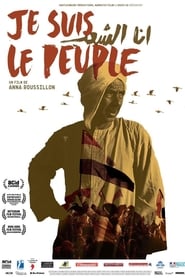
star 6.4January 2011 in Egypt was marked by anti-government demonstrations. While tens of thousands of protesters gathered in Cairo, poor villagers in the country's south followed the tense situation on Tahrir Square on their TV screens and in the daily newspapers. It is from their perspective that this documentary captures the political changes in Egypt, from the toppling of President Mubarak to the election of Mohamed Morsi.Lightning Over Braddock: A Rustbowl Fantasy
1988
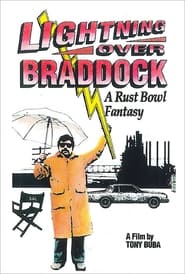
star 6.8Tony Buba, a film maker from Braddock, Pennsylvania, tells the story of his hometown's decline (along with the rest of the steel mill towns along the Monongahela River) while he dreams of making higher budget films. The picture documents, in a lighthearted way, the community anxiety and activism that accompanied the failure of the steel industry around Pittsburgh, Pennsylvania.Divorce: A Journey Through the Kid's Eyes
2014
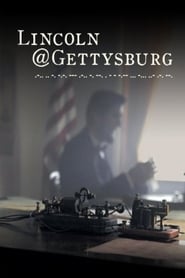
star 5.4A powerful examination of the effects of divorce told by kids for kids that the whole family will benefit from. Witness testimonies as kids face the trauma, work through the pain, and learn to heal.Lincoln@Gettysburg
2013
Lincoln@Gettysburg
2013
star 7.4An examination of how President Abraham Lincoln used contemporary telecommunications to his maximum advantage in the American Civil War.Leona's Sister Gerri
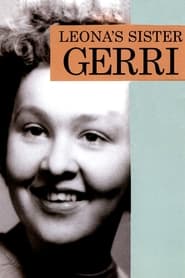
1995
Leona's Sister Gerri
1995
star 6.4Millions have seen the photograph, and no one who has seen it will ever forget it. A naked woman, dead from a botched illegal abortion, lying on a motel room floor. The picture appeared in Ms. Magazine in April 1973, and quickly became a symbol for the abortion rights movement. LEONA'S SISTER GERRI tells the dramatic story of Gerri Santoro, a mother of two and the "real person" in the now famous photo. Should the media have used this image? What circumstances led to Gerri's tragic death? Powerfully addressing issues of reproductive rights and domestic violence, this video is a moving portrait of Gerri Santoro's life and society's response to her death.Asylum
1972
Asylum
1972
star 5.8A documentary crew lives with the schizophrenic residents of a group home based upon radical psychiatrist R. D. Laing's controversial approach to healing through compassion and freedom.Escape to Life: The Erika and Klaus Mann Story
2001
star 4.2This documentary contains dramatized episodes about the lives of Erika and Klaus Mann, the brilliant children of German writer Thomas Mann.I Remember Me
2000
I Remember Me
2000
star 5.6In 1984-85, people at Lake Tahoe fell ill with flu symptoms, but they didn't get better. Medical literature documents similar outbreaks: in 1934 at LA county hospital, in 1948-49 in Iceland, in 1956 in Punta Gorda, Florida. The malady now has a name, chronic fatigue syndrome, and filmmaker Kim Snyder, who suffered from the disease for several years, tells her story and talks to victims and their families, and to physicians and researchers: is it viral, it is psychosomatic, is it one disease or several (a syndrome) ; what's the CDC doing about it; what's it like to have a disease that's not yet understood? Her inquiry takes her to Punta Gorda and to a high-school graduation.Man without Pigs
1990
Man without Pigs
1990
star 6.4John Waiko is the first Papua New Guinea man to graduate with a PhD and be appointed a professor. He returns to the Binandere clan and his small village of Tabara in the Northern Province of PNG. Once there, he has to organise a celebration for his achievements with his family’s help. Since he has been away for most of his life, he has no recognised wealth in the village (the pigs used for gift giving), nor a network of supporters or knowledge of the preparation and rituals for having such a celebration. He wants the event to happen quickly but that’s not the way it works in Tabara. Man without pigs focuses on the antagonism aroused by the clash between traditional customs and Western values in this remote PNG community.Drops of Joy
2014
Drops of Joy
2014
star 8.3Pointing out the importance of maintaining a playful spirit, which we all have when we are kids and society forces us to abandon in our adult lives, Drops of Joy is a documentary that speaks widely about the idea that playing is something very serious and urgent.Kristina Talking Pictures
1976
star 3.4Kristina, a self-named Hungarian female lion tamer, arrives in New York to become a dance choreographer. Kristina, now a middle-class NYC artist concerned about the environment, has a sailor lover named Raoul. The film, a collage work, an essay film, a fictional narrative and a documentary all rolled into one, is one of the most important independent American feminists films made during the 1970's.Gulpilil: One Red Blood
2002
star 6.6An hour-long documentary on the life and career of actor David Gulpilil.