Top Rated Documentary Movies on Kanopy - Page 106
All Services
Free Services
 Netflix
 Amazon Prime Video
 Apple iTunes
 Apple TV Plus
 Disney Plus
 Google Play Movies
 Paramount Plus
 Hulu
Hulu
 HBO Max
 YouTube
 fuboTV
 Peacock
 Peacock Premium
 Amazon Video
 The Roku Channel
 AMC+
AMC on Demand
AMC+
AMC on Demand
 Kocowa
 Hoopla
 The CW
 Vudu
Vudu
 Starz
Starz
 Showtime
 PBS
PBS
 Pantaflix
 FXNow
FXNow
 Tubi TV
 Kanopy
 Comedy Central
 Crunchyroll
 Microsoft Store
 Redbox
 Sun Nxt
 ABC
ABC
 DIRECTV
 Crackle
 Fandor
 Plex
Plex
Netflix
Amazon Prime Video
Apple iTunes
Apple TV Plus
Disney Plus
Google Play Movies
Paramount Plus
Hulu
HBO Max
YouTube
fuboTV
Peacock
Peacock Premium
Amazon Video
The Roku Channel
AMC+
AMC on Demand
Kocowa
Hoopla
The CW
Vudu
Starz
Showtime
PBS
Pantaflix
FXNow
Tubi TV
Kanopy
Comedy Central
Crunchyroll
Microsoft Store
Redbox
Sun Nxt
ABC
DIRECTV
Crackle
Fandor
Plex

Cinema of Vengeance
1994
Cinema of Vengeance
1994
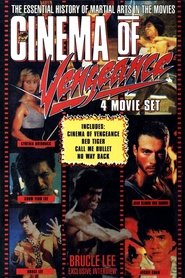
star 5.4A documentary study of martial arts films and their leading protagonists. Included are profiles of such artists as Bruce Lee, Cynthia Rothrock, Jackie Chan, Jean-Claude Van Damme and John Woo favorite Chow Yun-Fat.Con Artist
2010
Con Artist
2010
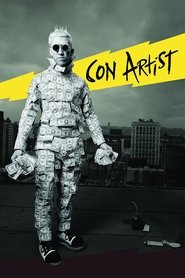
star 6.7A docu-comedy feature film about a once-famous millionaire "business artist" forced to confront his own legendarily obnoxious behavior, while trying to find love through fame.South Seas Adventure
1958
South Seas Adventure
1958
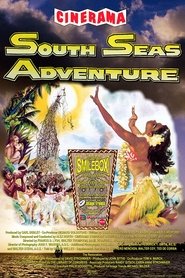
star 5.7Cinerama takes you on a South Seas Adventure to tropical islands set like sparkling jewels in dreamy cerulean waters. Thrill to the lure of sunbrowned, luscious maidens and a paradise of coconut palms, coral strand and blue lagoons. Enchanted South Pacific archipelagos beckon with all the beauty and color of a painter’s palette. Stepping stones in the vast expanse of far-away seas, they promise romance, adventure, excitement—an irresistible blend of fascinating people and exotic places.Changing Our Minds: The Story of Dr. Evelyn Hooker
1992
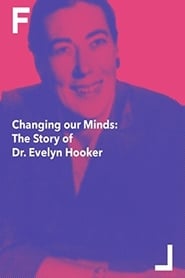
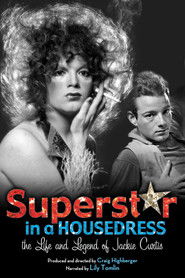
star 3.6The life and work of the woman described as "The Rosa Parks of Gay Rights". During the repressive 1950's, Dr. Evelyn Hooker undertook ground breaking research that led to a radical discovery: homosexuals were not, by definition, "sick." Dr. Hooker's finding sent shock waves through the psychiatric community and culminated in a major victory for gay rights: in 1974 the weight of her studies, along with gay activism, forced the American Psychiatric Association to remove homosexuality from its official manual of mental disorders. Startling archival footage of the medical procedure used to "cure" homosexuality, images from the underground gay world of the McCarthy era, and home movies of literary icon Christopher Isherwood bring to life history which we must never forget.Superstar in a Housedress: The Life and Legend of Jackie Curtis
2004
star 2.6Andy Warhol described Jackie Curtis as “A pioneer without a frontier.” In this biographical documentary, Curtis’s co-workers and friends speak of her work and her influence, along with clips from Curtis’s Warhol films as well as never-before-seen footage from her stage shows.Shakespeare Behind Bars
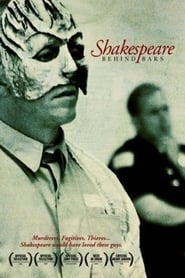
2005
star 4.8Twenty male inmates in a Kentucky prison form an unlikely Shakespearean acting troupe.Kings Point
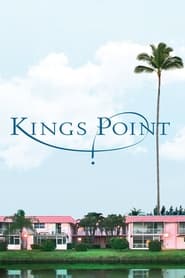
2012
Kings Point
2012
star 6In the 1970s and 80s, hundreds of thousands of senior citizens migrated from New York City to Kings Point, a typical retirement community, located just outside West Palm Beach, Florida. Lured by blue skies, sunshine, palm trees, and the promise of a rich social life, they bought their way to paradise for just a $1,500 down payment. Now, as an aging community faces its own mortality, paradise has begun to exact a higher price. Through the experiences of six longtime residents, 'Kings Point' captures both the allure and the darker complexities of living in a world where 'nobody gets too close.' Poignant, funny and dark, 'Kings Point' is a deeply empathetic portrait of the last act of the American Dream.First Contact
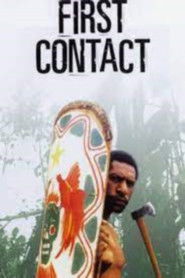
1982
First Contact
1982
star 6.8First Contact is a 1983 documentary by Bob Connolly and Robin Anderson which recounts the discovery of a flourishing native population in the interior highlands of New Guinea in 1930 in what had been thought to be an uninhabited area. It is based on the book of the same name by the same authors. Inhabitants of the region and surviving members of the Leahy brothers' gold prospecting party recount their astonishment at this unforeseen meeting. The film includes still photographs taken by a member of the expedition and contemporary footage of the island's terrain. It was nominated for an Academy Award for Best Documentary Feature.Radio Unnameable
2012
Radio Unnameable
2012
star 7.6The story of legendary New York City disc jockey Bob Fass who pioneered free expression on the airwaves with his long running FM program 'Radio Unnameable'.Thomas Sankara: The Upright Man
2006
star 8.4Thomas Sankara, former president of Burkina Faso, was known as "the African Che", and became famous in Africa due to his innovative ideas, his devastating humor, his spirit and his altruism. More than a classic biography, this film sheds light on the impact that this man and his politic made on Burkina Faso and Africa in general.The World Without US
2008
The World Without US
2008
star 5.3What would happen should the United States leave the international scene, and become again a "normal nation", a republic, and not an empire? To find an answer to this question, director and producer Mitch Anderson embarked on an investigative trip on four continents. "The World Without US" is an in-depth investigation of how US foreign policy affects the lives of millions of people around the world.Licensed to Kill
1997
Licensed to Kill
1997
star 3.4A riveting journey into the minds of men whose contempt for homosexuals led them to murder. Attacked in 1977 by gay bashers on the streets of San Francisco, filmmaker Arthur Dong confronts murderers of gay men face-to-face in his film. He asks them directly: “Why did you do it?”The Line King: The Al Hirschfeld Story
1996
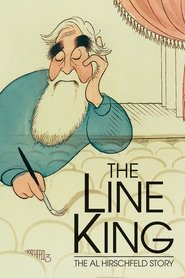
star 7The childhood, adolescence, and incredible adult years of Al Hirschfeld, celebrated creator of thousands of line drawings of famous people - many in the entertainment industry - over a span of more than sixty years. He is still drawing in his nineties. His interesting domestic life, political, and cultural views are highlights. In addition, he talks about himself a bit - seriously and lightly.(At one point he he claims that his only form of exercise has been to live in his Manhattan townhouse: stairs). He drives his car around Manhattan - an adventure in itself. Brief interviews with, and reminiscences of many friends and associates.Small Wonders
1996
Small Wonders
1996
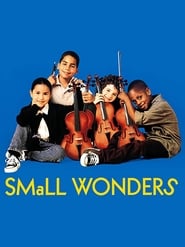
star 7.4A dedicated music teacher in East Harlem instructs a gaggle of underprivileged children in the art of the violin. In the climax, they play Carnegie Hall with some of the world's foremost fiddlers.State Legislature
2007
State Legislature
2007
star 7.6STATE LEGISLATURE shows the day-to-day activities of the Idaho Legislature during an entire session. Lobbyists, lawmakers and their constituents are seen debating and discussing the concerns of the electorate, on issues that range from violence in schools, mad cow disease and video voyeurism to illegal immigration, secondhand smoke and the deregulation of telephone rates. The film is an example of the achievements, values, constraints and limitations of the democratic process.Essene
1972
Essene
1972
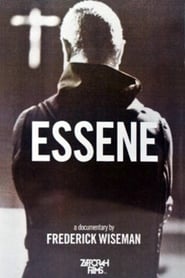
star 7Essene is about daily life in a Benedictine monastery and the resolution of conflict between personal needs and the institutional and organizational priorities of the community. In the Order, where the focus of life is the relationship of individual work and worship to the community as a whole, the brethren must cope with the same issues that arise in any community: rules, work, worship, values, love, and play.Portrait of Wally
2012
Portrait of Wally
2012
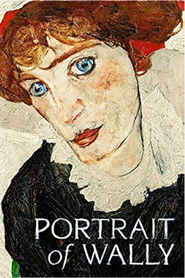
star 6“Portrait of Wally”, Egon Schiele’s tender picture of his mistress, Walburga (“Wally”) Neuzil, is the pride of the Leopold Museum in Vienna. But for 13 years the painting was locked up in New York, caught in a legal battle between the Austrian museum and the Jewish family from whom the Nazis seized the painting in 1939.Meanwhile in Mamelodi
2011
star 5.1Set against the raucous backdrop of the 2010 World Cup, MEANWHILE IN MAMELODI is a beautifully crafted portrait of a place and one family’s daily life inside it. The Mtsweni family lives in the Pretoria Township of the title, in the district known as Extension 11. Their world is a ramshackle collection of corrugated tin dwellings and makeshift shops, open sewers littered with debris and red-earth rectangles filled with soccer-playing children and teens. Seventeen-year-old Mosquito is one of those kids. As she studies for math tests, flirts with boys and shops with her best friend, her father Steven prepares his "tuck shop" for the promise of cash-flush tourists. Meanwhile, his wife struggles with mental illness. The Mtswenis' lives unfold as the Cup brings new hope to the ravaged town. Despite the poverty around her, Mosquito insists this is not her parents' country. She is the face of South Africa's future - part of "a new generation free to do all things."Live Nude Girls Unite!
2000
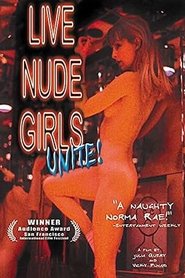
star 3.8Documentary look at the 1996-97 effort of the dancers and support staff at a San Francisco peep show, The Lusty Lady, to unionize. Angered by arbitrary and race-based wage policies, customers' surreptitious video cameras, and no paid sick days or holidays, the dancers get help from the Service Employees International local and enter protracted bargaining with the union-busting law firm that management hires. We see the women work, sort out their demands, and go through the difficulties of bargaining. The narrator is Julia Query, a dancer and stand-up comedian who is reluctant to tell her mother, a physician who works with prostitutes, that she strips.Food Fight
2008
Food Fight
2008
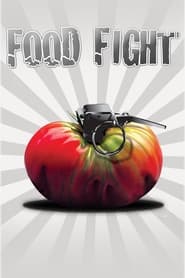
star 8A fascinating look at how American agricultural policy and food culture developed in the 20th century, and how the California food movement rebelled against big agribusiness to launch the local organic food movement.