Top Rated Documentary Movies on Kanopy - Page 235
All Services
Free Services
 Netflix
 Amazon Prime Video
 Apple iTunes
 Apple TV Plus
 Disney Plus
 Google Play Movies
 Paramount Plus
 Hulu
Hulu
 HBO Max
 YouTube
 fuboTV
 Peacock
 Peacock Premium
 Amazon Video
 The Roku Channel
 AMC+
AMC on Demand
AMC+
AMC on Demand
 Kocowa
 Hoopla
 The CW
 Vudu
Vudu
 Starz
Starz
 Showtime
 PBS
PBS
 Pantaflix
 FXNow
FXNow
 Tubi TV
 Kanopy
 Comedy Central
 Crunchyroll
 Microsoft Store
 Redbox
 Sun Nxt
 ABC
ABC
 DIRECTV
 Crackle
 Fandor
 Plex
Plex
Netflix
Amazon Prime Video
Apple iTunes
Apple TV Plus
Disney Plus
Google Play Movies
Paramount Plus
Hulu
HBO Max
YouTube
fuboTV
Peacock
Peacock Premium
Amazon Video
The Roku Channel
AMC+
AMC on Demand
Kocowa
Hoopla
The CW
Vudu
Starz
Showtime
PBS
Pantaflix
FXNow
Tubi TV
Kanopy
Comedy Central
Crunchyroll
Microsoft Store
Redbox
Sun Nxt
ABC
DIRECTV
Crackle
Fandor
Plex

Geoff Dixon: Portraits of Us
2022
Environmental issues and pop-culture collide in vibrant textural colours and forms in this intimate portrait of the life, loves and friendships of Aotearoa New Zealand artist Geoff Dixon.They Turned Our Desert Into Fire
2007
Reporting the devastation, forced displacement, and genocide in Darfur should be a story with daily coverage. Mere mention of the word "Darfur" should set off a passionate exchange, or at least the question, "What can be done?". Unfortunately, the people of Darfur struggle with a problem common to so many victimized by geo-political realities: how to overcome the willful indifference of powerful government and media interests who find their story unimportant or merely inconvenient. With images and first-hand accounts, filmmaker Mark Brecke shares his experience of the Darfur crisis with Amtrak train passengers journeying eastward on a three day trip to Washington D.C. Their reactions, interwoven with hard facts and expert opinion, raise the central question in They Turned Our Desert Into Fire - Why does the public not understand the severity of this crisis and how can the world continue to do nothing?As Prescribed
2022
As Prescribed
2022
Detailing multiple cases of the damage wreaked by benzodiazepines, Holly Hardman’s film offers poignant insight into a devastating social crisis.Marwan: Tomorrow's Freedom
2024
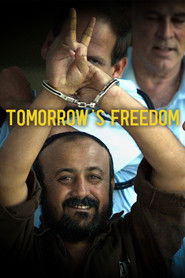
Marwan Barghouti, often described as the ‘Palestinian Nelson Mandela’, is serving five life sentences in an Israeli prison. This is his story.The Melt Goes on Forever: The Art & Times of David Hammons
2022
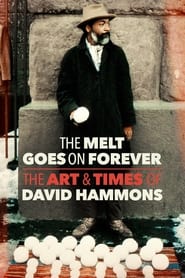
David Hammons’ singular career covers life in LA during a turbulent 1960s through to his prominence within the global art world today. Key to his work has been an analysis of African American society and its representation within US life. Featuring interviews with eminent artists, curators and critics; a wealth of archival footage; an evocative soundscape by Ramachandra Borcar that includes Marshall Allen, Idris Ackamoor and Shabaka Hutchings; and a reading by The Last Poets member and hip-hop forefather Umar Bin Hassan, The Melt Goes on Forever is a revelatory journey through six decades of art and culture.Punitive Damage
1999
Punitive Damage
1999
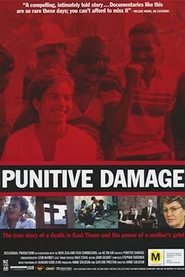
The story of New Zealander Helen Todd's law suit against an Indonesian general that she pursued after her son, Kamal, was shot dead in the Dili massacre in East Timor.Running Out of Time
2006
Running Out of Time
2006
In many ways the heart of indigenous India, mineral-rich Jharkhand is and has been at the core of India's industrial development after independence. There, the indigenous Adivasi people have borne the brunt of what is arguably India's most fundamental developmental conflict, which has pushed them to the verge of extinction as an agricultural people.Who Cares
2012
Who Cares
2012
Documentary following the stories of Courtney and Shelly, two former Edmontonian prostitutes.Nuhoniyeh: Our Story
1993
Nuhoniyeh: Our Story
1993
This powerful film, produced from a Native perspective, has won many awards in recognition of its exploration of the history and current circumstances of the Sayisi Dene, a people of the ecological and cultural borderlands between tundra and forest in Canada. While specific to the Sayisi Dene, the film provides an excellent introduction to complex issues of politics, land rights, cultural ecology and processes of cultural destruction and rebirth that are of widespread concern in the circumpolar Arctic. It is a well-integrated film using historical photographs, archival material and contemporary film records that, together with the strong testimony of the Sayisi Dene people themselves, combine to provide a positive statement of human potential."Palliative
2022
Palliative
2022
A documentary short exploring the conversations during end-of-life care with pediatric Palliative care specialist Dr. Nadia Tremonti. Filmed in Detroit at the Children's Hospital of Michigan over several years 'Palliative' aims to draw attention to a vital area of care struggling to overcome the stigmas of death and dying.Il était une fois... « Le procès de Viviane Amsalem »
2016
The final part of a family trilogy by Ronit and Shlomi Elkabetz. It follows Viviane Amsalem's grueling legal marathon to obtain a divorce.K'Sai Chivit: Threads of Life
1994
K'Sai Chivit: Threads of Life documents the ancient art form of Khmer silk weaving and its place in Cambodian society today. For over a thousand years, Cambodian weavers have been producing a variety of elegant silks, however current societal hardships Cambodians face have dramatically hindered this production. Organizations like UNESCO have began to take part in the revitalization of Khmer weaving, and have established training programs across the region to increase job opportunities and economic independence.Bitter Roots
2010
Bitter Roots
2010
BITTER ROOTS: THE ENDS OF A KALAHARI MYTH is set in Nyae-Nyae, a region of Namibia located in southern Africa's Kalahari desert, traditional home of the Ju/'hoansi. It updates the ethnographic film record begun in the 1950s by John Marshall, whose films documented 50 years of change, and who together with Claire Ritchie, established a grass-roots development foundation, which Adrian Strong (the filmmaker) joined in the late 1980s. Through archival footage and discussions with community members, this film sensitively examines the problems (lions, elephants, conservationists) currently facing the Ju/'hoansi and challenges the myth that they are culturally unable to farm. The film investigates the perpetuation of this myth by showing how tourists and filmmakers still demand to see how people used to live rather than they way they live now, and how the Ju/'hoansi cope with such expectations, while steadfastly continuing to farm against all the odds.This is [Not] Who We Are
2022
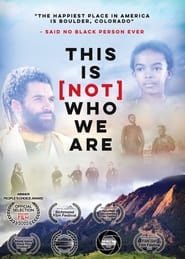
Explores the gap between Boulder, Colorado’s progressive self-image and the lived experiences of its small but resilient Black community by featuring Zayd Atkinson, a university student performing his work study job cleaning up the grounds of his dorm when he was threatened by a police officer and, soon, by eight officers with guns drawn. He lived to tell the story many Black men don't survive to tell. While it has a unique history, Boulder is emblematic of liberal, white, university-based communities that profess an inclusive ethic but live a segregated reality. The film explores the interconnected issues of land use, affordability, racial and class-based segregation, educational equity, and policing.The Chairman and the Lions
2012
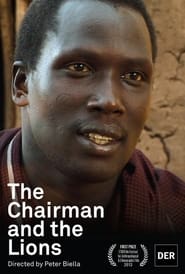
As recently as forty years ago, most sections of the Maasai were semi-nomadic and relatively independent of the nation-state. However, political, social and economic changes in East Africa have forced many herders to adopt a sedentary lifestyle. The Chairman and the Lions introduces Frank Kaipai Ikoyo, a charismatic Ilparakuyo Maasai who, at thirty-three, is the leader of a Tanzanian village called Lesoit. Ikoyo was elected to his post at the age of twenty-six in part because he had completed primary school. That someone so young would be accorded such authority would have been without precedent not long ago. Yet this ethnography of Ikoyo's duties as village chairman shows how literacy and insight into the workings of the nation-state are essential for Maasai to combat the many lions, both real and figurative, that beset them: land grabbers, "bush" lawyers, unemployment, out-migration and poverty.Walking Dancing Belonging
2006
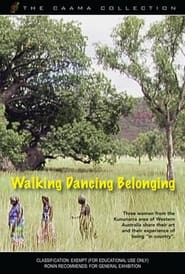
Produced in association with Waringarri Aboriginal Arts at Kununurra in Western Australia, this moving documentary features three women who talk about their paintings as an expression of their relationship to their country. The women share a sense of belonging to their place and express this belonging through dance and song and all of their artistic expressions. On a trip into the bush around Cockatoo Lagoon near Kununurra, they explain the stories of their Dreaming and of their land, and talk of their own experiences growing up as workers on stations in the area. Each artist talks about why they paint - to teach and to share stories about their country with others in the community and wider afield. The film also observes them working on paintings, each giving her personal interpretation of a loved environment and a living culture. The paintings are all very different in style but all express a life-affirming sense of identity intimately linked to their own country.Moresby Modern
2009
Moresby Modern
2009
For many people, the mention of Papua New Guinea will evoke images such as remote highlands cultures and tribal warriors; or perhaps tropical islands and palm fringed beaches, or it may bring to mind darker images of poverty, corruption and raskol violence. But in PNG's capital, Port Moresby, things are starting to look a little different. PNG is slowly joining the globalised world, and if you look closely at this society in transition you can see signs of a modest middle class on the rise, and a new generation coming of age. In Moresby you can find a small band of business people, professionals, managers, and creatives, all working hard to build a better life for themselves and their families. Moresby Modern, is the stories of 7 such people, as they work in the challenging environment of a developing country, learning to balance the traditional expectations of their culture with the demands of modern society.The Islanders
1968
The Islanders
1968
Above the tip of Cape York, beyond the northernmost point of the Australian continent, are the Torres Strait Islands. The economy here is based on home gardens and pearlshell fishing. The culture, with its basis in music, dancing and ceremony, provides a striking contrast to that of mainland Australia. This film, shot in the late 1960s, shows how strongly old traditions still affect Torres Strait Islander people, even though they also have most of the trappings of modern life.Mourning For Mangatopi
1974
Because of work commitments and the influence of Christian Missions, traditional mourning ceremonies among the Tiwi people of Melville Island were becoming rare at the time of making this film (1974). The full, elaborate ceremony, called the Pukumani ceremony, lasted several days and involved large numbers of people in ritual roles. It was performed here with full awareness that this may be one of the last times such a ceremony would be staged in the traditional way. The ceremony was prepared by the Mangatopi family of Snake Bay after the death of a 35-year old family member killed by his wife. The dead man’s father, Geoffrey Mangatopi, and his family requested this film to be made as a public record of a disappearing tradition. Unique to the Tiwi people of Melville and Bathurst islands, the Pukumani ceremony was not only performed to safe-guard the passage of the dead person into the spirit world, but to re-affirm kinship relationships and traditional Tiwi culture.Abraham and Sarah II. Hosting the Gundagundo Pilgrims
2019
The film is part of the Guardians of Productive Landscapes series and a sequel to 'Abraham and Sarah I: Creators of a productive landscape'. A Tigrean farmer and his wife, who host pilgrims to a festival at the Gundagundo monastery, have gained the biblical names Abraham and Sarah. We see Sarah and other women prepare food and drink for the pilgrims, while Abraham and other men erect a shelter. At dawn dozens of pilgrims descend the steep escarpment, eventually arriving at Gundagundo where celebrations are in full swing. We witness highlights of the festival, and the pilgrims' return to the homestead of Abraham and Sarah. Here they receive food, drink and shelter, and sing the praises of their hosts. At midnight visitors arrive with an old, sick monk. Before the guests depart next morning, a monk thanks and blesses Abraham and Sarah.