Top Rated Documentary Movies on Kanopy - Page 237
All Services
Free Services
 Netflix
 Amazon Prime Video
 Apple iTunes
 Apple TV Plus
 Disney Plus
 Google Play Movies
 Paramount Plus
 Hulu
Hulu
 HBO Max
 YouTube
 fuboTV
 Peacock
 Peacock Premium
 Amazon Video
 The Roku Channel
 AMC+
AMC on Demand
AMC+
AMC on Demand
 Kocowa
 Hoopla
 The CW
 Vudu
Vudu
 Starz
Starz
 Showtime
 PBS
PBS
 Pantaflix
 FXNow
FXNow
 Tubi TV
 Kanopy
 Comedy Central
 Crunchyroll
 Microsoft Store
 Redbox
 Sun Nxt
 ABC
ABC
 DIRECTV
 Crackle
 Fandor
 Plex
Plex
Netflix
Amazon Prime Video
Apple iTunes
Apple TV Plus
Disney Plus
Google Play Movies
Paramount Plus
Hulu
HBO Max
YouTube
fuboTV
Peacock
Peacock Premium
Amazon Video
The Roku Channel
AMC+
AMC on Demand
Kocowa
Hoopla
The CW
Vudu
Starz
Showtime
PBS
Pantaflix
FXNow
Tubi TV
Kanopy
Comedy Central
Crunchyroll
Microsoft Store
Redbox
Sun Nxt
ABC
DIRECTV
Crackle
Fandor
Plex

Songs of Pasta'ay
1989
Songs of Pasta'ay
1989
The Pasta’ay, which means "the festival of the legendary little people," is a significant ritual held every other year in the Saisiat aborigine group in Taiwan. Every ten years, they hold the Great Ritual. This film focuses on the Great Ritual in 1986. It tries to convey the Saisiat people’s affection for and belief in the legendary little people. At the same time, the film brings into light Saisiat people’s ambivalence towards tourist invasion, and their dilemma of being caught between tradition and modernization. Structured by the Pasta’ay songs’ movements, the film breaks down to 15 chapters. It carefully juxtaposes the visual with the aural elements, which are conveyed in the conceptual dichotomy between “the real” and “the artificial.”The Song of Harmonics
1990
In the practice of overtone singing (called also bi-phonic singing), whose best-known examples can be found in Mongolia and with the Tuva people of Southern Siberia, a single person sings what the audience perceives as two voices at the same time: a low pitch with his vocal cords, and in addition, a high-pitched melody using harmonics (overtones) selected by modifying the volume of the mouth cavity. This documentary is not an ethnography filmed in location. It is partly an illustration of the results of former research, partly the very actual investigation on overtone singing carried out in Paris, in the Ethnomusicology Department of the Musée de l'Homme, during a workshop, during a concert of the Mongolian National Ensemble, and in the medical visualization department of a hospital.Journey West: Buwarrala Aryah
2019
Growing concern among young Aboriginal community leaders, particularly those in the Borroloola Men's Group, drew them to the idea of re-enacting a walk that hadn't occurred for almost thirty years. The Buwarrala-Journey is a traditional walk for the Garrwa, Yanyuwa, Mara and Gurdanji peoples of the Gulf of Carpentaria in northern Australia. Practiced for generations as part of the initiation of young boys, the walk was re-enacted in 1988 and documented in the film, Buwarrala Agarriya - Journey East. Gadrian Jarwijalmar Hoosan was twelve years old then and was one of four boys or Daru – boys who were prepared for their initiation ceremony. As an adult he had become a mentor to younger men, and directed a new film to record the new re-enactment of the walk in late 2017. The walk involved over one hundred community members - children, their families, teachers and volunteers, who covered a distance of seventy kilometres in seven days.Gods and Kings
2012
Gods and Kings
2012
In the muddy market square of Momostenango, Guatemala, where shamans burn offerings in the shadow of the Catholic church, prehispanic gods dance beside horror movie monsters and dictators from the dark days of the Cold War. Unlike the folkloric performances long studied by anthropologists, this new dance won't show up on any postcard. In some villages, it's even been banned for frightening tourists. So how did these fiberglass masks of Xena: Warrior Princess come to be blessed in the smoke of Maya altars? Presenting a striking case never before documented on film, Gods and Kings illuminates the way creations of mass-culture take on new meanings as they travel around the world. In a town where a Hollywood B-movie villain is a real evil spirit, stories can't be taken lightly and it always matters who's telling them.The Reindeer Thief
1988
The Reindeer Thief
1988
Like many St. Lawrence Island legends, this story is set in Siberia where Chukchi, the Reindeer People, live. Pelaasi, an elder from Gambell, speaks Siberian Yupik. His mythical story, about a man who goes out in search of a reindeer thief is an ungipaghaq, a tale that has been passed down unchanged through generations and believed to be based in truth.Kabelbel
2014
Kabelbel
2014
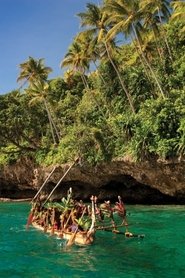
Kabelbel follows a group of villagers as they are taught the art of canoe making and seafaring by clan elders. Intergenerational differences and a sense of social change emerge along the way, along with a profound sense of cultural pride. Shot entirely on the remote island of Masahet in Papua New Guinea’s New Ireland Province, Kabelbel captures the daily rhythm of contemporary village life and reveals with great nuance the importance of custom and tradition in a changing world.Uncle Poison
1998
Uncle Poison
1998
A healer on healing, medicine & religion...Filmed in the modern city of Caracas, capital of Venezuela, Uncle Poison is an intimate portrait of a traditional faith healer, set against the backdrop of his community's Easter celebrations. Every day, Benito Reyes receives people at his house looking for all sorts of cures. Through his own testimony, this documentary looks at the healer's role as mediator between the social, natural and spiritual worlds. Curing someone or harvesting medicinal leaves, he must first seek permission from the plants he uses and from a variety of Saints. Like some plants and spirits, Benito has the power to extract the sickness and spells from his patients. A conjunction of sacred and profane, celebrating and mourning, Easter provides a rare opportunity to look at traditional faith healing in a wider social and religious context.Via Dolorosa
1978
Via Dolorosa
1978
Every year, in the colonial city of Antigua, Guatemala, the "sorrowful way" of Good Friday is recreated by a path of colored sawdust and flower petals. Along this road several hundred people take turns carrying a ponderous mahoganybier.Dancing Grass: Harvesting Teff in the Tigrean Highlands
2018
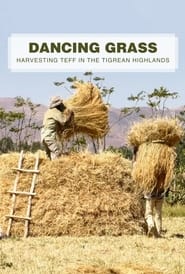
Dancing Grass captures the communal harvesting of teff among Tigreans of Northern Ethiopia. Teff, an ancient indigenous grain, is central to the livelihood of smallholder farmers and may be called the 'cereal core' of Ethiopian national food identity. A local elder provides the commentary for the sequence of events that unfold in the homestead, fields and neighbourhood of the author's eldest brother and family: the cutting of the 'dancing grass'; the drying and stacking; the threshing and winnowing; then the sale of teff in the local market; off with a donkey to the mill; cooking enjera for family and guests; coffee drinking and blessing; and finally the Mesqel fire, an Orthodox Christian celebration at the end of the rainy season.In Aiye's Garden: Propagation And Processing of Enset in the Gamo Highlands
2019
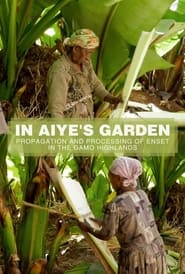
Enset, which is related to the banana plant, is very drought resistant and a good source of carbohydrates (in the stem and underground bulb). Enset has been farmed from time immemorial in the Gamo Highlands of southern Ethiopia, where women are the main cultivators. The film focuses on Aiye, the filmmaker's grandmother, who shares her knowledge about the enset plant, and shows how it is possible to produce good organic food by using simple farming tools and natural fertilizers. We see how she and a young kinswoman cultivate (using animal dung and organic waste to fertilize the plants), propagate (generating suckers from the corm), harvest (digging up the plant) and process (scraping and fermentating) the enset, and finally produce a variety of nutritious dishes.Inagina: The Last House of Iron
1997
Swiss archaeologist Eric Huysecom and cameraman Bernard Augustoni work with 13 master smelters to recreate the building of a traditional furnace for smelting iron in Mali. There has not been any traditional iron smelting in Africa since the 1960's, in part due to the importing of cheaper substitutes. The building of the furnaces and the work involved in the actual production is deeply entwined with ritual, symbolism and gender. This film describes in great detail every aspect of the event, from the selection of the site of the reconstruction - which is the oldest remaining furnace site in the region, last active in 1961 - to the final result.Robert Morris: Retrospective
1994
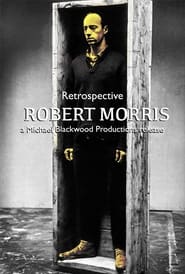
This retrospective exhibition gives brilliant insight into the artist’s work of the last 4 decades. Credit for this highly sensitive selection of Morris’ work goes to Rosalind Krauss, who curated the exhibition. We invited artist and curator to come back to the Guggenheim Museum for a second look at the exhibition. The filmed walk-through gives a vivid sense of the artist’s progress and documents the views of the artist and Rosalind Krauss, one of the most significant critics of our time.Kenya Boran
1974
Kenya Boran
1974
In the midst of a traditional herding territory, a growing town and a new road encroach upon a once-isolated desert people. The complexities brought about by this modernization are shown as two fathers and their sons confront difficult choices between old ways and new.Harambee: Pull Together
1974
Harambee is a traditional Swahili chant meaning heave-ho or pull together the slogan for a united Kenya. Harambee Day or Independence Day is celebrated in this small town in North Kenya with political speeches and an auction at the native school. The film shows how North Kenya- isolated for years- tries to adapt to the new concept of nationhood. Government officials from South Kenya are appointed as ambassadors to spread the idea of national unity to a people unaccustomed to it.Boran Women
1974
Boran Women
1974
Traditionally confined to the roles of life-givers, nurturers and homemakers, Boran women of Kenya are slowly realizing the importance of education and the difference it can make in their lives. They attach great importance to the traditional role of women in a herding society and perform dawn to dusk tasks with little deviation from customary ways. Remarkable though is the obvious independence they demonstrate in performing tasks which normally would fall under the male domain, like building their own houses. The film is principally observational with occasional segments in which the women speak directly to the camera.Boran Herdsmen
1974
Boran Herdsmen
1974
This film demonstrates the time-honored solutions to the problems associated with the Boran's dependence on cattle for living. Direct government intervention and the indirect impact of modernization are forcing the old patterns to change. The film depicts herding practices, movement patterns, watering strategies, and the lifestyle of the herdsmen. The film has special currency for issues in rural development and agricultural, environmental, and human adaption.The Living Forest
2004
The Living Forest
2004
Living Forest explains the food forest system in use in an area near the river Amônia; a consortium in which everyone participates to provide better food for the entire community. Using forest management, the Ashaninka Indians turn degraded land into a place for communal cultivation. Banana trees are grown for food and also as fertilizer for other crops, including plants that are used for building materials. The video also shows how the Ashaninka are able to attract more wild game with the fruit that they grow, as well as keeping honeybees and turtles for food. By conducting studies of plants and animals they are continually finding ways to improve their system. Through communal, sustainable cultivation of the forest, these Indians protect their land and plan to feed themselves well into the future.Cimarrón Spirit: Afro-Dominican Maroon Culture
2015
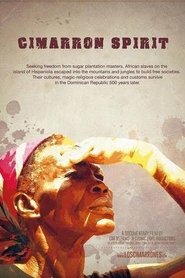
In the Dominican Republic, as early as 1512, African slaves escaped from Spanish plantations and lived with the island’s Taíno Indians or on their own in mountainous jungles in the remote frontier land of Hispaniola. These people who were known as “cimarrones,” meaning “maroons,” created their own independent communities that have survived for centuries and until recently remained isolated from mainstream Dominican society. These resilient and resourceful “outlaws” have long developed their own celebrations, many of which mock a society that enslaved and branded them. Cimarrón Spirit explores carnival traditions such as the ritualistic fire burning of the masks and costumes of “Judas,” “Cocorícamo,” and “Tifúas,” as figures important to the cimarrón culture of Elias Piña.Kinja Iakaha, A Day in the Village
2003
In A Day in the Village, Waimiri and Atroari filmmakers document the day-to-day life of their relatives in the Cacau village, located in the Amazon region. We watch as women prepare the midday meal and do laundry in the river. Men hunt for alligators, paca and tapir in the forest as well as make handcrafts during a rainstorm. Children play and help with chores such as fruit-gathering and fishing, with adults showing them the right way to do things. Through intimate, interwoven images, the video gives us a vivid sense of the daily pattern in this village.Jarlmadangah: Our Dream
2007
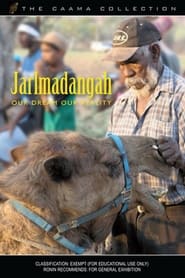
Situated south of Derby in the West Kimberleys, Jarlmadangah is a unique community often hailed as 'a model community' for its many social and cultural achievements. At the centre of the story are two brothers, John and Harry Watson, Elders in the Nyikina and Mangala nations. The community was first formed in 1987 when John and Harry Watson set out to establish Jarlmadangah as a focus for strong family ties, traditional language, law and culture, with the main aim of passing these onto the next generations of young people in the two nations.