Top Rated Documentary Movies on Kanopy - Page 236
All Services
Free Services
 Netflix
 Amazon Prime Video
 Apple iTunes
 Apple TV Plus
 Disney Plus
 Google Play Movies
 Paramount Plus
 Hulu
Hulu
 HBO Max
 YouTube
 fuboTV
 Peacock
 Peacock Premium
 Amazon Video
 The Roku Channel
 AMC+
AMC on Demand
AMC+
AMC on Demand
 Kocowa
 Hoopla
 The CW
 Vudu
Vudu
 Starz
Starz
 Showtime
 PBS
PBS
 Pantaflix
 FXNow
FXNow
 Tubi TV
 Kanopy
 Comedy Central
 Crunchyroll
 Microsoft Store
 Redbox
 Sun Nxt
 ABC
ABC
 DIRECTV
 Crackle
 Fandor
 Plex
Plex
Netflix
Amazon Prime Video
Apple iTunes
Apple TV Plus
Disney Plus
Google Play Movies
Paramount Plus
Hulu
HBO Max
YouTube
fuboTV
Peacock
Peacock Premium
Amazon Video
The Roku Channel
AMC+
AMC on Demand
Kocowa
Hoopla
The CW
Vudu
Starz
Showtime
PBS
Pantaflix
FXNow
Tubi TV
Kanopy
Comedy Central
Crunchyroll
Microsoft Store
Redbox
Sun Nxt
ABC
DIRECTV
Crackle
Fandor
Plex

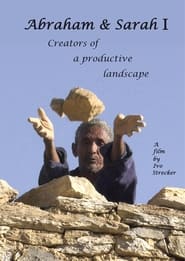
Abraham and Sarah. Creators of a Productive Landscape
2017
In the highlands of Tigray - northern Ethiopia - on the edge of the escarpment that descends steeply to the Danakil dessert, Hagos Mashisho and Desta Gidey have toiled and struggled for years to turn the rugged slopes of the East African Rift Valley into fertile ground. They have grown crops here not only to feed themselves and their family, but also to share with others, in particular the pilgrims who regularly pass by on their way to the monastery of Gundagundo. Touched by the kindness of their hosts, the pilgrims have given them the biblical names "Abraham" and "Sarah". The film explores the work ethos and grace of these Tigrean farmers: the cheerful mood with which they do what needs to be done; the devotedness to the tasks at hand; the coordinated movements of humans and animals as they work when ploughing, sowing, harvesting, threshing; - and finally those moments of invocation when the dependence on nature and the transcendent are acknowledged.The Tree of Iron
1988
The Tree of Iron
1988
This is one of the few films to document archaeological work on ancient civilizations in Africa. It also deals with an important subject, African iron smelting, and presents convincing evidence for early indigenous technologies far more complex than previously expected. The Tree of Iron is set in Tanzania, East Africa, on the western shores of Lake Victoria, where Haya people have lived for centuries.To Hold Our Ground: A Field Report
1991
For thousands of years Ju/'hoansi have lived in the Nyae Nyae region in northeastern Namibia. In the 1950s, most Ju/'hoansi had been exterminated or were dispossessed by white colonists and black farmers, but in Nyae Nyae Ju/'hoansi were still the only permanent inhabitants. Waterless approaches isolated their ancient communal land and protected them from enslavement.Wild Florida
2020
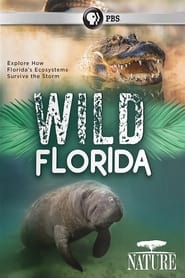
Wild Florida
2020
Florida is home to beaches, coral reefs, pine forests and the famous Everglades wetland, but a growing human population and abandoned exotic pets like pythons are threatening this wild paradise. Can Florida’s ecosystems continue to weather the storm?Artpark People
1976
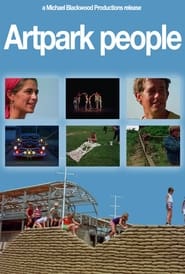
Artpark People
1976
Encouraging visitors to engage and connect with on site artist's, Artpark provides a unique environment for those craving culture away from the whirring city. Located in Lewiston, New York the outdoor venue opens itself to artists, musicians and performers seeking a spot to reflect and create. During the summer seasons Artpark serves as an immersive experience, inviting the public to observe the artists as they work. Artpark People observes the vibrant scene and captures candid interactions between artist and onlookers. With a heavy emphasis on outdoor space and environmental influence, Artpark asserts itself as a cultural and communal haven for creatives.Christo: Wrapped Walk Ways
2009
Wrapped Walk Ways, in Jacob Loose Memorial Park, Kansas City, Missouri, consisted of the installation of 136,268 square feet (12,540 square meters) of saffron-colored nylon fabric covering 2.7 miles (4.4 kilometers) of formal garden walkways and jogging paths.Art in an Age of Mass Culture
1991
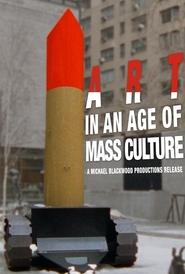
Art in an Age of Mass Culture pulls back the curtain and takes a look at the cultural climate surrounding MoMA's now famed exhibition, "High and Low: High Art and Popular Culture". Opening in the fall of 1990, the show placed a spotlight on the rapid merging of consumerism and the artistic avant-garde. Curated by Kirk Varnedoe and Adam Gopnik and featuring work from artists such as Jeff Koons and Roy Lichtenstein, "High and Low" ignites conversations of mass culture and our society's ever-changing relationship with the arts.Richard Meier in Rome Building a Church in the City of Churches
2006
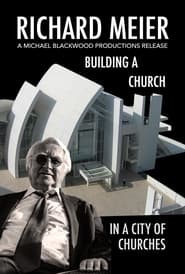
Known for his bold, abstract and stark white buildings, American architect Richard Meier now takes on the challenge of building the Jubilee Church in Rome. Holding the location in high regard, Meier praises the vibrant visual layout of the city and tells us, "Rome is a city of architecture; it's a city of walls and columns and spaces and places and defined places and wherever you look there's architecture" (Richard Meier). Staying true to his signature design style, Meier has created a structure resembling grand soaring sails which appear steady and peaceful as they stand in striking opposition to the city's landscape. Three curved walls separate three distinct spaces: the main sanctuary, the weekday chapel and the baptistry, each with its own entrance. As a contrast he shows us his favorite churches in Rome by his famous colleagues from earlier times.Elizabeth Murray: 4 Decades
2006
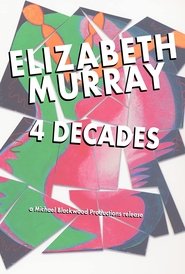
"Elizabeth Murray: 4 Decades" tracks the artist's career and shows her moving forward fearlessly toward new shapes and concepts for her unique style of painting. Inspired by artists of the Abstract Expressionism movement such as Willem de Kooning and Philip Guston, Murray was privy to their technique and motive. Though she may share ideals with her artistic predecessors, Murray has created miraculously original work which she discusses with curator Robert Storr as they explore her MoMA retrospective.Brice Marden: 4 Decades
2006
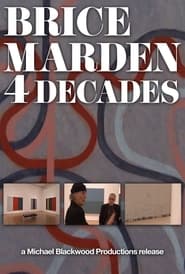
"Brice Marden: 4 Decades" follows the renowned abstract artist as he explores his acclaimed 2006 MoMA retrospective with curator Gary Garrels. Applauded for his bold and contemporary style, Marden speaks openly with Garrels about his approach, beginnings and influences. His fluid and colorful works demand attention but welcome the viewer to choose their own path within the painting itself. Marden's career is mapped out through a tour of the exhibition, as he and Garrels discuss key works of the last forty years.The Imaginary Solutions of Thomas Chimes
2007
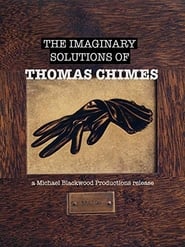
The Imaginary Solutions of Thomas Chimes presents a conversation with the artist as he reminisces about his career, influences and artistic intuitions. Director of the museum, Anne d'Harnoncourt, joins Chimes to revisit the galleries of Thomas Eakins, Duchamp and Van Gogh, all of whom were deeply influential throughout his artistic journey. Just as many other American artists, Chimes spent time in Paris and discovered writers such as Antonin Artaud, James Joyce and most notably Alfred Jarry, whose writings on pataphysics dominated Chimes' work for two decades.Vija Celmins: 4 Decades
2007
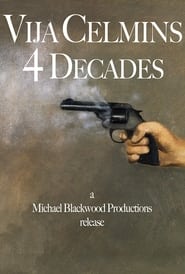
Best known for her drawings of the ocean and the galaxies of the night sky, Vija Celmins has solidified herself as one of the most important artists of the postwar generation. Stepping back from painting in order to explore her photorealistic drawing style, Celmins creates spectacularly precise renderings of the natural world. In her forty year retrospective at the Hammer Museum in Los Angeles, Celmins recalls her beginnings in abstraction, her choices of subject matter after freeing herself of the New York School influence, and her later immersion in what must be termed her great master drawings.Hans Haacke: 4 Decades
2007
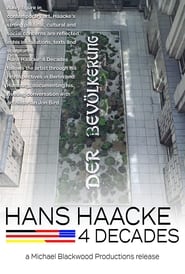
Hans Haacke is a key figure in contemporary art whose work intersects with conceptual, pop, minimal and land art. The artist is particularly known for his research into the hidden economies and politics of the art world and the repressed histories of places and peoples. Haacke's strong political, cultural and social concerns are reflected in his installations, texts and sculptures.Engineered Transparency: Glass in Architecture and Structural Engineering
2008
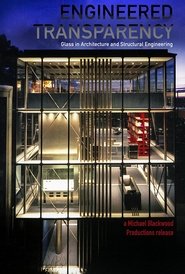
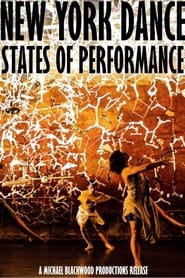
Accentuating the effects of space, light and structure, glass has become an architectural staple that encourages transparency and visibility throughout a variety of landscapes. After its role in the last century's call to a radical new architecture and urban life, glass architecture is today more ubiquitous than ever.New York Dance States of Performance
2010
Seven choreographers work tirelessly to both question and embrace their chosen form, producing work that celebrates the strange, startling and poetic beauty of dance and performance. Curated by Gia Kourlas. Narrated by the choreographers.Post Ductility: Metals in Architecture and Structural Engineering
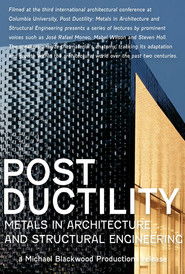
2010
"Post Ductility: Metals in Architecture and Structural Engineering" presents a series of detailed lectures during which the past, present and future of metal is discussed. Speakers such as José Rafael Moneo, Mabel Wilson and Steven Holl bring forth examples of the material's merit and methodical use over the past two centuries. The engineerical history addressed during the conference highlights the developmental and aesthetical reliance designers have consistently felt towards metal as a material. Citing its form, structure and construction, the lecturers analyze the material's anatomy, tracking its adaptation and growth within the architectural world.Permanent Change: Plastics in Architecture and Engineering
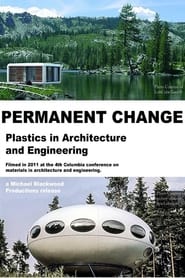
2011
"Permanent Change" looks at the history and development of plastic within the architectural world. Capturing both a series of lectures and a panel with prominent names such as Steven Holl, Beatriz Colomina and Werner Sobek, this documentation observes detailed examples and lively debates regarding the popularization of plastic as a construction material. Addressing a number of contributing factors including design, engineering and form, the participants of the conference present a wide range of theories, analyses and predictions pertaining to plastics as an architectural material.Richard Meier
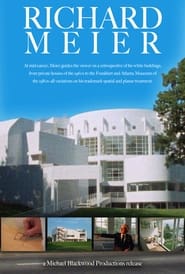
1986
Richard Meier
1986
Meier guides the viewer on a retrospective of his white buildings, from private houses of the 1960s to the Frankfurt and Atlanta Museums of the 1980s--all variations on his trademark spatial and planar treatment. His influences from Corbusier, Wright, Mies, and Baroque Germany are shown. Clients and colleagues offer opinions.Ed Ruscha: 4 Decades
2005
Ed Ruscha: 4 Decades
2005
Ed Ruscha made his very first art in his native Oklahoma, but soon became attracted to Los Angeles . Curator Margit Rowell has examined his extensive body of work and created a brilliant exhibition of his seldom seen drawings. Rowell visits Ruscha in his studio, looking at new paintings with the artist, discussing his progress over the decades and asking him to comment on the many milestones in his large retrospective exhibition at MoCA in Los Angeles.Christo: Wrapped Coast
1969
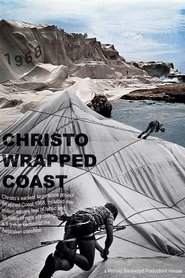
In 1969, Christo and Jeanne-Claude wrapped 2.5 kilometers of coast and cliffs up to 26 metres along the coast of Little Bay, in Southeast Sydney, Australia.