Top Rated Documentary Movies on Kanopy - Page 299
All Services
Free Services
 Netflix
 Amazon Prime Video
 Apple iTunes
 Apple TV Plus
 Disney Plus
 Google Play Movies
 Paramount Plus
 Hulu
Hulu
 HBO Max
 YouTube
 fuboTV
 Peacock
 Peacock Premium
 Amazon Video
 The Roku Channel
 AMC+
AMC on Demand
AMC+
AMC on Demand
 Kocowa
 Hoopla
 The CW
 Vudu
Vudu
 Starz
Starz
 Showtime
 PBS
PBS
 Pantaflix
 FXNow
FXNow
 Tubi TV
 Kanopy
 Comedy Central
 Crunchyroll
 Microsoft Store
 Redbox
 Sun Nxt
 ABC
ABC
 DIRECTV
 Crackle
 Fandor
 Plex
Plex
Netflix
Amazon Prime Video
Apple iTunes
Apple TV Plus
Disney Plus
Google Play Movies
Paramount Plus
Hulu
HBO Max
YouTube
fuboTV
Peacock
Peacock Premium
Amazon Video
The Roku Channel
AMC+
AMC on Demand
Kocowa
Hoopla
The CW
Vudu
Starz
Showtime
PBS
Pantaflix
FXNow
Tubi TV
Kanopy
Comedy Central
Crunchyroll
Microsoft Store
Redbox
Sun Nxt
ABC
DIRECTV
Crackle
Fandor
Plex

Ruthie and Connie: Every Room in the House
2002
They're Jewish, they're grandmothers, and they're lesbians. But they're also so much more, as you'll find out in Deborah Dickson's powerful and intimate documentary. Ruth Berman and Connie Kurtz first met in Brooklyn in 1959, both young married women raising their young children. Becoming fast friends, they soon both moved with their families near Coney Island, where they became active community leaders. Then, in 1974, something incredible happened - they fell in love.Russia's Open Book: Writing in the Age of Putin
2013
Who is the new Tolstoy, Dostoevsky, or Gogol waiting to be discovered by the English-speaking world? Hosted by actor, author, and activist Stephen Fry, focuses on six authors whose vibrant, idiosyncratic work continues to gain traction with a global audience: Dmitry Bykov, Mariam Petrosyan, Zakhar Prilepin, Anna Starobinets, Vladimir Sorokin, and Lyudmila Ultiskaya. With contributions from their literary critics, publishers, and peers, the film features extensive interviews with each author.The Year We Thought About Love
2015
With passion, wit, intelligence and attitude, an LGBTQ youth theater group creates a play about love in all its forms, while bonding together to make change in their own lives. With candor, they tell their stories through intimate interviews, entertaining and powerful clips of their self-written plays, and glimpse into their everyday lives. Members range from a transgender woman being kicked out of her home, to a runway model who likes men’s clothing, to an out gay man accepted unconditionally by his mother. The plays they write and perform are close to their experiences and not only provide catharsis but insight into what it means to be gay, lesbian, transgender, or just queer. It’s an inspirational work of art about the hardships one faces in realizing that they are different and the courage it takes to find the pride within that.Still Dreaming
2015
Still Dreaming
2015
Once a star on Broadway, always a star – at least that is what a group of feisty, humorous, and inspirational actors think as they embark on a journey to perform Shakespeare's 'A Midsummer Night's Dream' at their retirement home. With the help of two enthusiastic New York City theater directors who are not quite sure what awaits them, the troupe is formed among thespians whose skills and minds are not what they once were. As performance day nears, the tension mounts, with the actors battling to overcome crises, as well as themselves. But the show must go on and go on it does, with the troupe clinging to the hope of experiencing the magic and exuberance of performing on stage just one last time.Healing a Soldier's Heart
2015
Healing a Soldier’s Heart transports us into the troubled hearts and minds of four Vietnam veterans as they begin the courageous healing process to alleviate their severe PTSD. Still traumatized 40 years later, the veterans bravely journey back to the sites where they witnessed and committed atrocities of war. In the process, they come face to face with victims and experience Vietnamese culture through a new lens that fosters the compassion and the mutual forgiveness necessary for healing.Savage Memory
2011
Savage Memory
2011
Founding father of Anthropology, Bronislaw Malinowski's work raises powerful and disturbing questions today. This is a look at his legacy and the imprints it has made on the generations that followed.We Like It Like That
2015
We Like It Like That
2015
Latin boogaloo is New York City. It is a product of the melting pot, a colorful expression of 1960s Latino soul, straight from the streets of El Barrio, the South Bronx and Brooklyn. Starring Latin boogaloo legends like Joe Bataan, Johnny Colon and Pete Rodriguez, We Like It Like That explores this lesser-known, but pivotal moment in Latin music history, through original interviews, music recordings, live performances, dancing and rare archival footage and images. From its origins to its recent resurgence in popularity, We Like It Like That tells the story of a sound that redefined a generation and was too funky to keep down.Welcome To Unity
2018
Welcome To Unity
2018
In a sleepy mountain town nestled in rural America, seven foreign exchange students set out to tackle the 'American Dream'.One Woman, One Vote
1995
One Woman, One Vote
1995
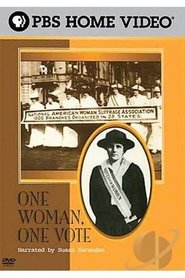
Oscar-winning actress Susan Sarandon narrates this educational installment of the popular "American Experience" series as it examines the 72-year struggle for a woman's right to vote. Segments focus on influential figures in the women's suffrage movement, including Elizabeth Cady Stanton and Alice Paul; the country's widespread fear of social revolution; and the U.S. Senate's passage of the 19th Amendment by a single vote.Edible City
2016
Edible City
2016
Edible City is a feature-length documentary film that tells the stories of extraordinary people who are digging their hands into the dirt, working to transform their communities and doing something truly revolutionary: growing local Good Food systems that are socially just, environmentally sound, and economically resilient.Raising Shrimp
2013
Raising Shrimp
2013
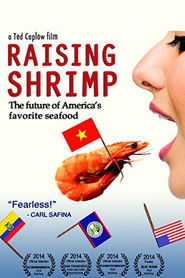
America's most popular and iconic seafood is really a cheap foreign import. Raising Shrimp paints the economic and medical perils of an outsourced food supply,and follows Ted, an engineer, and Andy, an ecologist, on a quest for a better shrimp. In Texas, they find fishermen pushed from riches to rags by imports. In Belize, they find shrimp farmers striving for a natural balance with jungles and lagoons, but again globalization takes its toll, and the best farm collapses. Back home in the U.S. pioneering farmers harness the power of bacteria to grow shrimp inside a darkened warehouse without any waste. Encouraged, Andy and Ted see that raising shrimp this way offers hope for all.Altar of Fire
1976
Altar of Fire
1976
This film records a 12 day ritual performed by Mambudiri Brahmins in Kerala, southwest India, in April 1975. This event was possibly the last performance of the Agnicayana, a Vedic ritual of sacrifice dating back 3,000 years and probably the oldest surviving human ritual. Long considered extinct and never witnessed by outsiders, the ceremonies require the participation of seventeen priests, involve libations of Soma juice and oblations of other substances, all preceded by several months of preparation and rehearsals. They include the construction, from a thousand bricks, of a fire altar in the shape of a bird.Memories Of A Dreamer: The Journey Of A Political Prisoner
2010
Memories of a Dreamer is a first person account of the hardship suffered by a political prisoner from Chile's 1973 cruel dictatorship. Felix Mora recounts shocking details of the torture he endured, his escape from the dictatorship and the challenges he has faced as an exile in Italy and Canada. The question is has Felix allowed torture and exile to shatter his dreams of obtaining justice and being able to return to Chile? Or has he used that suffering as a force to accomplish that dream?Rebel
2013
Rebel
2013
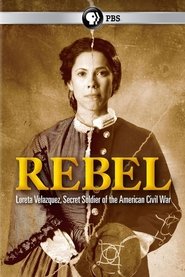
Shrouded in mystery and long the subject of debate, the amazing story of Loreta Velazquez is one of the Civil War’s most gripping forgotten narratives. While the U.S. military may have recently lifted the ban on women in combat, Loreta Janeta Velazquez, a Cuban immigrant from New Orleans, was fighting in battle 150 years ago — one of an estimated 1,000 women who secretly served as soldiers during the American Civil War. Who was she? Why did she fight? And what made her so dangerous she has been virtually erased from history?A Steam Train Passes
1974
A Steam Train Passes
1974
Generally regarded as Australia's finest railway film and winner of many awards the world over, A Steam Train Passes is a nostalgic, imaginative essay on one of the majestic C38 class steam locomotives, 3801. The locomotive has recently returned to service and is currently operating out of the NSW Rail Museum at Thirlmere, south of Sydney.Meredith Monk: Inner Voice
2009
Meredith Monk is a composer, singer, director, choreographer and creator of new opera, music theater, films and installations. She has been proclaimed as a 'magician of the voice' and 'one of America's coolest composers.Well-Founded Fear
2000
Well-Founded Fear
2000
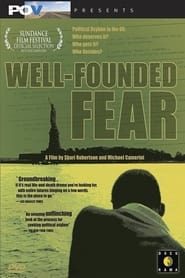
Examines how the Immigration and Naturalization Service decides who will be granted asylum in the United States. The applicant must have a "well-founded fear" of persecution in his or her home country. Despite true and terrifying stories of torture and mistreatment, it's often up to how well the translator presents the case and how sensitive are the ears of the asylum officer to decide a person's fate.When the World Breaks
2010
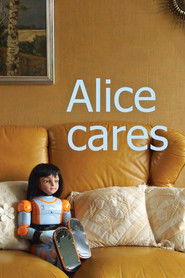
Exploring the idea that times of extreme difficulty facilitate increased resourcefulness and creativity, this compelling documentary takes a look at the art, music, literature, business, architecture, sports and entertainment of the Great Depression. The filmmakers also interview both ordinary people dealing with crisis and a diverse group of luminaries -- including Buzz Aldrin, Jesse Jackson, Hugh Downs, Mickey Rooney and Jerry Stiller.Alice Cares
2015
Alice Cares
2015
In order to meet future care demands for elderly who are lonely and suffering from dementia, carebot Alice has been developed. Can a robot build a human relationship with someone and thus replace a person of flesh and blood? The three women, all getting on in years, who are visited by her in Alice Cares actually become pretty fond of the robot girl. Carebot Alice leaves the laboratory to visit Mrs. Remkes, Mrs. Schellekens-Blanke and Mrs. van Wittmarschen, each in their own house. The three women are getting on in age and are therefore exceptionally suited for the services of Alice, who has been developed by SELEMCA. This is a research group which tries to discover, with the help of community nurses and family, how 'sociobot' Alice should talk and react to stem the effects of loneliness on older women. The outcome of the experiment is surprising for all involved.Gough Whitlam: In His Own Words
2002
To commemorate the life and time of Australia's twenty-first prime minister, Gough Whitlam, SBS will pay tribute by airing his final ever TV interview. In this documentary, at 86 years of age, Gough shares his revelatory views on 50 years of public life in an in-depth conversation with John Faulkner. Looks at Whitlam's early parliamentary life and his role in the 1960s and the 1970s as Labor's Deputy Leader and then Leader, taking the ALP to power after a record 23 years of Liberal government.