Top Rated Documentary Movies on Kanopy - Page 92
All Services
Free Services
 Netflix
 Amazon Prime Video
 Apple iTunes
 Apple TV Plus
 Disney Plus
 Google Play Movies
 Paramount Plus
 Hulu
Hulu
 HBO Max
 YouTube
 fuboTV
 Peacock
 Peacock Premium
 Amazon Video
 The Roku Channel
 AMC+
AMC on Demand
AMC+
AMC on Demand
 Kocowa
 Hoopla
 The CW
 Vudu
Vudu
 Starz
Starz
 Showtime
 PBS
PBS
 Pantaflix
 FXNow
FXNow
 Tubi TV
 Kanopy
 Comedy Central
 Crunchyroll
 Microsoft Store
 Redbox
 Sun Nxt
 ABC
ABC
 DIRECTV
 Crackle
 Fandor
 Plex
Plex
Netflix
Amazon Prime Video
Apple iTunes
Apple TV Plus
Disney Plus
Google Play Movies
Paramount Plus
Hulu
HBO Max
YouTube
fuboTV
Peacock
Peacock Premium
Amazon Video
The Roku Channel
AMC+
AMC on Demand
Kocowa
Hoopla
The CW
Vudu
Starz
Showtime
PBS
Pantaflix
FXNow
Tubi TV
Kanopy
Comedy Central
Crunchyroll
Microsoft Store
Redbox
Sun Nxt
ABC
DIRECTV
Crackle
Fandor
Plex

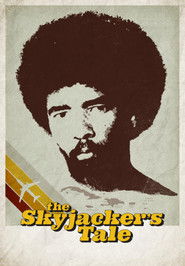
The Skyjacker's Tale
2017
The Skyjacker's Tale
2017
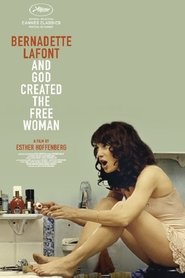
star 6.5Canadian documentarian Jamie Kastner (The Secret Disco Revolution) looks back at a notorious 1970s murder trial in the Virgin Islands — where five politicized young islanders were convicted of a massacre at a ritzy country club — and its dramatic aftermath a decade later, when the culprits’ ostensible leader staged a skyjacking and found refuge in Cuba.Bernadette Lafont: And God Created the Free Woman
2016
star 6.9A journey in the company of Bernadette Lafont, French Cinema’s most atypical actress. Tracing her career from pin-up girl, to New Wave model of sexual freedom, to drug-dealing granny in the film Paulette, by way of La Fiancée du Pirate and Les Stances à Sophie, this film pays tribute to her extraordinary life and artistic odyssey. Her grand-daughters, Anna, Juliette and Solène, revisit the dreams of Bernadette, in the family home in the Cevennes region where they, like her, grew up. Her close friends, Bulle Ogier and Jean-Pierre Kalfon, reminisce on their artistic and human complicity. Throughout the film, Bernadette Lafont in person, with her inimitable character actress voice, re-evokes a life in cinema marked with insolence, courage and freedom.Ghostland: The View of the Ju'Hoansi
2017
star 8.3Remember the culture clash in THE GODS MUST BE CRAZY? This time it's real. One of the most ancient cultures on our planet is undergoing a major change. The Ju/Hoansi Bushmen in Namibia are not allowed to hunt anymore and need to converge with our so called “civilized” lifestyle. For the first time the Ju/Hoansi Bushmen travel through the Kalahari and then right into the heart of Europe. What starts as a look at their fascinating culture becomes an even more fascinating look at our Western lifestyle. A warm and humorous reflection of our habits through the eyes of people who are about to give up their million year old traditions.Reach for the SKY
2015
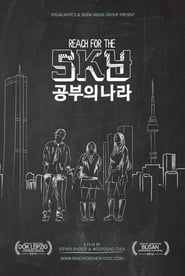
Reach for the SKY
2015
star 7Can one day shape the rest of your life? A feature documentary on the South-Korean education system.Surire
2015
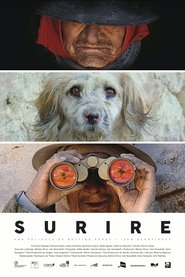
Surire
2015
star 7.5The Surire Salt Flat is located at an altitude of 4300 m in the Chilean High Plateau and is one of the most remote places in the world, keeping the treasure of untouched nature with all its beauty but also holding an allurement: a huge amount of borax, promising the mining industry profits at unknown levels. Surire, metaphorically tells us in an outstanding visual way the story of our planet - about the very important subjects of the disappearance of traditional indigenous culture, untouched nature, the environment, and the clash of new and old.Ingrid Bergman Remembered
1996
star 6.7Her name conjures up beauty, grace, talent and style. One of the greatest actresses of her time, she is best remembered for a natural and vulnerable persona which was so genuine and alluring. Her cinematic contributions produced such classics as "Casablanca," "Gaslight" and "Anastasia." But Ingrid's story goes deeper than the triumphs of her movie career.Finding Phong
2015
Finding Phong
2015
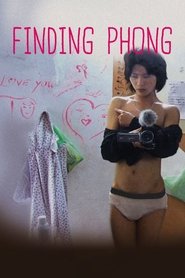
star 4.9Phong grew up in a small town in the center of Vietnam - the youngest of six children. From the time she was young, Phong felt like she was a girl with a mismatched boy's body. Not until she moved to Hanoi to attend university at age 20 did Phong discover that she was not the only one in the world with this predicament. Her dream to 'find herself' by physically changing sex becomes a reality several years later. The movie follows Phong's struggle during these years, with excerpts from an intimate video journal, along with encounters with family, friends and doctors - all of whom must come to terms with Phong determination to become a "complete girl".La Buena Vida - The Good Life
2015
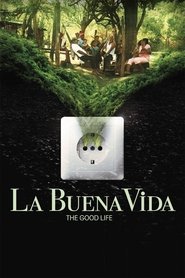
star 7.2The village of Tamaquito lies deep in the forests of Colombia. Here, nature provides the people with everything they need. But the Wayúu community's way of life is being destroyed by the vast and rapidly growing El Cerrejón coal mine. Determined to save his community from forced resettlement, the leader Jairo Fuentes negotiates with the mine's operators, which soon becomes a fight to survive.Love Is All: 100 Years of Love & Courtship
2014
star 6.5A magical and moving archive trip through the universal theme of love, from the very first kisses ever caught on film, through the disruption of war to the birth of youth culture, gay liberation and free love, we follow courting couples flirting at tea dances, kissing in the back of the movies, shacking up and fighting for the right to love.Congo: White King, Red Rubber, Black Death
2003
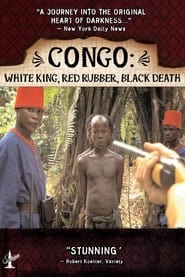
star 7.2This true, astonishing story describes how King Leopold II of Belgium turned Congo into its private colony between 1885 and 1908. Under his control, Congo became a gulag labor camp of shocking brutality. Leopold posed as the protector of Africans fleeing Arab slave-traders but, in reality, he carved out an empire based on terror to harvest rubber.The Last Patrol
2014
Forbidden Films
2014
Forbidden Films
2014
star 6.5Between 1933 and 1945 roughly 1200 films were made in Germany, of which 300 were banned by the Allied forces. Today, around 40 films, called "Vorbehaltsfilme", are locked away from the public with an uncertain future. Should they be re-released, destroyed, or continue to be neglected? Verbotene Filme takes a closer look at some of these forbidden films.La Comédie-Française ou L'amour joué
1996
star 5.5La Comédie-Française is the oldest continuous repertory company in the world, founded in Paris in the late 17th century. This is the first time a documentary film-maker has been allowed to look at all the aspects of the work of this great theatrical company. Sequences in the film include sections of plays, casting, set and costume design, administrative meetings and rehearsals and performances of four classic French plays, Don Juan by Molière, La Thebaide by Racine, La Double Inconstance by Marivaux and Occupe-toi d'Amelie by Feydeau. (Zipporah Films)Last Call at Maud's
1993
Last Call at Maud's
1993
star 3.3A history of Maud's, a San Francisco lesbian bar that stayed open from 1966 to 1989.Limited Partnership
2014
Limited Partnership
2014
star 5LIMITED PARTNERSHIP is the love story between Filipino-American Richard Adams and Australian Tony Sullivan, who, in 1975, became one of the first same-sex couples in the world to be legally married. After applying for a green card for Tony based on their marriage, the couple received a denial letter from the Immigration and Naturalization Service stating, 'You have failed to establish that a bona fide marital relationship can exist between two faggots.' Outraged at this letter, and to prevent Tony's impending deportation, the couple sued the U.S. government, filing the first federal lawsuit seeking equal treatment for a same-sex marriage in U.S. history. This tenacious story of love, marriage and immigration equality is as precedent setting as it is little known... until now.Spanish Lake
2014
Spanish Lake
2014
star 5.7A bold and unflinching documentary on 'white flight' in the area of Spanish Lake, Missouri, a post WW2 suburb. The town experiences rapid economic decline and population turnover due to racism and governmental policies which support the white exodus. The themes of the film parallel America's growing political divide, racial tension, and rise of anti-government sentiment.The Hunters
1957
The Hunters
1957
star 6.1An ethnographic documentary following four Ju/’hoansi (!Kung) men during a multi-day giraffe hunt in the Kalahari Desert, filmed during the Smithsonian–Harvard Peabody expedition of 1952–53.Domestic Violence 2
2002
Domestic Violence 2
2002
star 5.2The opening scene in this film is of an arrest in Hillsborough County Florida where a woman has scratched her husband while he was trying to restrain her from getting back in her car and leaving after an argument. The officers explain that she has committed a battery and thereby earned herself an inescapable arrest and overnight stay in jail because by law they have no discretion. This sets the stage for two hours of court proceedings before three different judges, each trying to apply the Florida domestic violence laws.Uncle Bob
2010
Uncle Bob
2010
star 4.3Robert Oppel's documentary about the life and murder of his uncle and namesake, Robert Opel, the man who streaked the Academy Awards in 1974.