Top Rated History Movies on Kanopy - Page 44
All Services
Free Services
 Netflix
 Amazon Prime Video
 Apple iTunes
 Apple TV Plus
 Disney Plus
 Google Play Movies
 Paramount Plus
 Hulu
Hulu
 HBO Max
 YouTube
 fuboTV
 Peacock
 Peacock Premium
 Amazon Video
 The Roku Channel
 AMC+
AMC on Demand
AMC+
AMC on Demand
 Kocowa
 Hoopla
 The CW
 Vudu
Vudu
 Starz
Starz
 Showtime
 PBS
PBS
 Pantaflix
 FXNow
FXNow
 Tubi TV
 Kanopy
 Comedy Central
 Crunchyroll
 Microsoft Store
 Redbox
 Sun Nxt
 ABC
ABC
 DIRECTV
 Crackle
 Fandor
 Plex
Plex
Netflix
Amazon Prime Video
Apple iTunes
Apple TV Plus
Disney Plus
Google Play Movies
Paramount Plus
Hulu
HBO Max
YouTube
fuboTV
Peacock
Peacock Premium
Amazon Video
The Roku Channel
AMC+
AMC on Demand
Kocowa
Hoopla
The CW
Vudu
Starz
Showtime
PBS
Pantaflix
FXNow
Tubi TV
Kanopy
Comedy Central
Crunchyroll
Microsoft Store
Redbox
Sun Nxt
ABC
DIRECTV
Crackle
Fandor
Plex

Maestras Voluntarias
2022
Maestras Voluntarias
2022
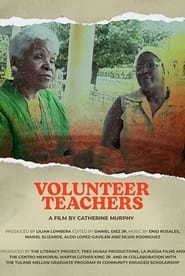
Ana Deborah Mola and Belkis Lescaille were among the first young teachers who started pilot programs around the island of Cuba in 1960, laying foundation for the massive National Literacy Campaign that would take place the following year.Twenty Pearls: The Story of Alpha Kappa Alpha Sorority
2021
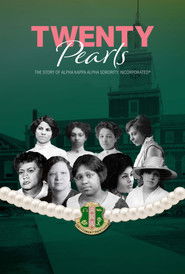
"Twenty Pearls" tells a powerful story of sisterhood. In 1908, nine Black women enrolled at Howard University made one decision that would change the course of history. These college students created Alpha Kappa Alpha Sorority, Incorporated.The Harlem Hellfighters' Great War
2017
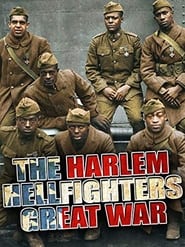
Nicknamed the "Harlem Hellfighters", these African-Americans wanted to become ordinary citizens like everyone else. They saw fighting heroically in the trenches as their chance to achieve this. In 1918, the 15th New York National Guard Regiment became the most highly decorated unit of the First World War.Black Patriots: Buffalo Soldiers
2022
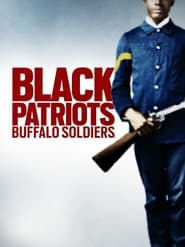
As the United States recovered from the bloody aftermath of the Civil War, Congress passed the Reorganization Act in 1866, that created the first-ever all-Black peacetime regiments. These six regiments would be reduced to four – the 9th and 10th Cavalry and the 24th and 25th Infantry – and soon earn the moniker Buffalo Soldiers. Although they never received the true and full recognition they deserved, Black Patriots: Buffalo Soldiers, will tell their remarkable story of their valor, bravery, and service. From the complicated skirmishes in the Southwest against Native Americans to the heroic battles on foreign soil to the ongoing fight to be treated as first-class citizens, the Buffalo Soldiers served with pride, dignity, and belief in defending a free America.Plague at the Golden Gate
2022
Discover how the 1900 outbreak of bubonic plague set off feat and anti-Asian sentiment in San Francisco. A fascinating medical mystery and timely examination of the relationship between the medical community, city powerbrokers and the Chinese-American community, Plague at the Golden Gate tells the gripping story of the race against time to save San Francisco and the nation from the deadly plague.The Ball Method
2020
The Ball Method
2020
Alice Ball, a 23 year-old African American Chemist living in 1915 Hawaii fights against racial and gender barriers to find an effective treatment for leprosy before Kalani, a 10-year-old patient is exiled into the leper colony of Molokai.The Oath
2022
The Oath
2022
The story of the first anniversary of the founding of the new China, the central delegation went to Yunnan ethnic areas to research, at the same time, in the name of Chairman Mao Zedong, invited representatives of the 26 ethnic minorities in the southwest to Beijing to participate in the National Day ceremonies, the representatives returned to Yunnan and swore to set up a monument. Built on New Year's Day in 1951, the "Pu'er Monument of National Unity Pledge" is unique in the country and is a monument of revolution, history and ethnicity, a vivid manifestation of national unity and the "First Monument of National Unity in New China" and the "First Monument of National Unity in New China". It is a vivid embodiment of great national unity, the "first monument of national unity in new China" and "the first monument of national work in new China", and has been hailed as "the only monument in the history of human nationalities".Kwestia sumienia
1969
Piaget’s Developmental Theory: an Overview
1989
The work of Jean Piaget has become the foundation of current developmental psychology and the basis for changes in educational practice. David Elkind, author of The Hurried Child and Miseducation, and a student of Jean Piaget, explores the roots of Piaget’s work and outlines important vocabulary and concepts that structure much of the study of child development. Using both archival film of Dr. Piaget and newly shot sequences of Dr. Elkind conducting interviews with children of varying ages, this film presents an overview of Piaget’s developmental theory, its scope and content.Erik H. Erikson: A Life's Work
1999
Narrated by Erikson's colleague, Margaret Brenman-Gibson, Ph.D. and Ruthie Mickles, Ph.D. Using archival materials and newly shot footage, this film introduces students to the rich wisdom of Erik H. Erikson. Best known for his identification of the eight stages of the life cycle, Erikson spent a lifetime observing and studying the way in which the interplay of genetics, cultural influences and unique experiences produces individual human lives. This film combines biographical information about Erikson with his theoretical proposals to give students an understanding of the relationship between the life experience of a theorist and the work that is produced.B. F. Skinner: A Fresh Appraisal
1999
Other than Freud, no psychologist has been so discussed, critiqued and, at times, maligned as B.F. Skinner. Using both archival and new film, this video takes a new look at who the man was, and what he really said in his twenty books. Like other thinkers who broke new ground, Skinner had to invent his own vocabulary to describe the phenomena he was studying. In this film, his terms are introduced in context so the student understands how they were intended to be used and the research that produced them. The film lays to rest some myths and credits Skinner with contributions not often attributed to him. Understanding the complex man behind his work enables students to better evaluate the importance and relevance of the work he inspired. Murray Sidman, Ph.D., colleague and thoughtful practitioner of behavioral analysis, narrates.Panama Canal
2011
Panama Canal
2011
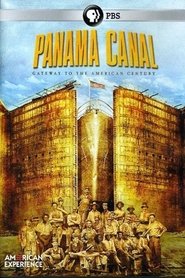
On August 15th, 1914, the Panama Canal opened, connecting the world's two largest oceans and signaling America's emergence as a global superpower.Sandra Day O'Connor: The First
2021
When Ronald Reagan nominated Sandra Day O’Connor as the Supreme Court’s first female justice in 1981, the announcement dominated the news. Time Magazine’s cover proclaimed “Justice At Last,” and she received unanimous Senate approval. Born in 1930 in El Paso, Texas, O’Connor grew up on a cattle ranch in Arizona in an era when women were expected to become homemakers. After graduating near the top of her class at Stanford Law School, she could not convince a single law firm to interview her, so she turned to volunteer work and public service. A Republican, she served two terms in the Arizona state senate, then became a judge on the state court of appeals. During her 25 years on the Supreme Court, O’Connor was the critical swing vote on cases involving some of the 20th century’s most controversial issues. Forty years after her confirmation, this biography recounts the life of a pioneering woman who both reflected and shaped an era.Haymarket: The Bomb, the Anarchists, the Labor Struggle
2021
The Chicago Haymarket tragedy, where a bomb thrown into the ranks of Police was followed by an eruption of panic and violence resulting in a trial and execution of presumably innocent workers' rights activists, is examined in this feature documentary film. Expert historians and professors present the history of the bomb, the anarchist movement of the 19th century, and the labor struggle of working people fighting for a shorter work day during the industrial might of America's Gilded Age.Mystic Mass
2014
Mystic Mass
2014
Every year, thousands of Shia Muslims meet in the village of Nabatiyyeh in Lebanon to commemorate the martyrdom of Imam Hussein, assassinated in 680 A.D. It is by far the most important religious event in the Shia cult, and leads to the formation of immense mass movements all around the world. Mystic Mass describes extensively this 24h ceremony, and deconstructs its indivisible, ever united, mystic mass, since its formation early in the morning of Ashoura, up to its dissolution in the afternoon of the same day.Green Flake
2020
Green Flake
2020
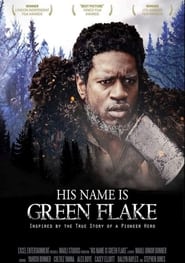
Green Flake, a southern slave, joins Church of Jesus Christ of Latter Day Saints as a child. Later on in his life he is sent to pave the way to what is now the Salt Lake Valley and his faith sustains him.Robert Shaw: Man of Many Voices
2016
A small-town California boy planned to be a minister like his father, but instead became the greatest conductor of choral music the world has ever known. With no formal musical training, he moved from stunning early success in popular music to legendary interpretations of classical music's great choral masterpieces.Secrets and Mysteries of Christopher Columbus
2018
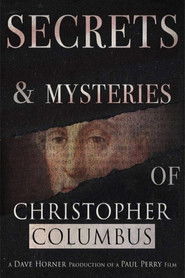
Was Christopher Columbus born in Genoa, Italy? Most definitely not, say an unlikely collection of experts from European royalty, DNA science, university scholars, even Columbus's own living family. This ground breaking documentary follows a trail of proof to show he might have been much more than we know.The 1936 Olympic Games
2016
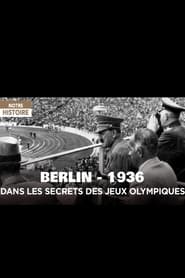
On the 1st August 1936, 100,000 spectators watched as Hitler and the Olympic delegates arrived at the Olympic opening ceremony in Berlin. The Olympic flags hung cheerfully side-by-side banners bearing the Nazi swastika. With the help of specialists and images from Léni Riefenstahl’s 1938 film, ‘Olympia’, we see what really went on behind the scenes and investigate the secret negotiations and compromises made by the International Olympic Committee to bring the Olympics to Berlin.Chanel No 5
2017
Chanel No 5
2017
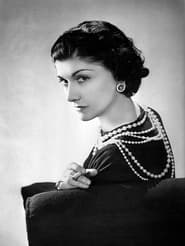
A historical and romantic look at the revolutionary fragrance showcases its place in the world of glamour and fashion, as well as its iconic allure.