Top Rated History Movies on Kanopy - Page 40
All Services
Free Services
 Netflix
 Amazon Prime Video
 Apple iTunes
 Apple TV Plus
 Disney Plus
 Google Play Movies
 Paramount Plus
 Hulu
Hulu
 HBO Max
 YouTube
 fuboTV
 Peacock
 Peacock Premium
 Amazon Video
 The Roku Channel
 AMC+
AMC on Demand
AMC+
AMC on Demand
 Kocowa
 Hoopla
 The CW
 Vudu
Vudu
 Starz
Starz
 Showtime
 PBS
PBS
 Pantaflix
 FXNow
FXNow
 Tubi TV
 Kanopy
 Comedy Central
 Crunchyroll
 Microsoft Store
 Redbox
 Sun Nxt
 ABC
ABC
 DIRECTV
 Crackle
 Fandor
 Plex
Plex
Netflix
Amazon Prime Video
Apple iTunes
Apple TV Plus
Disney Plus
Google Play Movies
Paramount Plus
Hulu
HBO Max
YouTube
fuboTV
Peacock
Peacock Premium
Amazon Video
The Roku Channel
AMC+
AMC on Demand
Kocowa
Hoopla
The CW
Vudu
Starz
Showtime
PBS
Pantaflix
FXNow
Tubi TV
Kanopy
Comedy Central
Crunchyroll
Microsoft Store
Redbox
Sun Nxt
ABC
DIRECTV
Crackle
Fandor
Plex

Flying Supersonic
2018
Flying Supersonic
2018
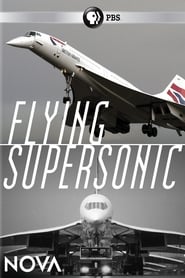
star 8Thundering across the sky on elegant white wings, the Concorde was an instant legend. But behind the glamour of jet setting at Mach 2 were stunning scientific innovations and political intrigue. Fifteen years after Concorde's final flight, this documentary takes you inside the historic international race to develop the first supersonic airliner. Hear stories from those inside the choreographed effort to design and build Concorde in two countries at once - and the crew members who flew her.The Codebreaker
2021
The Codebreaker
2021
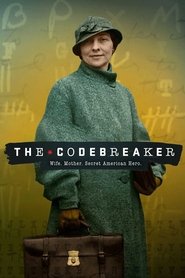
star 7Discover the fascinating story of Elizebeth Smith Friedman, the groundbreaking cryptanalyst who helped bring down gangsters and break up a Nazi spy ring in South America. Her work helped lay the foundation for modern codebreaking today.Nazi Art Thieves
2017
Nazi Art Thieves
2017
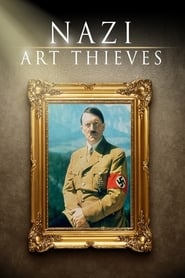
star 7This film examines the mechanisms of Nazi extortion during World War II, and is interspersed with current issues surrounding restitutions. It retraces the incredible stories of 3 major works having belonged to Jewish collectors. From their plundering by the Nazis to their final restitution: Man with a Guitar by Georges Braque, Herbstsonne by Egon Schiele and Sitting Woman by Henri Matisse.Grand Coulee Dam
2017
Grand Coulee Dam
2017
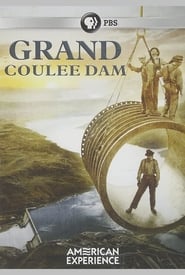
star 6During the darkest days of the Depression when construction was started on Grand Coulee Dam, everything about it was described in superlatives. It would be the "Biggest Thing on Earth," the salvation of the common man, a dam and irrigation project that would make the desert bloom, a source of cheap power that would boost an entire region of the country. Of the many public works projects of the New Deal, Grand Coulee Dam loomed largest in America's imagination, promising to fulfill President Franklin Roosevelt's vision for a "planned promised land" where hard-working farm families would finally be free from the drought and dislocation caused by the elements.Albert Einstein: Still a Revolutionary
2020
star 6Using a wealth of rarely-seen archival footage, correspondence, and new and illuminating interviews, Julia Newman makes the case that Albert Einstein's example of social and political activism is as important today as are his brilliant, groundbreaking theories.Walter Winchell: The Power of Gossip
2020
star 10The life and times of radio commentator and syndicated newspaper gossip columnist Walter Winchell, who reached an audience of 50 million at his peak.Liberty & Slavery
2016
Liberty & Slavery
2016
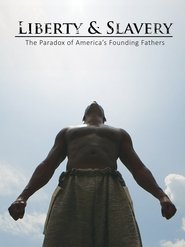
star 5America's Founding Fathers were yearning for a nation of individual liberty. But, the origins of America were overflowing with a deep-seated paradox. The Founding Fathers were rallying the colonists to liberty, while many were slave owners.House of Life: A Jewish Cemetary in Prague
2008
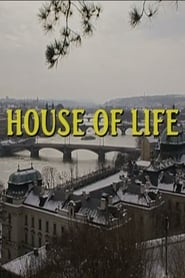
star 7A deep dive documentary into the history of the Old Jewish Cemetery of Prague.Secrets of Stonehenge
2010
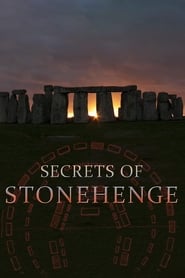
star 8Dated to the late Stone Age, Stonehenge may be the best-known and most mysterious relic of prehistory. Every year, a million visitors are drawn to England to gaze upon the famous circle of stones, but the monument's meaning has continued to elude us. Now investigations inside and around Stonehenge have kicked off a dramatic new era of discovery and debate over who built Stonehenge and for what purpose. How did prehistoric people quarry, transport, sculpt, and erect these giant stones? Granted exclusive access to the dig site at Bluestonehenge, a prehistoric stone-circle monument recently discovered about a mile from Stonehenge, NOVA cameras join a new generation of researchers finding important clues to this enduring mystery.The Johnstown Flood
2003
The Johnstown Flood
2003
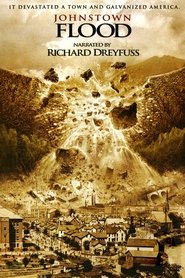
star 6On a stormy day in May of 1889, the South Fork Dam impounding Conemaugh Lake exploded, unleashing a 40-foot wall of water. The bustling industrial city of Johnstown, PA, in the valley below was reduced to a wasteland, killing more than 2,200. This heavily dramatized documentary reviews the factors that led to the dam's collapse, while dramatic reenactments and survivors' personal testimonies detail the horror.Part Three: Born Under the Red Flag 1976–1997
1997
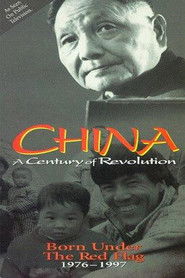
star 6What happened next could never have been anticipated and forms the story line for the final film of the trilogy; Born Under The Red Flag examines China’s remarkable transformation after Mao’s death. In just 15 years, under Deng Xiaoping’s leadership, China raced forward at an astonishing pace to become a never-before-seen hybrid of communism and capitalism. The world’s most populous nation has reinvented itself, changing from a relatively undeveloped and isolated nation into an economic giant and a major international power. For many Chinese, this transformation has brought unprecedented prosperity, but it has also raised troubling questions of national identity and social inequality.Part Two: The Mao Years 1949–1976
1994
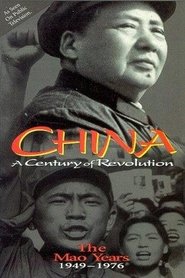
star 7The trilogy continues with The Mao Years, a look at the next period of modern China’s history: Mao Zedong’s rule, from 1949 to his death in 1976. The film begins with the celebrations marking the establishment of the People’s Republic of China, a moment of great hope for millions of Chinese. But the quarter-century of Mao’s rule was as turbulent as the decades which preceded it. Interludes of relative calm and increased prosperity were interrupted repeatedly by violent campaigns, purges, and a famine in which killed more than 30 million people. It culminated in Mao’s colossal and tragic experiment, the Great Proletarian Cultural Revolution. When Mao died in 1976, people were exhausted by the turmoil and longed for stability.Stateless
2020
Stateless
2020
star 5Director Michèle Stephenson’s new documentary follows families of those affected by the 2013 legislation stripping citizenship from Dominicans of Haitian descent, uncovering the complex history and present-day politics of Haiti and the Dominican Republic through the grassroots electoral campaign of a young attorney named Rosa Iris.JFK & LBJ: A Time for Greatness
2015
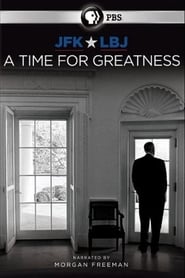
star 6How U.S. President Lyndon B. Johnson used his political prowess to make the Civil Rights Act of 1964 and the Voting Rights Act of 1965 happen. The story is told using rarely-seen footage, interviews and secret White House tapes.Orchard House: Home of Little Women
2018
star 8Emmy Award-winning chronicle of the history of Orchard House, the home in Concord, Massachusetts where Louisa May Alcott wrote and set Little Women.The White Line
2020
The White Line
2020
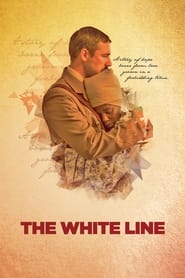
star 7Framed by scenes of Namibia's formal independence as a newly formed African country in 1990, Desiree Kahikopo's historical romance takes us back to 1963, soon after the 1959 uprising in Old Location — an area segregated for black residents of Windhoek, the capital of Namibia (then a territory of South Africa). It is in this setting that Sylvia Kamutjemo (Girley Charlene Jazama, who also produces), a black domestic worker, meets Afrikaner police officer Pieter de Wet (Jan-Barend Scheepers) on a routine passbook check. As the pair exchange letters and a story of forbidden love across racial lines unfolds, Kahikopo explores an underrepresented period of Namibian history with compassion and hope.Diego Rivera: I Paint What I See
1992
star 8The first biographical film on the famed Mexican artist, traces his life from childhood through his Cubist period, his leading role in the Mexican mural renaissance, his fame as a muralist in the USA, and his later years. The film explores Rivera's life and work, including his stormy relationship with Frida Kahlo and the destruction of his famous mural at Rockefeller Center. Shot on location in Mexico and the United States, the film includes a remarkable collection of archival film and photographs, much of which has not been seen before. The text is drawn from the writings of Rivera and Kahlo and from other historical texts. Using Rivera's own words, this richly detailed film brings to life the difficulty he faced in his transition from studio artist to public and political artist, and the conflicts that arose from that point onward.Empire City
1985
Empire City
1985
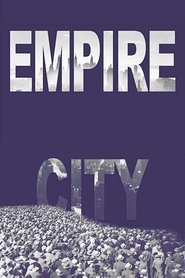
star 9A film essay contrasting the modern metropolis with its "golden age" from 1830-1930, with the participation of some of New York's leading political and cultural figures. Made at a time when the city was experiencing unprecedented real estate development on the one hand and unforeseen displacement of population and deterioration on the other. Empire City is the story of two New Yorks. The film explores the precarious coexistence of the service-based midtown Manhattan corporate headquarters with the peripheral New York of undereducated minorities living in increasing alienation.Eleanor Roosevelt
2000
Eleanor Roosevelt
2000
star 8Eleanor Roosevelt struggled to overcome an unhappy childhood, betrayal in her marriage, a controlling mother-in-law, and gripping depressions — all the while staying true to her passion for social justice. This biography includes rare home movies, contemporary footage, and reflections from Eleanor’s closest surviving relatives, as well as biographers Blanche Wiesen Cook, Allida Black, and Geoffrey C. Ward, bringing to vibrant life one of the century’s most influential women.