Top Rated History Movies on Kanopy - Page 43
All Services
Free Services
 Netflix
 Amazon Prime Video
 Apple iTunes
 Apple TV Plus
 Disney Plus
 Google Play Movies
 Paramount Plus
 Hulu
Hulu
 HBO Max
 YouTube
 fuboTV
 Peacock
 Peacock Premium
 Amazon Video
 The Roku Channel
 AMC+
AMC on Demand
AMC+
AMC on Demand
 Kocowa
 Hoopla
 The CW
 Vudu
Vudu
 Starz
Starz
 Showtime
 PBS
PBS
 Pantaflix
 FXNow
FXNow
 Tubi TV
 Kanopy
 Comedy Central
 Crunchyroll
 Microsoft Store
 Redbox
 Sun Nxt
 ABC
ABC
 DIRECTV
 Crackle
 Fandor
 Plex
Plex
Netflix
Amazon Prime Video
Apple iTunes
Apple TV Plus
Disney Plus
Google Play Movies
Paramount Plus
Hulu
HBO Max
YouTube
fuboTV
Peacock
Peacock Premium
Amazon Video
The Roku Channel
AMC+
AMC on Demand
Kocowa
Hoopla
The CW
Vudu
Starz
Showtime
PBS
Pantaflix
FXNow
Tubi TV
Kanopy
Comedy Central
Crunchyroll
Microsoft Store
Redbox
Sun Nxt
ABC
DIRECTV
Crackle
Fandor
Plex

World War II: The Fall of France
2001
Hitler attacks west invading Belgium and Holland, Operation Dynamo and the attempt to evacuate the British expeditionary force at Dunkirk culminating in the fall of France.Histories Of The Holocaust: Dachau - Liberation And Retribution
2011
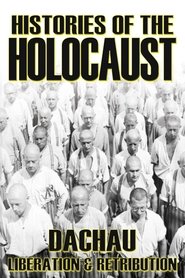
The inhuman brutality and bloodshed that was endemic at Dachau - Nazi Germany's first concentration camp - did not come to an end with its 1945 liberation, for this dread place proved capable of triggering a spate of vengeful retaliation not only by its half-crazed prisoners, but their rescuers. Chapels of various faiths, memorials and sculptures now mark the camp's sites of execution and torture.The VP Choice: Vance vs. Walz
2024
FRONTLINE investigates the lives and views of Sen. JD Vance and Gov. Tim Walz as they run for vice president. Drawing on interviews with those who know Vance and Walz well — friends, advisors, journalists and political insiders — the documentary traces how these two men from the middle of America found their opposing political voices and explores the ideas and influences they would bring to the White House.Rommel: The Soldier, the Son, and Hitler
2021
A rare insight into the military career and personal life of Germany's most famous Second World War commander, Field Marshal Erwin Rommel. Told from the perspective of his son Manfred, it tells what happens when a career soldier runs afoul of a dictator. Highly decorated and one of Hitler's favourite commanders in the early years of World War II, the 'Desert Fox' was something of an enigma. Never a member of the Nazi party, Rommel detested the blending of politics and war. He would quickly discover that both were always in play in Hitler's Germany. Greg Kinnear narrates.Blossoms From Ash
2021
Blossoms From Ash
2021
In the Ukhiya refugee camp, the scars of the ongoing genocide are visible on each and every face of the Rohingya refugees.Nagasaki Journey
1995
Nagasaki Journey
1995
Rashomon-like look at the atomic bombing of Nagasaki on August 10, 1945. Features color footage of the bomb's aftermath shown in public for the first time in over fifty years. The film features extremely rare footage of the atomic bombing, both black-and-white and color.Her War, Her Story: World War II
2022
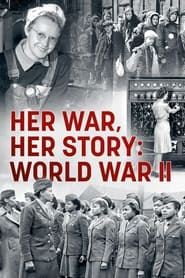
Explore the stories of women caught up in World War II, from the American Home Front to Auschwitz Concentration Camp in Poland. Included in this hour-long film are also the personal stories of the incredible women who served in a war that proved women were equal to men when it came to patriotism, service, or in some cases, self-preservation during watershed moments which called for steadfastness.Down in Dallas Town
2023
Down in Dallas Town
2023
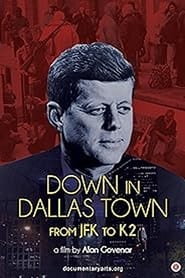
Through interviews with people on the street and songs recorded to memorialize JFK in the mid-1960s, the film explores the impact of the November 22, 1963 assassination on issues in today’s world, from lingering conspiracy theories to the proliferation of gun violence, homelessness, and the scourge of K-2.The Busing Battleground
2023
The Busing Battleground pulls back the curtain on the volatile effort to end school segregation, detailing the decades-long struggle for educational equity that preceded the crisis. It illustrates how civil rights battles had to be fought across the North as well as the South and reckons with the class dimensions of the desegregation saga, exploring how the neighborhoods most impacted by the court’s order were the poorest in the city.Speeches That Changed The World
2016
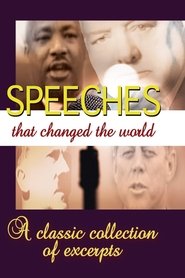
Words and delivery can combine to galvanize an audience, creating ‘I remember where I was when...’ moments. JFK at the Brandenburg Gate or Martin Luther King at the Lincoln Memorial provide unforgettable examples that still stir today. This collection of classic speech excerpts contains not only inspiring orations to democratic freedom and the noblest aspects of human endeavor, but also some of the darkest and most despicable speeches delivered in modern times.Mparntwe Sacred Sites
2004
This documentary focuses on the sacred sites in and around Mparntwe (Alice Springs) in central Australia, and the struggle of the Arrernte people to identify, document and preserve these sites in the face of rapid urban expansion and property development.Medieval England: The Peasants' Revolt
1969
Dramatically portraying the Peasants' Revolt of 1381, the film reveals the conditions of virtual slavery which persisted throughout the Middle Ages, and the weaknesses of the feudal system; its oppressive tax structure, its cruelty and its social inequalityBecoming Ourselves: How Immigrant Women Transformed Their World
2013
A social justice organization based in Oakland-Asian Immigrant Women Advocates-focused on building the collective leadership of limited-English speaking immigrants, and empowered women and youth to become powerful agents of social change.The Building of a Nation
1938
The epic (and very costly) retelling of the history of South Africa from 1652 to 1910, made to coincide with the 100th anniversary of the Great Trek (1838)Who Will Burry The Dead?
2016
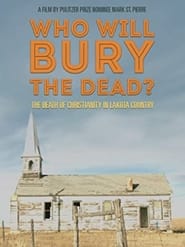
This documentary offers a deep, candid, and historical look at the Christian experience of America's largest and best-known tribes: the Dakota and Lakota. Its exploration into Native American history also takes a hard and detailed look at President Ulysses S. Grant's Peace Policy of 1873, which was, in effect, a "convert to Episcopalianism or starve" edict put forth by the American government in direct violation of its Constitution. The devastation it had on the values of the people affected were dramatic and extremely long-lasting. Grant's policy was finally ended over 100 years later by the Freedom of American Indian Religions Act in 1978. Interlaced with extraordinarily candid interviews, this documentary presents an insider's perspective of how the Dakota and Lakota were estranged from their religious beliefs and their long-standing traditions.When Liberty Burns
2020
When Liberty Burns
2020
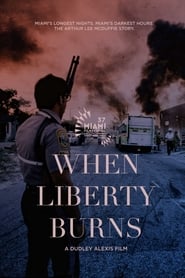
An in-depth analysis on the 40th Anniversary of the life and untimely death of Arthur Lee McDuffie at the hands of Miami Dade police officers.High Fidelity: The Adventures of the Guarneri String Quartet
1989
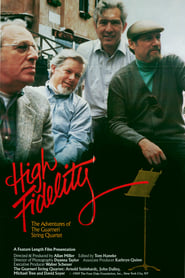
Relationships, rehearsals, performances, hobbies, and family life of the members of the Guarneri String Quartet.Black Is the Color: African-American Artists and Segregation
2016
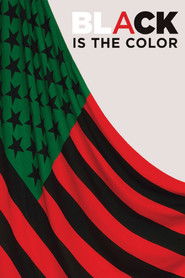
Black Is the Color highlights key moments in the history of Black visual art, from Edmonds Lewis’s 1867 sculpture Forever Free, to the work of contemporary artists such as Whitfield Lovell, Kerry James Marshall, Ellen Gallagher, and Jean-Michel Basquiat. Art historians and gallery owners place the works in context, setting them against the larger social contexts of Jim Crow, WWI, the civil rights movement and the racism of the Reagan era, while contemporary artists discuss individual works by their forerunners and their ongoing influence.Still We Rise
2022
Still We Rise
2022
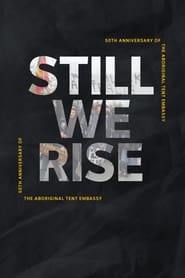
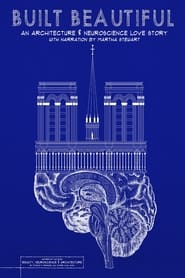
50 years on, the Aboriginal Tent Embassy is the oldest continuing protest occupation site in the world. Taking a fresh lens this is a bold dive into a year of protest and revolutionary change for First Nations people.Built Beautiful: An Architecture and Neuroscience Love Story
2020
For centuries, humans have sought to express beauty in architecture and art, but it is only recently that neuroscience is helping to determine how and why beauty plays an important role in our wellbeing. Architects and neuroscientists are embarking on a new field of study in which subliminal responses to one’s built environment may influence the future of design. Experts argue that positive subliminal reactions lead to a pleasurable experience, one reminiscent of a powerful meditation session. The question remains: what makes a building beautiful - or more specifically, which elements of the built environment does the brain recognize as beautiful? Narrated by Martha Stewart.