Top Rated Animation Movies on Pantaflix - Page 233
All Services
Free Services
 Netflix
 Amazon Prime Video
 Apple iTunes
 Apple TV Plus
 Disney Plus
 Google Play Movies
 Paramount Plus
 Hulu
Hulu
 HBO Max
 YouTube
 fuboTV
 Peacock
 Peacock Premium
 Amazon Video
 The Roku Channel
 AMC+
AMC on Demand
AMC+
AMC on Demand
 Kocowa
 Hoopla
 The CW
 Vudu
Vudu
 Starz
Starz
 Showtime
 PBS
PBS
 Pantaflix
 FXNow
FXNow
 Tubi TV
 Kanopy
 Comedy Central
 Crunchyroll
 Microsoft Store
 Redbox
 Sun Nxt
 ABC
ABC
 DIRECTV
 Crackle
 Fandor
 Plex
Plex
Netflix
Amazon Prime Video
Apple iTunes
Apple TV Plus
Disney Plus
Google Play Movies
Paramount Plus
Hulu
HBO Max
YouTube
fuboTV
Peacock
Peacock Premium
Amazon Video
The Roku Channel
AMC+
AMC on Demand
Kocowa
Hoopla
The CW
Vudu
Starz
Showtime
PBS
Pantaflix
FXNow
Tubi TV
Kanopy
Comedy Central
Crunchyroll
Microsoft Store
Redbox
Sun Nxt
ABC
DIRECTV
Crackle
Fandor
Plex

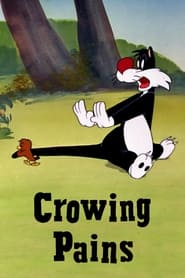
Crowing Pains
1947
Crowing Pains
1947
star 6.4Henery Hawk hides in an egg to catch his first chicken, while Foghorn Leghorn tells him that Sylvester is the real chicken and the farm dog joins in the fun.The Case of the Stuttering Pig
1937
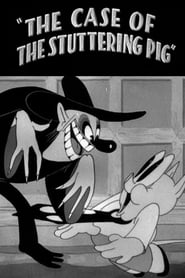
star 7Porky Pig and his family inherit Uncle Solomon's estate, but if they die everything goes to the lawyer, who turns himself into a Mr. Hyde-style monster in an effort to kill off the pigs.Daffy Doodles
1946
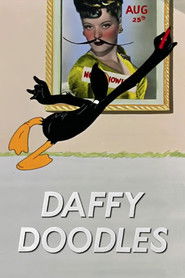
Daffy Doodles
1946
star 7.2Porky Pig is hot on the trail of a vandal painting mustaches on signs everywhere (Daffy Duck).Herr Meets Hare
1945
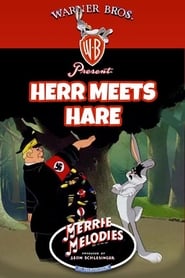
Herr Meets Hare
1945
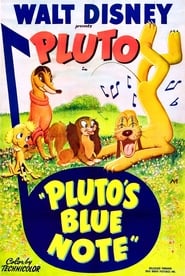
star 6.8Bugs disguises himself as Hitler, Stalin and Brunhilde when he confronts Nazi Hermann Goering in the Black Forest.Pluto's Blue Note
1947
Pluto's Blue Note
1947
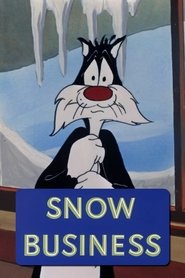
star 7.1Pluto wants to sing along with the birds, bee and cricket, but he is tone deaf.Snow Business
1953
Snow Business
1953
star 6.5Sylvester Cat and Tweety Bird are snowbound in a mountain cabin, and though Tweety has lots of bird seed, Sylvester will starve unless he can cook the unsuspecting Tweety. Meanwhile, a starving mouse thinks Sylvester is edible.Labyrinth
1963
Labyrinth
1963
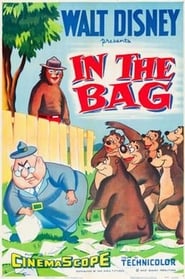
star 6.5A self-consciously Kafkaesque tale of a winged lonely man literally devoured by totalitarian rule.In the Bag
1956
In the Bag
1956
star 7.4The tourists have left behind lots of trash. Ranger Woodlore enlists his bears to clean up by turning the task into a game (and a dance), but when he takes to his hammock, they see through his ruse. Plan B: bribery no food until cleanup complete. But all the other bears put their trash in to Humphrey's section, so he resorts to a number of unsuccessful ruses to dispose of itThe Trapalhões in the Tail of the Comet
1986
star 4.6A journey back in time in the form of a cartoon with characterizations of the Trapalhões, from the time of the Roman Empire to the present day, through the Middle Ages, the Old West and the First World War. They begin the film by doing a stand-up show at the Teatro Scala, in Rio de Janeiro, receiving on stage the designer Mauricio de Sousa. From then on, the story unfolds in a cartoon, in which Os Trapalhões is chased by an evil wizard whose aim is to try to hold Didi's (always unsuccessful) hand to rule the world during the passage of the famous Halley Comet.La poulette grise
1947
La poulette grise
1947
star 5.5An experimental short film of images and music made by Norman McLaren.Rock the Boat
1944
Rock the Boat
1944
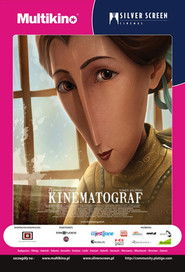
star 5.6One of a series of French-Canadian folk songs, this film was illustrated by Norman McLaren for the Chants populaires series. White gouache drawings on black cards were photographed with overlapping ‘zooms’ to suggest the forward movement of a canoe along rivers and lakes. This film appears in Chants populaires no. 5 and in Chants populaires no. 6.The Kinematograph
2009
The Kinematograph
2009
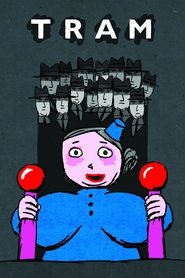
star 6.4A 19th-century inventor is close to perfecting motion pictures but doesn't want to reveal his invention to the public until he can show films with sound and color.Tram
2012
Tram
2012
star 6As every morning, men get on the tram to go to work. But on that day, to the rhythm of the tickets inserted in the ticket-stamping machine, the vehicle gets erotic and the conductress’ desire turns the reality into a surrealistic and phallic fantasy.Lego Indiana Jones and the Raiders of the Lost Brick
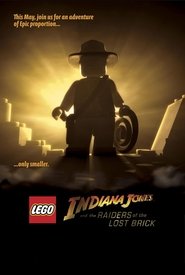
2008
star 6.4Four shorts based on all four Indiana Jones movies with a little Lego twist and inside jokes.Guardians of the Lost Code
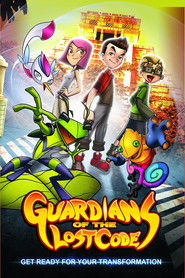
2010
star 7.5Brijes are magical animal spirits that have been in contact with human beings since the beginning of time. Every human had his brije: The human cared for his brije and vice versa. When the human turned 13 the old shamans performed the ritual a synchronizing ritual trough which the human and the brije were able to transform into the warrior form: a physical state in which the human acquired the powers of his brije and extraordinary strength needed to perform acts of heroism. Unfortunately hundreds of years ago, with the birth of modern science and technology, this union was severed and humans stopped believing in magic.Moon Man
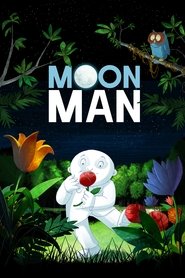
2012
Moon Man
2012
star 6.9One night, a shooting star appears, whizzing through outer space towards the moon. Moon Man seizes his chance, grabs the speeding comet by the tail and hitches a ride to earth. This 'attack from outer space' sets the alarm bells ringing in the Presidential Headquarters. While escaping the President and his soldiers, Moon Man sets off on a long journey and marvels at the many wonders the earth has to offer – and he realizes how much children love and need him.Pinocchio
1992
Pinocchio
1992
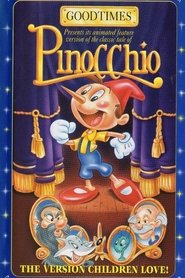
star 5.8The Little Wooden Toy. The unforgettable story of a little wooden boy who longs with all his heart to become real. When a small spark of magic escapes from the Blue Fairy's home, it travels down toy maker Gepetto's chimney, bringing one small log to life. Then, when Gepetto's toys stop being sold regularly, he decides to make a toy for his own using this same log. Soon, his new wooden puppet is complete, which instantly comes to life getting mixed up in all kinds of troubles. Soon, however, with the guidance of the talking cricket and the Blue Fairy, Pinocchio learns what is needed for him to earn his heart's desire of becoming a real boy. Written by Frederick Irizarry.Boogie-Doodle
1941
Boogie-Doodle
1941
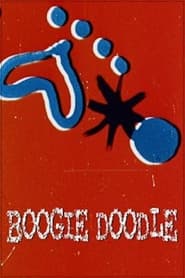
star 6An animation film, made without the use of a camera, in which "boogie" played by Albert Ammons and "doodle" drawn by Norman McLaren combine to make a rhythmic, brightly colored film experiment. The main title is in eight languages.How to Ride a Horse
1947
How to Ride a Horse
1947
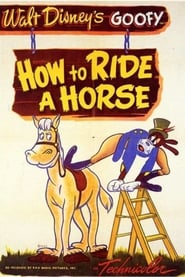
star 6.6Aided by his horse, Percy, Goofy takes horsemanship to a new level. Originally released as a part of The Reluctant Dragon (1941).Two Sisters
1991
Two Sisters
1991
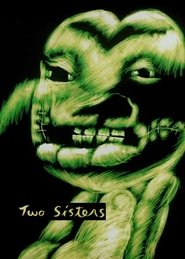
star 5.6Viola writes novels in a darkened room. Marie, her sister and only companion, takes care of her every need. Together, they are an island unto themselves, quiet and complete in their isolation. And then the abrupt arrival of a stranger throws their tenuous order into chaos. An animated short etched directly onto tinted 70 mm film.