Top Rated Animation Movies on Pantaflix - Page 235
All Services
Free Services
 Netflix
 Amazon Prime Video
 Apple iTunes
 Apple TV Plus
 Disney Plus
 Google Play Movies
 Paramount Plus
 Hulu
Hulu
 HBO Max
 YouTube
 fuboTV
 Peacock
 Peacock Premium
 Amazon Video
 The Roku Channel
 AMC+
AMC on Demand
AMC+
AMC on Demand
 Kocowa
 Hoopla
 The CW
 Vudu
Vudu
 Starz
Starz
 Showtime
 PBS
PBS
 Pantaflix
 FXNow
FXNow
 Tubi TV
 Kanopy
 Comedy Central
 Crunchyroll
 Microsoft Store
 Redbox
 Sun Nxt
 ABC
ABC
 DIRECTV
 Crackle
 Fandor
 Plex
Plex
Netflix
Amazon Prime Video
Apple iTunes
Apple TV Plus
Disney Plus
Google Play Movies
Paramount Plus
Hulu
HBO Max
YouTube
fuboTV
Peacock
Peacock Premium
Amazon Video
The Roku Channel
AMC+
AMC on Demand
Kocowa
Hoopla
The CW
Vudu
Starz
Showtime
PBS
Pantaflix
FXNow
Tubi TV
Kanopy
Comedy Central
Crunchyroll
Microsoft Store
Redbox
Sun Nxt
ABC
DIRECTV
Crackle
Fandor
Plex

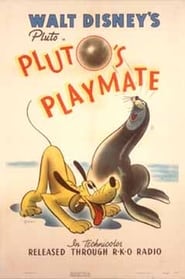
Pluto's Playmate
1941
Pluto's Playmate
1941
star 6.7Pluto is playing with a ball on the beach. The ball goes into the water and starts moving in strange ways, because a sea lion is playing with it. Pluto does not want to share the ball, and eventually tries to bury it, but the sea lion is too clever. Pluto goes after the sea lion, but has to tangle with a persistent octopus. The sea lion saves Pluto, and resuscitates him, so Pluto agrees to play.A Gentleman's Gentleman
1941
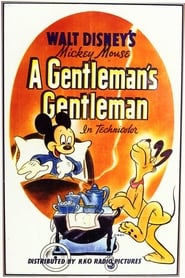
star 6.3Mickey Mouse lies in bed like a lord, getting served breakfast by man's (and mouse's?) best friend Pluto as gentleman's gentleman. Next duty is to fetch the paper, but also pay for it with a coin for the vending machine, and those round things have a nasty habit of escaping a dog's teeth and bouncing over the pavement till they end up in the gutter. After enough attempts to fish and spend the penny, Pluto has a newspaper to carry the same way. The wind has a nasty way to get a better grip on page after page then the dog, so by the time he delivers the daily dose of printed news it's an embarrassingly muddy mess.They're Off
1948
They're Off
1948
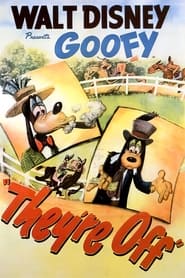
star 6.7At the race track, various spectators (all Goofy lookalikes) are playing the ponies. A posh rich Goofy bets on the equally posh Snapshot III while another more common looking Goofy bets on the bedraggled Old Moe. When the race begins, Snapshot and the rider are so overconfident they wait a few minutes after the race has begun to start running. When they finally do get going, Snapshot is not above stooping to dirty tricks such as tripping and biting the other horses. Sadly, Snapshot's vanity is what costs him winning the race (he stops to pose for the photo finish) and Old Moe is declared the winner.Slide Donald Slide
1949
Slide Donald Slide
1949
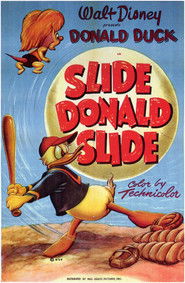
star 6.7Baseball fan and would be-star Donald Duck enjoys listening to a World Series game on the radio and 'playing' the part of his favorite star Casey in his own yard. Unfortunately a melomanic apis melifera (Latin for honeybee) is as avid to listen on the same radio to a mellifluous symphony and play the director theatrically, waving a match as baton, instead of fertilizing his garden flowers. Donald first just turns the switch, then hides it, but the bee dials inside, so he tries to chase it, but is scared by the sting. The battle for channel choice gets worse, and vindictive.Monkey Melodies
1930
Monkey Melodies
1930
star 5.7The monkeys are swinging; their song and dance routine has other jungle creatures joining in. And two monkeys in love chase and kiss. But the hungry crocodiles lie in wait (and dance the soft shoe).Birds in the Spring
1933
Birds in the Spring
1933
star 6Two birds rejoice over the hatching of their three eggs; as they grow, the hatchlings are taught to sing and fly. One falls from the nest and has adventures with a rattlesnake and a beehive before finding his way home.Gulliver's Travels
1977
Gulliver's Travels
1977
star 5.5Based on the novel of the same name by Jonathan Swift and built around the Lilliput and Blefuscu episode. It was made partly in live action and partly animated.Reason and Emotion
1943
Reason and Emotion
1943
star 6.3A World War II propaganda film about the need to remain calm and logical during wartime.Bugs Bunny's Howl-oween Special
1977
star 5.7Bugs Bunny and his friends face Witch Hazel and other scary characters on All Hallows Eve.The Ashlad and His Good Helpers
1961
star 6.8Askeladden (Norwegian "The Ash Lad") is the main character in many Norwegian folktales.Anamorphosis
1993
Anamorphosis
1993
star 6.5The Quays' interest in esoteric illusions finds its perfect realization in this fascinating animated lecture on the art of anamorphosis. This artistic technique, often used in the 16th- and 17th centuries, utilizes a method of visual distortion with which paintings, when viewed from different angles, mischievously revealed hidden symbols.Phoenix 2772
1980
Phoenix 2772
1980
star 5.8Phoenix 2772 starts with twelve minutes without dialogue, much like a silent film, recalling the birth and education of Godo. In this brave new world, children are born in test tubes and are raised by computers and robots. Godo learns the skills that will make him into a great pilot, assisted by the robotic wonder Olga. Everything that Godo needs is provided for him until he eventually goes for training with his automaton companion. He soon realizes that the world is not what he expected...Donald and the Wheel
1961
Donald and the Wheel
1961
star 6.1A father tells his son the invention of the wheel was most important; to prove it, the two hipsters visit the inventor caveman Donald Duck. There follows a survey of the progress of transportation, a digression into the basics of gear ratios, a series of live-action dancers to various styles of music inside a giant jukebox, an illustration of the use of wheels in power generation and space satellites, etc. Ultimately, Donald decides he doesn't want the responsibility, but certainly someone else would take on the task.The Sky-Colored Seed
1992
The Sky-Colored Seed
1992
star 5.7A short TV advertisement based on a children's book about a fox who gives a boy a seed which grows into a giant house.Canvas Back Duck
1953
Canvas Back Duck
1953
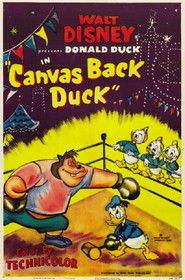
star 6.3Donald and his nephews are visiting the carnival. After Donald makes a relatively high score on a weight testing machine, he is thought to be a veritable strong man and takes on an offer from a little boy to fight his uncle in a boxing match. Unfortunately for Donald, that "little boy" is actually a con man in cahoots with boxer Peewee Pete who is anything but what his name implies. His nephews notice and try to warn Donald but he finds himself in the ring with Pete anyway.Snow White: The Sequel
2007
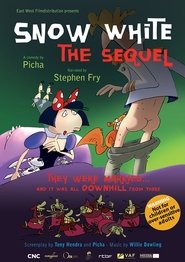
star 4.5Prince Charming was supposed to live long and happily with Snow White after kissing her back to life. However the jealous 'good' fairy decides that she and the prince were meant to be, only the start of a whole series of perversions of various fairy tale characters' traditional good nature.Autumn
1930
Autumn
1930
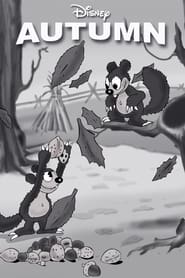
star 6.4The season series of Silly Symphonies continues, with squirrels storing nuts and corn, crows stealing it, beavers building a dam, ducks migrating, and the like, as the first snows fall.Maestro
2005
Maestro
2005
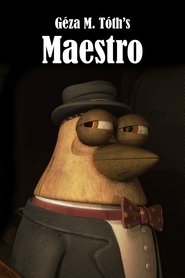
star 6.4Five minutes before his big performance, the Maestro and his persistent mechanical assistant are getting ready. As the clock ticks, life at the top is not all it seems.The Life and Adventures of Santa Claus
1985
star 5.5The Great Ak calls a council of the Immortals to ask that Santa Claus be given immortality. And to justify it, he tells the history of Santa Claus. The Ak found an abandoned baby and gave it to a lioness and a fairy to raise, who named him Claus. When Claus grew up, the Great Ak showed him the evil and hardship in the world and Claus decides to live there and relieve some of the suffering. He decides to make toys for orphans, but King Awgwa, the ruler of the valley where Claus lives doesn't want the children to be happy, and there is a great battle among Immortals.