Top Rated Documentary Movies on Pantaflix - Page 391
All Services
Free Services
 Netflix
 Amazon Prime Video
 Apple iTunes
 Apple TV Plus
 Disney Plus
 Google Play Movies
 Paramount Plus
 Hulu
Hulu
 HBO Max
 YouTube
 fuboTV
 Peacock
 Peacock Premium
 Amazon Video
 The Roku Channel
 AMC+
AMC on Demand
AMC+
AMC on Demand
 Kocowa
 Hoopla
 The CW
 Vudu
Vudu
 Starz
Starz
 Showtime
 PBS
PBS
 Pantaflix
 FXNow
FXNow
 Tubi TV
 Kanopy
 Comedy Central
 Crunchyroll
 Microsoft Store
 Redbox
 Sun Nxt
 ABC
ABC
 DIRECTV
 Crackle
 Fandor
 Plex
Plex
Netflix
Amazon Prime Video
Apple iTunes
Apple TV Plus
Disney Plus
Google Play Movies
Paramount Plus
Hulu
HBO Max
YouTube
fuboTV
Peacock
Peacock Premium
Amazon Video
The Roku Channel
AMC+
AMC on Demand
Kocowa
Hoopla
The CW
Vudu
Starz
Showtime
PBS
Pantaflix
FXNow
Tubi TV
Kanopy
Comedy Central
Crunchyroll
Microsoft Store
Redbox
Sun Nxt
ABC
DIRECTV
Crackle
Fandor
Plex

In Bad Taste
1999
In Bad Taste
1999
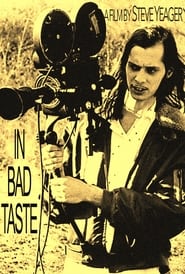
star 8A documentary on the career of filmmaker John Waters. Featuring interviews with actors and fellow film-makers. The life and death of the actor Divine is also discussed.Strip Jack Naked
1991
Strip Jack Naked
1991
star 5.2Ron Peck talks about his experiences of growing up as a gay man, the attitudes to homosexuality in Britain, and his journey towards making his film "Nighthawks".In the Land of the Deaf
1992
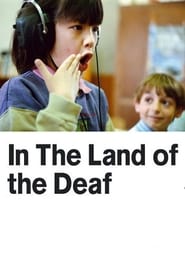
star 6.2Anyone who has ever ventured to the "Land of the Deafs" will have been struck by the strangeness of the choreographed signs with which deaf people express themselves. Developed ages ago, these signs constitute a veritable language. As precise and subtle as speech, they are as effective as spoken language in making a declaration love or providing a detailed technical description. Jean-Claude, Jeanine, Eric, Cyril, Alain, Juliette, Guy, Aurélien and René have one thing in common - they are all profoundly deaf. So they dream, think and communicate in sign language. Which means that they see the world differently. Viewers embark with them on a discovery of the distant land of the deaf, where sight and touch assume enormous importance.Brutality in Stone
1961
Brutality in Stone
1961
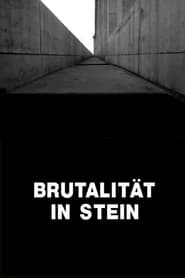
star 6.8In his experimental short film "Brutalität in Stein" (Brutality in Stone), Alexander Kluge demonstrates how Nazi architecture used dimensions of inhuman and super-human scale to bolster the regime's politics of the same kind. Shots of huge neo-classical architectural structures from the Nazi period are confronted with equally anti-human national-socialist language as a voice-over.Home of the Brave: A Film by Laurie Anderson
1986
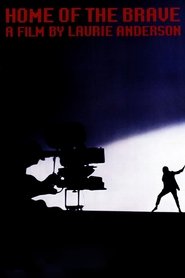
star 8.2A concert film directed by and featuring the music of Laurie Anderson, filmed at the Park Theater in Union City, New Jersey, during the summer of 1985. The film includes songs from her 1984 album 1984’s “Mister Heartbreak” and selections from her 1983 “United States” show, along with eclectic, experimental visuals blending film, animation, dance and electronics.Torero!
1957
Torero!
1957
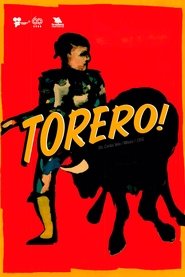
star 5.7The life of the famed Mexican bullfighter Luis Procuna, from his boyhood through his training and the triumphs that followed as Procuna rose to the peak of his profession. Written by Jim Beaver2 x 50 Years of French Cinema
1995
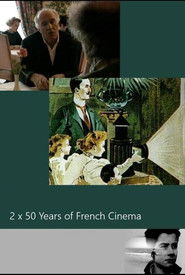
star 6.4At a lakeside hotel, Michel Piccoli discusses the centennial of cinema with Jean-Luc Godard. Godard asks why should cinema's birthday be celebrated when the history of film is a forgotten subject. Through the remainder of his hotel stay, Piccoli tests Godard's hypothesis.The Woodmans
2011
The Woodmans
2011
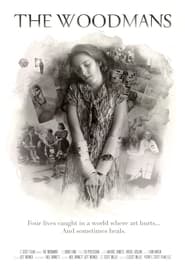
star 5.8The story of a family that suffers a tragedy, but perseveres and finds redemption through each other and their work - making art.Images of the World and the Inscription of War
1991
star 6.5Farocki’s intriguing and troubling film explores the processes of visual perception and how they affect our understanding of history and society. In a work reminiscent of the writings of Paul Virilio and Michel Foucault, Farocki examines a range of phenomena including aerial reconnaissance photos of the Auschwitz concentration camp.Down and Out in America
1986
star 6.6The recession of the 1980s split the country into the haves and have-nots, from family farmers to factory workers and homeless people forced to live in decrepit welfare hotels. On the verge of losing everything, courageous Americans discover the power of community organizing to fight injustice.The Eleanor Roosevelt Story
1965
star 5.8An intimate and moving portrait of one of the most remarkable women in American history. It is the story of a lonely, unhappy child who became the most admired and respected woman in the world. Richard Kaplan's lively documentary reveals the human face behind the American icon, beginning with the emotional deprivation suffered by this plain, awkward little girl born into a socially prominent and powerful family. Though she would eventually marry a man who would look beyond her awkwardness, Eleanor was not content to be the proper, silent wife to her husband Franklin's extraordinary political career. Instead, she began a lifelong crusade to speak out about injustice and oppression in any form. Preserved by the Academy Film Archive in 2006.Deaf
1986
Deaf
1986
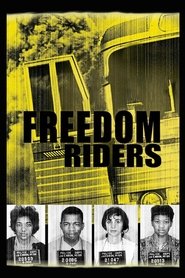
star 8.3The School for the Deaf at the Alabama Institute is organized around a theory of total communication i.e. the use of signs and finger spelling in conjunction with speech, hearing aids, lip reading, gestures and the written word. The film shows sequences dealing with various aspects of this comprehensive training such as teaching students and parents to sign; speech therapy; psychological counseling; regular academic courses; vocational training; disciplinary problems; parents visits; sports and recreational activity; training in living and working independently; and developing skills in home and money management.Freedom Riders
2010
Freedom Riders
2010
star 7.6This is the story of more than four hundred Americans who participated in a bold and dangerous experiment designed to awaken the conscience of a complacent nation. These self-proclaimed, 'Freedom Riders' challenged the mores of a racially segregated society by performing a disarmingly simple act.The Dark Ages
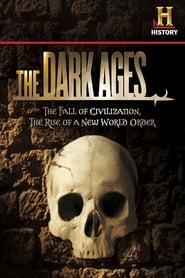
2007
The Dark Ages
2007
star 8.1Beginning with Rome's fall in the fifth century, tis History Channel presentation sheds light on the Dark Ages, covering the continent-wide chaos, including raids by Vikings Vandals, and Visigoths, bubonic plague, famine, civil unrest and more. The program takes viewers from the darkest of times to the dawn of a new beginning as the turmoil besieging Europe gives rise to the Crusades, the Enlightenment, and the Renaissance.Piano Blues
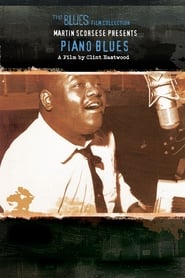
2003
Piano Blues
2003
star 6.5Director — and piano player — Clint Eastwood explores his life-long passion for piano blues, using a treasure trove of rare historical footage in addition to interviews and performances by such living legends as Pinetop Perkins and Jay McShann, as well as Dave Brubeck and Marcia Ball.So, What's Your Price?
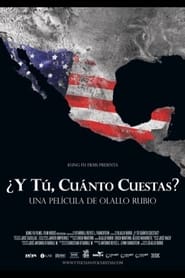
2007
star 7.6¿Y Tú, Cuánto Cuestas? (So, what's your price?), it seems to be the constant over this excellent documentary work, performed by Olallo Rubio, a young Mexican director. The movie shows two faces of the same issue: the American influence in the Mexican culture. you will remain thinking after the movie ends. Everything has a price? Everybody has a price?, so, What's your price?. Strong and ancient differences between two distant-neighbor countries are discussed under each opinion. Both Mexican and American-common persons give its particular point of view about the other, but also about themselves. Developed with a extremely low budget, but with inventive and imagination, this movie shows many of the key aspects in the Mexican-American relationship. However, the movie is not just a compilation of statistics, the producers manage to make it fun too. That's one of it's good points. But never the only one. Well developed, absolutely recommendable.The Search for Life: The Drake Equation
2010
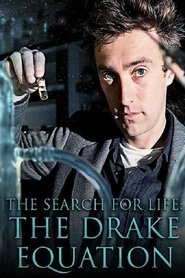
star 7.2Dallas Campbell explores the equation which attempts to calculate the number of planets supporting life in our universe.History of Postwar Japan as Told by a Bar Hostess
1970
star 6Postwar Japan as it is described by Etsuko, the manager of a bar catering to foreigners in Yokosuka. The way of life of a woman brimming with vitality, who skipped the countryside right after the war and, with her womanhood as a weapon, lived through atomic bombings, black markets, prostitution aimed at American soldiers and the Korean War. Inserting newsreels, Shohei Imamura depicts the history of twenty-five years in the Japanese postwar by way of the female body. (doclisboa)These Encounters of Theirs
2006
star 6.4These Encounters Of Theirs divides 10 non-professional actors into couples, then has them take turns in declaiming the Dialogues With Leuco, Cesare Pavese's abstract, philosophical work.Alone in Four Walls
2008
Alone in Four Walls
2008
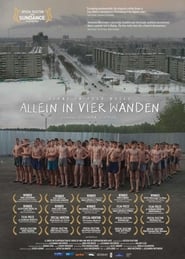
star 6.8In rural Russia, children convicted of theft, murder and rape are sent to a home for delinquents. Without the outside world's pressures, they're finally allowed to act as children, but for some of them, this new life proves to be a challenge. This documentary tells the stories of several of these adolescents, who must endure separation from their families and who, upon release, are unlikely to be forgiven for their crimes.