Top Rated Documentary Movies on Pantaflix - Page 463
All Services
Free Services
 Netflix
 Amazon Prime Video
 Apple iTunes
 Apple TV Plus
 Disney Plus
 Google Play Movies
 Paramount Plus
 Hulu
Hulu
 HBO Max
 YouTube
 fuboTV
 Peacock
 Peacock Premium
 Amazon Video
 The Roku Channel
 AMC+
AMC on Demand
AMC+
AMC on Demand
 Kocowa
 Hoopla
 The CW
 Vudu
Vudu
 Starz
Starz
 Showtime
 PBS
PBS
 Pantaflix
 FXNow
FXNow
 Tubi TV
 Kanopy
 Comedy Central
 Crunchyroll
 Microsoft Store
 Redbox
 Sun Nxt
 ABC
ABC
 DIRECTV
 Crackle
 Fandor
 Plex
Plex
Netflix
Amazon Prime Video
Apple iTunes
Apple TV Plus
Disney Plus
Google Play Movies
Paramount Plus
Hulu
HBO Max
YouTube
fuboTV
Peacock
Peacock Premium
Amazon Video
The Roku Channel
AMC+
AMC on Demand
Kocowa
Hoopla
The CW
Vudu
Starz
Showtime
PBS
Pantaflix
FXNow
Tubi TV
Kanopy
Comedy Central
Crunchyroll
Microsoft Store
Redbox
Sun Nxt
ABC
DIRECTV
Crackle
Fandor
Plex

Flatball: A History of Ultimate
2016
star 7.2On May 8, 1989, Sports Illustrated ran an article about Ultimate frisbee… about a team with no name hailing from New York City that was about to change the sport forever. From its 1968 New Jersey birth to its unanimous 2015 recognition by the International Olympic Committee, FLATBALL circles the globe to showcase four decades of world-class Ultimate and goes even further: to a set of fields in the Middle East to understand and demystify the unique spirit of the game.Le fort des fous
2017
Le fort des fous
2017
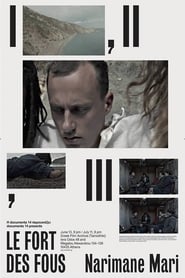
star 4.9Departing from material records of the early colonial “scientific expeditions” and “taming campaigns” led by the French colonizers in North Africa, the story follows a community of young nomads and wanderers as they form an imagined utopian society. Reenactments, improvisations, and interviews performed and conducted with the inhabitants of Algiers, Kythira Island, and the Prosfygika community in Athens inform this work as instances of alternative temporality and autonomous space.Meeting Snowden
2017
Meeting Snowden
2017
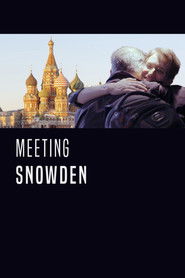
star 7Moscow, Russia, December 2016. Edward Snowden, Larry Lessig and Birgitta Jónsdóttir meet for the first time in a secret place. Apparently, Russia is interfering in the US presidential elections while it mourns the death of its ambassador to Turkey. Snowden carefully chooses his interviews, so nobody really knows something about him. As the world prepares for Christmas, they gather to discuss the only issue that matters, their common struggle: how to save democracy.Unrest
2017
Unrest
2017
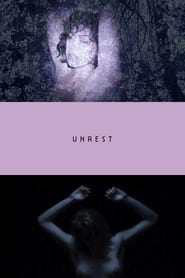
star 5.4Unrest is the third movement of a triptych by Philippe Grandrieux whose common thread is anxiety. A body as a return from the depths of time, an archaic body that we do not know and which nevertheless continues to project in us its shadow, its anxiety.Let It Be
2005
Let It Be
2005
star 5.6What do you think of when you think of a grain of rice? Let It Be is a documentary that records the daily labor and lives of three elderly rice farmers in Tainan County’s Houbi Township. In the heart of Taiwan’s rice-producing country, they have passed their days shedding a bead of sweat to match each grain of rice. The film depicts their lifestyles which have changed little over the last half-century. Observing their toil at work and the way they go about their lives allows the viewer to appreciate the wisdom that imbues their lives and the fascinating dynamics of their relationships with each other, their animals, the gods, the weather, and the land. Between the vastness of the heavens and the joys and sorrows of the earth and its inhabitants, each farmer fulfills his unique destiny.Reality's Invisible
1972
Reality's Invisible
1972
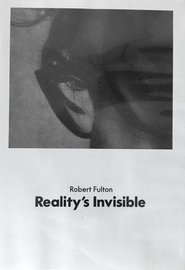
star 5.9Fulton made the film during his brief time at Harvard, where he had been invited to teach by Robert Gardner, his friend and collaborator (Fulton would later serve as a cinematographer on Gardner’s 1981 documentary Deep Hearts, among others). Reality’s Invisible could be described as a portrait of the Carpenter Center, yet it is a portrait of an extremely idiosyncratic and distinctive sort. Fulton moves us through the concrete space of the Center’s Le Corbusier-designed building—the only structure by the architect in North America—but, more centrally, presents us footage of students making and discussing their work alongside figures like Gardner, theorist Rudolf Arnheim, artist Stan Vanderbeek, filmmaker Stan Brakhage, and graphic designer Toshi Katayama.I'll Come to You with Deaf Eyes
2016
star 7.4This film is a letter to my friend Vincent who died ten years ago. Vincent was Deaf. He introduced me to his language, his culture, his world. Through Vincent ‘s life, the film will examine the roots of the distress that plagues the Deaf, and also explore a rich and fascinating world, a people that struggles to preserve its Sign Language and Culture.Not Even in a Wildest Dream
2017
star 9The challenges of the present, expectations for the future, and the dreams of those who experience the reality of public high school in Brazil. Through the voices of students, principals, teachers and experts, "Not Even In a Wildest Dream" offers a reflection on the value of education.The Beksińskis. A Sound and Picture Album
2017
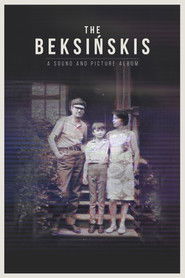
star 7.1Painter Zdzisław Beksiński, his wife Zofia and their son Tomasz, a well-known radio journalist and translator, were a typical and unconventional family, both at the same time. One of the father’s obsessions was filming himself and his family members. Using archival footage only, shot primarily by Zdzisław, as well many other materials, which have not been presented anywhere so far, the film tells a tragic story of the Beksińskis that has never ceased to fascinate Polish filmmakers.A Modern Man
2017
A Modern Man
2017
star 6.8You could be forgiven for mistaking Charlie Siem for James Bond. Whether he's driving an orange Porsche to his cliff-top Monaco mansion, ordering martinis or looking suave in a designer suit, he is a man on a mission. It isn't to hunt down SPECTRE, but to find perfection in everything he does. Whether it's performing on stage, recording albums, or selecting a suit, Charlie demands the best, of himself and others. Despite an entourage dubbed ‘Charlie's Angels', he's lonesome, and complains that people can't relate to him. Danish filmmaker Eva Mulvad, with patience and panache, delves into this life of privilege to find commonalities of ambition and desire.Kardashian: The Man Who Saved OJ Simpson
2016
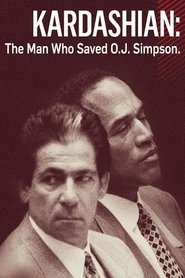
star 6.9After O.J. Simpson was arrested for murder, some believe his attorney and confidant Robert Kardashian destroyed a bag of damning evidence.Saving Brinton
2018
Saving Brinton
2018
star 7In rural Iowa, a beloved history teacher uncovers the century-old showreels of one of America's first motion picture impresarios and sets out to premiere the films at a historic local opera house.FEMEN: Naked War
2014
FEMEN: Naked War
2014
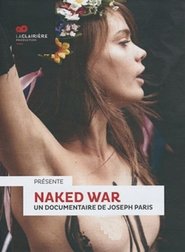
star 4.9During one year, Joseph Paris filmed from the inside the Femen movement; its acts, its shocks and confrontations, its smokes and noises, but also its circumstances, its doubts, and sometimes its contradictions. One year at the heart of a overexposed activism in mass-media, where its deep reasons remained under silence or sometimes misconceived.XXXXXXX
2016
XXXXXXX
2016
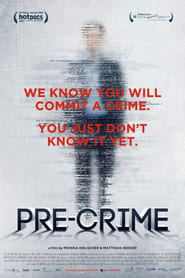
star 6.9A tarot card reading as a starting point. A disruptive relationship as a point. Translation of the cards' symbols to a joint. Of the domestic exploration for finding my voice.Pre-Crime
2017
Pre-Crime
2017
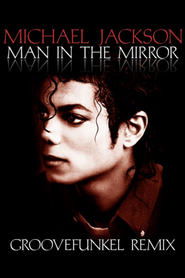
star 4.5Science fiction has become a reality in our modern criminal justice system. A term originally coined by science fiction author Philip K. Dick, “pre-crime” is a policing technique now used in both the US and Europe to identify “hot people”—those most likely to be victims or perpetrators of a crime. Forecasting software and algorithms that have been criticized as inaccurate and arbitrary are used to collect information, and monitor and flag people. But predictive tools are only as good as the data they’re fed. With scant evidence of the reliability of the data sources or the accuracy of the data crunching, misfires are a guarantee. In this chilling and explosive in-depth examination into the modern age of policing, directors Monika Hielscher and Matthias Heider pose an important question: How much freedom and human awareness are we willing to give to the limited logic of technology?Michael Jackson: Man In The Mirror
2017
star 8.6A biopic drama-documentary about the 'King of Pop', that mixes real footage and new interviews with people around him (most notably his mother Katherine Jackson) with re-enactments of times of Michael's life until his untimely death on the 25th of June in 2009.The Medici: Godfathers of the Renaissance
2004
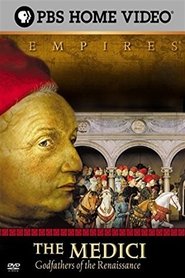
star 7.2From a small Italian community in 15th-century Florence, the Medici family would rise to rule Europe in many ways. Using charm, patronage, skill, duplicity and ruthlessness, they would amass unparalleled wealth and unprecedented power. They would also ignite the most important cultural and artistic revolution in Western history -- the European Renaissance. But the forces of change the Medici helped unleash would one day topple their ordered world.A Suitable Girl
2017
A Suitable Girl
2017
star 6.9A Suitable Girl follows three young women in India struggling to maintain their identities and follow their dreams amid intense pressure to get married. The film examines the women's complex relationship with marriage, family, and society.The Goldbergs: An '80s Rewind
2016
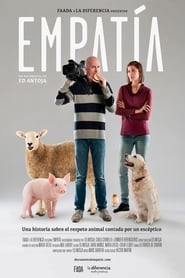
star 8.4Hilarious behind-the-scenes footage, interviews, and outtakes from the hit comedy.Empathy
2017
Empathy
2017
star 6.6Ed is commissioned to make a documentary intending to change those habits of society that are harmful to animals. But completely alien to the animal protection movement, he will realize that to carry out the project, he must first convince himself.