Top Rated History Movies on Pantaflix - Page 192
All Services
Free Services
 Netflix
 Amazon Prime Video
 Apple iTunes
 Apple TV Plus
 Disney Plus
 Google Play Movies
 Paramount Plus
 Hulu
Hulu
 HBO Max
 YouTube
 fuboTV
 Peacock
 Peacock Premium
 Amazon Video
 The Roku Channel
 AMC+
AMC on Demand
AMC+
AMC on Demand
 Kocowa
 Hoopla
 The CW
 Vudu
Vudu
 Starz
Starz
 Showtime
 PBS
PBS
 Pantaflix
 FXNow
FXNow
 Tubi TV
 Kanopy
 Comedy Central
 Crunchyroll
 Microsoft Store
 Redbox
 Sun Nxt
 ABC
ABC
 DIRECTV
 Crackle
 Fandor
 Plex
Plex
Netflix
Amazon Prime Video
Apple iTunes
Apple TV Plus
Disney Plus
Google Play Movies
Paramount Plus
Hulu
HBO Max
YouTube
fuboTV
Peacock
Peacock Premium
Amazon Video
The Roku Channel
AMC+
AMC on Demand
Kocowa
Hoopla
The CW
Vudu
Starz
Showtime
PBS
Pantaflix
FXNow
Tubi TV
Kanopy
Comedy Central
Crunchyroll
Microsoft Store
Redbox
Sun Nxt
ABC
DIRECTV
Crackle
Fandor
Plex

The Butcher, The Whore and the One-Eyed Man
2018
star 5.1Depicts the slow decline of three individuals as they are sucked into a world of sinful existence. It is the story of a wild and voracious love triangle.The Legend of King Solomon
2017
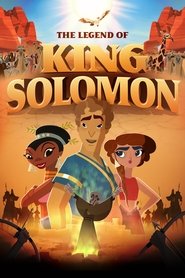
star 6.1Eager to impress the Queen of Sheeba, a young Solomon accidentally releases the devil Asmodeus from his prison. With the Kingdom of Jerusalem in peril, Solomon and Princess Naama work together to find an end to Asmodeus' evil rule.Öğretmen Kemal
1981
Öğretmen Kemal
1981
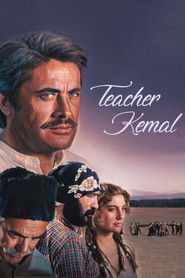
star 7.6Kemal a simple teacher arrives in a remote village to start a new school and teach the young ones, when he gets there he faces a strong opposition to his idea by the village master. Kemal with the help of few villagers tries to fight back the ignorance and oppression to give a hope for the poor people of the village.Indu Sarkar
2017
Indu Sarkar
2017
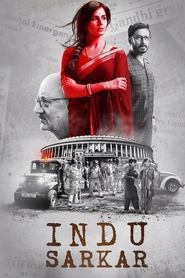
star 5Indu’s husband, a government employee, believes in using the state of Emergency to advance his career, but a moral and ideological discrepancy sets her on a own path.The Return of King Lapusneanu
1980
star 6.6Alexandru Lapusneanu is one of important Moldavian rulers. A Macbeth figure, who obtains his throne in fight, who reeves any possible danger out of his way, a good "hospodar", husband and father. His reign is result of relation with the Great Powers of the XVIth century. The strain relation with the boyars (noblemen), the economic and spiritual contribution in the country's development, tensions of his own family, the loss of reign and the revenge, the second reign are elements for define the man and the prince like touching characterThe Medici: Godfathers of the Renaissance
2004
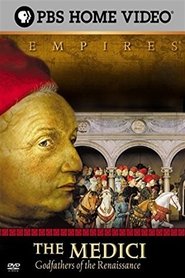
star 7.2From a small Italian community in 15th-century Florence, the Medici family would rise to rule Europe in many ways. Using charm, patronage, skill, duplicity and ruthlessness, they would amass unparalleled wealth and unprecedented power. They would also ignite the most important cultural and artistic revolution in Western history -- the European Renaissance. But the forces of change the Medici helped unleash would one day topple their ordered world.Ich werde nicht schweigen
2017
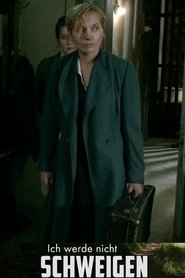
star 5.9TV post-war drama about a gruesome chapter of the Nazi era. Nadja Uhl reveals "wild" euthanasia in psychiatry. Oldenburg, 1948: For Margaret Oelkers (Uhl) and her two little sons, the pension is not enough as a war-wittwe behind and in front. But the authorities are working hard, not even because of their lack of credentials on the employment of their killed in the war. After an energetic appearance at the office, she is briefly put into the psychiatry of the Wehnen nursing home as a trainee. The consequences are bitter: one attests to their schizophrenia, takes away the children and brings them to the sister in the country. For a year, Margarete was kept in the hospital against her will, and forced to do so with electric shocks. After her release, she was placed under the guardianship of her neighbor Erich Windhorst (Martin Wuttke), a man with an SS past...'85: The Greatest Team in Football History
2016
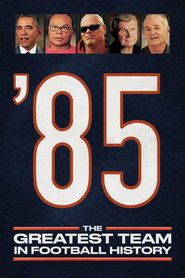
star 8.2Through never-been-seen-before footage and fascinating interviews with key members of the 1985 Chicago Bears -- Mike Ditka, Jim McMahon, Mike Singletary, and others -- you will hear the inside story of their historic season.Verso L'Ignoto
2016
Ono
1989
Ono
1989
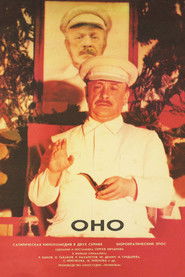
star 4.9The bureaucratic epos on the dialogues and plots of Mikhail Saltykov-Shchedrin "The History of a Town". In a metaphorical and grotesque form, the film conveys the history of Russia from the calling of the Varangians until the end of the 20th century. The film traces the change of the “chiefs” of the county town of Glupov, which differ in varying degrees of tyranny and the corresponding total number of “killed” city residents. The heads of the city easily guess the former heads of the Russian state and the USSR.Witchcraft Through the Ages
1968
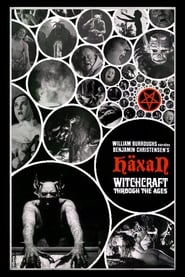
star 7.2A seventy-six-minute version of Häxan, re-edited and re-released in the United States by Metro Pictures Corporation in 1968. It is narrated by author William S. Burroughs, with a jazz score and soundtrack featuring violinist Jean-Luc Ponty.The Rose of Kentucky
1911
The Rose of Kentucky
1911
star 5.7A farmer takes in a young orphan after her mother's death and sends her off to school. After she's grown, he encourages her to consider his younger brother as a husband. When the younger brother proves to be a coward, she chooses the older brother instead.Barking Island
2010
Barking Island
2010
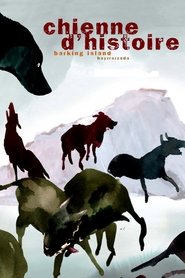
star 5.5Constantinople, Ottoman Empire, 1910. There are too many stray dogs on the streets, so the government decides to deport thousands of them on a desert island, off the coast of the city.Lo negro del Negro
1987
Lo negro del Negro
1987
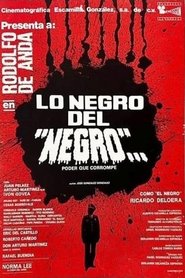
star 4.1Based on the book by the same name, the film follows the exploits of Arturo "El Negro" Durazo, who was the head of the police department in Mexico City, we witness his crimes and his eccentric life, that will inevitably lead to his fall.The Trials of J. Robert Oppenheimer
2008
star 5.9J. Robert Oppenheimer was a national hero, the brilliant scientist who during WWII led the scientific team that created the atomic bomb. But after the bomb brought the war to an end, in spite of his renown and his enormous achievement, America turned on him - humiliated and cast him aside. The question the film asks is, "Why?"Dead Souls
1984
Dead Souls
1984
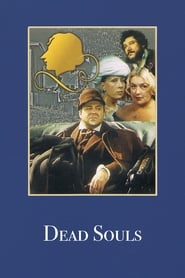
star 6Pavel Ivanovich Chichikov plans to buy the titles to “dead souls” and use them as collateral to obtain a large loan. He comes to a small provincial town and begins to proposition the local landowners. These landowners are revealed to be so petty and avaricious that not even Chichikov’s amazing offer can be worked to his advantage on them. Some stall, some refuse for no obvious reasons, some promise and then renege, and others want “in on the deal.” In the end, Chichikov, having concluded that the landowners are a hopeless lot, leaves for other regions.The Sixth of July
1968
The Sixth of July
1968
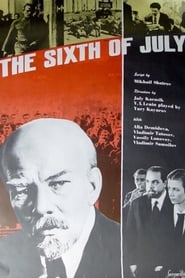
star 5.8Political thriller based on a story of coup against Bolsheviks by the Left Socialist Revolutionary Party in Moscow on 6–7 July 1918. They assassinate German ambassador in Moscow in hope of gaining public support and dragging the country into new war with Germany.Manto Mavrogenous
1971
Manto Mavrogenous
1971
star 6.4In Vienna 1820, the Manto Mavrogenous encounters a group of Greek students and talk of revolution to be made. Returning to Greece uncle of the initiates at Friendly Society. Madonna sells its dowry and equip their ships and army to help the revolution. Meet the founder of the Friendly Society, Dimitrios Ypsilanti, and builds relationships with him but encounters the objections of the political leaders of the struggle and particularly of Ioannis Kolettis who fears the two young people like to be the first king of the new nation. To break up the uses of beautiful paintings Niki monk who just came from Paris.The Emperor of Time
2016
The Emperor of Time
2016
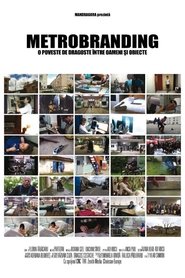
star 5.9The strange and sordid tale of Eadweard Muybridge, the man who accidentally invented motion pictures. The film is told from the point of view of Muybridge's abandoned son and viewed completely through a nineteenth century early cinema contraption called a mutoscope.Metrobranding
2010
Metrobranding
2010
star 4.6While people in Western Europe were used to choose between hundreds of brands, the communist Romanian used to have a different experience: all our life we lived with only one brand for each basic product. Imagine the importance that this 'mono-brands' could acquire for the lives of those who made them and for the lives of those who consumed them. A love story between man and object.