Top Rated History Movies on Pantaflix - Page 196
All Services
Free Services
 Netflix
 Amazon Prime Video
 Apple iTunes
 Apple TV Plus
 Disney Plus
 Google Play Movies
 Paramount Plus
 Hulu
Hulu
 HBO Max
 YouTube
 fuboTV
 Peacock
 Peacock Premium
 Amazon Video
 The Roku Channel
 AMC+
AMC on Demand
AMC+
AMC on Demand
 Kocowa
 Hoopla
 The CW
 Vudu
Vudu
 Starz
Starz
 Showtime
 PBS
PBS
 Pantaflix
 FXNow
FXNow
 Tubi TV
 Kanopy
 Comedy Central
 Crunchyroll
 Microsoft Store
 Redbox
 Sun Nxt
 ABC
ABC
 DIRECTV
 Crackle
 Fandor
 Plex
Plex
Netflix
Amazon Prime Video
Apple iTunes
Apple TV Plus
Disney Plus
Google Play Movies
Paramount Plus
Hulu
HBO Max
YouTube
fuboTV
Peacock
Peacock Premium
Amazon Video
The Roku Channel
AMC+
AMC on Demand
Kocowa
Hoopla
The CW
Vudu
Starz
Showtime
PBS
Pantaflix
FXNow
Tubi TV
Kanopy
Comedy Central
Crunchyroll
Microsoft Store
Redbox
Sun Nxt
ABC
DIRECTV
Crackle
Fandor
Plex

Rise Against the Sword
1966
star 6.5Farmer Abare Goemon is confronted by brigand-like samurai. He raises an army of farmers to fight them and does so brilliantly. When Lord Asakura sees the success Goemon has achieved, he attempts to recruit him to fight in a conflict between Asakura and another clan. Goemon refuses, and Lord Asakura sets out to destroy him.Marquis de Sade
1996
Marquis de Sade
1996
star 3.4Based on the true story of the notorious Marquis de Sade. In 18th century Paris, an innocent beauty's search for her missing sister leads her into the deadly sensuous realm of the infamous Marquis de Sade. Imprisoned for his sordid crimes, the Marquis likewise has the beauty morally trapped... for she must help him complete his banned book of lust, or never learn the fate of her sister. It becomes a test of wills and wit, as the Marquis attempts to convert her to his deviously sexual philosophy. When the Marquis escapes his prison, she must follow him to his remote chateau of sin to finally discover her sister's fate, and to face her own.Bohdan Khmelnytskyi
1941
Bohdan Khmelnytskyi
1941
star 3.4Year 1648. Ukraine under the oppression of Poland. Polish nobility committing outrage, burning villages one after another. Hetman of Zaporozhian Cossacks Bohdan Khmelnytskyi gathers the army of defenders of the motherland...The Challenge
1938
Stories of the Revolution
1960
star 6.2A film about the Cuban Revolution told from three different perspectives.When the Moors Ruled in Europe
2005
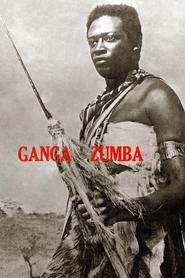
star 7.2A documentary movie covering the 700-year reign in Spain and Portugal of the Moors. It focus on Andlucia and specifically Fes, Granada and Cordoba.Ganga Zumba
1963
Ganga Zumba
1963
star 6.2The life of a runaway slave who founded the Quilombo dos Palmares, an outlaw community of Brazilian slaves.Year One in the North
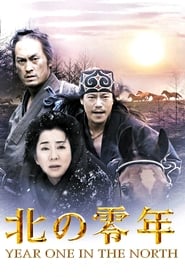
2005
star 4.9In 1868, after the fall of the Shogun-dominated Japan, the new government orders people from Awaji, near Kobe, to re-locate to the northern part of Hokkaido. These people once supported the now displaced Samurais of the older days. After two years, over 500 of them settled in their new land under the leadership of Hideaki, husband of Shino. However, as crops fail he is to go to Sapporo to learn new techniques of farming, leaving his wife and daughter for 5 years. All this time, the new community is constantly watched by the government which choose to again uproot them from their new homes.The Scarlet Coat
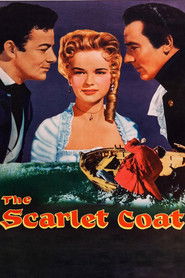
1955
The Scarlet Coat
1955
star 6.4An American officer goes undercover to unmask a Revolutionary War traitor.The Life and Works of Richard Wagner
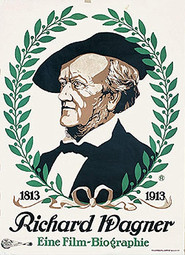
1913
star 5.2This biographical portrait of composer Richard Wagner (1813-1883), feature-length and lavishly produced, was released in conjunction with the centennial of his birth. It's an outstanding achievement in many respects. Naturally it looks primitive by modern standards, but contemporary viewers should bear in mind that it was made at a time when the motion picture industry was still in its infancy, and feature films were still a novelty. The very notion of a silent movie about a composer may seem odd, but Wagner is an ideal choice, simply because his life was so tempestuous and dramatic. Wagner's personality was operatic, while his tumultuous love life unfolded like a soap opera. He knew great success and abysmal failure, luxury one day and poverty the next. He participated in the wave of revolutions that swept Europe in the late 1840s, and had to flee Germany under threat of arrest.Amrapali
1966
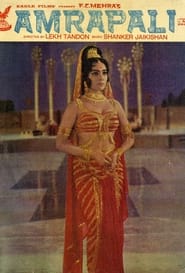
Amrapali
1966
star 6.2After a failed conquest, Emperor Ajaatshatru pretends to be a soldier in the enemy's army to weaken them from the inside. However, he falls in love with Amrapali, a well-respected royal courtesan, and must decide what his main priority is.A Radiant Life
2013
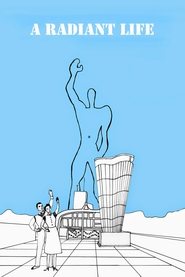
A Radiant Life
2013
star 5.81952, The Radiant City of Marseille receives its first occupants, eighty civil servants and compensated from war, coming from the four corners of France. Some are led by the promise of Le Corbusier’s ideals. Upon arrival, a couple experiments the location, facilities, and space allotted to them. They each respond to the new habitat. Its uniqueness, its details. The body questions the utopia. New Eden born under the reconstruction, the radiant city floats on the after-war as nothing happened. On board, settled cold, loneliness and sterility.A Trip Down Memory Lane
1966
star 5.9A Trip Down Memory Lane is a 1965 experimental collage film by Arthur Lipsett, created by editing together images and sound clips from over fifty years of newsreel footage. The film combines footage from a beauty contest, religious procession, failed airflight, automotive and science experiments, animal experimentation, skyscraper construction, military paraphernalia, John D. Rockefeller and scenes of leisure, Richard Nixon and scenes of war, blimps and hot air balloons, and a sword swallower. Lipsett envisioned his film as a kind of cinematic time capsule for future generations.Four Days of Snow and Blood
1989
star 6.8Based on the "2.26 Incident", an attempted coup d'état in Japan 1936, launched by radical ultra-nationalist parts of the military. Several leading politicians were killed and the center of Tokyo was briefly held by the insurgents before the coup was suppressed.Martín Fierro
1968
Martín Fierro
1968
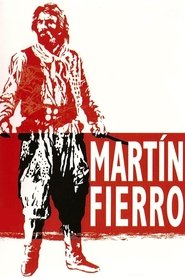
star 5.4The story of rebel gaucho Martin Fierro, his people, and their life in the Argentine Pampas. Based on José Hernández's epic poem.Art of Conflict: The Murals of Northern Ireland
2012
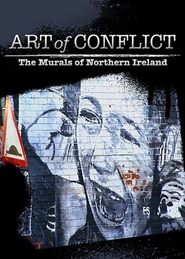
star 6.9The murals of Northern Ireland are an expression of the region's violent Troubles. 'The Art of Conflict' examines these murals through their painters and the people who live there, exploring this unique street art's impact, purpose, and future.Captain Boycott
1947
Captain Boycott
1947
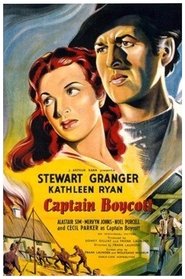
star 6.7Based on real events, this historical drama is set in 19th-century Ireland, when poverty-stricken tenants dispossessed by greedy landowner Capt. Boycott (Cecil Parker) band together to assert their rights. Patriotic farmer Hugh Davin (Stewart Granger) leads the rebels. Choosing nonviolent resistance, the villagers ostracize their nemesis, who squanders his fortune to repair his ruined reputation and wagers what's left on a horse race.The Birdmen
1973
The Birdmen
1973
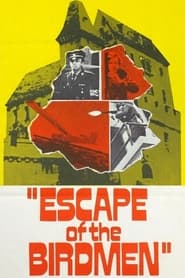
star 7.5During WWII an American soldier sent to Norway to help with the escape of a scientist working on the atomic bomb for the Germans. Before they can escape they are captured and sent to a POW prison camp in an alpine castle. Cook must find a way to escape with the scientist before the Gestapo discover the Norwegian's true identity and convinces the other prisoners to build a two person glider in which they plan to escape.Sermões
1989
Sermões
1989
star 5.9Based upon the life story of Father Antonio Vieira, born in Lisbon in 1608 and deceased in Salvador, Bahia, in 1697. He's considered the first Brazilian writer and one of the most important aesthete of linguistic and of the Portuguese language of all times, a master in the art of metaphor, of verbal relations and analogy. He was persecuted and condemned by the Portuguese Court of Inquisition due to his position against native slavery, against the intolerance to the Jewish people and to the colonial politics of exploration.Néron essayant des poisons sur des esclaves
1898
star 4.5Nero, seated on a throne, has slaves summoned. Each drinks poison and dies, the second even though he can see the corpse of his predecessor.