Top Rated History Movies on Pantaflix - Page 198
All Services
Free Services
 Netflix
 Amazon Prime Video
 Apple iTunes
 Apple TV Plus
 Disney Plus
 Google Play Movies
 Paramount Plus
 Hulu
Hulu
 HBO Max
 YouTube
 fuboTV
 Peacock
 Peacock Premium
 Amazon Video
 The Roku Channel
 AMC+
AMC on Demand
AMC+
AMC on Demand
 Kocowa
 Hoopla
 The CW
 Vudu
Vudu
 Starz
Starz
 Showtime
 PBS
PBS
 Pantaflix
 FXNow
FXNow
 Tubi TV
 Kanopy
 Comedy Central
 Crunchyroll
 Microsoft Store
 Redbox
 Sun Nxt
 ABC
ABC
 DIRECTV
 Crackle
 Fandor
 Plex
Plex
Netflix
Amazon Prime Video
Apple iTunes
Apple TV Plus
Disney Plus
Google Play Movies
Paramount Plus
Hulu
HBO Max
YouTube
fuboTV
Peacock
Peacock Premium
Amazon Video
The Roku Channel
AMC+
AMC on Demand
Kocowa
Hoopla
The CW
Vudu
Starz
Showtime
PBS
Pantaflix
FXNow
Tubi TV
Kanopy
Comedy Central
Crunchyroll
Microsoft Store
Redbox
Sun Nxt
ABC
DIRECTV
Crackle
Fandor
Plex

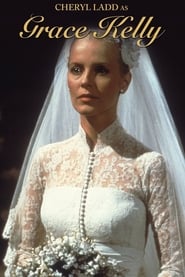
Grace Kelly
1983
Grace Kelly
1983
star 6.2The fairy tale story of the actress who became a princess is told in this biography that traces her rise from Philadelphia socialite to Hollywood movie star.Peter the First, Part II
1938
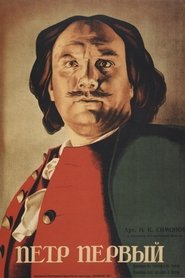
star 3.9Depicts Russian Tsar Peter the First's conquest over the Swedes and his son Aleksey's plot to overthrow him.Koch
2013
Revue
2008
Revue
2008
star 7As he did with his critically-acclaimed "Blockade," a documentary re-creation of the WWII siege of Leningrad, which received its NY theatrical premiere in March 2007, filmmaker Sergei Loznitsa has once again scoured the Russian film archives for "Revue," selecting excerpts from newsreels, propaganda films, TV shows and feature films that present an evocative portrait of Soviet life during the 1950s and 1960s. With scenes taken from the length and breadth of the “Soviet Motherland,” "Revue" illustrates industry and agriculture, political life, popular culture, and technology. The film’s fascinating flow of disparate scenes representing typical Soviet life of the period is, seen from today’s perspective, alternately poignant, funny, and tragicTitanic: 100 Years in 3D
2012
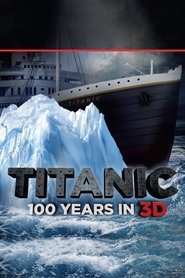
star 6.9100 years after an iceberg defeated the 882-foot luxury liner on its maiden voyage, scientists and historians are still exploring the Titanic. Armed with modern camera technology, submersibles were sent down to the ship's final resting place with the hope of capturing HD 3D visuals of the wreckage, in order to support or even confirm theories about the damage that took the boat down. Now, History Channel has brought some of that footage home in this 45-minute TV special, presented in 3D so that future generations can see it for themselves.The Wonderful Lies of Nina Petrovna
1929
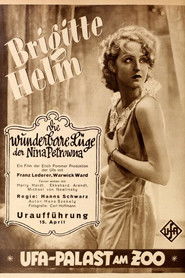
star 7This silent-screen classic, like many others produced near the end of the silent era, was both a theatrical extravaganza boasting an original orchestral score and an item which languished in obscurity for many years. When Carlo Piccardi took what was left of the score by Maurice Jaubert and re-created it, the existing footage was restored and paired with a new orchestral performance which was shown in Paris in 1988. The film's story concerns the travails of a woman who has been living quite comfortably as the mistress of a colonel in the Tsar's army in Russia. However, she eventually encounters a penniless young lieutenant and falls madly in love with him, as he does with her. Despite her best intentions of remaining with the colonel, and his intention to avoid trouble with his fellow soldiers, they cannot forswear this relationship, and tragedy is the inevitable result. The title refers to a moving incident in the story, and translates as "the wonderful lie of Nina Petrovna."Back to Your Arms
2010
Back to Your Arms
2010
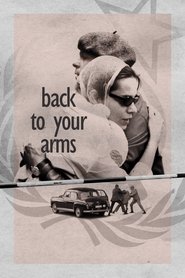
star 61961. Father and daughter, separated during World War II, are trying to meet in Berlin. He comes to Berlin from Soviet Lithuania, she comes from the USA. Even if the Berlin Wall has not been built yet, the Cold War is coming close to its apogee. Political and geographical situation, that seemed to be favorable in the beginning, turns out to be deceptive. After his arrival, the father is looked after by KGB intelligence agents. They, using him as bait, are trying to lure the daughter to the east side. Affected by the citie's atmospehere that's pervated with distrust, she is afraid to cross the West Berlin boundary. Trying to save each other from the possible trap, father and daughter are ready to give up the idea of the so much desired meeting...Story of the Golden Boot
1961
star 6.2Set in the Middle Ages the film tells the story of a wonder child, the little sculptor Wawrzek, who goes to work for a great master, Wit Stwosz. The story culminates in the unveiling of Stwosz's greatest masterpiece, the Altar of St. Mary's Church in Cracow.The Satin Slipper
1986
The Satin Slipper
1986
star 7.2During the century of the Spanish Gold, Doña Prouhèze, wife of a nobleman, deeply loves Don Rodrigo, who is forced to leave Spain and go to America. Meanwhile Prouhèze is sent to Africa to rule the city of Mogador. Ten years later Rodrigo leaves America and travels to Africa in search of Prouhèze to find out that she died and eventually meeting her daughter.Diary of a Provincial Girl
2003
star 6.8The day-to-day life of a young girl in the town of Diamantina, Brazil, on the end of 19th Century, based on real life diaries.My Mother's Courage
1995
My Mother's Courage
1995
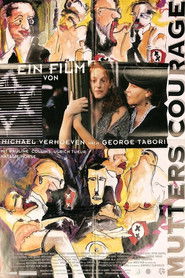
star 5.1The deportation of 4000 Jews from Budapest to Auschwitz in July 1944, as told by George Tabori, and how the narrator’s mother escaped it, owing to coincidence, courage and some help from where you’d least expect it.Horatio's Drive: America's First Road Trip
2003
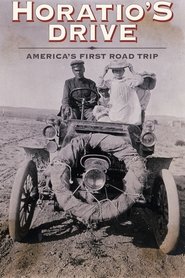
star 7.4In the spring of 1903, on a whim and a fifty-dollar bet, Dr. Horatio Nelson Jackson set off from San Francisco in a 20-horsepower Winton touring car hoping to become the first person to cross the United States in the new-fangled "horseless carriage." Most people doubted that the automobile had much of a future. Jackson's trip would prove them wrong.The Snow Goose
1971
The Snow Goose
1971
star 7Based upon Paul Gallico's delicate novel, Patrick Garland's Golden Globe winning The Snow Goose is a stark and hauntingly beautiful drama set amongst the striking scenery of the Essex salt marshes during the early years of WWII. A bearded Richard Harris leads the modest cast with his sensitive portrayal of tormented soul Philip Rhayader, a lonely misshapen man shunned by society but with a great love of life; Harris isnt overly bitter of his treatment and expresses his compassion through his paintings and love of the waterfowl that surround him. Harris is ably supported by the waiflike Jenny Agutter as Frith, who radiates the requisite amount of youthful innocence and naivety, and won a best supporting actress Emmy Award for her performance.Shors
1939
Shors
1939
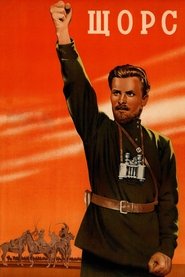
star 5.2The year is 1919. German troops retreat from Ukraine. The Directory, the Ukrainian national government lead by Symon Petliura, takes control of Kyiv. Meanwhile, the Bolshevik division commanded by Mykola Shchors is marching on the capital. The Bolsheviks capture the cities of Vinnytsia, Zhmerynka, and others one by one, but lose Berdychiv to Petliura’s forces. They are demoralized by the defeat. By his personal example of courage and military skill, Shchors inspires the retreating Red troops and leads them to victory over the enemy.Till Eulenspiegel
1975
Till Eulenspiegel
1975
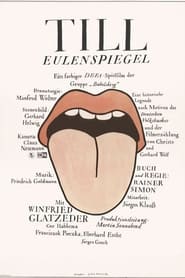
star 5.4In medieval Germany, poor and witty Till Eulenspiegel fools and cheats citizens, churchmen, and landlords. Although in most cases he uses his wit for personal well-being, he often helps the poor and weak. Eventually, he gains an influential but also dangerous position as royal fool at the court of the emperor.Empire of the Air: The Men Who Made Radio
1991
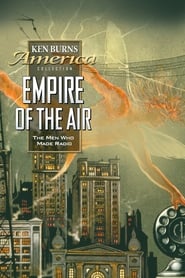
star 7.5For 50 years radio dominated the airwaves and the American consciousness as the first “mass medium.” In Empire of the Air: The Men Who Made Radio, Ken Burns examines the lives of three extraordinary men who shared the primary responsibility for this invention and its early success, and whose genius, friendship, rivalry and enmity interacted in tragic ways. This is the story of Lee de Forest, a clergyman’s flamboyant son, who invented the audion tube; Edwin Howard Armstrong, a brilliant, withdrawn inventor who pioneered FM technology; and David Sarnoff, a hard-driving Russian immigrant who created the most powerful communications company on earth.The Battle of Näsilinna 1918
2012
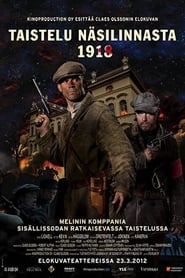
star 5Depicting the Finnish Civil War from the White army's point of view. Lieutenant Melin's soldiers mission is to penetrate the heart of the city and overtake the Nasilinna Palace from the Reds.Maleficarum
2011
Maleficarum
2011
star 4.1Maria Francisca, a wealthy young heiress and her friend Mariana De Castro, a young protestant widow, are accused of witchcraft and taken before the Inquisition of Lima, Peru .The Young Mr. Pitt
1942
The Young Mr. Pitt
1942
star 5.7This biopic tells the story of the life of Pitt The Younger, who became Prime Minister of Great Britain at the age of 24.Augustine of Hippo
1972
Augustine of Hippo
1972
star 5.9A biography of St. Augustine as he enters the episcopacy and deals with heresy and the decline of the Western Roman Empire.