New Documentary Movies - Page 81
All Services
Free Services
 Netflix
 Amazon Prime Video
 Apple iTunes
 Apple TV Plus
 Disney Plus
 Google Play Movies
 Paramount Plus
 Hulu
Hulu
 HBO Max
 YouTube
 fuboTV
 Peacock
 Peacock Premium
 Amazon Video
 The Roku Channel
 AMC+
AMC on Demand
AMC+
AMC on Demand
 Kocowa
 Hoopla
 The CW
 Vudu
Vudu
 Starz
Starz
 Showtime
 PBS
PBS
 Pantaflix
 FXNow
FXNow
 Tubi TV
 Kanopy
 Comedy Central
 Crunchyroll
 Microsoft Store
 Redbox
 Sun Nxt
 ABC
ABC
 DIRECTV
 Crackle
 Fandor
 Plex
Plex
Netflix
Amazon Prime Video
Apple iTunes
Apple TV Plus
Disney Plus
Google Play Movies
Paramount Plus
Hulu
HBO Max
YouTube
fuboTV
Peacock
Peacock Premium
Amazon Video
The Roku Channel
AMC+
AMC on Demand
Kocowa
Hoopla
The CW
Vudu
Starz
Showtime
PBS
Pantaflix
FXNow
Tubi TV
Kanopy
Comedy Central
Crunchyroll
Microsoft Store
Redbox
Sun Nxt
ABC
DIRECTV
Crackle
Fandor
Plex

Fatherless No More
2025
Fatherless No More
2025
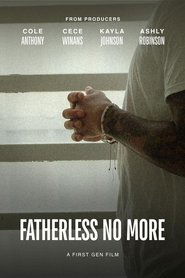
Fatherless No More is a feature documentary that chronicles the remarkable journey of an Orlando-based pastor and former Super Bowl Champion who answered a divine call to live in an RV on Rikers Island. The film explores his commitment to do what's never been done before which evolved into over a year of profound encounters and transformed lives within the jail walls. This is a story of redemption, healing and faith that magnifies the effects of fatherlessness on the human condition.Cathedrals
2025
Cathedrals
2025
star 10In CATHEDRALS, filmmaker Dan Algrant embarks on a journey to reconnect with two black collaborators from a film made nearly 50 years ago. CATHEDRALS becomes a powerful exploration of the bonds that tie us together and the experiences that shape our identities. Through the lens of a creative collaboration, the film illuminates the struggles and triumphs that define life in a close-knit community, ultimately reaffirming the importance of human connection and the power of collective memory.Stronger Together
2025
Stronger Together
2025
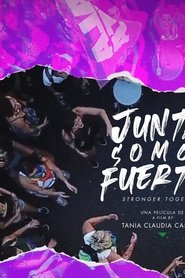
A documentary that depicts the rise of the Mexican feminist movement to legalize abortion and combat the growing wave of violence against women.Being Here, Dreaming There
2025
In this experimental film, Peruvian Super 8 safari reels are reimagined as immersive VR imagery, exploring the lingering specters of colonialism and the eeriness of tourism.Mollusk
2025
Mollusk
2025
Few know José Ignacio Solórzano—a balding man with everyday troubles like money and marriage. But everyone knows Jis, the beloved cartoonist whose humor and art have left a mark on the country. Mollusk tells the story of both, exploring how creativity and laughter can help overcome life’s challenges.Itacoatiaras
2025
Itacoatiaras
2025
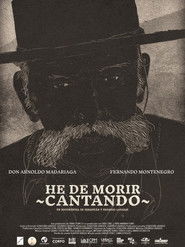
He de Morir Cantando
2025
He de Morir Cantando
2025
Portrait of two Chilean folk poets, practitioners of the “canto a lo divino.” Afflicted by the drought of their lands and by the fading of tradition, an old shepherd and a laborer—both born as singers—must die singing.Sax Maniac: The Life and Times of James Chance
2025
"Sax Maniac: The Life and Times of James Chance" delves into the groundbreaking career of James Siegfried, better known as James Chance or James White, a seminal figure in the late 1970s and early 1980s New York City "No Wave" music scene. Produced and directed by his brother, David Siegfried, the documentary chronicles James's journey from his early days in Milwaukee, Wisconsin, where he first explored jazz and protopunk.Solstice
2025
Solstice
2025
Jan Šípek documented the unmistakable singer-songwriter and spiritual seeker Oldřich Janota (1949–2024) during the last period of Janota's life. This meant accepting the challenge and approaching Oldřich's song koans with a wholly original film style. The film was made on the day of the winter solstice during one of the very last performances of this great figure of Czech independent culture.Tender Hrabal
2025
Tender Hrabal
2025
The discovery of previously unknown recordings of Hrabal's lectures provides a rare, intimate insight into the author's world. The documentary film The Gentle Hrabal allows his authentic voice to be heard again after almost fifty years. Here, Hrabal speaks to students at his cottage in Kersko, and at other times to parishioners at the Protestant rectory in Libice.AXOMAMA
2025
AXOMAMA
2025
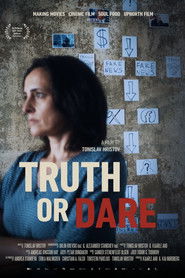
The name Axomama refers to the Inca goddess of potatoes. In the mountainous regions of Peru, her place of origin, this food permeates various spheres of the lives of the local people. This anthropologically conceived documentary attempts to capture the inseparable connection between potatoes and Peru’s famous colonial history, culture, and traditional beliefs.Truth or Dare
2025
Truth or Dare
2025
An investigation into the functioning of fake news in pre-election Bulgaria reveals the people behind its creation and dissemination, while also highlighting those who are trying to remove it from public discourse. The documentary follows two opposing protagonists. An experienced investigative journalist, with twenty years of experience, whose life has been repeatedly threatened, and whose car has been set on fire twice, has long been highlighting the dangers of disinformation to the Bulgarian public. In contrast to her efforts is a young man entering politics to fight against “gender ideology,” immigrants, vaccinations, and Western influences, who actively buys Russian trolls, and spreads propaganda through social networks.Snowblind
2025
Snowblind
2025
A dark fantasy inspired by Edgar Allan Poe’s The Narrative of Arthur Gordon Pym of Nantucket, interwoven with Lovecraftian allusions, follows a lonely traveler who enters a forgotten realm where reality shatters.SPIKA: Sowing Teeth
2025
SPIKA: Sowing Teeth
2025
Beneath the polished floors of a contemporary art gallery, a new form of life is awakening, gradually transforming the urban space into a living, symbiotic system connecting humans with the realm of plants and bacteria. This speculative docufiction, shot on 16 mm film in response to the We the Bacteria exhibition at the Milan Triennale, imagines an alternative future for architecture told from the perspective of non-human actors. It explores the thorny structure of experimental architect Rachel Armstrong's SPIKA installation, which functions both as a fortress and an ecosystem, and outlines the possibility of urban buildings transformed into metabolic nodes of a new community.Mushrooms
2025
Mushrooms
2025
A stop-motion animation composed of photographs, watercolors, and fungal pigments brings to life the imagery of mushrooms in an endless array of shapes and forms. With exaggeration and humor, it allows a fascinating mycological universe to grow, evoking the infinitely ramified, mysterious world of mycelium and its hidden communication.Nora, an Unexpected Guest Is Coming to See You
2025
Two narrative and aesthetic levels—a stylized studio room with a horror vibe that the fictional Nora can't leave, and a voyeuristic handheld camera recording a nervous girl in a real setting—connect the main character's body and experience with sexualized violence. A variation on Ibsen's woman, whose story is taken over and rewritten by a man, creates a counterpoint to the image of the contemporary heroine, who speaks for herself falteringly and painfully and refuses to be silenced.Without Touch
2025
Without Touch
2025
The seemingly purely observational fascination with insect bodies is disrupted by a diegetic soundtrack composed of distinctive frequencies to which the observed creatures are exposed. This scientific film experiment, which results in a visual transcription of their auditory responses into colored marks on a speaker, concludes with a tragic punchline.Maya
2025
Maya
2025
Mājā – a Sanskrit term denoting a veil, illusion, or deceptive reflection that conceals the true nature of reality while simultaneously creating it. The film translates this ancient metaphor into slowly flowing black-and-white images: mesmerizing details, alternating light and shadow, flowing water that melts on the girl's face like a translucent veil. The central symbol of the film is a mirror cube – both a deception and a gateway, in which reality shatters into a dimension of reflections and opens up a space for quiet contemplation.How Not to Remember Our Bodies
2025
A collage of excerpts from Czechoslovak television educational programmes from the 1970s and 1980s devoted to the artificial termination of pregnancy is accompanied by an urgent voice-over reflecting on what really shapes the history of abortion: is it the idea of self- ownership and freedom, the development of medical technologies, state reproductive policy, or market logic? The film paints a complex picture of the reproductive history of socialist Czechoslovakia, in which media representations of abortion—so different from the rhetoric surrounding the feminist pro-choice movement in the US—are transcribed into intimate bodily experience.Los Cangrejos
2025
Los Cangrejos
2025
A young filmmaker finds a notebook containing his great-grandfather's memoirs from the Spanish Civil War in Soria. He discovers that his great-grandfather was persecuted and imprisoned for years and attempts to reconstruct his story by revisiting these locations to film them.