New Documentary Movies on Kanopy - Page 157
All Services
Free Services
 Netflix
 Amazon Prime Video
 Apple iTunes
 Apple TV Plus
 Disney Plus
 Google Play Movies
 Paramount Plus
 Hulu
Hulu
 HBO Max
 YouTube
 fuboTV
 Peacock
 Peacock Premium
 Amazon Video
 The Roku Channel
 AMC+
AMC on Demand
AMC+
AMC on Demand
 Kocowa
 Hoopla
 The CW
 Vudu
Vudu
 Starz
Starz
 Showtime
 PBS
PBS
 Pantaflix
 FXNow
FXNow
 Tubi TV
 Kanopy
 Comedy Central
 Crunchyroll
 Microsoft Store
 Redbox
 Sun Nxt
 ABC
ABC
 DIRECTV
 Crackle
 Fandor
 Plex
Plex
Netflix
Amazon Prime Video
Apple iTunes
Apple TV Plus
Disney Plus
Google Play Movies
Paramount Plus
Hulu
HBO Max
YouTube
fuboTV
Peacock
Peacock Premium
Amazon Video
The Roku Channel
AMC+
AMC on Demand
Kocowa
Hoopla
The CW
Vudu
Starz
Showtime
PBS
Pantaflix
FXNow
Tubi TV
Kanopy
Comedy Central
Crunchyroll
Microsoft Store
Redbox
Sun Nxt
ABC
DIRECTV
Crackle
Fandor
Plex

Best of Enemies
2015
Best of Enemies
2015
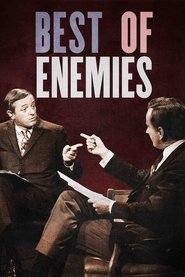
star 7.2A documentary about the legendary series of nationally televised debates in 1968 between two great public intellectuals, the liberal Gore Vidal and the conservative William F. Buckley Jr. Intended as commentary on the issues of their day, these vitriolic and explosive encounters came to define the modern era of public discourse in the media, marking the big bang moment of our contemporary media landscape when spectacle trumped content and argument replaced substance. Best of Enemies delves into the entangled biographies of these two great thinkers, and luxuriates in the language and the theater of their debates, begging the question, "What has television done to the way we discuss politics in our democracy today?"Art of the Prank
2015
Art of the Prank
2015
star 6.8The great media prankster, Joey Skaggs, wants to fool the world media AGAIN, and, with the most complex hoax of his career in the pipeline, he now must use every trick in his prankster's arsenal to make it work. Art of the Prank is an emotional journey following the evolution of artist Joey Skaggs-a fierce proponent of independent thinking and the man who has turned the media hoax into an art form. With unprecedented access to the man and his archives, the 95-minute documentary interweaves a current unfolding hoax with a look behind-the-scenes at some classic performance pieces (all reported as fact by a wide range of prestigious journalists) plus commentary from co-conspirators and others.The Bomb
2015
The Bomb
2015
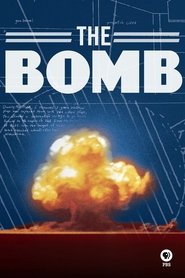
star 6.8Using masterfully restored footage from recently declassified images, The Bomb tells a powerful story of the most destructive invention in human history. From the earliest testing stages to its use as the ultimate chess piece in global politics, the program outlines how America developed the bomb, how it changed the world and how it continues to loom large in our lives. The show also includes interviews with prominent historians and government insiders, along with men and women who helped build the weapon piece by piece.Another Country
2015
Another Country
2015
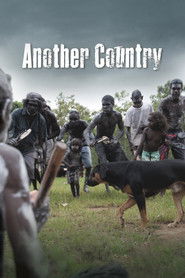
star 5.8In this documentary companion to CHARLIE'S COUNTRY, Australian actor David Gulpilil tells the story of when his people's way of life was derailed by ours.I Am Chris Farley
2015
I Am Chris Farley
2015
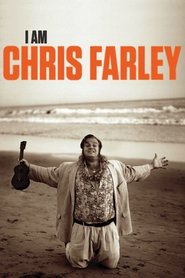
star 7.1I am Chris Farley tells his hilarious, touching and wildly entertaining story - from his early days in Madison, Wisconsin, to his time at Second City and Saturday Night Live, then finally his film career (which included hits like Tommy Boy and Black Sheep). The film showcases his most memorable characters and skits from film and television and also includes interviews and insights from his co-stars, family and friends - including the likes of Christina Applegate, Dan Aykroyd, Mike Myers, Bob Odenkirk, Bob Saget and Adam Sandler.Black and Cuba
2015
Black and Cuba
2015
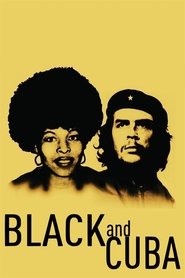
star 7.3'Black and Cuba' follows street-smart students, who are outcasts at an elite Ivy League university, as they band together and adventure to Cuba to see if revolution is truly possible. While filming their poignant encounters with AfroCuban youth, breathtaking sites and moving hip-hop performances, the travelers confront realities behind myths of color-blindness and social mobility. This edgy and artful documentary of their journey uncovers renewed hope for equality and human rights. 'Black and Cuba' is the feature film directorial debut of international human rights advocate and scholar Robin J. Hayes, PhD.East LA Interchange
2015
East LA Interchange
2015
star 2East L.A. Interchange follows the evolution of working-class, immigrant Boyle Heights, the oldest neighborhood in East Los Angeles from multiethnic to predominately Latino and a cradle of Mexican-American culture in the U.S. The documentary tells the story of how one neighborhood managed to survive the construction of the largest and busiest freeway interchange in the nation and explores the shifting face of community in the United States today arguing why it should matter to us all.UnSlut: A Documentary Film
2015
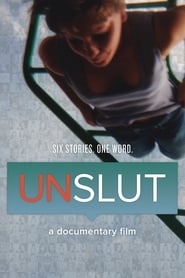
star 10In 2013, seventeen-year-old Rehtaeh Parsons took her own life. The Halifax teenager had been gang-raped a year and a half earlier by her classmates and labeled a "slut" as a result. Despite transferring schools many times, she could not escape constant cyber harassment and in-person bullying. Rehtaeh's is not the only story like this to make headlines in recent years. Why is the sexual shaming of girls and women, including sexual assault victims, still so prevalent in the United States and Canada?Sharknado: Feeding Frenzy
2015
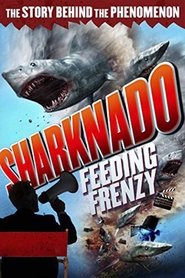
star 4.8What began as another Syfy creature feature has now become an important piece of pop culture - poised to take over the entire world.Feeling Wanted
2015
Feeling Wanted
2015
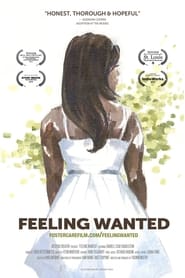
With a dad incarcerated for murder, a mom on drugs and a childhood in foster care, Charell knew it was time to break the cycle.Packed In A Trunk: The Lost Art of Edith Lake Wilkinson
2015
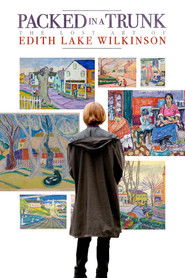
star 7.6The story of artist Edith Lake Wilkinson, a painter who was committed to an asylum in 1924 and never heard from again. All her worldly possessions were packed into trunks and shipped to a relative in West Virginia where they sat in an attic for 40 years. Edith's great-niece, Emmy Award winning writer and director Jane Anderson, grew up surrounded by Edith's paintings, thanks to her mother who had gone poking through that dusty attic and rescued Edith's work. The film follows Jane in her decades-long journey to find the answers to the mystery of Edith's buried life, return the work to Provincetown and have Edith's contributions recognized by the larger art world.Bitcoin: The End of Money as We Know It
2015
star 6.6A documentary exploring how money and the trading of value has evolved, culminating in Bitcoin.Great White Lies
2015
Great White Lies
2015
Focusing on the Western Australian Government's decision in January 2014 to hunt and kill the protected great white shark, filmmaker Skyler Thomas visits Australia, South Africa, and New Zealand to learn more about the shark culling practices in each of those locations. Interviewing scientists, politicians, surfers, and activists, Great White Lies thoroughly examines the history of shark culling.Famous Nathan
2015
Famous Nathan
2015
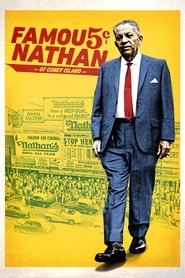
star 5.8A Coney Island-inspired, densely-layered visually dynamic documentary portrait of the life and times of the original Nathan's Famous, created in 1916 by filmmaker Lloyd Handwerker's grandparents, Nathan and Ida Handwerker. 30 years in the making, Famous Nathan interweaves decades-spanning archival footage, family photos and home movies, an eclectic soundtrack and never-before-heard audio from Nathan: his only interview, ever as well as compelling, intimate and hilarious interviews with the dedicated band of workers, not at all shy at offering opinions, memories and the occasional tall tale.Chasing Pluto
2015
Chasing Pluto
2015
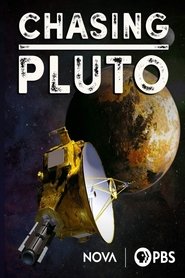
star 5NOVA captures New Horizons' historic flyby of Pluto, the culmination of the spacecraft's nine-year, three-billion-mile journey to reveal the first ever detailed images of this strange, icy world at the very edge of our solar system.By Sidney Lumet
2015
By Sidney Lumet
2015
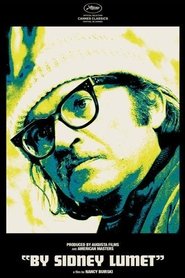
star 6.9An analysis of director Sidney Lumet's work (12 Angry Men, Dog Day Afternoon, Before The Devil Knows You're Dead) in his own words, based on a five-day interview recorded shortly before his death.Do I Sound Gay?
2015
Do I Sound Gay?
2015
star 5.5What makes a voice “gay”? A breakup with his boyfriend sets journalist David Thorpe on a quest to unravel a linguistic mystery.CIA Covert Experiments
2015
star 7.3It is August 1951 and an entire French village goes crazy. People are screaming in the streets and throwing themselves out of windows. 300 people are affected and 7 end up dead. Wild theories start circulating to explain the tragedy. 60 years later declassified documents from the United States reveal that the CIA conducted experiments on unsuspecting citizens.Too Black to Be French?
2015
Approximately, because so-called "ethnic" statistics are prohibited, there are an estimated 3.3 million black French citizens. Distant descendants of slaves from the Caribbean or "indigenous" peoples from the French colonial empire in Africa, they constitute a minority that is often discriminated against. Isabelle Boni-Claverie, a mixed-race woman raised in the affluent neighborhoods of Paris, daughter of an Ivorian politician and granddaughter of Alphonse Boni, a Black man who became a magistrate of the French Republic in the 1930s, examines what is blocking the social advancement of Black French people and the full recognition of their citizenship.Cartel Land
2015
Cartel Land
2015
star 7.2In the Mexican state of Michoacán, Dr. Jose Mireles, a small-town physician known as "El Doctor," shepherds a citizen uprising against the Knights Templar, the violent drug cartel that has wreaked havoc on the region for years. Meanwhile, in Arizona's Altar Valley—a narrow, 52-mile-long desert corridor known as Cocaine Alley—Tim "Nailer" Foley, an American veteran, heads a small paramilitary group called Arizona Border Recon, whose goal is to halt Mexico’s drug wars from seeping across our border.