New Documentary Movies on Kanopy - Page 160
All Services
Free Services
 Netflix
 Amazon Prime Video
 Apple iTunes
 Apple TV Plus
 Disney Plus
 Google Play Movies
 Paramount Plus
 Hulu
Hulu
 HBO Max
 YouTube
 fuboTV
 Peacock
 Peacock Premium
 Amazon Video
 The Roku Channel
 AMC+
AMC on Demand
AMC+
AMC on Demand
 Kocowa
 Hoopla
 The CW
 Vudu
Vudu
 Starz
Starz
 Showtime
 PBS
PBS
 Pantaflix
 FXNow
FXNow
 Tubi TV
 Kanopy
 Comedy Central
 Crunchyroll
 Microsoft Store
 Redbox
 Sun Nxt
 ABC
ABC
 DIRECTV
 Crackle
 Fandor
 Plex
Plex
Netflix
Amazon Prime Video
Apple iTunes
Apple TV Plus
Disney Plus
Google Play Movies
Paramount Plus
Hulu
HBO Max
YouTube
fuboTV
Peacock
Peacock Premium
Amazon Video
The Roku Channel
AMC+
AMC on Demand
Kocowa
Hoopla
The CW
Vudu
Starz
Showtime
PBS
Pantaflix
FXNow
Tubi TV
Kanopy
Comedy Central
Crunchyroll
Microsoft Store
Redbox
Sun Nxt
ABC
DIRECTV
Crackle
Fandor
Plex

A German Youth
2015
A German Youth
2015
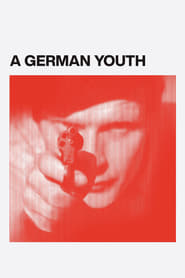
star 7.1At the end of the 1960s the post-war generation began to revolt against their parents. This was a generation disillusioned by anti-communist capitalism and a state apparatus in which they believed they saw fascist tendencies. This generation included journalist Ulrike Meinhof, lawyer Horst Mahler, filmmaker Holger Meins as well as students Gudrun Ensslin and Andreas Baader.Dog by Dog
2015
Dog by Dog
2015
star 7.7An examination of efforts in the United States to tighten regulations on commercial dog kennels, known as 'puppy mills,' where animals are kept without adequate regard for their welfare.Mission Control Texas
2015
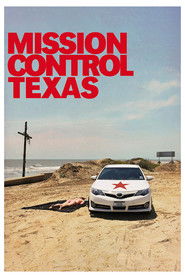
star 7"The Atheist Experience," produced in Austin, Texas, is the only atheist TV show in the United States. Every Sunday afternoon, two atheists debate callers for one hour, on camera. "Mission Control Texas" portrays the show, its protagonists, and the discussions between the hosts and callers. The debates between believers and skeptics are funny, touching, and shocking in turn, and they're interspersed with footage of the very public religious displays common in the state of Texas. The film is an intimate, concentrated, and entertaining insight into the culture wars, and is sure to provoke inspiration as well as frustration, no matter which side of the divide you fall on.Nelson Algren: The End Is Nothing, the Road Is All...
2015
An in-depth feature length documentary of one of America's greatest and least understood authors, Nelson Algren. This never before told compelling life story reveals a unique literary voice through rare interviews, archival footage and the gritty noirish voice of Algren on Algren. Kurt Vonnegut and Studs Terkel, literary giants in their own right, sing songs of praise along with many of his old friends, which makes this film seem like a hymn from the grave. This stylishly produced film embeds us in the 1950's cold war world when Algren worked. Algren's touching love affair with Simone de Beauvoir weaves it's way through the film along with the damaging impact of FBI and CIA surveillance.Habeas Corpus
2015
Habeas Corpus
2015
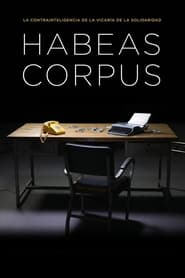
After the coup d’état in 1973, employees at the Vicariate for Solidarity began the risky road to save the lives of the prosecuted and find the fate of the detained. With time, they understood there was a politics of extermination in place against the dissidents, and that, in order to decipher its functioning and those directly responsible, they had to turn into a sophisticated intelligence team.Winning: The Racing Life of Paul Newman
2015
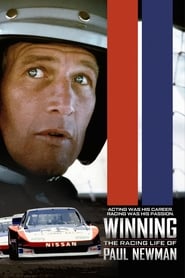
star 7.5The world knows Paul Newman as an Academy Award winning actor with a fifty-plus year career as one of the most prolific and revered actors in American Cinema. He was also well known for his philanthropy; Newman's Own has given more than four hundred and thirty million dollars to charities around the world. Yet few know the gasoline-fueled passion that became so important in this complex, multifaceted man's makeup. Newman’s deep-seated passion for racing was so intense it nearly sidelined his acting career. His racing career spanned thirty-five years; Newman won four national championships as a driver and eight championships as an owner. Not bad for a guy who didn't even start racing until he was forty-seven years old.Alzheimer's: A Love Story
2015
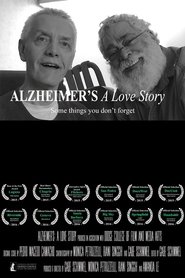
star 4.4Partners for 40 years, Michael and Gregory approach the end of their journey together with incredible love and courage.I Am Big Bird: The Caroll Spinney Story
2015
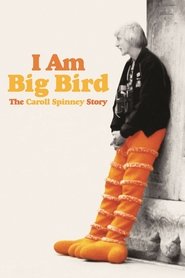
star 7.4A documentary about Caroll Spinney who has been Sesame Street's Big Bird and Oscar the Grouch since 1969. At 78-years-old, he has no intention of stopping.I, Dalio
2015
I, Dalio
2015
star 6.4The great French actor, Marcel Dalio, who has the lead role in Jean Renoir's THE RULES OF THE GAME, also appears in Renoir's GRAND ILLUSION. In both films he plays a character who is Jewish, as Dalio was in real life. In fact, in most of the French films he's in the 1930s, he almost always plays shady characters, informers, blackmailers and gangsters. In other words, he is always "the Jew." When the Nazis invaded France in 1940, he fled to America and appeared in CASABLANCA and TO HAVE AND HAVE NOT. In America, he was no longer the Jew but The Frenchman. He became, in dozens of films, America's idea of a typical Frenchman. His film career has these two strands in which he has two different identities. Are you defined by other people and their perceptions of who you are? Are you always a creation of the way people want to see you? Or can you exist outside of the arbitrary boundaries which are placed on you?The Vanity Tables of Douglas Sirk
2015
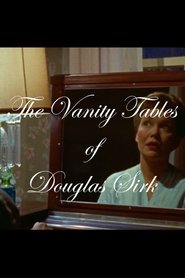
star 5.6A video essay exploring the frequency and meaning of that particular prop in a wide variety of Sirk movies. Is it a device that traps and keeps women in an artificial world with a limited point of view? Or is it a gateway to the past and the future, and a distorted but nevertheless real vision of the roles that woman are forced to play in society? It's an exploration of the texts and subtexts of commercial films and the subterranean and complicated ways that they affect us and can be read.Our Stars
2015
Our Stars
2015
star 4Stars of the 1940s and 1950s, were they cast for their mutual affinities or for their commercial appeal? If and when they were re-starred years later, did the magic still work? Did sparks still fly? The movie business, a machine that manufactured romance and desire at the same time that it documented the process of aging. A meditation on youth and beauty, aging and box office.Small is Beautiful: A Tiny House Documentary
2015
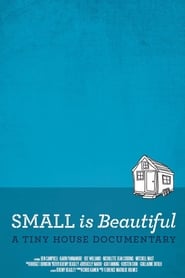
star 4.8Four people seek a more sustainable and secure future by asking the question: "What is it really like to build and live in a tiny house?"The Last Colony
2015
The Last Colony
2015
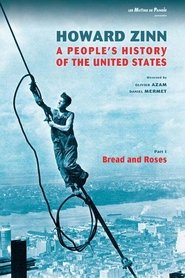
star 7A close look at Puerto Rico's unique relationship with the United States.Howard Zinn: A People's History of the United States
2015
star 6.9Between 1900 and 1920 more than 14 million immigrants arrived in the US, like Howard Zinn's parents. They came fleeing poverty or war, or racism, or religious persecution. They dreamed of a promised land, of wealth, or simply of a better life.Drag Becomes Him
2015
Drag Becomes Him
2015
star 6.5An intimate glimpse inside the life of internationally acclaimed drag performer Jinkx Monsoon.Help Us Find Sunil Tripathi
2015
star 7.5A fragile and depressed university student disappears from his apartment in the middle of a cold winter's night. Four weeks later his name and photo explode across social media and into the mainstream media as 'suspect 2' in the Boston Marathon bombings. The search for truth by citizen journalists, mainstream journalists and members of social media Web sites derails with tragic consequences as collective fear and suspicion rule the day and rain down upon a vulnerable family. Exclusive access and never released footage reveal the enduring love of a family in crisis.A Sinner in Mecca
2015
A Sinner in Mecca
2015
star 5.8For a gay filmmaker, filming in Saudi Arabia presents two serious challenges: filming is forbidden in the country and homosexuality is punishable by death. For filmmaker Parvez Sharma, however, these were risks he had to assume as he embarked on his Hajj pilgrimage, a journey considered the greatest accomplishment and aspiration within Islam, his religion. On his journey Parvez aims to look beyond 21st-century Islam’s crises of religious extremism, commercialism and sectarian battles. He brings back the story of the religion like it has never been told before, having endured the biggest jihad there is: the struggle with the self.Tehlirian on Trial: Armenia's Avenger
2015
star 8On 15 March 1921, Talat Pasha, a high-ranking Turkish dignitary, was shot dead in a Berlin street by a young Armenian. A few months later, Soghomon Tehlirian, his assassin, appeared before a German court. He faced the death penalty. Yet, during the trial, the victim gradually changed into the guilty party, and the accused was finally acquitted.Changing Season
2015
Changing Season
2015
Venture out to the Masumoto Farm – eighty acres of prime, peach-growing orchards – where seven varieties of the sweet juicy fruit are cultivated to sun-kissed perfection by a dynamic father-and-daughter team of David “Mas” and Nikiko Masumoto. Director Jim Choi succinctly captures this underrepresented facet of the CA farming industry about an Asian American family-run business, three generations strong, which in turn presents us with the changing idea of the American Dream. - See more at: http://laapff.festpro.com/films/detail/changing_season_2015#sthash.54OdJcdi.dpufThe Day the '60s Died
2015
star 7.8The Day the '60s Died chronicles May 1970, the month in which four students were shot dead at Kent State. The mayhem that followed has been called the most divisive moment in American history since the Civil War. From college campuses, to the jungles of Cambodia, to the Nixon White House, the film takes us back into that turbulent spring 45 years ago.