New Documentary Movies on Kanopy - Page 258
All Services
Free Services
 Netflix
 Amazon Prime Video
 Apple iTunes
 Apple TV Plus
 Disney Plus
 Google Play Movies
 Paramount Plus
 Hulu
Hulu
 HBO Max
 YouTube
 fuboTV
 Peacock
 Peacock Premium
 Amazon Video
 The Roku Channel
 AMC+
AMC on Demand
AMC+
AMC on Demand
 Kocowa
 Hoopla
 The CW
 Vudu
Vudu
 Starz
Starz
 Showtime
 PBS
PBS
 Pantaflix
 FXNow
FXNow
 Tubi TV
 Kanopy
 Comedy Central
 Crunchyroll
 Microsoft Store
 Redbox
 Sun Nxt
 ABC
ABC
 DIRECTV
 Crackle
 Fandor
 Plex
Plex
Netflix
Amazon Prime Video
Apple iTunes
Apple TV Plus
Disney Plus
Google Play Movies
Paramount Plus
Hulu
HBO Max
YouTube
fuboTV
Peacock
Peacock Premium
Amazon Video
The Roku Channel
AMC+
AMC on Demand
Kocowa
Hoopla
The CW
Vudu
Starz
Showtime
PBS
Pantaflix
FXNow
Tubi TV
Kanopy
Comedy Central
Crunchyroll
Microsoft Store
Redbox
Sun Nxt
ABC
DIRECTV
Crackle
Fandor
Plex

State of Denial
2003
State of Denial
2003
An unprecedented and unflinching look at how the citizens of South Africa are living with the AIDS epidemic, given the climate of governmental confusion and neglect.Whose Is This Song?
2003
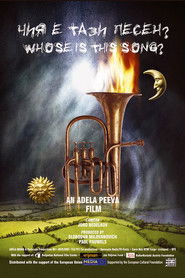
Whose Is This Song?
2003
star 6.1Adela Peeva explores the national origin of a song common amongst a set of countries, and finds that the answer is not as simple as one might think.The Blonds
2003
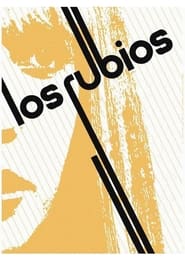
The Blonds
2003
star 5.6In 1977, when she was four years old, Albertina Carri's parents vanished without a trace, victims of Argentina's brutal military junta. In this fresh and politically daring film, the young Argentinian filmmaker attempts to unravel the mystery, piecing together her memories and fantasies in a quest to understand her parents' untimely fate.Liberty: 3 Stories about Life & Death
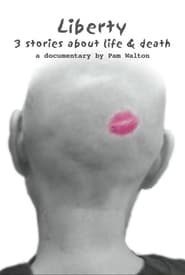
2003
star 1This extraordinary film interweaves the stories of three close lesbian friends: Joyce Fulton, who died over the course of two years from a brain tumor; Mary Bell Wilson, who, with indefatigable courage, faces up to her own losing battle with lymphoma; and Nan Golub, a black-leather-jacketed, platinum-dyed New York city artist, very much alive. Liberty demystifies death, dispels misinformation about age and sexual orientation and reminds us that life is worth living, even worth celebrating.The Wild Parrots of Telegraph Hill
2003
star 7.1A homeless musician finds meaning in his life when he starts a friendship with dozens of parrots.Horatio's Drive: America's First Road Trip
2003
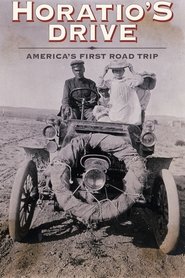
star 7.4In the spring of 1903, on a whim and a fifty-dollar bet, Dr. Horatio Nelson Jackson set off from San Francisco in a 20-horsepower Winton touring car hoping to become the first person to cross the United States in the new-fangled "horseless carriage." Most people doubted that the automobile had much of a future. Jackson's trip would prove them wrong.The Net
2003
The Net
2003
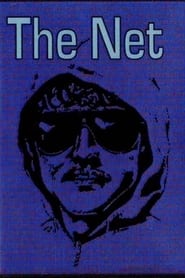
star 6Explores the incredibly complex backstory of Ted Kaczynski, the infamous Unabomber. This exquisitely crafted inquiry into the rationale of this mythic figure situates him within a late 20th century web of technology—a system that he grew to oppose. A marvelously subversive approach to the history of the Internet, this insightful documentary combines speculative travelogue and investigative journalism to trace contrasting countercultural responses to the cybernetic revolution.Morning Sun
2003
Morning Sun
2003
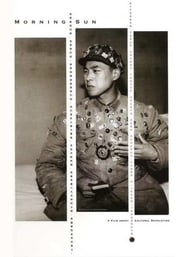
star 7.4The film Morning Sun attempts in the space of a two-hour documentary film to create an inner history of the Great Proletarian Cultural Revolution (c.1964-1976). It provides a multi-perspective view of a tumultuous period as seen through the eyes—and reflected in the hearts and minds—of members of the high-school generation that was born around the time of the founding of the People’s Republic of China in 1949, and that came of age in the 1960s. Others join them in creating in the film’s conversation about the period and the psycho-emotional topography of high-Maoist China, as well as the enduring legacy of that period.People Say I'm Crazy
2003
People Say I'm Crazy
2003
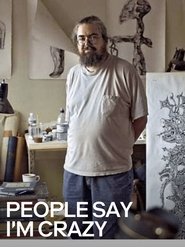
star 8John Cadigan, an artist with schizophrenia, presents a documentary about "the world inside my head. It's a chaotic world filled with paranoia, creativity, fear and desire. A world in which I'm struggling every day, trying to know what is real and what is not."The Corporation
2003
The Corporation
2003
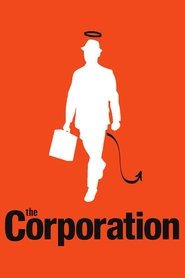
star 7.6Since the late 18th century American legal decision that the business corporation organizational model is legally a person, it has become a dominant economic, political and social force around the globe. This film takes an in-depth psychological examination of the organization model through various case studies. What the study illustrates is that in the its behaviour, this type of "person" typically acts like a dangerously destructive psychopath without conscience. Furthermore, we see the profound threat this psychopath has for our world and our future, but also how the people with courage, intelligence and determination can do to stop it.Touching the Void
2003
Touching the Void
2003
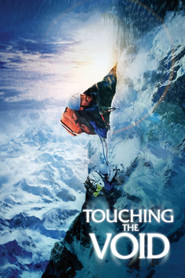
star 7.6The true story of Joe Simpson and Simon Yates' disastrous and nearly-fatal mountain climb of 6,344m Siula Grande in the Cordillera Huayhuash in the Peruvian Andes in 1985.Hey! Is Dee Dee Home?
2003
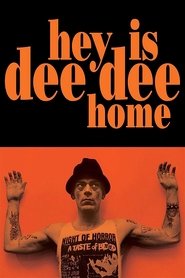
star 5.6Punk rock devotees will welcome director Lech Kowalski's reflective video portrait of late bassist Dee Dee Ramone and his life as a music industry icon -- including his self-destructive bouts with heroin. The centerpiece of the hourlong documentary -- which is peppered with vintage performance clips -- is a 1991 interview with a clean Dee Dee, who talks at length about his storied career and penchant for living on the edge.Plaster Caster
2003
Plaster Caster
2003
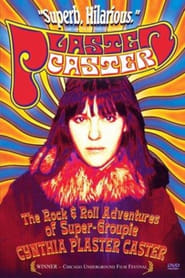
star 6Portrait of legendary artist and groupie Cynthia Plaster Caster famous for plaster casting the penises of rock stars.Skinhead Attitude
2003
Skinhead Attitude
2003
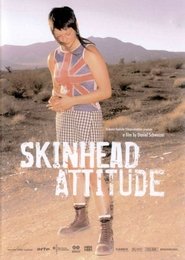
star 7.2Outlines the history of 40 years of the skinhead subculture, beginning with the most recent versions of the culture.Step Into Liquid
2003
Step Into Liquid
2003
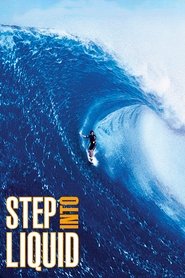
star 7.2No special effects. No stuntmen. No stereotypes. No other feeling comes close. Surfers and secret spots from around the world are profiled in this documentary.The Flute Player
2003
The Flute Player
2003
From 1975 to 1979, the Khmer Rouge led a campaign of death against every Cambodian believed to be educated. As a result, over 90 percent of the country's traditional musicians were killed. Now, as the handful of surviving musicians grow old and fall ill, a way of life quietly slips toward the brink of extinction. Facing this desperate situation is Arn Chorn Pond - a survivor of Cambodia's genocide, an internationally recognized human rights leader and a talented musician. Today Arn is striving to heal the deep scars of his wartorn past by bringing Cambodia's once outlawed traditional music back to his people. The Flute Player is a heroic story of one man's fight against the devastating effects of war. It is a film about sorrow and pain, dignity and freedom, and the will to survive.No Logo
2003
No Logo
2003
star 6.3There's a bad mood rising against the corporate brands. No Logo is the warning on the label. In the last decade, No Logo has become a cultural manifesto for the critics of unfettered capitalism worldwide. As the world faces a second economic depression, No Logo's analysis of our corporate and branded world is as timely and powerful as ever. Equal parts cultural analysis, political manifesto, mall-rat memoir, and journalistic exposé, No Logo is the first book to put the new resistance into pop-historical and clear economic perspective. It tells a story of rebellion and self-determination in the face of our new branded world.Bonhoeffer
2003
Bonhoeffer
2003
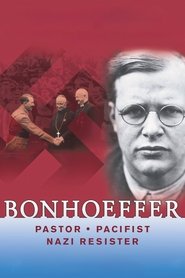
star 6Dramatic documentary about the young German pacifist and theologian Dietrich Bonhoeffer who resisted the Nazi regime and was hanged two weeks before World War II was over.Alex's Wedding
2003
Alex's Wedding
2003
star 5.5Chronicle of a rather particular afternoon during which the lives of three people change dramatically: Alex, the husband, goes to his in-laws' to bring home his second wife. Elise, Alex's childhood sweetheart and first wife, accompanies him--as she must, according to tradition. And Josephine, the young bride, leaves her parents to begin a new life.In the Realm of the Hackers
2003
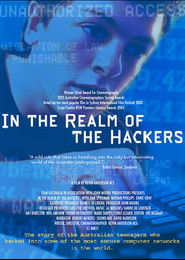
star 6.4In The Realm of the Hackers is a documentary about the prominent hacker community, centered in Melbourne, Australia in the late 80's to early 1990. The storyline is centered around the Australian teenagers going by the hacker names "Electron" and "Phoenix", who were members of an elite computer hacking group called The Realm and hacked into some of the most secure computer networks in the world, including those of the US Naval Research Laboratory, Lawrence Livermore National Laboratory, a government lab charged with the security of the US nuclear stockpile, and NASA.