New Documentary Movies on Tubi TV - Page 392
All Services
Free Services
 Netflix
 Amazon Prime Video
 Apple iTunes
 Apple TV Plus
 Disney Plus
 Google Play Movies
 Paramount Plus
 Hulu
Hulu
 HBO Max
 YouTube
 fuboTV
 Peacock
 Peacock Premium
 Amazon Video
 The Roku Channel
 AMC+
AMC on Demand
AMC+
AMC on Demand
 Kocowa
 Hoopla
 The CW
 Vudu
Vudu
 Starz
Starz
 Showtime
 PBS
PBS
 Pantaflix
 FXNow
FXNow
 Tubi TV
 Kanopy
 Comedy Central
 Crunchyroll
 Microsoft Store
 Redbox
 Sun Nxt
 ABC
ABC
 DIRECTV
 Crackle
 Fandor
 Plex
Plex
Netflix
Amazon Prime Video
Apple iTunes
Apple TV Plus
Disney Plus
Google Play Movies
Paramount Plus
Hulu
HBO Max
YouTube
fuboTV
Peacock
Peacock Premium
Amazon Video
The Roku Channel
AMC+
AMC on Demand
Kocowa
Hoopla
The CW
Vudu
Starz
Showtime
PBS
Pantaflix
FXNow
Tubi TV
Kanopy
Comedy Central
Crunchyroll
Microsoft Store
Redbox
Sun Nxt
ABC
DIRECTV
Crackle
Fandor
Plex

The Smashing of the Reich
1961
An unpublished documentary film proposed in restored version. 100 million meters of film viewing, film libraries inventoried 11 countries and 3 years of work were needed to bring these documents. This documentary evokes the destruction of the Nazi war machine with a particular emphasis on air power. The most significant events are recounted as the Normandy landings, the battle of Paris, the last German offensive with the historical siege of Bastogne and the landing on the island of Elba. Also shown are the bombing of German industrial centers, and the liberation of concentration camps.Sky Above and Mud Beneath
1961
star 5.5In September, 1959, six Europeans leave Cook's Bay on the southern coast of Dutch New Guinea, now West Papua or Irian Jaya, to trek north to the far side of the island. The journey (450 miles, as a crow flies) across unmapped territory took seven months; three Muyu porters died. Near both coasts, the expedition met villagers who invited them to observe rituals and live with them. In the interior, all villagers kept them at bay, and they depended on air lifts from Hollandia for food and supplies. They climbed above 10,000 feet, built 14 bridges, and fought leeches and malaria. The narrator focuses on describing Stone Age savages, headhunters, and cannibals.Project XX: The Real West
1961
Silver-screen legend Gary Cooper narrates this insightful documentary, which aims to subvert the idealized notions of the Western frontier posited by Hollywood and unveil what life was really like in the rough-and-tumble Old West. Originally aired as an installment of the NBC News series "Project Twenty," the program uses vintage photographs, archival accounts and historical reenactments to paint a vivid portrait of the Wild West of the 19th century. Note: This film was also distributed separately on 16mm for schools and libraries, qualifying it as a standalone documentary.Days of Thrills and Laughter
1961
star 5.5An appreciative, uncritical look at silent film comedies and thrillers from early in the century through the 1920s.Hollywood: The Golden Years
1961
Host Gene Kelly takes a nostalgic look at silent films from their earliest beginnings to the introduction of sound with "The Jazz Singer."Jose Torres
1959
The Alphabet Conspiracy
1959
star 6.8Dr. Frank Baxter, with the help of The Mad Hatter and Jabberwock, takes young Judy exploring the world of language, in which she finds out that language is for doing more than just talking.Last Clear Chance
1959
Last Clear Chance
1959
star 2.6On the day young Alan receives his driver's license, Officer Hal Jackson visits the Dixon farm to sternly lecture the family on the dangers of carelessness at railroad crossings.The Secret Life of Adolf Hitler
1958
star 6.11950's television documentary special that includes interviews with Hitler's sister Paula Wolf and a fellow prisoner who was incarcerated with Hitler, actual footage shot by the Nazi's and Eva Braun's rare home movies.South Seas Adventure
1958
South Seas Adventure
1958
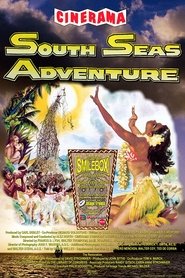
star 5.7Cinerama takes you on a South Seas Adventure to tropical islands set like sparkling jewels in dreamy cerulean waters. Thrill to the lure of sunbrowned, luscious maidens and a paradise of coconut palms, coral strand and blue lagoons. Enchanted South Pacific archipelagos beckon with all the beauty and color of a painter’s palette. Stepping stones in the vast expanse of far-away seas, they promise romance, adventure, excitement—an irresistible blend of fascinating people and exotic places.Fun in the Big Country
1958
Behind-the-scenes look during the filming of William Wyler's 1958 western, "The Big Country."The Golden Age of Comedy
1957
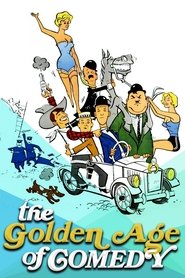
star 6.9A compilation featuring comedic stars of the silent era including Will Rogers, Laurel and Hardy, and the Keystone Cops.The James Dean Story
1957
The James Dean Story
1957
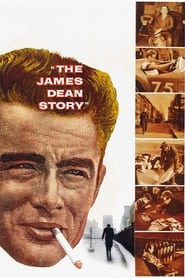
star 5.4Released two years after James Dean's death, this documentary chronicles his short life and career via black-and-white still photographs, interviews with the aunt and uncle who raised him, his paternal grandparents, a New York City cabdriver friend, the owner of his favorite Los Angeles restaurant, outtakes from East of Eden, footage of the opening night of Giant, and Dean's ironic PSA for safe driving.Men Don't Know About It
1957
This is a distinctive example of a documentary film revealing the disparity between the official gender discourse and the social reality of the Polish female.Project XX: The Jazz Age
1956
The period between the end of World War I and the crash of 1929 is known as the Jazz Age in America, a time of high-energy nightclubs, wild Prohibition evasion and an "America first" attitude. Narrated by Fred Allen. Note: Originally part of Project XX, this film was also distributed separately on 16mm for schools and libraries, qualifying it as a standalone documentary.Basin Street Revue
1956
Basin Street Revue
1956
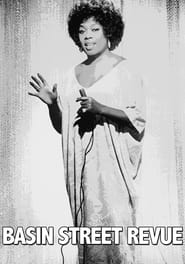
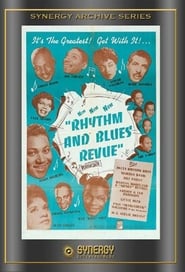
star 8A one-hour variety show performed live at Harlem’s Apollo Theater, featuring a who’s-who of vocal and big band jazz and comedy acts of the 1950s.Rhythm and Blues Revue
1955
star 6Rhythm and Blues Revue is a plotless variety show, one of several compiled for theatrical exhibition from the made-for-television short films produced by Snader and Studio Telescriptions, with newly-filmed host segments by Willie Bryant. Originally 86 minutes, the "short" version available on public domain collections and websites is missing a reelWeapons of the Artillery
1953
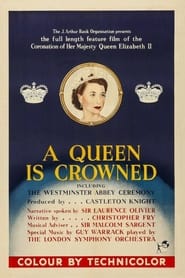
This color educational/training film is about the current artillery weapons the U.S. Army is using. This was made in 1953.A Queen Is Crowned
1953
A Queen Is Crowned
1953
star 7.1A lavish documentary film of Queen Elizabeth II's Coronation in 1953.A Is for Atom
1953
A Is for Atom
1953
star 7.1General Electric sponsors this explanation of atomic energy, detailing some of its uses besides the bomb. Using animation and an off-screen narrator, the film describes the atom, elements and isotopes, the discovery of transmutation, experiments in artificial transmutation, and the reasons for the power of nuclear fission. The film argues that now, besides war, the atomic age holds promise for energy, farming, medicine, and research. The promise of the atomic age will depend on human wisdom.