New Documentary Movies on Tubi TV - Page 393
All Services
Free Services
 Netflix
 Amazon Prime Video
 Apple iTunes
 Apple TV Plus
 Disney Plus
 Google Play Movies
 Paramount Plus
 Hulu
Hulu
 HBO Max
 YouTube
 fuboTV
 Peacock
 Peacock Premium
 Amazon Video
 The Roku Channel
 AMC+
AMC on Demand
AMC+
AMC on Demand
 Kocowa
 Hoopla
 The CW
 Vudu
Vudu
 Starz
Starz
 Showtime
 PBS
PBS
 Pantaflix
 FXNow
FXNow
 Tubi TV
 Kanopy
 Comedy Central
 Crunchyroll
 Microsoft Store
 Redbox
 Sun Nxt
 ABC
ABC
 DIRECTV
 Crackle
 Fandor
 Plex
Plex
Netflix
Amazon Prime Video
Apple iTunes
Apple TV Plus
Disney Plus
Google Play Movies
Paramount Plus
Hulu
HBO Max
YouTube
fuboTV
Peacock
Peacock Premium
Amazon Video
The Roku Channel
AMC+
AMC on Demand
Kocowa
Hoopla
The CW
Vudu
Starz
Showtime
PBS
Pantaflix
FXNow
Tubi TV
Kanopy
Comedy Central
Crunchyroll
Microsoft Store
Redbox
Sun Nxt
ABC
DIRECTV
Crackle
Fandor
Plex

A Motion Picture History Of The Korean War
1953
Post-war South Korea with the history of the communist advance across the 38th parallel.Triangeldrama
1952
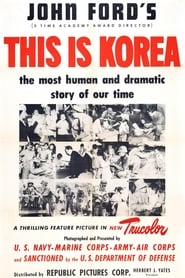
This Is Korea!
1951
This Is Korea!
1951
star 5.7John Ford's documentary about the early battles of the Korean War, shot in color.Too Hot to Handle
1950
Too Hot to Handle
1950
star 2.3This is an entire burlesque show, complete with a live band. Five strippers strut their stuff in between bawdy songs and sexy jokes delivered by burlesque singers and comedians.Kon-Tiki
1950
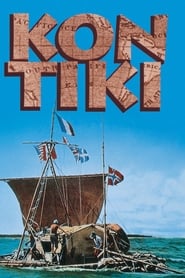
Kon-Tiki
1950
star 7.4"Kon-Tiki" was the name of a wooden raft used by six Scandinavian scientists, led by Thor Heyerdahl, to make a 101-day journey from South America to the Polynesian Islands. The purpose of the expedition was to prove Heyerdal's theory that the Polynesian Islands were populated from the east- specifically Peru- rather than from the west (Asia) as had been the theory for hundreds of years. Heyerdahl made a study of the winds and tides in the Pacific, and by simulating conditions as closely as possible to those he theorized the Peruvians encountered, set out on the voyage.Nuremberg: Its Lesson for Today
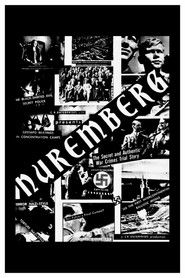
1948
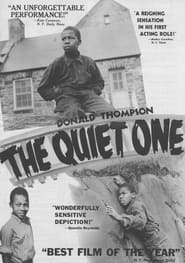
star 5.7How, in November 1945, after the end of the World War II and the fall of the Third Reich, the international prosecutors participating in the first Nuremberg trial —formally, the International Military Tribunal— built their case against the top Nazi war criminals using the films and records produced by the own regime, obsessed with documenting everything in its long path of infamy and crime.The Quiet One
1948
The Quiet One
1948
star 4.8A documentary account of the rehabilitation at the Wiltwyck School of an emotionally disturbed black boy who is unwanted, misunderstood, and inwardly tortured.Road to Hollywood
1947
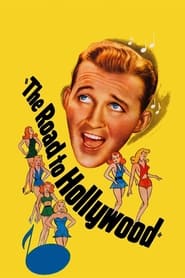
Road to Hollywood
1947
star 4.3Exploitation film-maker Bud Pollard appears on screen to tell us of Bing Crosby's rise to fame, using scenes from four early Crosby shorts to illustrate his fictional biography.Let There Be Light
1946
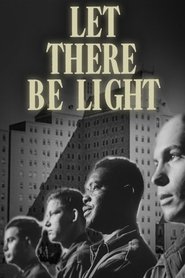
Let There Be Light
1946
star 7.4The final entry in a trilogy of films produced for the U.S. government by John Huston. Some returning combat veterans suffer scars that are more psychological than physical. This film follows patients and staff during their treatment. It deals with what would now be called PTSD, but at the time was categorised as psychoneurosis or shell-shock. Government officials deemed this 1946 film counterproductive to postwar efforts; it was not shown publicly until 1981.Nuremberg Trials
1946
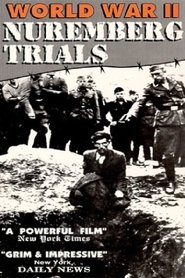
Nuremberg Trials
1946
star 4.8This riveting Russian documentary takes you inside the trials of the notorious German war criminals, brought to trial to account for their actions. The footage includes excerpts from the trials of many of the senior Nazis including Goebels and Goring.Theirs Is the Glory
1946
Theirs Is the Glory
1946
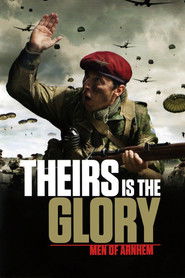
star 6.8Re-enactment of World War 2 Battle of Arnhem using the survivors from the battle.Here Is Germany
1945
Here Is Germany
1945
star 7A "know-your-enemy" propaganda film similar to "Know Your Enemy: Japan" and "My Japan", films about Japan with the same objective. It contains a history of the prelude to WW II, the death camps and other Nazi war crimes, and commentary on the character of the German people. Directed by Frank Capra, this film is in essentially the same format as his "Why We Fight" series. It was intended to be shown to American troops participating in the invasion and occupation of Germany. But by the time it was ready, events had overtaken it -- Germany was already well on its way to falling -- so the film was shelved. Although it is readily available for public-domain viewing on the Internet, it has never been widely distributed or shown.Appointment in Tokyo
1945
Appointment in Tokyo
1945
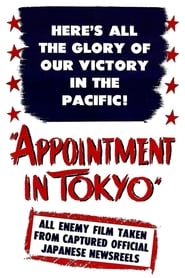
star 5.8Produced by the Army Pictorial Service, Signal Corps, with the cooperation of the Army Air Forces and the United States Navy, and released by Warner Bros. for the War Activities Committee shortly after the surrender of Japan. Follow General Douglas MacArthur and his men from their exile from the Philippines in early 1942, through the signing of the instrument of surrender on the USS Missouri on September 1, 1945. Preserved by the Academy Film Archive in 2013.Nazi Concentration Camps
1945
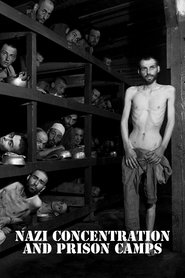
star 7.7Produced and presented as evidence at the Nuremberg war crimes trial of Hermann Göring and twenty other Nazi leaders, this film consists primarily of dead and surviving prisoners and of facilities used to kill and torture during the World War II.The Stilwell Road
1945
The Stilwell Road
1945
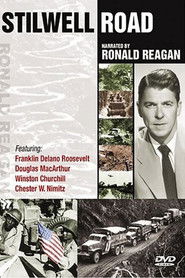
Documentary - Documentary about the construction of the Stilwell Road--originally called The Ledo Road--a 478-mile passage from Assam, India, to Ledo, Burma, during World War II. The road, which was built by 63,000 workers and cost $150 million, was used by the British, Chinese and Indian armies to transport supplies, troops and other essentials from India to Burma in order to keep the Japanese from overrunning the entire theater. - Ronald Reagan, Harold Alexander, Claude AuchinleckGaslight Follies
1945
Gaslight Follies
1945
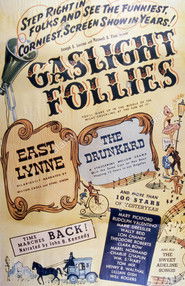
star 4.5Four-part documentary (each part of which was also available as a short subject) relating to films and other customs of the 1910s and 1920s.Auschwitz
1945
Auschwitz
1945
Soviet documentary shot right after liberation of Auschwitz. It was used as evidence by the Soviet prosecution at the Nuremberg trials. In 2014, footage shot by cameraman Aleksandr Vorontsov, as well as his interview given in 1986 for German television, were included in Andre Singer’s documentary “Night Will Fall”.The True Glory
1945
The True Glory
1945
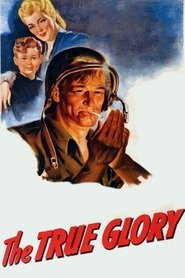
star 6.3A documentary account of the allied invasion of Europe during World War II compiled from the footage shot by nearly 1400 cameramen. It opens as the assembled allied forces plan and train for the D-Day invasion at bases in Great Britain and covers all the major events of the war in Europe from the Normandy landings to the fall of Berlin.War Comes to America
1945
War Comes to America
1945
star 7The seventh and final film of Frank Capra's Why We Fight World War II propaganda film series. This entry attempts to describe the factors leading up to America's entry into the Second World War.The Battle of San Pietro
1945
star 6This documentary movie is about the battle of San Pietro, a small village in Italy. Over 1,100 US soldiers were killed while trying to take this location, that blocked the way for the Allied forces from the Germans. Preserved by the Academy Film Archive in 2005.