Popular Documentary Movies - Page 491
All Services
Free Services
 Netflix
 Amazon Prime Video
 Apple iTunes
 Apple TV Plus
 Disney Plus
 Google Play Movies
 Paramount Plus
 Hulu
Hulu
 HBO Max
 YouTube
 fuboTV
 Peacock
 Peacock Premium
 Amazon Video
 The Roku Channel
 AMC+
AMC on Demand
AMC+
AMC on Demand
 Kocowa
 Hoopla
 The CW
 Vudu
Vudu
 Starz
Starz
 Showtime
 PBS
PBS
 Pantaflix
 FXNow
FXNow
 Tubi TV
 Kanopy
 Comedy Central
 Crunchyroll
 Microsoft Store
 Redbox
 Sun Nxt
 ABC
ABC
 DIRECTV
 Crackle
 Fandor
 Plex
Plex
Netflix
Amazon Prime Video
Apple iTunes
Apple TV Plus
Disney Plus
Google Play Movies
Paramount Plus
Hulu
HBO Max
YouTube
fuboTV
Peacock
Peacock Premium
Amazon Video
The Roku Channel
AMC+
AMC on Demand
Kocowa
Hoopla
The CW
Vudu
Starz
Showtime
PBS
Pantaflix
FXNow
Tubi TV
Kanopy
Comedy Central
Crunchyroll
Microsoft Store
Redbox
Sun Nxt
ABC
DIRECTV
Crackle
Fandor
Plex

1925 Studio Tour
1925
1925 Studio Tour
1925
star 6.1A tour of the Metro-Goldwyn-Mayer Studio in 1925 shows the people who make the movies there, and gives viewers a glimpse at how movies are made.Song
2014
Song
2014
Song is a story of the last Finnish rune singer and his pupil, and the comforting power of singing.Déjà Vu: Surveillance Window
2007
star 6Divided into 10 segments we hear from cast and crew. We learn about filming the opening ferry explosion, Washington's character and performance, makeup and costumes, the Time Lab and technological issues, the car chase, shooting in New Orleans, the Washington/Bruckheimer/Scott collaboration, physical sequences, and the concluding ferry scene.Secrets of the Tribe
2010
Secrets of the Tribe
2010
star 6.9What happens when western anthropologists descend on the Amazon and make one of the last unacculturated tribes in existence, the Yanomami, the most exhaustively filmed and studied tribe on the planet? Despite their "do no harm" creed and scientific aims, the small army of anthropologists that has studied the Yanomami since the 1960s has wreaked havoc among the tribe – and sparked a war within the anthropology community itself.Buscando a Panzeri
2020
Buscando a Panzeri
2020
Panzeri was an honest man, a critical journalist, a freethinker. He faced power and died alone and forgotten. Kohan is an outsider obsessed with doing justice, getting Panzeri out of ostracism and bringing him back to this world. Without Panzeri, football has only a few days to live.War Paint: Women at War
2025
star 6Shining a light on the trailblazing role of women war artists, on the front lines round the world, championing the female perspective on conflict through art and asking: when it's life or death, what do women see that men don't?Like Tears in Rain
2024
Like Tears in Rain
2024
star 7.5His entire life, the charismatic actor Rutger Hauer kept the outside world at a distance. His inner circle included only a small group of people, among them director and goddaughter Sanna Fabery de Jonge. In this film, she unravels the mystery surrounding Rutger and reveals a man even more fascinating than the roles he played.The Making of Habit
1999
The Making of Habit
1999
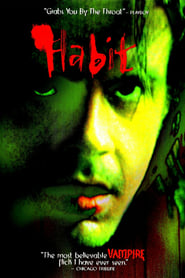
star 7The making of Habit (1995) narrated by writer-director Larry Fessenden and produced by the feature's production studio for the 1999 DVD release.Misery Loves Comedy
2015
Misery Loves Comedy
2015
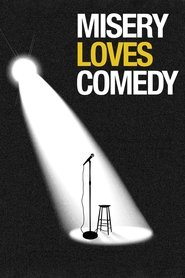
star 6Do you have to be miserable to be funny? More than sixty comedians—including stand-ups, writers, actors, and directors from the US, Canada, and abroad—take on this question, sharing anecdotes and insights with lively enthusiasm.Unzipped
1995
Unzipped
1995
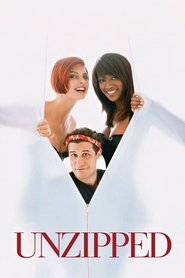
star 5.2Isaac Mizrahi, one of the most successful designers in high fashion, plans his fall 1994 collection.Place of Work
1976
Place of Work
1976
star 9Margaret Tait documents her house, studio and garden in Buttquoy, Orkney as the seasons pass. She had lived there from the age of seven and often returned. At the time of filming, the house was about to be taken back by the council - this film is an effective 'goodbye'. Margaret Tait said it 'was meant to define a place, or the feeling of being in one place, with the sense this gives one, not of restriction but of the infinite variations available.'Dancing with Le Pen
2018
Dancing with Le Pen
2018
star 9In France’s last presidential election, Marine Le Pen, a right-wing candidate, won over 30 per cent of the vote after an attempt to rebrand a party long associated with her controversial father, Jean-Marie Le Pen. See how three of her supporters faced similar obstacles in changing the narrative.Butterflies Do Not Live Here
1958
star 5.7A documentary about the life of Jewish children forced to live in the Theresienstadt concentration camp.The Curse of Poltergeist
2002
Exploring the popular film series and several tragedies amongst the cast members.It Conquered Hollywood! The Story of American International Pictures
2001
star 6.8A 60-minute salute to American International Pictures. Entertainment lawyer Samuel Z. Arkoff founded AIP (then called American Releasing Corporation) on a $3000 loan in 1954 with his partner, James H. Nicholson, a former West Coast exhibitor and distributor. The company made its mark by targeting teenagers with quickly produced films that exploited subjects mainstream films were reluctant to tackle.Oscar
1997
Oscar
1997
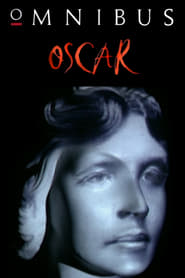
Writer Michael Bracewell presents an unusual and provocative look at the life and legacy of Oscar Wilde, the controversial Irish-born writer. Michael sets out to rescue him from the dangers of respectability by portraying him as an inspiration to generations of rockers and artists.Abebe – Butterfly Song
2023
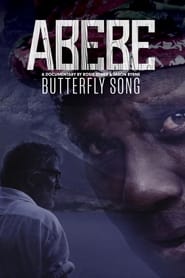
In 1986, Melbourne musician David Bridie of the groups Not Drowning, Waving and My Friend the Chocolate Cake travelled to Papua New Guinea, where he heard the heartfelt sounds of George Telek and the Moab Stringband’s ‘Abebe’ (‘Butterfly Song’) on board a bus. It marked the beginning of a profound fascination with the nation and its rich culture – and of a bond with Telek that would last more than 30 years.Lisboa no Cinema, Um Ponto de Vista
1994
star 6.5The city during the beginning of cinema. The typical city at the time of the dictatorship. The New Lisbon of the New Cinema. Lisbon after the Revolution. The white city of foreigners. A geographical and moviegoer screenplay of Lisbon through the images of films and testimonies of several filmmakers who filmed in Lisbon.UN PILUSO
2024
UN PILUSO
2024
A sunset, a camera following Blas. Made in Traslasierra, Córdoba, Argentina. Filmed in half an hour, edited in half an hour, all with an iPhone 14.