Popular Documentary Movies - Page 493
All Services
Free Services
 Netflix
 Amazon Prime Video
 Apple iTunes
 Apple TV Plus
 Disney Plus
 Google Play Movies
 Paramount Plus
 Hulu
Hulu
 HBO Max
 YouTube
 fuboTV
 Peacock
 Peacock Premium
 Amazon Video
 The Roku Channel
 AMC+
AMC on Demand
AMC+
AMC on Demand
 Kocowa
 Hoopla
 The CW
 Vudu
Vudu
 Starz
Starz
 Showtime
 PBS
PBS
 Pantaflix
 FXNow
FXNow
 Tubi TV
 Kanopy
 Comedy Central
 Crunchyroll
 Microsoft Store
 Redbox
 Sun Nxt
 ABC
ABC
 DIRECTV
 Crackle
 Fandor
 Plex
Plex
Netflix
Amazon Prime Video
Apple iTunes
Apple TV Plus
Disney Plus
Google Play Movies
Paramount Plus
Hulu
HBO Max
YouTube
fuboTV
Peacock
Peacock Premium
Amazon Video
The Roku Channel
AMC+
AMC on Demand
Kocowa
Hoopla
The CW
Vudu
Starz
Showtime
PBS
Pantaflix
FXNow
Tubi TV
Kanopy
Comedy Central
Crunchyroll
Microsoft Store
Redbox
Sun Nxt
ABC
DIRECTV
Crackle
Fandor
Plex

Oswald, the Forger
2022
Oswald, the Forger
2022
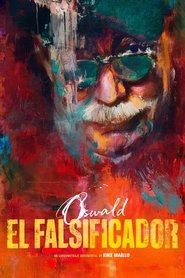
star 7.2The story of Oswald Aulestia Bach, extravagant painter and legendary forger; a bon vivant, a persona non grata for museums and collectors, a criminal hunted by the FBI.Sleeping Village
2019
Sleeping Village
2019
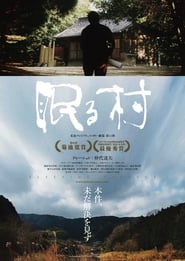
star 6.7In 1961, a spectacular criminal case shocks Japan: at what became known as the “Nabari Poison Wine” incident, five people lose their lives at a village social gathering. One of the attendants, Masaru OKUNISHI, is made out as the main suspect. Rumor has it that he wanted to kill his wife and his lover in order to end his extra-marital affair. After being questioned by the police for days, he signs a confession, only to withdraw it soon afterwards. Nonetheless, he is sentenced to death and all pleas for a retrial are denied.Billy Connolly: Portrait of a Lifetime
2017
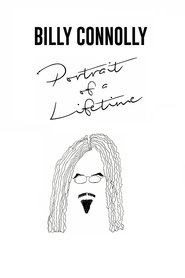
star 6Celebrating Billy Connolly's 75th birthday and 50 years in the business, three Scottish artists - John Byrne, Jack Vettriano and Rachel MacLean - each create a new portrait of the Big Yin. As he sits with each artist, Billy talks about his remarkable life and career which has taken him from musician and pioneering stand-up to Hollywood star and national treasure.Four Minute Fever
1956
Four Minute Fever
1956
Using newsreel footage, this Sportscope entry chronicles the race toward running's four-minute mile, highlighting several important contests. It starts in the 1920's, when Finland's Paavo Nurmi set the record for the distance at 4 minutes 10.4 seconds. It continues through Roger Bannister's first run under 4 minutes in 1954, and ends in spring 1956, when Australia's Joe Bailey became the first to break 4 minutes on US soil.The Real Four Jills
2008
The Real Four Jills
2008
Featurette for Four Jills in a Jeep (1944). The stars of the '44 film actually went on a USO tour on which the film was based.Boogaloo Shrimp Documentary
2019
star 4he life story of Michael Chambers aka "Boogaloo Shrimp: the dancer, actor, singer, comedian and master of waving, ticking, backsliding and liquid animation dance during the 1980's breakdancing phenomenon.Hollywood, I'm Sleeping Over Tonight
2008
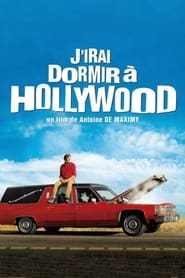
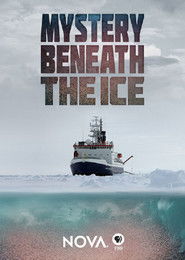
star 6.8French TV host Antoine de Maximy travels the U.S. from coast to coast, relying on the hospitality of strangers and documenting his experiences with a hand-held camera.NOVA: Mystery Beneath the Ice
2016
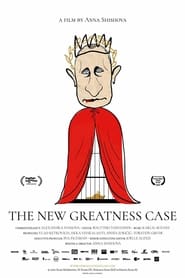
star 7Scientists venture onto the ice to find out why krill, creatures crucial to the Antarctic ecosystem, are disappearing at an alarming rate.The New Greatness Case
2022
star 6Anya was an ordinary Moscow teenager who found a chat group of her choice online. They talked about animals, the stars and social issues. A man called Ruslan D joined the group, who set up an office space for the online group to meet. Step by step, he began to lead young people who were critical of the Putin's regime towards political activism. Ruslan D placed a camera in the meeting room, and when he had enough footage, he handed it over to the prosecutor. The police raided the teenagers' homes and they were arrested on charges of planning to overthrow the government and terrorism. Three years of legal proceedings transformed Anya's mother from a loyal follower of Putin to a hunger-striking activist. Moscow-based director Anna Shishova followed Anya and her mother's life throughout the event and eventually revealed the true identity of Ruslan D.Le tecniche dell'assenza
1984
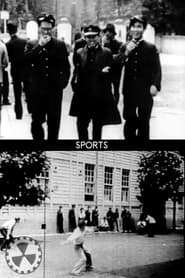
Videotape produced by Ferruccio Marotti for Roma's University theatre students. A presentation of Carmelo Bene's "Performative matrix": not a performance yet, but it's not just text or ideas. Essentially, a work-in-progress on his Macbeth.Sports
1932
Sports
1932
The film is about a protest provoked when the university decided to restrict access to sports facilities to athletes, cutting out all other students. This is, strictly speaking, not a Prokino film. It was produced by the Waseda University Film Circle, which was organized by Kawazoe Shiro. Feature film directors Yamamoto Satsuo and Taniguchi Senkichi were apparently students at Waseda at the time and participated in the production.Seven Brides for Uncle Sam
1997
This documentary shares the stories of seven women from Newfoundland who married American soldiers. From the beginning of World War II to the end of the Cold War, Newfoundland housed some of the largest military bases outside of the U.S. As a result, as many as 40,000 Newfoundland women married American soldiers. Using a combination of interviews and old war footage, Seven Brides for Uncle Sam shows how some of the most important events in world history can serve as the backdrop to the timeless tales of romance, heartbreak and joy.Johanna Dohnal - Visionary of Feminism
2020
star 10Johanna Dohnal, whose political career spans three decades, was one of the very first explicitly feminist politicians in Europe. As a member of the Austrian socialist government and the first Austrian minister for Women’s Affairs from 1990 to 1994, Dohnal was responsible for founding Austria’s first women’s refuge as well as criminalizing of marital rape. Yet her legacy remains yet to be discovered and re-examined. DIE DOHNAL makes a first step, and it makes Dohnal come alive.The Stolen Sea
1984
The Stolen Sea
1984
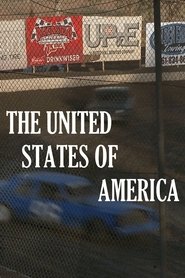
Umitori takes place in Shimokita Peninsula on the northern edge of the mainland, which was becoming a “nuclear energy peninsula”, undergoing tremendous development and serving as the home port for Mutsu, a nuclear-powered ship. Focusing on the fishermen and their stories, Tsuchimoto and his crew made their subject matter the “theft of the sea” perpetrated by giant business conglomerates. While the fishermen of Minamata were obvious victims of the mercury-poisoning tragedy, the fishermen in Shimokita were inadvertently becoming the permanent victims of another announced tragedy. Tsuchimoto interviews the fishermen, especially focusing on a stage play actor and his boat-owner family, establishing, as it became his practice, a complex reflection about the threat brought to small communities by the forces of “progress”.The United States of America
2022
star 5.5A crisscross through the USA, carving it up into a series of static shots of just under two minutes, one for each state, presented alphabetically, from Heron Bay, Alabama to Kelly, Wyoming.På genomresa - en intervju med Roy Andersson
2009
Gothenburg Film Festival's new honorary chairman Roy Andersson talks about the adversities after the film "Giliap", revealing that he does not always think it's so much fun. A backlash can instead be a boost for creativity.On Jupiter
1995
On Jupiter
1995
This 54 minute program - narrated by actor John Hurt - chronicles the story of Jupiter starting with Galileo Galilei's Jupiter observations in the 1600's through the impacts of Comet Shoemaker-Levy on July 16-22, 1994. Computer animations and information are provided to give the viewer a solid background on the significance of Galileo's encounter with Jupiter. Also featured are interviews with comet discoverers Gene and Carolyn Shoemaker and David Levy, Caltech planetary scientist Andrew Ingersoll, Galileo Project Manager Bill O'Neil and other members of the Galileo mission team.From Moscow to Pietushki
1990
star 7.9A look at Benedict Yerofeyev, the elusive author of the Russian underground classic From Moscow to Pietushki, who has existed on the fringes of Soviet society for most of his life.Children Who Draw
1956
Children Who Draw
1956
star 5.3Children Who Draw explores the delicate chemistry of school children interacting in an art class through a constant juxtaposition of observational black-and-white portraits of the young children with lyrical passages shot in vivid color exploring their imaginative and expressive paintings. Experimenting with color as an intimate expression of the children’s inner worlds, a tool for deeper psychological investigation, Hani allows his camera to roam freely across the drawings, “de-framing’” and enagaging the artwork in a manner reminiscent of Alain Resnais.Chuck & Tito
2019
Chuck & Tito
2019
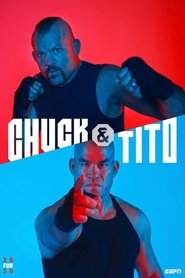
star 7A look at the career, friendship and rivalry of legendary MMA fighters Chuck Liddell and Tito Ortiz.