Popular Western Movies - Page 253
All Services
Free Services
 Netflix
 Amazon Prime Video
 Apple iTunes
 Apple TV Plus
 Disney Plus
 Google Play Movies
 Paramount Plus
 Hulu
Hulu
 HBO Max
 YouTube
 fuboTV
 Peacock
 Peacock Premium
 Amazon Video
 The Roku Channel
 AMC+
AMC on Demand
AMC+
AMC on Demand
 Kocowa
 Hoopla
 The CW
 Vudu
Vudu
 Starz
Starz
 Showtime
 PBS
PBS
 Pantaflix
 FXNow
FXNow
 Tubi TV
 Kanopy
 Comedy Central
 Crunchyroll
 Microsoft Store
 Redbox
 Sun Nxt
 ABC
ABC
 DIRECTV
 Crackle
 Fandor
 Plex
Plex
Netflix
Amazon Prime Video
Apple iTunes
Apple TV Plus
Disney Plus
Google Play Movies
Paramount Plus
Hulu
HBO Max
YouTube
fuboTV
Peacock
Peacock Premium
Amazon Video
The Roku Channel
AMC+
AMC on Demand
Kocowa
Hoopla
The CW
Vudu
Starz
Showtime
PBS
Pantaflix
FXNow
Tubi TV
Kanopy
Comedy Central
Crunchyroll
Microsoft Store
Redbox
Sun Nxt
ABC
DIRECTV
Crackle
Fandor
Plex

Chinatown Cowboy
0000
A Modern Knight
1916
A Modern Knight
1916
Percival Cadwallader Perkins was so bashful that whenever a woman would look at him he would blush like a beet, and this brought the "Happy Family," the cowboys of the Flying U, to calling him "Pink."The Tenderfoot's Triumph
1915
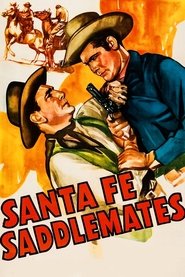
When Tommy, an Eastern young man, arrives in a Western town, the cowboys see that he is a tenderfoot and make him dance to the tune of a gun. Beecher, a ranchman, Hazel, his daughter, and Sid, the foreman, who is in love with Hazel, rescue Tommy.Santa Fe Saddlemates
1945
Santa Fe Saddlemates
1945
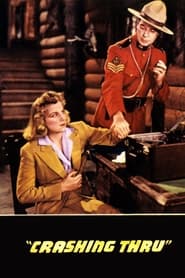
star 5Governor Price sends Sunset Carson to investigate a smuggling ring which is baffling the Border Patrol. Newspaper woman Ann Morton is working incognito in the saloon waiting for a break on ...Crashing Thru
1939
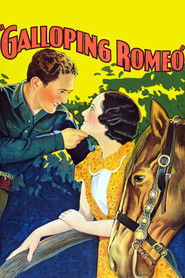
Galloping Romeo
1933
Galloping Romeo
1933
Money is mysteriously disappearing from a locked trunk atop the stage even though the trunk arrives still locked. When pals Bob Rivers and Grizzly get the jop driving the stage, the same thing happens.Where the West Begins
1919
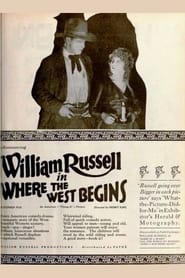
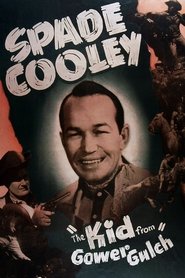
William Russell plays Cliff Redfern, a hard-ridin' Westerner who takes a liking to Easterner Ned Caldwell (Cullen Landis), the dissolute son of a wealthy cattle rancher. Certain that all Caldwell needs to become a "real man" is a dose of frontier life, Cliff kidnaps Ned and brings him back to the wide open spaces.The Kid from Gower Gulch
1950
star 4A Hollywood singing-cowboy star with a big heart and an even bigger secret (he uses a double in most scenes because he can't ride, fight or sing) comes to the aid of a rancher about to lose his home on a rodeo bet.Broncho Billy and the Rustler's Child
1913
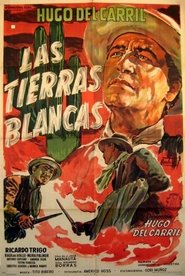
star 5David Morgan, a cowpuncher, is informed by Doctor Harding that the former's wife is in a serious condition and must be taken from the high altitude. An Indian horse thief shows David a way to make some money easy. That night, the Indian and the cowpuncher steal two horses. The Indian is captured by Broncho Billy, the sheriff, and squeals on Morgan. Dorothy, the cowpuncher's child, informs her father that a posse is coming up the road. Morgan instructs his child to say nothing to the men concerning his whereabouts. The cowpuncher crawls into the loft and pulls the ladder up after him. Broncho Billy enters, sees Morgan's wife is in a critical condition and asks the child where her father is. She tells him she does not know. The sheriff, hearing a sound above him, is about to fire his revolver into the loft, when the girl confesses that her father is above.Las tierras blancas
1959
Las tierras blancas
1959
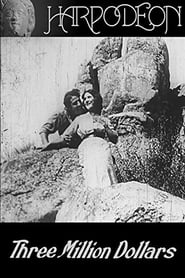
The miserable life of the inhabitants of a town in Santiago del Estero, between crime, revenge and drought.Three Million Dollars
1911
star 4Mr. Joseph Close, ranch man, with his wife and daughter, visit the town for supplies. The daughter makes a hit with the storekeeper and it is with difficulty that the ranch man induces his daughter to leave. They return home, and the ranch man finds a letter in his mail box from Wm. Schrider, Attorney-at-Law, informing him that his brother is dead, and has left the sum of three million dollars to his daughter, on condition that she produce an official certificate of her marriage one month from the date of her uncle's death.Tom's Sacrifice
1916
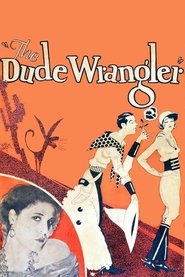
The Dude Wrangler
1930
The Dude Wrangler
1930
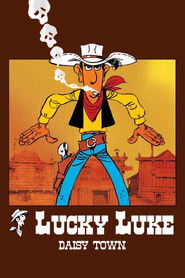
In order to prove his manliness to the girl he loves, a young urban dandy takes a job at a dude ranch. Predictable misadventure ensues in this poorly-made early talkie.Daisy Town
1971
Daisy Town
1971
star 6.6When the members of a caravan of pioneers find a daisy growing in the middle of the desert they decide to stop there and to build their town on this very spot. Houses soon spring up like mushrooms, immediately followed by a bank, a saloon, a prison, etc. Daisy Town is born. Unfortunately a city does not go without its bad boys and the peaceful place is soon turned into a lawless place. To restore law and order, a lawman is needed. Lucky Luke, the cowboy who shoots faster than his shadow, will be this man: all the villains had better watch out!La que se avecina: Una ciudad sin ley, un mormón mojón y un saloon a doble altura
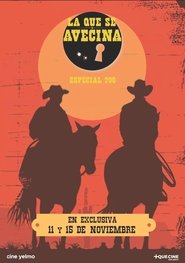
2025
The 200th episode of the popular Spanish series "La que se avecina" received special screenings in more than 40 cinemas across Spain ahead of the premiere of season 16. The plot is an alternate history where the series' characters live in the Wild West.Dodge City Trail
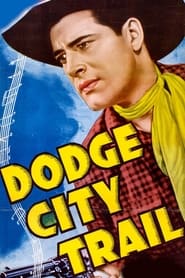
1936
Dodge City Trail
1936
star 3With the increasing popularity of Republic's sagebrush crooner Gene Autry, rival company Columbia found it necessary to add a musical element to this Charles Starrett Western released in early 1937. As Starrett himself was no singer, the studio hired Donald Grayson to warble Lonesome River, Out in the Cow Country and Pancho's Widow, all by Ned Washington and Sam H. Stept.The Women's Happy Time Commune
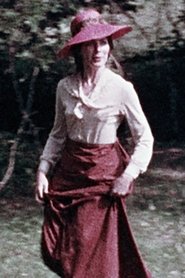
1972
The first all-women Western. Set in a fictional 1850, the movie is about one woman's attempt to recruit others for an all-women commune. "..a Warholesque frolic" -- Daphne Davis, Women's Wear Daily " Some great comments about women, men and the pros and cons of living with either." -- Women & Film: International Festival, 1973 "A group of wonderfully idiosyncratic women improvise characters close to their real lives and fantasy lives. Funny, ambling, off-handedly lyrical, the film....is above all excellent for sharing warm feelings in a group." -- Ms. magazineThese Thousand Hills
1959
These Thousand Hills
1959
star 6.4A cowboy tries for easy money with his partner, then tries ranching with a saloon hostess's money.Hungry Eyes
1918
Hungry Eyes
1918
Ex-convict Dale Revenal arrives at Dudley Appleton's ranch bearing a letter of introduction from John Silver, Appleton's old friend. Appleton hires Dale, who, through his winning manner, soon wins the respect of the ranch hands and the love of the ranch owner's daughter Mary Jane. Believing himself unworthy of her, Dale tells Mary Jane that he has a wife and child in Arizona, and she reluctantly agrees to marry Jack Nelda, a local rancher. Nelda realizes that Mary Jane is still in love with Dale and plots with Bessie Dupont and her brother Pinto to kill him.Diamond City
1949
Diamond City
1949
star 5.2Set in the diamond fields of South Africa, Stafford Parker is a lawman trying to maintain a semblance of law and order in the "Wild South".