Popular Documentary Movies on Kanopy - Page 103
All Services
Free Services
 Netflix
 Amazon Prime Video
 Apple iTunes
 Apple TV Plus
 Disney Plus
 Google Play Movies
 Paramount Plus
 Hulu
Hulu
 HBO Max
 YouTube
 fuboTV
 Peacock
 Peacock Premium
 Amazon Video
 The Roku Channel
 AMC+
AMC on Demand
AMC+
AMC on Demand
 Kocowa
 Hoopla
 The CW
 Vudu
Vudu
 Starz
Starz
 Showtime
 PBS
PBS
 Pantaflix
 FXNow
FXNow
 Tubi TV
 Kanopy
 Comedy Central
 Crunchyroll
 Microsoft Store
 Redbox
 Sun Nxt
 ABC
ABC
 DIRECTV
 Crackle
 Fandor
 Plex
Plex
Netflix
Amazon Prime Video
Apple iTunes
Apple TV Plus
Disney Plus
Google Play Movies
Paramount Plus
Hulu
HBO Max
YouTube
fuboTV
Peacock
Peacock Premium
Amazon Video
The Roku Channel
AMC+
AMC on Demand
Kocowa
Hoopla
The CW
Vudu
Starz
Showtime
PBS
Pantaflix
FXNow
Tubi TV
Kanopy
Comedy Central
Crunchyroll
Microsoft Store
Redbox
Sun Nxt
ABC
DIRECTV
Crackle
Fandor
Plex

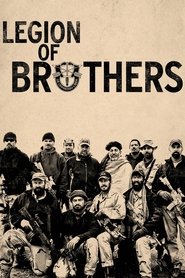
Legion of Brothers
2017
Legion of Brothers
2017
star 6Afghanistan, immediately post-9/11: Small teams of Green Berets arrive on a series of secret missions to overthrow the Taliban. What happens next is equal parts war origin story and cautionary tale, illuminating the nature and impact of 15 years of constant combat, with unprecedented access to U.S. Special Forces.Portrait of Jason
1967
Portrait of Jason
1967
star 6.4Interview with Jason Holliday aka Aaron Payne. House-boy, would-be cabaret performer, and self-proclaimed hustler giving one man's gin-soaked, pill-popped view of what it was like to be black and gay in 1960s United States. Preserved by the Academy Film Archive in partnership with Milestone Films in 2013.You Burn Me
2025
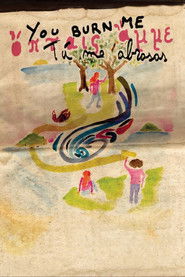
You Burn Me
2025
star 10An adaptation of “Sea Foam”, a chapter from Cesare Pavese’s “Dialoghi con Leucò” published in 1947. The ancient Greek poet Sappho and the nymph Britomartis meet beside the sea and have a conversation about love and death. Sappho is said to have thrown herself into the ocean from lovesickness. Britomartis apparently tumbled off a cliff and into the water while fleeing from a man. Together, the two discuss the stories and images that have emerged around them to try and understand, at least for a moment, the bittersweet nature of desire.Dreaming of a Jewish Christmas
2017
star 8An offbeat, irreverent musical documentary that tells the story of a group of Jewish songwriters, including Irving Berlin, Mel Tormé, Jay Livingston, Ray Evans, Gloria Shayne Baker and Johnny Marks, who wrote the soundtrack to Christianity’s most musical holiday. It’s an amazing tale of immigrant outsiders who became irreplaceable players in pop culture’s mainstream – a generation of songwriters who found in Christmas the perfect holiday in which to imagine a better world, and for at least one day a year, make us believe.All the Rage (Saved by Sarno)
2016
star 8America is experiencing an epidemic of pain. One man has the answer to the problem yet the medical establishment has ignored him. For nearly 50 years, Dr. John Sarno has been single-handedly battling the pain epidemic by focusing on the mind-body connection and the nature of stress and the manifestation of physical ailments. With a renowned practice in rehabilitative medicine at NYU he is also a bestselling author of numerous books that deal with psychosomatic disorders. Filmmaker Michael Galinsky's family has a long history with Dr. Sarno and their experience will be woven into the fabric of the film, alongside well known patients, including Howard Stern, John Stossel, Jonathan Ames, Larry David, and many others.Journey to 10,000 BC
2009
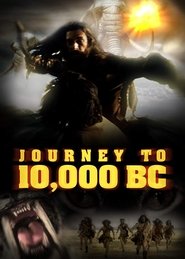
Journey to 10,000 BC
2009
star 4.710,000 B.C. was a time of cataclysmic change on Earth. Extreme climactic fluctuations hurled the planet into a minor ice age; megafauna like the saber-toothed tiger and woolly mammoth were suddenly becoming extinct; and early humans began to inhabit North America. Cold and hungry, their fragile communities undertook perilous hunting expeditions. The slaughter of a single mammoth, weighing nearly ten tons, could be the difference between survival and death. Journey to 10,000 BC. brings this unique and thrilling period to life, and investigates the geologic and climate changes that scientists are just beginning to understand. In a major forensic investigation, History visits early human archaeological sites to uncover fossilized bones, ancient dwellings, and stone weapons, and uses state-of-the-art CGI to recreate the treacherous mammoth hunts and the devastating impact of a comet colliding with Earth.American Trial: The Eric Garner Story
2020
By depicting real-life witnesses and actual evidence in a courtroom setting, American Trial will tell the story of the trial that may have occurred had NYPD Officer Daniel Pantaleo been indicted for the killing of Eric Garner in Staten Island, New York. Using the trial as a conduit, this documentary will examine accountability, race and police/civilian relations in New York City and beyond.The Language You Cry In
1998
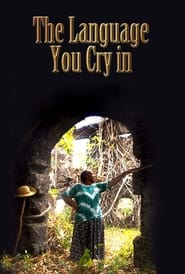
star 6THE LANGUAGE YOU CRY IN tells an amazing scholarly detective story that searches for -and finds- meaningful links between African Americans and their ancestral past. It bridges hundreds of years and thousands of miles from the Gullah people of present-day Georgia back to 18th century Sierra Leone.With One Voice
2009
With One Voice
2009
star 1This illuminating documentary explores the unity of humanity, featuring mystics from around the world, whose lives have been dedicated to answering the mysteries of existence.William Shatner: You Can Call Me Bill
2024
star 6.3Captain Kirk. T.J. Hooker. Denny Crane. Big Giant Head. Alexander the Great. Henry V. Priceline’s Negotiator. These are but a handful of the innumerable masks worn by William Shatner over seven extraordinary decades onstage and in front of the camera. A peerless maverick thespian, electrifying performer, and international cultural treasure, Bill (as he prefers to be called), now 91 years young, is the living embodiment of his classic line “to boldly go where no man has gone before.” In unprecedented fashion, You Can Call Me Bill strips away all the masks he has worn to embody countless characters, revealing the man behind it all.Strange Powers: Stephin Merritt and the Magnetic Fields
2011
star 6.8Ten years in the making, Strange Powers is an intimate documentary portrait of songwriter Stephin Merritt and his band the Magnetic Fields. With his unique gift for memorable melodies, lovelorn lyrics and wry musical stylings that blend classic Tin Pan Alley with modern sounds, Stephin Merritt has distinguished himself as one of contemporary pop's most beloved and influential artists.Warrior Marks
1994
Warrior Marks
1994
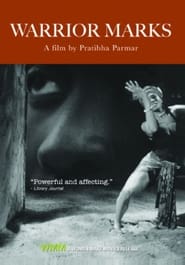
WARRIOR MARKS is a poetic and political film about female genital mutilation from the director of A PLACE OF RAGE, presented by the Pulitzer Prize winning author of THE COLOR PURPLE and POSSESSING THE SECRET OF JOY. Female genital mutilation affects one hundred million of the world’s women and this remarkable film unlocks some of the cultural and political complexities surrounding this issue. Interviews with women from Senegal, Gambia, Burkino Faso, the United States and England who are concerned with and affected by genital mutilation are intercut with Walker’s own personal reflections on the subject.A Place to Stand
2015
A Place to Stand
2015
Jimmy Santiago Baca was a petty thief and a drug dealer when he was sentenced to five years in Arizona State Prison, one of the deadliest prisons in America. Baca began his incarceration violent, angry and illiterate, yet taught himself how to read and write, discovering a passion for poetry that ultimately saved his life.Bad Actor: A Hollywood Ponzi Scheme
2024
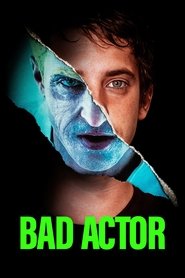
star 6.6Wannabe actor Zachary Horwitz was desperate to make it big as a movie star. The only thing stopping him was talent. Bad Actor: A Hollywood Ponzi Scheme is a juicy true story about deception, denial, and the seductive promise of fame and fortune.The Green Prince
2014
The Green Prince
2014
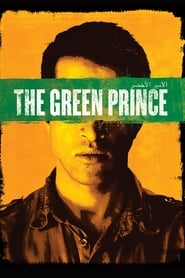
star 7.2This real-life thriller tells the story of one of Israel’s prized intelligence sources, recruited to spy on his own people for more than a decade. Focusing on the complex relationship with his handler, The Green Prince is a gripping account of terror, betrayal, and unthinkable choices, along with a friendship that defies all boundaries.*smiles and kisses you*
2024
star 6.5The relationship between a man and his life-size AI-animated doll is explored in this moving documentary. A clear eyed and open hearted take on machine learning and loneliness, in an age of algorithmic dating apps.An American Satan
2019
An American Satan
2019
star 7.1Founded in 1966 in California by a former organist and lion tamer named Anton Szandor LaVey, the Church of Satan has often been surrounded by mysteries, scandals and moral panics. An immersive journey into one the most fascinating phenomena of American religious pluralism.Looking for Life on Mars
2021
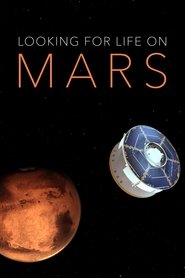
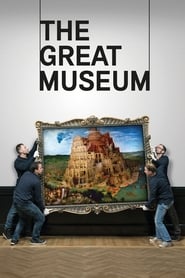
star 7.5NASA launches its most ambitious hunt for traces of life on Mars, landing a car-sized rover in a rocky, ancient river delta. The rover will stow samples for possible return to Earth and test technology that may pave the way for human travel to Mars.The Great Museum
2014
The Great Museum
2014
star 6This feature documentary portrays one of the most important museums in the world, the Kunsthistorisches Museum Wien. It presents a unique look behind the scenes of this fascinating institution and encounters a number of charismatic protagonists and their working fields unfolding the museum’s special world – as an art institution as well a vehicle for state representation.Battleground
2020
Battleground
2020
Battleground is an intimate look at our current political divide, as seen through the eyes of two grassroots activists in the pivot counties of the Lehigh Valley, PA. Tom Carroll is a Trump delegate, and a Tea Party Chairman. Greg Edwards is a Black pastor, and a progressive leader supported by Bernie Sanders. When their paths collide, we realize that they have much more in common than meets the eye.