Popular Documentary Movies on Kanopy - Page 105
All Services
Free Services
 Netflix
 Amazon Prime Video
 Apple iTunes
 Apple TV Plus
 Disney Plus
 Google Play Movies
 Paramount Plus
 Hulu
Hulu
 HBO Max
 YouTube
 fuboTV
 Peacock
 Peacock Premium
 Amazon Video
 The Roku Channel
 AMC+
AMC on Demand
AMC+
AMC on Demand
 Kocowa
 Hoopla
 The CW
 Vudu
Vudu
 Starz
Starz
 Showtime
 PBS
PBS
 Pantaflix
 FXNow
FXNow
 Tubi TV
 Kanopy
 Comedy Central
 Crunchyroll
 Microsoft Store
 Redbox
 Sun Nxt
 ABC
ABC
 DIRECTV
 Crackle
 Fandor
 Plex
Plex
Netflix
Amazon Prime Video
Apple iTunes
Apple TV Plus
Disney Plus
Google Play Movies
Paramount Plus
Hulu
HBO Max
YouTube
fuboTV
Peacock
Peacock Premium
Amazon Video
The Roku Channel
AMC+
AMC on Demand
Kocowa
Hoopla
The CW
Vudu
Starz
Showtime
PBS
Pantaflix
FXNow
Tubi TV
Kanopy
Comedy Central
Crunchyroll
Microsoft Store
Redbox
Sun Nxt
ABC
DIRECTV
Crackle
Fandor
Plex

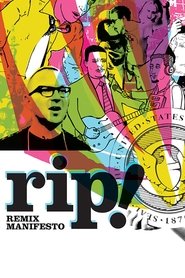
RiP!: A Remix Manifesto
2008
star 7.1RiP!: A Remix Manifesto is a 2008 open source documentary film about the "the changing concept of copyright" directed by Brett Gaylor.9/11: I Was There
2021
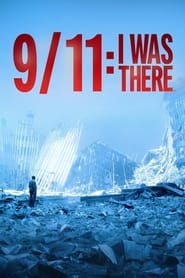
9/11: I Was There
2021
star 8.2Marking the 20th anniversary of September 11, this two-hour documentary presents a unique and moving account of the day that changed the modern world. Featuring rare footage and audio, “9/11: I Was There” unveils an intimate portrayal of the events of September 11 captured by ordinary people who chose to pick up their video cameras that day; some courageous enough to get a closer look. Told in the moment without interview, commentary or narration, this riveting documentary weaves together the personal video diaries of a dozen people whose emotions are remarkable documentation of that dark day. A truly extraordinary portrayal, “9/11: I Was There” puts viewers in the shoes of New Yorkers and visitors alike to unfold the tragedy, the fear of what was next and the horrific aftermath to follow resulting in a raw and unfiltered telling of 9/11 from confusion to comprehension, terror and relief.Kapyong
2011
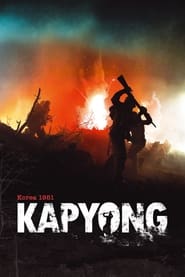
Kapyong
2011
On April 24, 1951, following a rout of the South Korean army, the Chinese People Volunteer Army pursued their enemy to the lines of Australian and Canadian troops still digging fall-back defences, 39 kilometres to the rear. Here, sometimes at the length of a bayonet, often in total darkness, individual was pitted against individual in a struggle between a superpower and a cluster of other nations from across the world. They fought for a valley, the ancient and traditional invasion route to Seoul. If it fell the southern capital and the war, was lost. The United Nations troops had the military advantage of the high ground and artillery support: the Chinese relied entirely on vastly superior numbers. As a result, young men from both sides found a battle which was very close and very personal. The Battle of Kapyong became the turning point of China's Fifth Offensive in that Korea spring... Written by John LewisLouis Sullivan: the Struggle for American Architecture
2010
star 1The award-winning feature-length documentary about the revolutionary and brilliant Chicago architect Louis Sullivan (1856-1924). Known by historians as the 'father of the skyscraper' and creator of the iconic phrase 'form follows function,' Sullivan was on top of his profession in 1890. Then a series of setbacks plunged him into destitute obscurity from which he never recovered. Yet his persistent belief in the power of his ideas created some of America's most beautiful buildings ever created, and inspired Sullivan's protégé, Frank Lloyd Wright, to fulfill his own dream of a truly American style of architecture.Atlantide
2022
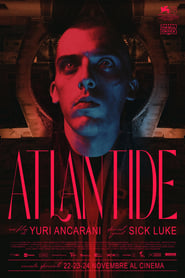
Atlantide
2022
star 7.1Daniele is a young man from Sant’Erasmo, an island on the edges of the Venice Lagoon. He lives on his wits, isolated even from his peer group who are busy exploring an existence of pleasure-seeking expressed in the cult of the barchino (motorboat). This obsession focuses on the building of ever more powerful engines to transform the little lagoon launches into dangerously fast racing boats. Daniele too dreams of a record-breaking barchino, one that will take him to the top of the leader board, but everything he does to further his dream and win respect from the others turns out to be tragically counterproductive. The decline that erodes the relationships, environment and habits of a rootless generation is observed from the timeless perspective of the Venetian landscape and its island outskirts: the point of no return is a foolish, vestigial tale of male initiation. Violent and destined to fail, it explodes dragging the ghost city along on a psychedelic shipwreck.¡Qué Viva México!
1979
¡Qué Viva México!
1979
star 6.7Eisenstein shows us Mexico in this movie, its history and its culture. He believes, that Mexico can become a modern state.The Making of a Japanese
2024
star 9Intimately following 1st and 6th graders at a public elementary school in Tokyo, we observe kids learning the traits necessary to become part of Japanese society.Alexandria: The Greatest City
2010
star 8Bettany Hughes goes in search of this lost civilisation, revealing the story of a city founded out of the desert by Alexander the Great in 331 BC to become the world's first global centre of culture. The documentary also looks at the role of astronomer and philosopher Hypatia, and incorporates stunning footage from the feature film 'Agora'.Whitey: United States of America v. James J. Bulger
2014
star 6.4A documentary that captures the sensational trial of infamous gangster James 'Whitey' Bulger, using the legal proceedings as a springboard to explore allegations of corruption within the highest levels of law enforcement. Academy Award-nominated filmmaker Joe Berlinger examines Bulger's relationship with the FBI and Department of Justice that allowed him to reign over a criminal empire in Boston for decades.Battle of Dunkirk: From Disaster to Triumph
2018
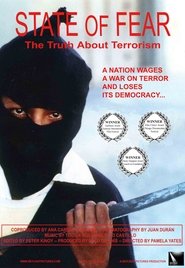
star 7.4Relive the bravery of the Dunkirk veterans in defenseless boats crossing the English Channel to rescue the stranded soldiers from the inferno through their uplifting stories of heroism in a battle that changed the course of WWII.State of Fear
2006
State of Fear
2006
star 8STATE OF FEAR takes place in Peru, yet serves as a cautionary tale for a world engaged in a "global war on terror." It dramatizes the human and societal costs a democracy faces when it embarks on a "war" against terror, a "war" potentially without end, all too easily exploited by unscrupulous leaders seeking personal political gain.Magical Universe
2014
Magical Universe
2014
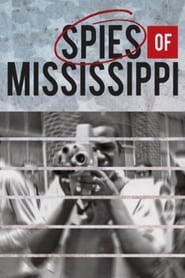
star 6.2A documentarian strikes up an odd friendship with reclusive 80 year old outsider artist Al Carbee, whose strange Barbie-doll photography gains acclaim and interest over the course of the project's multi-year history. Far beyond a portrait of an eccentric, Magical Universe is about wonder, friendship, and the transcendent power of creativitySpies of Mississippi
2014
Spies of Mississippi
2014
star 7.3Spies of Mississippi tells the story of a secret spy agency formed by the state of Mississippi to preserve segregation and maintain white supremacy. The anti-civil rights organization was hidden in plain sight in an unassuming office in the Mississippi State Capitol. Funded with taxpayer dollars and granted extraordinary latitude to carry out its mission, the Commission evolved from a propaganda machine into a full blown spy operation. How do we know this is true? The Commission itself tells us in more than 146,000 pages of files preserved by the State. This wealth of first person primary historical material guides us through one of the most fascinating and yet little known stories of America's quest for Civil Rights.This Is What Democracy Looks Like
2000
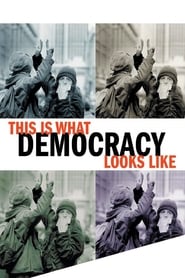
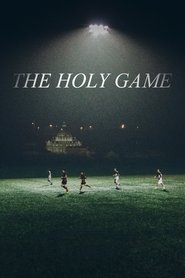
star 7.3This film, shot by 100 amateur camera operators, tells the story of the enormous street protests in Seattle, Washington in November 1999, against the World Trade Organization summit being held there. Vowing to oppose, among other faults, the WTO's power to arbitrally overrule nations' environmental, social and labour policies in favour of unbridled corporate greed, protestors from all around came out in force to make their views known and stop the summit. Against them is a brutal police force and a hostile media as well as the stain of a minority of destructively overzealous comrades. Against all odds, the protesters bravely faced fierce opposition to take back the rightful democratic power that the political and corporate elite of the world is determined to deny the little people.The Holy Game
2021
The Holy Game
2021
star 1Seminarians compete in the Vatican's football tournament known as the Clericus Cup. A film about religion, sport, and why young men choose to become priests.The Accountant of Auschwitz
2018
star 7Oskar Gröning, known as the "Accountant of Auschwitz," was charged with the murder of 300,000 Jews. When he took the stand in 2015, at the age of 94, his trial made headlines worldwide.American Anarchist
2016
American Anarchist
2016
star 6.3The story of one of the most infamous books ever written, "The Anarchist Cookbook," and the role it's played in the life of its author, now 65, who wrote it at 19 in the midst of the counterculture upheaval of the late '60s and early '70s.Disturbing the Peace
2009
Disturbing the Peace
2009
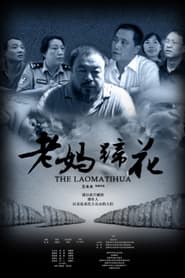
star 6.5"Disturbing the Peace" is a documentary of an incident during Tan Zuoren's trial on August 12, 2009. Tan Zuoren was charged with inciting subversion of state power. Chengdu police detained witnessed during the trial of the civil rights advocate, which is an obstruction of justice and violence. Tan Zuoren was charged as a result of his research and questioning regarding the 5.12 Wenchuan students' casualties and the corruption resulting poor building construction. Tan Zuoren was sentenced five years to prison.A Perfect Candidate
1996
A Perfect Candidate
1996
star 5.6The filmmakers follow Oliver North's unsuccessful 1994 bid for a Virginia Senate seat, focusing on North's campaign strategist, Mark Goodin, and a Washington Post reporter. Mudslinging ensues.Unconquered: Allan Houser and the Legacy of One Apache Family
2008
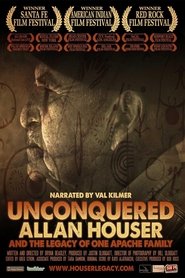
In decades past, Native American artists who wanted to sell to mainstream collectors had little choice but to create predictable, Hollywood-style western scenes. Then came a generation of painters and sculptors led by Allan Houser (or Haozous), a Chiricahua Apache artist with no interest in stereotyped imagery and a belief that his own rich heritage was compatible with modernist ideas and techniques. Narrated by actor Val Kilmer and originally commissioned as part of an exhibit of Houser’s work at the Oklahoma History Center, this program depicts the artist’s tribal ancestry, his rise to regional and national acclaim, and the continuing success of his sons as they expand upon and depart from their father’s achievements. Key works are documented, as is Houser’s tenure at the Santa Fe–based Institute of American Indian Arts.