Popular Documentary Movies on Kanopy - Page 185
All Services
Free Services
 Netflix
 Amazon Prime Video
 Apple iTunes
 Apple TV Plus
 Disney Plus
 Google Play Movies
 Paramount Plus
 Hulu
Hulu
 HBO Max
 YouTube
 fuboTV
 Peacock
 Peacock Premium
 Amazon Video
 The Roku Channel
 AMC+
AMC on Demand
AMC+
AMC on Demand
 Kocowa
 Hoopla
 The CW
 Vudu
Vudu
 Starz
Starz
 Showtime
 PBS
PBS
 Pantaflix
 FXNow
FXNow
 Tubi TV
 Kanopy
 Comedy Central
 Crunchyroll
 Microsoft Store
 Redbox
 Sun Nxt
 ABC
ABC
 DIRECTV
 Crackle
 Fandor
 Plex
Plex
Netflix
Amazon Prime Video
Apple iTunes
Apple TV Plus
Disney Plus
Google Play Movies
Paramount Plus
Hulu
HBO Max
YouTube
fuboTV
Peacock
Peacock Premium
Amazon Video
The Roku Channel
AMC+
AMC on Demand
Kocowa
Hoopla
The CW
Vudu
Starz
Showtime
PBS
Pantaflix
FXNow
Tubi TV
Kanopy
Comedy Central
Crunchyroll
Microsoft Store
Redbox
Sun Nxt
ABC
DIRECTV
Crackle
Fandor
Plex

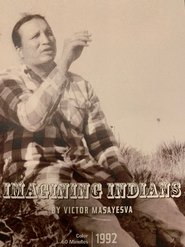
Imagining Indians
1992
Imagining Indians
1992
With an all Indian crew, Victor Masayesva visited tribal communities in Arizona, Montana, New Mexico, South Dakota, Washington and the Amazon to produce this film.Shots Fired
2021
Shots Fired
2021
star 7Amid record police shootings in Utah, an investigation into the use of deadly force in the state with Frontline's local journalism partner The Salt Lake Tribune.NOVA: Prediction by the Numbers
2018
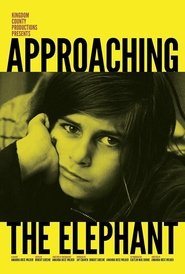
star 5.8Predictions underlie nearly every aspect of our lives, from sports, politics, and medical decisions to the morning commute. With the explosion of digital technology, the internet, and 'big data,' the science of forecasting is flourishing. But why do some predictions succeed spectacularly while others fail abysmally? And how can we find meaningful patterns amidst chaos and uncertainty? From the glitz of casinos and TV game shows to the life-and-death stakes of storm forecasts and the flaws of opinion polls that can swing an election, 'Prediction by the Numbers' explores stories of statistics in action. Yet advances in machine learning and big data models that increasingly rule our lives are also posing big, disturbing questions. How much should we trust predictions made by algorithms when we don't understand how they arrive at them? And how far ahead can we really forecast?Approaching the Elephant
2015
star 7APPROACHING THE ELEPHANT is a feature-length documentary about The Teddy McArdle Free School, where classes are optional and rules are made by democratic vote. Summerhill, founded 90 years ago by A. S. Neill, was the first free school - now there are more than 200 worldwide. Approaching the Elephant chronicles a free school in the making - spanning two years, from Teddy McArdle's first day when there were no rules or classes, through the changing of the school's director and the expulsion of a student by democratic vote, to the last day of the second year, APPROACHING THE ELEPHANT is an intimate portrait of a small group of people from a range of educational backgrounds, come together to forge a place where children are treated as equals, at liberty to spend their days however they please.Griefwalker
2008
Griefwalker
2008
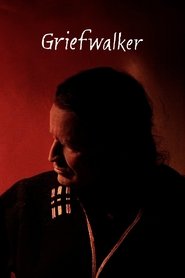
Documentary about Harvard-trained theologian Stephen Jenkinson, a grief counselor who teaches that death empowers us to live and that we must not only accept death but embrace it.Dreams and Nightmares
1974
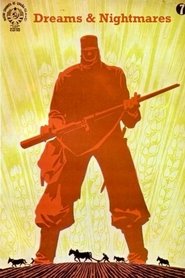
A study of Spain during the years 1936-1973, focusing on the involvement of the United States in the affairs of that country.Some Aspects of Cape Verdean Culture
1975
"Some Aspects Of Cape Verdean Culture" is a re-discovered and restored documentary shot in 1975 in cape verde at the time of independence by pioneering video artist Anthony D. Ramos. This was some of the earliest video work by ramos, who received a 1975 grant from the Rhode Island Council for the Humanities for travel to Cape Verde and a sony color 1/2" reel to reel video camera . Ramos , a cape verdean american, traveled to the islands of Sao Tiago, Fogo and Sao Vicente , and was the only american camera to capture the historic end of 500 years of Portuguese colonial rule. Over eighty hours of video were shot, and efforts are currently underway to raise funds to restore and transfer the rest of videos in this valuable archive.Gabe
2017
Gabe
2017
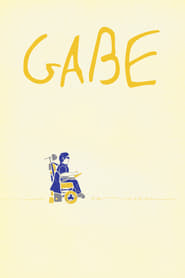
star 7Gabe Weil is a 27 year old born with the most severe form of muscular dystrophy. For his entire life, Gabe had been told he would be lucky to live past 25. But recently, he learned he was misdiagnosed, and may live well into his 50's.Ohero:kon - Under the Husk
2017
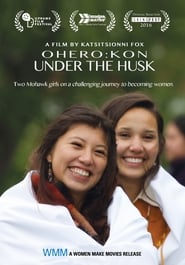
star 6This documentary follows two Mohawk girls on their journey to become Mohawk women. Friends since childhood, Kaienkwinehtha and Kasennakohe are members of the traditional community of Akwesasne on the U.S./Canada border. Together, they undertake a four-year rite of passage for adolescents, called Oheró:kon, or "under the husk." The ceremony had been nearly extinct, a casualty of colonialism and intergenerational trauma; revived in the past decade by two traditional leaders, it has since flourished. Filmmaker Katsitsionni Fox has served as a mentor, or "auntie," to many youth going through the passage rites.Linie 41
2016
Linie 41
2016
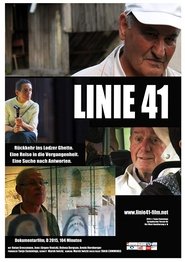
"LINE 41" documents a Holocaust and Lodz Ghetto survivor's return back to today's Lodz (Poland). Until now, Grossmann had repressed his desire to learn about the fate of his brother he lost contact with in 1942. 70 years later, Grossmann starts a search for his missing brother. His search crosses paths with Jens-Jürgen Ventzki, son of the former Nazi Head Mayor of Lodz. Ventzki is pursuing his family's dark secret. In tracing their family histories, they inevitably confront each other.Bogalusa Charm
2017
Bogalusa Charm
2017
A contemporary portrait of a small Louisiana town created at the site of the world’s largest lumber mill. Captured here in its last days after thirty years, Miss Dixie Gallaspy conducts a charm school for girls in order to teach the young women of Bogalusa the social graces and skills that would guide them into “Ladyhood”. Dixie’s week long school, in a town confronted with many challenges (including a legacy of racial conflict and financial dissipation) preserves fragments of a world that may already be lost.To Breathe as One
2013
To Breathe as One
2013
In 2009 Maureen & James Tusty, filmmakers for The Singing Revolution, produced a second film out of Estonia. Seen nationally on U.S. Public Broadcasting, this one hour documentary tells the history of Estonia’s massive Song Festival, and the role music plays in Estonian culture, even today.Can't Feel Nothing
2024
Can't Feel Nothing
2024
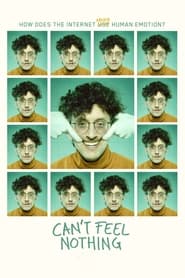
star 8A man lies in bed illuminated by the blue-white light of his mobile phone. He doom scrolls past cute pets, outraged opinion pieces and haunting images from the world's hotspots – and he feels absolutely nothing. With curiousity and humour, director David Borenstein travels the world to investigate how bad things really are. Who is pulling the strings when the internet makes us angry, sad, horny or just plain indifferent? And is there any way back? From the American internet troll, a burnt-out superstar in the Asian influencer industry, a cynical fake-news factory in Eastern Europe, Russian state propagandists and an online dominatrix, this is an alarming contemporary diagnosis, with a bold attempt to also look at solutions.Who Controls the Land
2018
Native American actor Martin Sensmeier travels to San Juan County, Utah, to investigate the controversy over the Bears Ears National Monument. While there, he learns how the fight over the monument is just one more battle in a long-running war between the county's Native American citizens and their Mormon neighbors over who will control the future of the county. His journey reveals how voting rights denied by the Mormons have led to the marginalization of their Native neighbors and learns about the long history of looting of sacred archeological sites in the county.Framing Lesbian Fashion
1992
star 2Framing Lesbian Fashion looks at the evolution of lesbian attire and identity – butch/femme, flannel, androgyny, cross-dressing and drag, queer fluorescent, S/M and leather, lipstick and more.History and Memory: For Akiko and Takashige
1991
This film is a poetic composition of recorded history and non-recorded memory. Filmmaker Rea Tajiri’s family was among the 120,000 Japanese and Japanese Americans who were imprisoned in internment camps after the attack on Pearl Harbor. And like so many who were in the camps, Tajiri’s family wrapped their memories of that experience in a shroud of silence and forgetting. This film raises questions about collective history – questions that prompt Tajiri to daringly re-imagine and re-create what has been stolen and what has been lost.Monk with a Camera
2014
Monk with a Camera
2014
star 7.2Nicholas Vreeland walked away from a worldly life of privilege to become a Tibetan Buddhist monk. Grandson of legendary Vogue editor Diana Vreeland and apprentice of photographer Irving Penn, Nicholas' life changed drastically upon meeting one of the Dalai Lama's teachers. Soon thereafter, he gave up his glamorous life to live in a monastery in India, ultimately returning to his roots in photography to help his fellow monks rebuild their monastery.Joyce Carol Oates: A Body in the Service of Mind
2022
star 7.4Prolific writer Joyce Carol Oates has remained intensely private. Until now. Through a long-standing friendship, and persistent inquiry, director Stig Bjorkman is granted unprecedented access to document her mornings of longhand writing, her walks with her husband—to visit her within her solitude.Desire Lines
2024
Desire Lines
2024
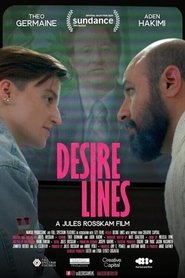
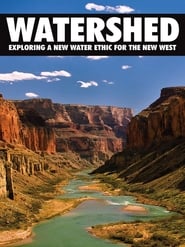
star 1Past and present collide when an Iranian American trans man time-travels through an LGBTQ+ archive on a dizzying and erotic quest to unravel his own sexual desires.Watershed: Exploring a New Water Ethic for the New West
2012
star 6As the most dammed, dibbed, and diverted river in the world struggles to support thirty million people and the peace-keeping agreement known as the Colorado River Pact reaches its limits, WATERSHED introduces hope. Can we meet the needs of a growing population in the face of rising temperatures and lower rainfall in an already arid land? Can we find harmony amongst the competing interests of cities, agriculture, industry, recreation, wildlife, and indigenous communities with rights to the water? Sweeping through seven U.S. and two Mexican states, the Colorado River is a lifeline to expanding populations and booming urban centers that demand water for drinking, sanitation and energy generation. And with 70% of the rivers’ water supporting agriculture, the river already runs dry before it reaches its natural end at the Gulf of California. Unless action is taken, the river will continue its retreat – a potentially catastrophic scenario for the millions who depend on it.