Popular Documentary Movies on Kanopy - Page 199
All Services
Free Services
 Netflix
 Amazon Prime Video
 Apple iTunes
 Apple TV Plus
 Disney Plus
 Google Play Movies
 Paramount Plus
 Hulu
Hulu
 HBO Max
 YouTube
 fuboTV
 Peacock
 Peacock Premium
 Amazon Video
 The Roku Channel
 AMC+
AMC on Demand
AMC+
AMC on Demand
 Kocowa
 Hoopla
 The CW
 Vudu
Vudu
 Starz
Starz
 Showtime
 PBS
PBS
 Pantaflix
 FXNow
FXNow
 Tubi TV
 Kanopy
 Comedy Central
 Crunchyroll
 Microsoft Store
 Redbox
 Sun Nxt
 ABC
ABC
 DIRECTV
 Crackle
 Fandor
 Plex
Plex
Netflix
Amazon Prime Video
Apple iTunes
Apple TV Plus
Disney Plus
Google Play Movies
Paramount Plus
Hulu
HBO Max
YouTube
fuboTV
Peacock
Peacock Premium
Amazon Video
The Roku Channel
AMC+
AMC on Demand
Kocowa
Hoopla
The CW
Vudu
Starz
Showtime
PBS
Pantaflix
FXNow
Tubi TV
Kanopy
Comedy Central
Crunchyroll
Microsoft Store
Redbox
Sun Nxt
ABC
DIRECTV
Crackle
Fandor
Plex

The Burden
2015
The Burden
2015
The Burden tells the story of fossil fuel dependence as our greatest long-term national security threat, and why the U.S. military is leading the fight for clean energy.After Antarctica
2021
After Antarctica
2021
In a dramatic attempt to bring attention to climate change, an international expedition led by renowned explorer Will Steger embarked on the first-ever coast-to-coast expedition across Antarctica in 1989. Six men and their sled dogs braved howling storms, sub-zero temperatures, snow crevasses, and other perils as they traversed the icy terrain. Tasha Van Zandt’s enthralling feature debut catches up with Steger 30 years later as he revisits the frigid continent, deftly weaving his contemporary journey with rare, dynamic footage of his original, treacherous seven-month odyssey.House of Life: A Jewish Cemetary in Prague
2008
star 7A deep dive documentary into the history of the Old Jewish Cemetery of Prague.The Library That Dolly Built
2020
star 10A behind-the-scenes look at Dolly Parton's literacy-focused non-profit, Imagination Library, to show how the famous performer shares her love of reading.Leaving Home, Coming Home: A Portrait of Robert Frank
2004
star 6A documentary on the photographer Robert Frank.The Motherhood Archives
2013
Archival montage, science fiction, and an homage to '70s feminist filmmaking are woven together to form The Motherhood Archives, a lyrical essay film excavating hidden histories of childbirth in the twentieth century.Birds of Passage
2009
Birds of Passage
2009
star 1Birds of Passage presents a lyrical journey through the everyday lives of two young Uruguayan songwriters. Ernesto and Yisela have moved to the capital, leaving behind their respective hometowns on the borders of Brazil and Argentina. After many years of composing songs that reflect their origins, both decide to explore new horizons and each seeks to fulfill the dream of recording a first album. While Yisela struggles to reconcile the emerging possibilities of a career in Uruguay with her plans to move to Argentina, Ernesto confronts personal conflicts that threaten to sabotage his creative passion. The film fuses the arts of documentary film and music, interweaving the songs and stories of these two young composers. With vérité cinematography and an unforgettable soundtrack, Birds of Passage explores the challenges of being a young artist, and the art of searching, inside and outside of oneself.Human Harvest
2015
Human Harvest
2015
star 7.7David Matas and David Kilgour investigate the organ harvesting trade in China.The Habits Of New Norcia
2000
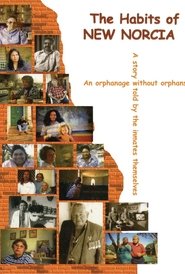
The stories in The Habits of New Norcia are told by former Western Australian Aboriginal child 'inmates' of the New Norcia Benedictine Mission who were separated from their families in the 1940s, 50s and 60s and confined in this "orphanage without orphans". In recent decades the New Norcia Monastery has been packaged as one of the State's leading cultural tourist attractions. "A unique blend of Spanish architecture, European art treasures and pioneer history," "Monks, Music & Mystery," "New Norcia, Australia's only monastic town," the brochures announce. Aboriginal testimony in the film challenges this revised and sanitised history. The documentary provides damming evidence of the continuing violence of the Mission against its victims by deliberate omission of their experience in the New Norcia museum, guided tours, art gallery and promotions — an omission that represents a cruel and wounding cover-up.Let the Fire Burn
2013
Let the Fire Burn
2013
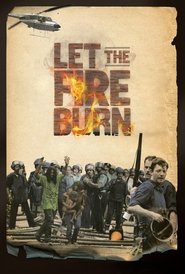
star 7.6Jason Osder delivers an account of the incidents leading up to and during the 1985 standoff between the extremist African-American organization MOVE and Philadelphia authorities. The dramatic clash would claim eleven lives and devastate an entire community.Down a Dark Stairwell
2020
star 8Set in motion by a tragic police-involved shooting, two communities of color navigate fraught perceptions of injustice, inequality, and discrimination in the eyes of the law.The Key to Dalí
2016
The Key to Dalí
2016
star 8.8Spanish scientist Tomeo L'Amo bought a painting in 1989 that he believed to be an original Dalí. After 25 years of searching for the truth, an art expert in Paris changes his life.Orchestra of Exiles
2012
Orchestra of Exiles
2012
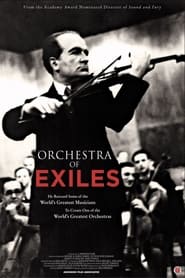
The suspenseful chronicle of how the prodigious Polish violinist Bronislaw Huberman helped save Europe’s premiere Jewish musicians from obliteration by the Nazis during World War II. In three years, he transformed from a world renowned violinist to a humanitarian racing against time.Animals in Action
1955
Animals in Action
1955
The profession of capturing animals in action on celluloid is both an art and science. Some of the most exciting footage can be obtained in different ways. Examples are: a large herd, such as of reindeer, moving as one; slow motion footage of fast moving animals, such as racing greyhounds, especially when they do something unexpected; mothers and their newborn offspring doing what comes naturally; animals placed among special props; animals placed in human situations; combining the exciting and dangerous, such as the running of the bulls in Pamplona and the bullfights to follow; placing animals that are not natural companions together; and placing animals in the situation of a challenge, such as a bunch of bananas just out of reach of a hungry monkey. Many of these elements are combined into the final sequence of a steeplechase race.Wallowitch & Ross: This Moment
1999
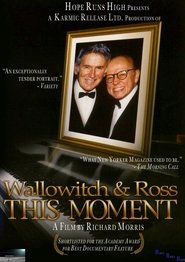
star 2.7Documentarian Richard Morris examines both the onstage and offstage lives of veteran cabaret entertainers John Wallowitch and Bertram Ross. Since 1984, Wallowitch and Ross have been a performing duo, entertaining nightclub audiences with such acid-tongued musical parodies as "If You Don't Love Me, I'll Kill Myself -- Or Maybe I'll Kill You" and "Don't Do To Me What Woody Did To Mia." Wallowitch and Ross have also been lovers for 30 years, who met while while both were active in the New York creative community; Ross spent close to three decades as a dancer with the Martha Graham company and Wallowitch is a Julliard-trained pianist and songwriter with over 1,000 compositions to his credit. Morris exmines Wallowitch and Ross both as artists and members of the gay community without patronizing or exploiting them in the process.Two: The Story of Roman & Nyro
2013
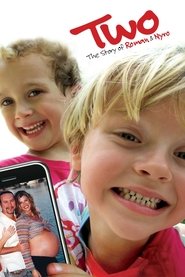
star 3.5Combining over twelve years of footage and narrated by their twin sons, TWO: The Story of Roman & Nyro, follows legendary songwriter Desmond Child and his lifelong partner's loving journey to create their new modern family.Vojta Lavička: Ups and Downs
2013
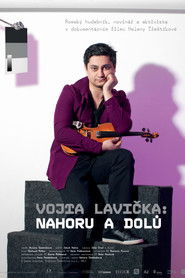
Longitudinal documentary film was shot for past 16 years and the main protagonist is Roman musician and activist Vojta Lavička. Vojta is a master in violin play, who focuses not only on music but also deals with problems of his origin Roman nationality. Vojta is very active in media - he worked in the national radio and television, he worked in the NGO that organize street work for Roman ghettos around the Czech republic, Vojta worked also as a social worker. All together we can watch him struggling with the main topic of his life - his national minority and problems that are caused by living next to Czech majority. Aside this topic films discovers Vojta's private life and his fight for being a good musician and a good man.Rivers of Sand
1974
Rivers of Sand
1974
star 6The people portrayed in this film are called Hamar. They dwell in the thorny scrubland of southwestern Ethiopia, about one hundred miles north of Lake Rudolph, Africa's great inland sea. They are isolated by some distant choice that now limits their movement and defines their condition. At least until recently, it has resulted in their retaining a highly traditional way of life. Hamar women eagerly accept their ritual whipping when boys come of age. Part of that tradition was the open, even flamboyant, observance of male supremacy. In their isolation, they seemed to have refined this not uncommon principle of social organization into a remarkably pure state. Hamar men are masters and their women are slaves. The film tries to disclose the effect on mood and behavior of lives governed by the idea of sexual inequality.I Am Secretly An Important Man
2010
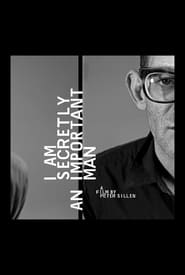
star 8A portrait of the writer and poet Steven J. Bernstein (aka Jesse Bernstein), one of Seattle's most celebrated and troubled voices. His angry, surprisingly fresh, lyrical writings are about sensitive souls, drifters and drug addicts, people alienated by a society that refuses to understand them. Bernstein was an integral part of the legendary Seattle rock scene of the late 80's and early 90s, and in 1991 was dubbed the 'Godfather of Grunge.'Nagasaki Journey
1995
Nagasaki Journey
1995
Rashomon-like look at the atomic bombing of Nagasaki on August 10, 1945. Features color footage of the bomb's aftermath shown in public for the first time in over fifty years. The film features extremely rare footage of the atomic bombing, both black-and-white and color.