Popular Documentary Movies on Kanopy - Page 202
All Services
Free Services
 Netflix
 Amazon Prime Video
 Apple iTunes
 Apple TV Plus
 Disney Plus
 Google Play Movies
 Paramount Plus
 Hulu
Hulu
 HBO Max
 YouTube
 fuboTV
 Peacock
 Peacock Premium
 Amazon Video
 The Roku Channel
 AMC+
AMC on Demand
AMC+
AMC on Demand
 Kocowa
 Hoopla
 The CW
 Vudu
Vudu
 Starz
Starz
 Showtime
 PBS
PBS
 Pantaflix
 FXNow
FXNow
 Tubi TV
 Kanopy
 Comedy Central
 Crunchyroll
 Microsoft Store
 Redbox
 Sun Nxt
 ABC
ABC
 DIRECTV
 Crackle
 Fandor
 Plex
Plex
Netflix
Amazon Prime Video
Apple iTunes
Apple TV Plus
Disney Plus
Google Play Movies
Paramount Plus
Hulu
HBO Max
YouTube
fuboTV
Peacock
Peacock Premium
Amazon Video
The Roku Channel
AMC+
AMC on Demand
Kocowa
Hoopla
The CW
Vudu
Starz
Showtime
PBS
Pantaflix
FXNow
Tubi TV
Kanopy
Comedy Central
Crunchyroll
Microsoft Store
Redbox
Sun Nxt
ABC
DIRECTV
Crackle
Fandor
Plex

Ruthless: Monopoly's Secret History
2023
star 6.9America’s favorite board game, Monopoly, is a love letter to unbridled capitalism and the impulses that make our free-market society tick. Contrary to the folksy legend spread by Parker Brothers, Monopoly’s origin involves a radical feminist and a community of Quakers in Atlantic City. If not for the determination of an economics professor and impassioned anti-monopolist, the real story behind the creation of the game might never have come to light.Sinai Field Mission
1978
Sinai Field Mission
1978
star 6.3SINAI FIELD MISSION shows the routine activities of the diplomats and electronics technicians who operate the U.S. Sinai Field Mission, the early warning system established in 1976 to help facilitate the disengagement between Egypt and Israel after the 1973 war. The major purpose of the Mission is to monitor the approaches to strategic passes and to verify the operations of the Egyptian and Israeli surveillance stations in the Sinai Buffer Zone.People Say I'm Crazy
2003
People Say I'm Crazy
2003
star 8John Cadigan, an artist with schizophrenia, presents a documentary about "the world inside my head. It's a chaotic world filled with paranoia, creativity, fear and desire. A world in which I'm struggling every day, trying to know what is real and what is not."Soul of a Farmer
2021
Soul of a Farmer
2021
Follows Patty Gentry, a former chef, as she battles to earn a living on her three acre Early Girl Farm on Long Island. Isabella Rossellini, from whom Patty rents her land tells us, "Patty is the Picasso of vegetables!" The documentary upends the romance of farm-to-table – buying fresh produce directly from farmers markets and at farm stands is wonderful, but the farmer's life is a constant struggle. We watch Patty work her butt off (with her small, mostly female team) seven days a week, growing the vegetables her top chef clients treasure. Patty's passion is to constantly improve her soil, increase her yield of organic vegetables, and just as urgently scramble to stay afloat.Art With a Message: Protest, Propaganda, Satire and Social Comment
1988
This program investigates the ways various art forms are used to sway minds and to argue political causes. Examples include Napoleon and Hitler; artist such as Daumier, Hogarth and Shann; writers Dickens, Swift and Orwell; and pop artists who mock popular ideals.My Mother India
2002
My Mother India
2002
Patricia Uberoi, an Australian woman, married an Indian professor in the 60s and moved to his home in New Delhi. They raised three children there, but the riots and the anti-Sikh feelings led to her encouraging her children to move to Australia. A documentary about a multicultural family becomes a commentary on the events surrounding the anti-Sikh riots of 1984.Breath of the Gods
2012
Breath of the Gods
2012
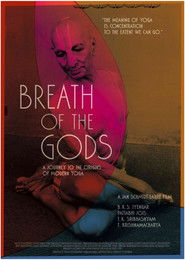
star 7A Journey to the Origins of Modern Yoga. Yoga is known to go back to God Shiva, who perfected 8,4 million postures, according to Indian tradition. Far less known is the fact that yoga is at the same time an early 20th century-creation of Indian savant T. Krishnamacharya, which is what this film is about. Krishnamacharya's life and teachings are seen through the eyes of the director on his search for authentic yoga. His journey leads him from students and relatives of Krishnamacharya's such as the legendary teachers Iyengar and Pattabhi Jois to the source of modern yoga: the palace of the Maharaja of Mysore, where Krishnamacharya founded the first ever yoga school. A feature-length documentary including rare historical footage as well as lavish reenactments.The Self-Made Man
2005
The Self-Made Man
2005
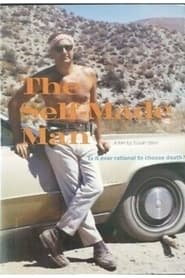
Is it ever rational to choose death? On Independence Day at Stern Ranch, 77-year-old solar energy pioneer Bob Stern finds out he’s seriously ill – possibly dying. Meanwhile, an elderly in-law is dying on artificial life support. Bob decides to cheat that fate and take his own life. His family tries to stop him. Bob sets up a video camera. Daughter Susan Stern explores “rational suicide,” the “right-to-die” and the difficult end-of-life choices faced by an aging population.Chasing Beauty
2013
Chasing Beauty
2013
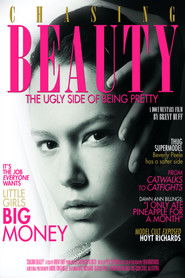
star 6.1Provides a rare glimpse into the intriguing and complex world of modeling. Behind the glossy covers of Vogue and Glamour lie the rarely talked about, uncensored stories of what models endure and sacrifice to become a top model. It examines body image and the psychological effects of the beauty business on young women and men.A Gamer's Life
2016
A Gamer's Life
2016
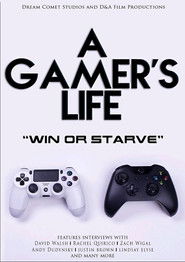
star 5.7Go behind the scenes to uncover the truths of being a professional gamer for a living. Can you really make a living from being a gamer?She Is the Ocean
2020
She Is the Ocean
2020
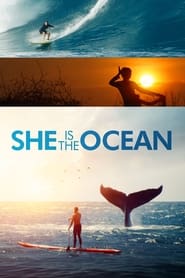
star 8Examine the lives of eight extraordinary women who define the courage and spirituality it takes to lead a life of the sea. A Big Wave Surfer, a Freediver, a Midwife, a scientist, a fourteen years old surfing prodigy, even a Cliff Diver.The Trials of Spring
2015
The Trials of Spring
2015
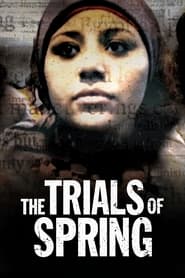
When 24-year-old Hend Nafea is arrested and tortured for demonstrating peacefully in Cairo's Tahrir Square, her pursuit of justice reflects post-revolution Egypt at an uncertain crossroads.Birth of The Endless Summer: Discovery of St.Francis
2023
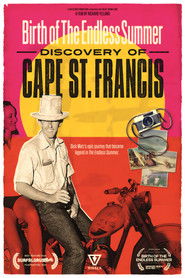
The documentary "Birth of The Endless Summer: Discovery of Cape St. Francis" reveals the untold story behind Bruce Brown's iconic film "The Endless Summer." It follows the journey of Dick Metz, a California surf pioneer, as he travels the world from 1958 to 1961. Metz's adventures lead him to discover the "perfect wave" at Cape St. Francis in South Africa, which inspires Bruce Brown to create "The Endless Summer" and revolutionize the sport of surfing. The film also documents Metz's return to South Africa at the age of 90 to retrace his original journey. It features interviews with influential figures in the surfing world, including Metz, Bruce Brown, and other surfers. The premiere of the film at the Newport Beach Film Festival is particularly special for director Richard Yelland, as it tells a personal story rooted in his hometown.Sissy
2000
Sissy
2000
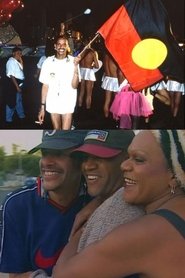
star 9SISSY takes you behind the scenes to give a rare insight into a subculture that has created its own space within the gay culture, and it explores the bond that sets the black 'sisterhood' apart from white gays. SISSY is an expression of gay black identity: 'We are glamorous, we are here and we are queer.'Monumental: David Brower's Fight for Wild America
2004
star 6From the moment David Brower first laid eyes on the beauty of the Yosemite Valley, he wanted to the fight to preserve the American wilderness for future generations. The story of a true American legend, Monumental documents the life of this outdoorsman, filmmaker and environmental crusader, whose fiery dedication and activism not only saved the Grand Canyon (among other accomplishments) but also transformed the Sierra Club into a powerful national political force, giving birth to the modern environmental movement. Seen through Brower's own eyes - he was an accomplished filmmaker, and his stunning footage is included here-- a 1956 raft trip down Glen Canyon, before its damming, evokes the awful sadness of losing public land we've failed to protect. And in period footage of Brower's early rock-climbs (done in sneakers, with hemp ropes) and of his training in the 10th Mountain Division (who defeated the Nazis in the high Alps).Women's Territory
2021
Women's Territory
2021
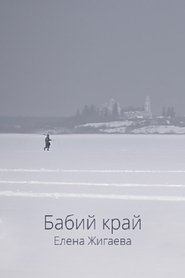
The ancient city of Soligalich, as if frozen in space and time…The city is an open-air museum, with a beautiful and majestic temple architecture fading into oblivion. There is still no gas heating in the city, and the smell of clean snow and stove smoke is in the streets. In the sapogo-katalny shop, which stands on the site of the former temple, women manually create felt boots. They work hard and hard, give birth and raise children! And each has its own destiny…Unique Russian women, worthy of the brush of the best artists, the guardians of the ancient craft, the ancient tradition. The backbone of our country, its essence and salt.Unfolding Florence: The Many Lives of Florence Broadhurst
2006
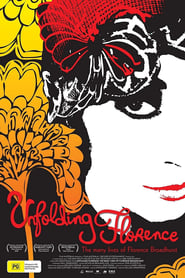
star 7A Colourful Life is a Docu/Drama based on the colourful life of flamboyant design pioneer Florence Broadhurst.Philip Guston: A Life Lived
1982
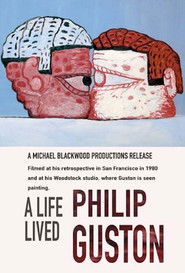
Late in life, the artist looks back over a career that originated in social realism during the '30s, moved to the center of Abstract Expressionism, and culminated in a return to figuration. Filmed at his retrospective in San Francisco in 1980 and at his Woodstock studio, where Guston is seen painting, the artist speaks candidly about his philosophy of painting and the psychological motivation for his work.Indian Point
2016
Indian Point
2016
star 5Indian Point Nuclear Power Plant looms just 35 miles from Times Square. With over 50 million people living in close proximity to the aging facility, its continued operation has generated controversy for the surrounding community. In the brewing fight for clean energy and the catastrophic possibilities of complacency, director Ivy Meeropol weaves a startling portrait of our uncertain nuclear future.Ursula von Rydingsvard: Into Her Own
2019
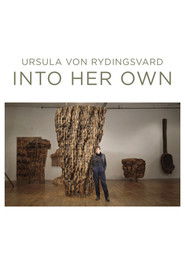
This compelling documentary portrait is a quiet ode to a woman whose approach to form and material are unmatched in the art world. Working primarily in cedar, von Rydingsvard creates monumental sculptures that play with texture and shape in ways that evoke surprising emotion. Born in Germany to Ukrainian-Polish parents, von Rydingsvard’s family was detained for five years in a post-WWII refugee camp before moving to America. The pain and trauma of this experience, coupled with the anger born from an abusive childhood, left indelible marks on Ursula. But her ability to channel this into her work and practice undoubtedly birthed an artist of singular determination and talent.