Popular Documentary Movies on Kanopy - Page 257
All Services
Free Services
 Netflix
 Amazon Prime Video
 Apple iTunes
 Apple TV Plus
 Disney Plus
 Google Play Movies
 Paramount Plus
 Hulu
Hulu
 HBO Max
 YouTube
 fuboTV
 Peacock
 Peacock Premium
 Amazon Video
 The Roku Channel
 AMC+
AMC on Demand
AMC+
AMC on Demand
 Kocowa
 Hoopla
 The CW
 Vudu
Vudu
 Starz
Starz
 Showtime
 PBS
PBS
 Pantaflix
 FXNow
FXNow
 Tubi TV
 Kanopy
 Comedy Central
 Crunchyroll
 Microsoft Store
 Redbox
 Sun Nxt
 ABC
ABC
 DIRECTV
 Crackle
 Fandor
 Plex
Plex
Netflix
Amazon Prime Video
Apple iTunes
Apple TV Plus
Disney Plus
Google Play Movies
Paramount Plus
Hulu
HBO Max
YouTube
fuboTV
Peacock
Peacock Premium
Amazon Video
The Roku Channel
AMC+
AMC on Demand
Kocowa
Hoopla
The CW
Vudu
Starz
Showtime
PBS
Pantaflix
FXNow
Tubi TV
Kanopy
Comedy Central
Crunchyroll
Microsoft Store
Redbox
Sun Nxt
ABC
DIRECTV
Crackle
Fandor
Plex

The Tree of Iron
1988
The Tree of Iron
1988
This is one of the few films to document archaeological work on ancient civilizations in Africa. It also deals with an important subject, African iron smelting, and presents convincing evidence for early indigenous technologies far more complex than previously expected. The Tree of Iron is set in Tanzania, East Africa, on the western shores of Lake Victoria, where Haya people have lived for centuries.Voting Matters
2018
Voting Matters
2018
This documentary follows civil-rights attorney Donita Judge as she helps several voters in Ohio cast ballots even though they initially were turned away, while highlighting how many hoops must be jumped through simply to vote and how cries of voter fraud are exaggerated.The Reunited States
2020
The Reunited States
2020
star 7Follow four Americans as they travel the country in an effort to bridge political division. From Susan Bro, reluctantly called to activism after losing daughter Heather Heyer in Charlottesville, to Milwaukeean Steven Olikara, founder of the Millennial Action Project, they all seek to mend division and find the human bond that crosses the aisles of our partisan nation. This film is a balm before Election Day, reminding us that even within division, connection is possible.From the Back of the Room
2011
star 4Although it is often credited with spurring the "third wave" of feminism, Riot Grrrl seemed to many to be a blip in the media. Riot Grrrl paved the way for the more mainstream "girl power" phenomenon, but was ultimately forgotten until recently. This film tackles the past thirty years of female involvement in Do It Yourself music, and aims to give a more complete picture of how women have participated in the D.I.Y. community, and how it affects their daily lives.SnapShots
2021
Policing the Police
2016
Policing the Police
2016
George Floyd’s killing triggered mass demonstrations nationwide calling for racial justice and police accountability in the United States. In the wake of those protests, New Yorker writer and historian Jelani Cobb returns to a troubled police department he first visited four years ago (Policing the Police) to examine whether reform can work, and how police departments can be held accountable.Angels in the Dust
2007
Angels in the Dust
2007
star 8ANGELS IN THE DUST is the story of a courageous, self-sacrificing, fiercely loving woman who chooses a spiritual path over a material one; it tells of the life-changing power of one compassionate heart. For a nation overwhelmed by an epidemic of HIV/AIDS, orphans, rape, violence, and Apartheids legacy of social and political unrest, the film offers a clear pathway of hope and a replicable paradigm for the future.Free Renty: Lanier v. Harvard
2021
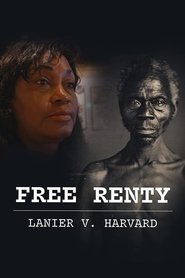
FREE RENTY tells the story of Tamara Lanier, an African American woman determined to force Harvard University to cede possession of daguerreotypes of her great-great-great grandfather, an enslaved man named Renty. The daguerreotypes were commissioned in 1850 by a Harvard professor to "prove" the superiority of the white race. The images remain emblematic of America’s failure to acknowledge the cruelty of slavery, the racist science that supported it and the white supremacy that continues to infect our society today. The film focuses on Lanier and tracks her lawsuit against Harvard, and features attorney Benjamin Crump, author Ta-Nehisi Coates and scholars Ariella Azoulay and Tina Campt.Troublemakers: The Story of Land Art
2015
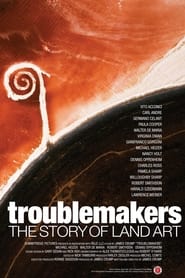
star 6The titular troublemakers are the New York–based Land (aka Earth) artists of the 1960s and 70s, who walked away from the reproducible and the commodifiable, migrated to the American Southwest, worked with earth and light and seemingly limitless space, and rethought the question of scale and the relationships between artist, landscape, and viewer. Director James Crump has meticulously constructed Troublemakers from interviews (with Germano Celant, Virginia Dwan, and others), photos and footage of Walter De Maria, Michael Heizer, Robert Smithson, Nancy Holt, and Charles Ross among others at work on their astonishing creations.The Paw Project
2013
The Paw Project
2013
star 8.7This is a David and Goliath story of one veterinarian's battle to protect her patients (tigers, lions and even house cats) from big corporations, with their big corporate money, that will shamelessly do anything to animals to increase their bottom line. She starts a grassroots movement that is fueled by passion, but appears to be losing the battle. Then, unexpectedly, she realizes that the corporations accidentally left her a giant loophole. In a scramble to take advantage of this unforeseen gift, she leads the crusade passing legislation protecting animals from de-clawing in seven cities in just six weeks.Liberia: An Uncivil War
2004
star 7Liberia, a nation burdened by its past. America, a nation with no memory at all." In Liberia, the summer of 2003 was pure insanity. A rebel army attempts to overthrow a government run by an indicted war criminal. Two armies engage in the final battle of a decade long civil war. Hundreds of innocent civilians die from mortar shells launched from afar and thousands more suffer hunger while the soldiers, mostly teenagers, keep the capital city under siege. The nation prays that America, the world's sole superpower, will put an end to the violence. Conceived in Washington in the early 1800s, its constitution written at Harvard, its founding fathers freed slaves who returned to Africa, Liberia is the one country in the world worthy of the title, Made in America. By the year 2000, Liberia, once considered the gem of Africa, was ranked last in the world for quality of life.Stay Prayed Up
2021
Stay Prayed Up
2021
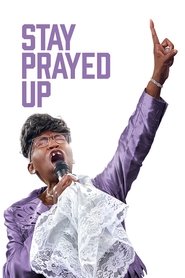
Lena Mae “Mother” Perry, the backbone of her community, cooks for crowds, tends to the needy, and boy, can she sing! After 50 years leading the dynamic, down-home gospel group The Branchettes, the octogenarian powerhouse, armed with her unwavering faith, shows no signs of slowing down. Taking us inside her loving community while following the recording of the group’s first album, this film is bursting with warmth, joy, and soul-stirring gospel music.Box of Treasures
1983
Box of Treasures
1983
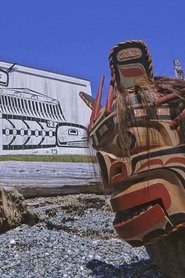
In 1921 the Kwakiut'l people of Alert Bay, British Columbia, held their last secret potlatch. In 1980 at Alert Bay, the U'mista Cultural Centre (U'mista means "something of great value that has come back") opened its doors to receive and house the cultural treasures which were seized decades earlier and only then returned to the people. The center also took up activities such as recording stories told by elders so that some part of the past would always be alive and teaching children about their heritage in order to make them feel connected to their ancestors. This film documents the cultural significance of these events for today's Kwakiut'l people. It is an eloquent testimony to the persistence and complexity of Kwakiut'l society and to the struggle for redefining cultural identity for them.My Bolivia: Remembering What I Never Knew
2016
A documentary filmmaker travels to Bolivia to learn more about his father and his family's history.theEYE: Howard Hodgkin
2006
Howard Hodgkin was one of the world’s leading painters, whose art is admired both by critics and by a wide public. Beginning with a remembered experience, Hodgkin works on his seductive and complex paintings for long periods, characteristically producing richly coloured, sweeping compositions, which continue into the picture-frame itself. These paintings uniquely straddle representation and abstraction, at the same time as they demonstrate both an awareness of history and an understanding of art’s potential today. Most recently, his interest in working in different scales, evident particularly in significantly larger paintings such as Americana and After Vuillard, demonstrates his concern to engage the viewer in new and challenging ways.Below Sea Level
2008
Below Sea Level
2008
star 6.4During a five year period an Italian filmmaker documents the world of down-on-their-luck individuals who live in a Californian desert trying to get by one day at a time. None of them has more than a vehicle, a dog and some clothes.Secrets from Putumayo
2020
star 1Documentary about the man who is currently considered the father of violation of human rights inquests, Roger Casement (1864-1916). The actions during the time he spent in Africa, Brazil and in his native Ireland still echo in our days.The Busing Battleground
2023
The Busing Battleground pulls back the curtain on the volatile effort to end school segregation, detailing the decades-long struggle for educational equity that preceded the crisis. It illustrates how civil rights battles had to be fought across the North as well as the South and reckons with the class dimensions of the desegregation saga, exploring how the neighborhoods most impacted by the court’s order were the poorest in the city.Imagine Peace
2019
Imagine Peace
2019
Almost 50 years after Lionel Rogosin made Arab-Israeli Dialogue, his son revisits the same topic. Following his father’s footsteps, his first journey leads to friends and co-workers of the participants in this unusual shooting. His second journey guides him to places where the historical and contemporary disputes, discussed in the film, took place. Here the director tries to document the development of the complex situation since Amos Kenan’s and Rashed Hussein’s discussion in New York, and find out if their bold words about peace and friendship between the two nations sharing one state became the reality.China Undercover
2020
China Undercover
2020
A revealing look at the Chinese government’s mass imprisonment of an estimated two million Uyghurs and other Muslims, with undercover footage inside China's secretive Xinjiang region. Experts have described it as the largest mass incarceration of an ethnic group since the Holocaust. Now, with undercover footage and firsthand accounts from survivors of China's detention camps, FRONTLINE investigates the Chinese Communist regime’s detention of Muslims — and its use and testing of sophisticated surveillance technology against the Uyghur community.