Popular Documentary Movies on Kanopy - Page 278
All Services
Free Services
 Netflix
 Amazon Prime Video
 Apple iTunes
 Apple TV Plus
 Disney Plus
 Google Play Movies
 Paramount Plus
 Hulu
Hulu
 HBO Max
 YouTube
 fuboTV
 Peacock
 Peacock Premium
 Amazon Video
 The Roku Channel
 AMC+
AMC on Demand
AMC+
AMC on Demand
 Kocowa
 Hoopla
 The CW
 Vudu
Vudu
 Starz
Starz
 Showtime
 PBS
PBS
 Pantaflix
 FXNow
FXNow
 Tubi TV
 Kanopy
 Comedy Central
 Crunchyroll
 Microsoft Store
 Redbox
 Sun Nxt
 ABC
ABC
 DIRECTV
 Crackle
 Fandor
 Plex
Plex
Netflix
Amazon Prime Video
Apple iTunes
Apple TV Plus
Disney Plus
Google Play Movies
Paramount Plus
Hulu
HBO Max
YouTube
fuboTV
Peacock
Peacock Premium
Amazon Video
The Roku Channel
AMC+
AMC on Demand
Kocowa
Hoopla
The CW
Vudu
Starz
Showtime
PBS
Pantaflix
FXNow
Tubi TV
Kanopy
Comedy Central
Crunchyroll
Microsoft Store
Redbox
Sun Nxt
ABC
DIRECTV
Crackle
Fandor
Plex

Lili
2020
Lili
2020
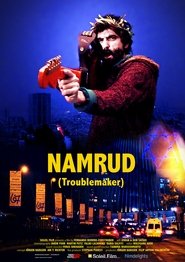
A young mother flees her country in the midst of a revolution, revealing to her daughter a history of abandonment that crosses three continents and four generations.Namrud: Troublemaker
2017
Namrud: Troublemaker
2017
star 7Jowan Safadi, born as Palestinian in the State of Israel, is a famous musician and a true free spirit. With his band Fish Samak he delivers songs ranging from the political and social to the emotional and philosophical and gathered a huge fan-community in the Arabic world. Jowan is unafraid to speak his mind or tackle taboo subjects, and his lyrics, at once penetrating and witty, have also courted controversy on several occasions: Previously investigated by Israeli police for "inciting terrorism", his last tour to Jordan ended with his arrest and an overnight stay in a Jordanian prison cell. But this is just the beginning: standing for co-resistance instead of co-existence and criticizing the stare society he lives in, Jowan struggles for his ideals - at any price.Under the Same Sky
2017
Under the Same Sky
2017
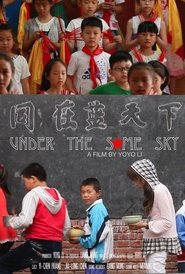
The Chinese government is sponsoring a national campaign on "equal" education. UNDER THE SAME SKY documents school children in the city as well as the country to compare the two educational experiences. UNDER THE SAME SKY had been nominated for best short documentary at the 2017 Asian Pacific Film Festival, 2017 St. Louis International Film Festival, Long beach indie Film Festival and Los Angeles Chinese Film Festival. It's also been shown and won awards at 15 other film festivals around the world, including the Cannes Short Film Corner and The Impact Docs Awards.Le bouillon d'awara
1996
Le bouillon d'awara
1996
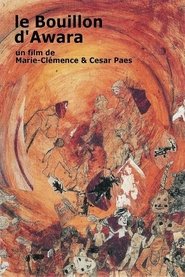
The awara soup is a kind of stew containing all sorts of ingredients from French Guiana. People say that if someone eats that dish on Easter, he is sure never to leave Guiana.Brooklyn Farmer
2013
Brooklyn Farmer
2013
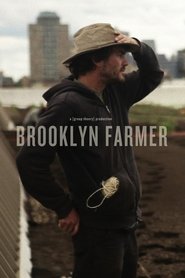
BROOKLYN FARMER explores the unique challenges facing Brooklyn Grange, a group of urban farmers who endeavor to run a commercially viable farm across the rooftops of New York City. As their growing operation expands to a second roof, the team confronts the realities inherent in operating the world’s largest rooftop farm in one of the world's biggest cities.The Heart of Nuba
2016
The Heart of Nuba
2016
star 6.2American doctor Tom Catena dedicates himself to the Nuba people in Sudan during a relentless campaign of bombing by war criminal Omar Al-Bashir.Dhakiyarr vs. the King
2004
Seventy years after his controversial murder trial and subsequent disappearance, an Australian Aboriginal's descendants seek to restore what was denied him: his honor.Protected: The Truth About Palm Island
1975
Exposé of the ill-treatment of Aboriginal workers by white men. A dramatised documentary about the June 1957 Aboriginal strike on Palm Island reserve, off the north Queensland coast.Miss Hill: Making Dance Matter
2014
Miss Hill: Making Dance Matter tells the inspiring and largely unknown story of a woman whose life was defined by her love for dance. Martha Hill emerges as dance's secret weapon, someone who fought against great odds to establish dance as a legitimate art form in America. Through archival footage, lively interviews with friends and intimates, and rare footage of the spirited subject, the film explores Hills's arduous path from a Bible Belt childhood in Ohio to the halls of academe at NYU and Bennington College to a position of power and influence as Juilliard's founding director of dance (1952-1985). Peppered with anecdotal material delivered by dance notables who knew her, this revelatory story depicts her struggles and successes, including the battle royal that accompanied her move to the Lincoln Center campus.Campaign of Hate: Russia and Gay Propaganda
2014
star 6.2As most of the world moves forward toward gay equality, Russia is seemingly heading backward. Antigay sentiment and legislation are spreading rapidly throughout the country. In 2013, the Russian parliament passed a ban on so-called 'gay propaganda' that effectively makes nearly any public discussion of gay equality a crime. It is my hope that this documentary will educate viewers to their reality.Sacred Sperm
2014
Sacred Sperm
2014
star 7The film creates a daring first exposure on the way parents, rabbis, teachers, pedagogues and therapists within the Orthodox Hasidic Jewish Community educating their male children from infancy to adolescence, to avoid spilling their sperm. They target them to keep their seed only after marriage with a female for the purpose of fertilization. "Sacred Sperm" penetrates into one of the most suppressed hidden issues in the Orthodox Hasidic Jewish Community - a Taboo. Throughout the film we follow the emotional and theological struggle of the director who is trying to find a proper way as a father to explain his teenager son logically why he should keep this major Mitzvah (commandment) which perceived by many as unreasonable and seems impossible to fulfill.The Barefoot Artist
2014
The Barefoot Artist
2014
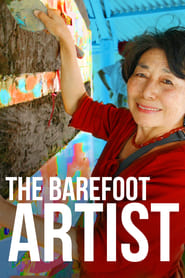
star 5.3Lily Yeh is a global artist who is fueled by a belief that art is a human right, and that artists can create a foundation for profound social change. Slight of frame, but large in spirit and vision, the 70-year-old artist was born in China, lives in Philadelphia, and now, as constant traveler, the world is her canvas. Our film explores two sides of Lily's life that are connected parts of the same journey: her international ventures helping to heal weakened spirits in communities around the world and a personal journey within, to repair her own fractured family.Pride of Place
1976
Pride of Place
1976
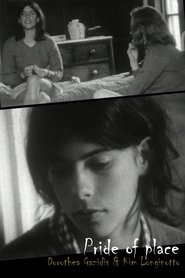
star 6.3In this first project of Kim Longinotto while she was a student at Englands National School of Television and Film she filmed the daily life in a girls boarding school situated in an old isolated castle in Buckinghamshire. Until she was 17, Longinotto lived in this boarding school, finaly she run away from there. In this dark and expressive black and white documentary, Longinotto exposes the repressive school from the students perspective. It seems to be a kind of miniature state with bizzare rules, idigestibel food and absurd punishments. The documentary begins with an graduation ceremony. The director blows her own trumpet, afterwards the film describes the daily routine of schoollife. The film ends up with the students leaving for holidays. As a result of this documentary, the boarding school was closed down one year after the release of the film.American Terrorist: Could the '08 Mumbai Attack Have Been Prevented?
2015
FRONTLINE investigates American-born terrorist David Coleman Headley, who helped plan the deadly 2008 siege on Mumbai. In collaboration with ProPublica, the film — an updated and expanded version of A Perfect Terrorist — reveals how secret electronic surveillance missed catching the Mumbai plotters, and how Headley planned another Charlie Hebdo-like assault against a Danish newspaper.Better Things: The Life and Choices of Jeffrey Catherine Jones
2012
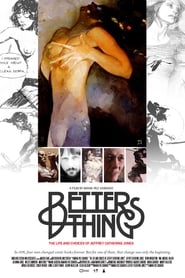
star 6.3Jeffrey Catherine Jones is one of the most revered comic book and fantasy artists of all time and a complex character with an unusual life, an ideal subject for an insightful and captivating documentary. Tracing the early history as part of The Studio with fellow artists Bernie Wrightson, Barry Windsor-Smith and Michael William Kaluta through to gender transition in later life, Maria Paz Cabardo assembles a collage of artwork and archive alongside interviews with collaborators and some touchingly intimate conversations with the artist herself shortly before she died.Don't Get Sick After June: American Indian Healthcare
2010
Declared wards of the state, Native Americans were promised housing, education and healthcare in numerous treaties with the US Government. Like so many other federal promises, these too have not been met. The budget shortfall to the Indian Health Service continues. Add to this generational trauma of subjugation, reservations, boarding schools and alienation, their health and their healthcare is in a critical state. This is the story of the program's inception of our government's obligation to America's first people.Butterfly Blueprints
2022
Butterfly Blueprints
2022
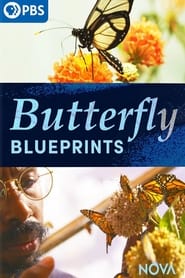
star 10The hidden scientific secrets of butterflies reveal them to be more inventive and resilient than we ever imagined. Follow their extraordinary life cycle and migrations to tropical rainforests, windswept prairies, and even inside a chrysalis as it’s being spun.Yanomamo: A Multidisciplinary Study
1968
This film illustrates the field techniques used by a multidisciplinary team of researchers from the University of Michigan in collaboration with their Venezuelan colleagues. The film also includes a brief sketch of Yanomamo culture and society.The Reunited States
2020
The Reunited States
2020
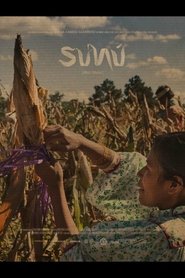
star 7Follow four Americans as they travel the country in an effort to bridge political division. From Susan Bro, reluctantly called to activism after losing daughter Heather Heyer in Charlottesville, to Milwaukeean Steven Olikara, founder of the Millennial Action Project, they all seek to mend division and find the human bond that crosses the aisles of our partisan nation. This film is a balm before Election Day, reminding us that even within division, connection is possible.Sunú
2015
Sunú
2015
star 6.8Seen through the eyes of small, midsize and large Mexican maize producers, SUNU knits together different stories from a threatened rural world. It journeys deep into the heart of a country where people realize their determination to stay free, to work the land and cultivate their seeds, to be true to their cultures and forms of spirituality, all in a modern world that both needs them and despises them.