Popular Documentary Movies on Kanopy - Page 281
All Services
Free Services
 Netflix
 Amazon Prime Video
 Apple iTunes
 Apple TV Plus
 Disney Plus
 Google Play Movies
 Paramount Plus
 Hulu
Hulu
 HBO Max
 YouTube
 fuboTV
 Peacock
 Peacock Premium
 Amazon Video
 The Roku Channel
 AMC+
AMC on Demand
AMC+
AMC on Demand
 Kocowa
 Hoopla
 The CW
 Vudu
Vudu
 Starz
Starz
 Showtime
 PBS
PBS
 Pantaflix
 FXNow
FXNow
 Tubi TV
 Kanopy
 Comedy Central
 Crunchyroll
 Microsoft Store
 Redbox
 Sun Nxt
 ABC
ABC
 DIRECTV
 Crackle
 Fandor
 Plex
Plex
Netflix
Amazon Prime Video
Apple iTunes
Apple TV Plus
Disney Plus
Google Play Movies
Paramount Plus
Hulu
HBO Max
YouTube
fuboTV
Peacock
Peacock Premium
Amazon Video
The Roku Channel
AMC+
AMC on Demand
Kocowa
Hoopla
The CW
Vudu
Starz
Showtime
PBS
Pantaflix
FXNow
Tubi TV
Kanopy
Comedy Central
Crunchyroll
Microsoft Store
Redbox
Sun Nxt
ABC
DIRECTV
Crackle
Fandor
Plex

Orizzonti di gloria
1985
Orizzonti di gloria
1985
Young band musicians from the Province of Turin face the idea that they won't ever be famous.State of Denial
2003
State of Denial
2003
An unprecedented and unflinching look at how the citizens of South Africa are living with the AIDS epidemic, given the climate of governmental confusion and neglect.Ten by Ten
2022
Ten by Ten
2022
There is no denying the evocative power of food to remind us of who we are and where we come from.They Turned Our Desert Into Fire
2007
Reporting the devastation, forced displacement, and genocide in Darfur should be a story with daily coverage. Mere mention of the word "Darfur" should set off a passionate exchange, or at least the question, "What can be done?". Unfortunately, the people of Darfur struggle with a problem common to so many victimized by geo-political realities: how to overcome the willful indifference of powerful government and media interests who find their story unimportant or merely inconvenient. With images and first-hand accounts, filmmaker Mark Brecke shares his experience of the Darfur crisis with Amtrak train passengers journeying eastward on a three day trip to Washington D.C. Their reactions, interwoven with hard facts and expert opinion, raise the central question in They Turned Our Desert Into Fire - Why does the public not understand the severity of this crisis and how can the world continue to do nothing?The Islanders
1968
The Islanders
1968
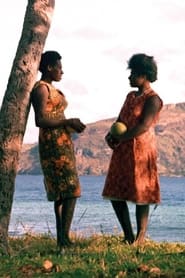
Above the tip of Cape York, beyond the northernmost point of the Australian continent, are the Torres Strait Islands. The economy here is based on home gardens and pearlshell fishing. The culture, with its basis in music, dancing and ceremony, provides a striking contrast to that of mainland Australia. This film, shot in the late 1960s, shows how strongly old traditions still affect Torres Strait Islander people, even though they also have most of the trappings of modern life.Mourning For Mangatopi
1974
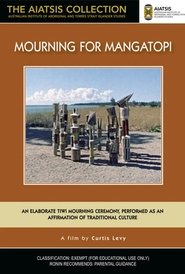
Because of work commitments and the influence of Christian Missions, traditional mourning ceremonies among the Tiwi people of Melville Island were becoming rare at the time of making this film (1974). The full, elaborate ceremony, called the Pukumani ceremony, lasted several days and involved large numbers of people in ritual roles. It was performed here with full awareness that this may be one of the last times such a ceremony would be staged in the traditional way. The ceremony was prepared by the Mangatopi family of Snake Bay after the death of a 35-year old family member killed by his wife. The dead man’s father, Geoffrey Mangatopi, and his family requested this film to be made as a public record of a disappearing tradition. Unique to the Tiwi people of Melville and Bathurst islands, the Pukumani ceremony was not only performed to safe-guard the passage of the dead person into the spirit world, but to re-affirm kinship relationships and traditional Tiwi culture.A Kali Temple Inside Out
2018
This film portrays everyday life inside and around a Kali temple in the city of Kanpur, Uttar Pradesh (India). Its central characters are a priest and three devotees, who show why this temple is so important to them. The film offers a counterpoint to assumptions about religious differences and shows a more complex relationship informed by mutual friendship and shared religious aspirations.Beneath the Polar Sun
2021
Five hundred miles from the North Pole, a scientific expedition is beset by the sea ice it has come to study. Three red kayaks, tiny specks in an austere wilderness, the team is in shock, its way forward blocked by a crumpled and pulverized wreckage of floes. Conditions are unrecognizable, no research can be done. With the Arctic Ocean collapsing all around them, they must escape the chaos by traversing Nares Strait, the most formidable passage of the polar North.Every Family's Nightmare
2009
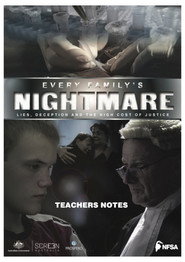
star 10This is the shocking inside story of a family’s fight to free their 15-year-old son after he is wrongly accused of rape. A horrifying tale of lies, deception and the high cost of justice, Every Family’s Nightmare raises questions about systemic, procedural and cultural flaws in Australia’s criminal justice system by investigating the case of Perth schoolboy Patrick Waring. Patrick was jailed for a year while his family battled to prove his innocence. From the time he was accused of raping a teenage girl on 30 March 2006, the Western Australian police were convinced Patrick Waring was guilty. His family knew they were wrong. Over the next year, the Waring family assembled an international team of experts to help defend their son, exposing deep flaws in the police investigation and the legal battle that followed. Alarmingly, experts say that the same situation could arise at any time, involving any family, in any Australian state.After Sherman
2022
After Sherman
2022
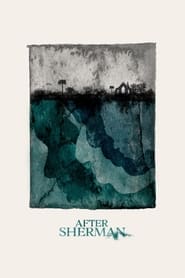
Beautifully layered and expressionistic, After Sherman is a story about inheritance and the tension that defines our collective American history, especially Black history. The filmmaker follows his father, a minister, in the aftermath of a mass shooting at his church in Charleston, South Carolina to understand how communities of descendants of enslaved Africans use their unique faith as a form of survival as they continue to fight for America to live up to its many unfulfilled promises to Black Americans.Rosalie's Journey
2003
Rosalie's Journey
2003
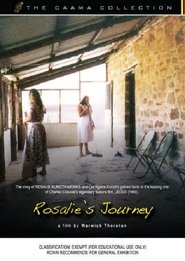
In 1955, filmmaker Chauvel debuted Jedda. His star was a young Arrernte woman from Alice Springs named Ngarla Kunoth, or Rosalie. Her story, the story of what happened before and after Chauvel's film, is told in Rosalie's Journey.John Dewey: An Introduction to His Life and Work
2003
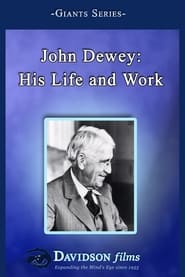
John Dewey wrote extensively about philosophy, psychology, education, political science, and the arts. In his very full 92 years of life (1859-1952), he not only wrote about the breadth of life, he participated in it as a teacher, social critic, political activist and involved family man. This fully produced video introduces students to his philosophy and his critical studies of education, the arts and the implications of democracy for the lives of individuals and their communities. Dewey lived in a different era of history than we do, but many of his concerns are very relevant to life today. Maintaining a democracy in the face of diverse ethnic values, educating the young to participate fully in the life of their community, and expanding individual perceptions through participation in the arts were among the issues he examined.Chanel No 5
2017
Chanel No 5
2017
A historical and romantic look at the revolutionary fragrance showcases its place in the world of glamour and fashion, as well as its iconic allure.Global Homophobia: The Roots of Hatred
2019
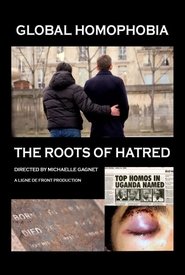
This hard-hitting documentary reveals the abuse suffered by the gay community all over the world. France, despite having legalized gay marriage in 2013, has seen a rise in homophobic violence in recent years. In Tunisia, gay people can be sentenced to three years in prison, simply for their sexual orientation. When arrested by the police, they are subject to an “anal examination”, a humiliating procedure of no scientific value. Uganda is one of the 27 sub-Saharan countries in which homosexuality is repressed, with active state-encouragement of homophobia, and where homosexuality is punishable by lifetime imprisonment. In the United States, more progressive laws have not translated into progressive attitudes. 700,000 Americans, in a desperate attempt to change their sexual orientation, have gone to see therapists who claim to be able to “transform any homosexual into a heterosexual.”Return to the Land of Souls
2009
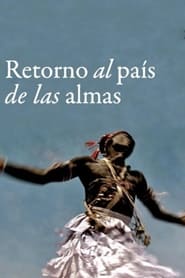
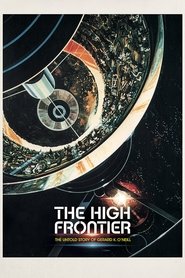
In the 21st century many ancestral beliefs are struggling to survive in a hostile, fast-changing world. In southeast Ivory Coast, some Akan communities still make contact with the spirits through Komians or animistic priests who go into a trance and are possessed by the spirits of the Forest and the Waters. Jean Marie Addiaffi (1941-1999), a writer and intellectual from Ivory Coast, fought to conserve the Akans’ oral literature, myths and legends, and the knowledge and uses of the plants. In the film “Return to the land of souls”, Yéo Douley, a disciple of Jean Marie Addiaffi , will set out on a journey to visit his master’s grave and carry out a ritual libation. On his travel, he will attend the initiation rites of three people chosen by the spirits and witness one of them proclaimed as the new Komian or high animistic priest.The High Frontier: The Untold Story of Gerard K. O'Neill
2021
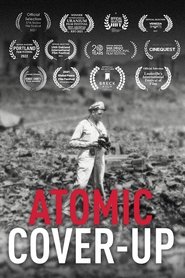
star 7The High Frontier: The Untold Story of Gerard K. O'Neill tells the untold story of the life and influence of the late physicist and space colony pioneer Dr. Gerard K. O'Neill. In 1977, O'Neill wrote the book The High Frontier: Human Colonies in Space, which sparked an enormous grassroots movement to build Earth-like habitats in space in order to solve Earth's greatest crises. The film is told through "Gerry's Kids" as they affectionately call themselves; his peers, family, and the younger generation who followed that movement and are now leading the modern day space industry.Atomic Cover-up
2021
Atomic Cover-up
2021
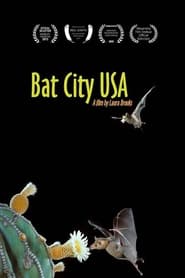
star 8.4Explores the 1945 bombings of Hiroshima and Nagasaki from the unique perspective of the camera crews who risked their lives filming in the irradiated aftermath. Initially started by a Japanese newsreel crew, and then continued under the supervision of the US Army, this documentary reveals how their footage was seized, classified top secret, and then buried by American officials for decades in order to hide the full human cost of the bombings as a costly nuclear arms race began.Bat City USA
2012
Bat City USA
2012
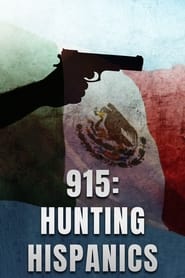
star 5Bat City USA delves into Austin's complicated relationship with a colony of Mexican free-tailed bats under the downtown Congress Avenue Bridge. Each year, thousands of people get a fascinating, close-up glimpse of the world's largest urban bat colony amid the colorful downtown Austin, Texas setting. The film reveals how the bats moved into the bridge and survived eradication plans by hostile residents. Viewers discover how the bats eventually became a beloved part of what makes Austin unique and weird, mainly through the efforts of Merlin Tuttle, founder of Bat Conservation International, who convinced residents of the benefits of the bats.915: Hunting Hispanics
2021
star 9On August 3, 2019 a racist murderer, hating Mexican people, committed the ultimate hate crime. 915: HUNTING HISPANICS is a full length feature film that closely examines the El Paso Walmart mass shooting. It provides a complete analysis of what happened that day, as well as an exploration of many overlooked angles.Past Life (January - June)
2019
An abstract narrative, diary film and travelogue reminiscing on the quotidian. My day to day routines and deviations from it are captured as 6 months pass on the screen in a blur. Musique concrète accompanies the visuals taken from vocal samples of myself as a child and repurposed. Ruminations on nostalgia, film as material and 16mm as a particularly evocative medium with a long history of home movies and nonprofessional filmmaking. The film acts as a document, archiving time and place, as a way for me to recount where and what I did at this point in my life-a point where I still feel an existential drifting and listlessness. Something to look back at and only make sense of after the fact.