Top Rated Documentary Movies - Page 316
All Services
Free Services
 Netflix
 Amazon Prime Video
 Apple iTunes
 Apple TV Plus
 Disney Plus
 Google Play Movies
 Paramount Plus
 Hulu
Hulu
 HBO Max
 YouTube
 fuboTV
 Peacock
 Peacock Premium
 Amazon Video
 The Roku Channel
 AMC+
AMC on Demand
AMC+
AMC on Demand
 Kocowa
 Hoopla
 The CW
 Vudu
Vudu
 Starz
Starz
 Showtime
 PBS
PBS
 Pantaflix
 FXNow
FXNow
 Tubi TV
 Kanopy
 Comedy Central
 Crunchyroll
 Microsoft Store
 Redbox
 Sun Nxt
 ABC
ABC
 DIRECTV
 Crackle
 Fandor
 Plex
Plex
Netflix
Amazon Prime Video
Apple iTunes
Apple TV Plus
Disney Plus
Google Play Movies
Paramount Plus
Hulu
HBO Max
YouTube
fuboTV
Peacock
Peacock Premium
Amazon Video
The Roku Channel
AMC+
AMC on Demand
Kocowa
Hoopla
The CW
Vudu
Starz
Showtime
PBS
Pantaflix
FXNow
Tubi TV
Kanopy
Comedy Central
Crunchyroll
Microsoft Store
Redbox
Sun Nxt
ABC
DIRECTV
Crackle
Fandor
Plex

Blood of Havana
2010
Blood of Havana
2010
star 5.2Shot on a Digital Harinezumi, the film features a disturbing and monstrous character walking the streets of Havana to meet people. The reading of a poetic, funny and false prophecy about communism and a new revolution coincides with a minimal and repetitive soundtrack.Lyon, travaux au canal de Jonage: Machine à damer
1897
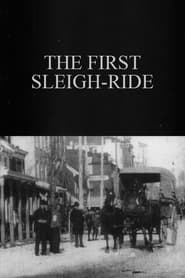
star 5.5A group of workers, aided by a steam-roller, are leveling the ground during the construction of the Jonage canal, a diversion of the Rhône river, which was built in order to supply the hydroelectric plant of Cusset.The First Sleigh-Ride
1897
star 3.6“This subject taken just after the recent first fall of snow, shows two enthusiastic horsemen indulging in a "brush" with their respective horses and cutters.” (Maguire & Baucus)Watermelon Contest
1896
Watermelon Contest
1896
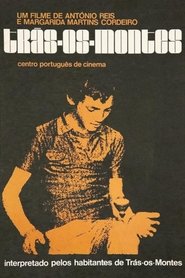
star 3.3Two men have a contest to see which one can be the first to eat a large slice of watermelon.Trás-os-Montes
1976
Trás-os-Montes
1976
star 6.8The first feature in António Reis and Margarida Cordeiro’s trilogy is a journey through this almost mythical region of north-east Portugal, a tapestry of micronarratives where past, present and future become intertwined.Arab Cortege, Geneva
1896
Arab Cortege, Geneva
1896
star 5A stationary camera looks across a busy corner toward a store front marked "The Divan." The words "des fees" are beneath. A cortege of Arabs, about 20 persons in the party, walk past; the dignitaries are in front, attended by men with horns and drums. Coming in the other direction are local Swiss, who pay little attention, and a group of native-garbed Africans. The dozen or so well-dressed denizens of Geneva who are sitting on the steps of the Divan take it all in.San Francisco: Aftermath of Earthquake
1906
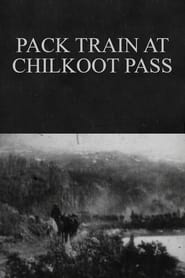
star 5.4Footage shot not long after the 1906 earthquake in San Francisco is edited together so that more than one scene and more than one vantage are included. We see fire raging. We see burned-out buildings, piles of rubble, and buildings with only one wall standing. People stand and watch; others walk purposely through the debris. A carriage passes; the camera pans the desolation. A horse-drawn cart is laden with a family's remaining possessions. A sign hangs outside one building: "A little disfigured but still in business. Men Wanted."Pack Train at Chilkoot Pass
1898
star 4.1During the Alaska gold rush, one way to reach the Klondike was over the Chilkoot Pass. A stationary camera is placed to see a ways down the curving trail. A pack train comes into view and passes in front of us, led by a man on horseback. Eight loaded mules follow, then another cowboy on horseback and a man walking, then eight more laden mules, another cowboy, then nine more mules, a cowboy, and still the pack train stretches as far as the eye can see. A solitary man watches from atop a hillock.Pixo
2009
Pixo
2009
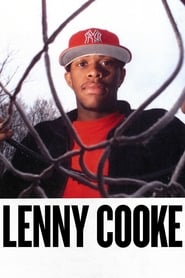
star 8.2The film discusses the cultural impact of “pichação”, a Brazilian form of graffiti, on the streets of São Paulo and its international influence as one of the main cornerstones of Street Art.Lenny Cooke
2013
Lenny Cooke
2013
star 6.8In 2001, Lenny Cooke was the most hyped high school basketball player in the country, ranked above future greats LeBron James, Amar’e Stoudemire, and Carmelo Anthony. A decade later, Lenny has never played a minute in the NBA. In this quintessentially American documentary, filmmaking brothers Joshua and Benny Safdie track the unfulfilled destiny of a man for whom superstardom was only just out of reach.100 Yen: The Japanese Arcade Experience
2012
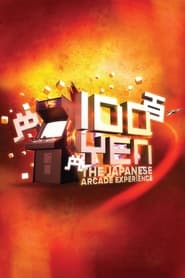
star 6.2Imagine a world where video games reign supreme. Five story buildings filled with arcade cabinets, old and new, inundate the streets. Welcome to downtown Tokyo, Japan. A place where the arcades of the 80s and 90s not only still exist, but thrive and have evolved into an elaborate, unmatchable gaming experience. 100 Yen is a historical documentary about the evolution of arcades and the culture surrounding it - from the birth of arcades to the game centers that still thrive today. With a predominant focus on the three major arcade genres, Shooting games, Fighting games and Rhythm games, 100 Yen explores the culture and evolution of arcades through the past and present. Featuring interviews with industry professionals, game programmers and designers, casual gamers and gaming icons from Japan, Canada, and the USA.Quick Billy
1971
Quick Billy
1971
star 7.1A psychedelic montage of home movie footage gives way to a silent western story.The Blood of Yingzhou District
2006
star 6.4A year in the life of children in the Province of Anhui in China, who have lost their parents to AIDS. Traditional obligations to family and village collide with terror of the disease.Fifi Howls from Happiness
2013
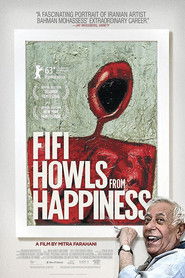
star 6.8Bahman Mohassess was a celebrated artist at the time of the Shah. Trained in Italy, he created sculptures and paintings in his homeland. But audiences often took offence at the pronounced phalli on his mostly naked bronze figures and his work was regularly censored. All traces of him were lost after the revolution. It was said he destroyed his remaining paintings and disappeared.Por primera vez
1969
Por primera vez
1969
star 7.3In 1967, Cuban documentary filmmaker Octavio Cortazar followed a travelling projectionist troupe whose mission was to show moving pictures to rural communities for the first time. Cortazar’s short film documents one audience’s response to its first film: Charlie Chaplin’s Modern Times.Earthflight
2013
Earthflight
2013
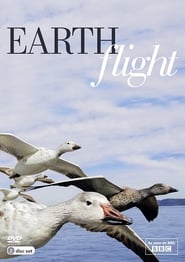
star 6.7Nature documentary that takes a breathtaking flight on the wings of birds across six continents and experiences some of the world's greatest natural spectacles from a bird's-eye view.The Shutka Book of Records
2005
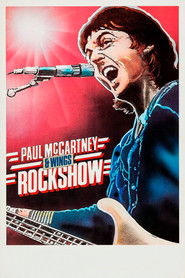
star 7.4A documentary about bizarre residents of Shutka, a Macedonian village built on the former city dump area. Shutka, where everyone is the champion of something. This film is a celebration of the culture, humor, spirit, oddities and idiosyncrasies of the Roma, one of the world's poorest and most persecuted peoples. Ultimately we are instructed in the celebration of life despite any and all circumstances - everyone is of value here.Rockshow
2013
Rockshow
2013
star 8During their 1976 world tour, Paul McCartney and Wings gave a magnificent performance to 67,000 fans at the Kingdome, in Seattle, Washington. The concert features 30 songs of the Beatles and Wings.Sea Ballerinas
1956
Sea Ballerinas
1956
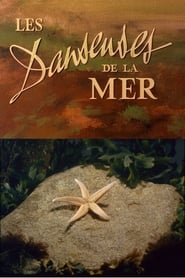
star 6.3Two kinds of starfish, the brittle and the feather. The brittle star moves its arms alone, without the aid of suckers. Underneath is a single opening. Stalks move food close to the mouth and move waste away. We see vents, used in reproduction and breathing. We watch the hatched young expelled into the water. The camera shows us brittle stars' intricate patters. We observe feather stars in clusters, like ferns. One turns over slowly; arms have branches with stalks for breathing and gathering microscopic food. Reproductive organs are inside branches. We see eggs develop at 1,400 nature's speed. Larvae emerge, 0.1 mm long. They grow. A feather star takes a walk.The City
1939
The City
1939
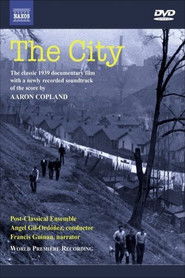
star 5.8A prescient documentary about city planning, which presents idyllic suburbs and nuclear families as a solution to the chaos, poverty and social decay of industrialized inner cities.