Top Rated Documentary Movies - Page 318
All Services
Free Services
 Netflix
 Amazon Prime Video
 Apple iTunes
 Apple TV Plus
 Disney Plus
 Google Play Movies
 Paramount Plus
 Hulu
Hulu
 HBO Max
 YouTube
 fuboTV
 Peacock
 Peacock Premium
 Amazon Video
 The Roku Channel
 AMC+
AMC on Demand
AMC+
AMC on Demand
 Kocowa
 Hoopla
 The CW
 Vudu
Vudu
 Starz
Starz
 Showtime
 PBS
PBS
 Pantaflix
 FXNow
FXNow
 Tubi TV
 Kanopy
 Comedy Central
 Crunchyroll
 Microsoft Store
 Redbox
 Sun Nxt
 ABC
ABC
 DIRECTV
 Crackle
 Fandor
 Plex
Plex
Netflix
Amazon Prime Video
Apple iTunes
Apple TV Plus
Disney Plus
Google Play Movies
Paramount Plus
Hulu
HBO Max
YouTube
fuboTV
Peacock
Peacock Premium
Amazon Video
The Roku Channel
AMC+
AMC on Demand
Kocowa
Hoopla
The CW
Vudu
Starz
Showtime
PBS
Pantaflix
FXNow
Tubi TV
Kanopy
Comedy Central
Crunchyroll
Microsoft Store
Redbox
Sun Nxt
ABC
DIRECTV
Crackle
Fandor
Plex

Brando
2007
Recipes For Disaster
2008
Recipes For Disaster
2008
star 6.8Director John Webster convinces his wife and two small children that the whole family should go on an oil diet, yet without having to give up their a middle class suburban lifestyle. All the everyday things that we don't do, or that we can't help doing, make up recipes for disaster. In this comedy of errors they find themselves questioning their values and putting to test their will power and ultimately, their happiness.Inocente
2012
Inocente
2012
star 7.3INOCENTE is a personal and vibrant coming of age story about a young artist's determination never to surrender to the bleakness of her surroundings. At 15, Inocente refuses to let her dream of becoming an artist be caged by being an undocumented immigrant forced to live homeless for the last nine years. Color is her personal revolution and its sweep on her canvases creates a world that looks nothing like her own dark past. INOCENTE is both a timeless story about the transformative power of art and a timely snapshot of the new face of homelessness in America: children. The challenges are staggering, but the hope in her story proves that the hand she has been dealt does not define her, her dreams do.Embracing Chaos: Making The African Queen
2010
star 7The epic story of how the film The African Queen (1951), directed by John Huston and starring Humphrey Bogart and Katharine Hepburn, was shot on real African locations, barely overcoming all kinds of hardships and disasters.Speed: In Search of Lost Time
2012
star 7.8It’s a paradox. Never before in history we have worked more efficiently. Never before we have saved time with more sophisticated technologies. Anyway, nearly all of us are feeling an increasing pressure of time. It seems that the same technology that has been invented to make our life better and easier, is now enslaving us. Why?Foreigners Out! Schlingensief's Container
2002
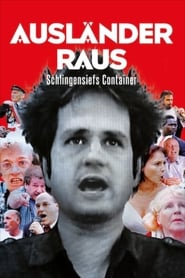
star 6.6FOREIGNERS OUT! SCHLINGENSIEFS CONTAINER is a thrilling, insightful, funny chronicle and reflection of one of he biggest public pranks and acts of art terrorism ever committed. Austria 2000: Right after the FPÖ under Jörg Haider had become part of the government, the first time an extreme right wing party became state officials after WW2, infamous German shock director Christoph Schlingensief showed a very unique form of protest. Realising public xenophobia and the new hate politics in the most drastic ways possible, he installed a public concentration camp right in the middle of Vienna's touristic heart, right beside the picturesque opera where hundreds of tourists and locals pass by daily. And it was no concentration camp you had ever feared to return from the old times, but one that cynically reflected our new multimedia culture. Satirising reality TV shows, "Big Brother" especially, a dozen asylum seekers were surveilled by a multitude of cameras, could be fed and watched by.All About 'The Birds'
2000
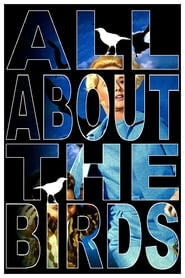
star 7.2A wonderfully informative 80-minute documentary combining current interviews with archival materials and scenes from the film. Hitchcock's daughter Pat, production designer Robert Boyle, screenwriter Evan Hunter, matte artist Albert Whitlock's colleagues Syd Dutton and Bill Taylor, storyboard artist Harold Michelson, Hitchcock collaborator Hilton Green, actors Tippi Hedren, Veronica Cartwright and Rod Taylor, filmmaker Peter Bogdanovich, author Robin Wood, makeup artist Howard Smit, and composer Bernard Herrmann biographer Steven Smith all contribute valuable input to Hitchcock's memorable classic.Inside Nazi Germany
1938
Kuningas Litmanen
2012
Kuningas Litmanen
2012
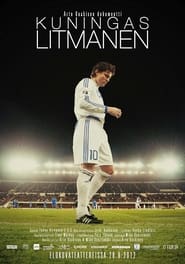
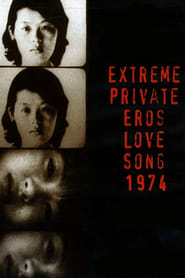
star 6.9The film aims to reveal what the general public has been unable to see: the modest and mysterious inner world of Jari Litmanen. In addition to reviewing the stages of the great soccer player and "artist's" own life, the film also examines the experiences and thoughts of other people connected to his life, such as his teammates and supporters, about Jari Litmanen, soccer, and life itself.Extreme Private Eros: Love Song 1974
1974
star 6.9When his wife, the outspoken feminist Miyuki Takeda, announced that she was leaving him in order to find herself, Kazuo Hara began this raw, intensely personal documentary as a way to both maintain a connection to the woman he still cared for and to make sense of their complex relationship. Granted at times shockingly intimate access to Miyuki’s personal life, Hara follows her wayward journey toward liberation as she explores her sexuality with both men and women, becomes pregnant and raises a family as a single mother, and grows increasingly disenchanted with the constraints of traditional social structures.Hitler - Never Heard of Him
1963
star 6.8In 1963, 22-year-old Bertrand Blier invited 11 of his peers to come to a film studio and talk about their lives. The record of what was said is a discussion of values that remains relevant and fascinating today. The footage was shot just five years prior to May 1968, and the atmosphere of that time is clearly discernible: these young people may not yet be revolutionaries, but there is clearly a ferment in the air.… But Film Is My Mistress
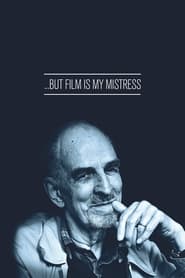
2010
star 6.2Guided by Liv Ullmann and with commentaries from a number of prominent filmmakers for whom Bergman is and remains an important influence - such as Woody Allen, Olivier Assayas, Bernardo Bertolucci, Arnaud Desplechin, John Sayles, Martin Scorsese and Lars von Trier, the film provides a vivid portrait of the artist who in each new project found a challenge for himself and for the people he worked with - both actors and colleagues behind the camera.Marijuana
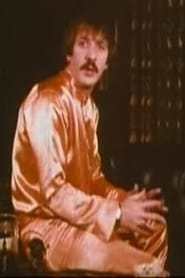
1968
Marijuana
1968
star 4.4Sonny Bono appears onscreen to tell kids that marijuana is a "bummer" that turns you into a "weedhead" and will make you "trip out" (the fact that, based upon his performance, Sonny appears to have ingested unknown substances before the cameras started rolling tends to limit the film's crediblity somewhat).The Fruit Hunters
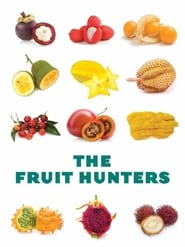
2012
The Fruit Hunters
2012
star 6.7The Fruit Hunters explores the little known subculture and history of rare fruit hunters who travel the globe in an obsessive search for the exotic, in this stylish and sometimes erotic documentary.Housing Problems
1935
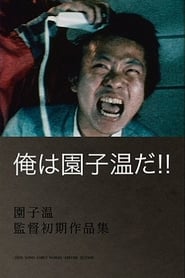
I Am Sono Sion!
1985
I Am Sono Sion!
1985
star 4.3Sono's first film, 30 minutes long and shot on 8mm. A free-wheeling intimate cinematic journal in which the artist contemplates his life as he approaches his birthday.Lasseter's Bones
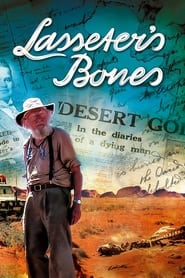
2012
Lasseter's Bones
2012
star 6.4Australia’s El Dorado was found by Lewis Harold Bell Lasseter – if we believe his claims in the late 1800s to have discovered a vast gold deposit in central Australia. This mysterious place has never again been found, and many believe it doesn’t exist. But one thing is certain: Lasseter was a larger-than-life character. Seen by some as an eccentric conman, he was ridiculed for his extravagant assertions, which he held until his tragic end. But Lasseter remains the embodiment of the Australian folk hero, who lived a life full of incredible adventures, tall tales and outrageous claims – including a possible faked death and his insistence that he designed the Sydney Harbour Bridge.A Well Spent Life
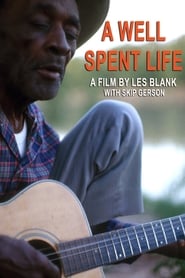
1971
A Well Spent Life
1971
star 6.4A tribute to the Texas songster, Mance Lipscomb, considered by many to be the greatest guitarist of all time.Gettysburg
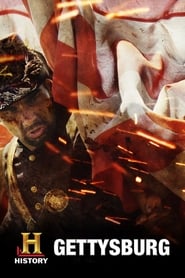
2011
Gettysburg
2011
star 5.8An examination of the Battle of Gettysberg on both the personal and strategic level.