Top Rated Documentary Movies on Pantaflix - Page 484
All Services
Free Services
 Netflix
 Amazon Prime Video
 Apple iTunes
 Apple TV Plus
 Disney Plus
 Google Play Movies
 Paramount Plus
 Hulu
Hulu
 HBO Max
 YouTube
 fuboTV
 Peacock
 Peacock Premium
 Amazon Video
 The Roku Channel
 AMC+
AMC on Demand
AMC+
AMC on Demand
 Kocowa
 Hoopla
 The CW
 Vudu
Vudu
 Starz
Starz
 Showtime
 PBS
PBS
 Pantaflix
 FXNow
FXNow
 Tubi TV
 Kanopy
 Comedy Central
 Crunchyroll
 Microsoft Store
 Redbox
 Sun Nxt
 ABC
ABC
 DIRECTV
 Crackle
 Fandor
 Plex
Plex
Netflix
Amazon Prime Video
Apple iTunes
Apple TV Plus
Disney Plus
Google Play Movies
Paramount Plus
Hulu
HBO Max
YouTube
fuboTV
Peacock
Peacock Premium
Amazon Video
The Roku Channel
AMC+
AMC on Demand
Kocowa
Hoopla
The CW
Vudu
Starz
Showtime
PBS
Pantaflix
FXNow
Tubi TV
Kanopy
Comedy Central
Crunchyroll
Microsoft Store
Redbox
Sun Nxt
ABC
DIRECTV
Crackle
Fandor
Plex

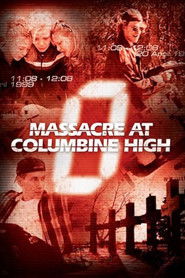
Zero Hour: Massacre at Columbine High
2004
star 8.1This movie covers the final hour leading up to the Columbine High Massacre. On April 20, 1999, two boys from Columbine High School in Colorado embarked on a massacre and killed 12 students, one teacher, and injured 21 other students, before turning the guns on themselves.American Vagabond
2013
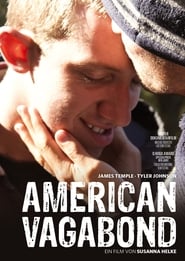
American Vagabond
2013
star 5.8American Vagabond is a documentary film about runaway queer youth living in the shadows of the promised city.North on Evers
1992
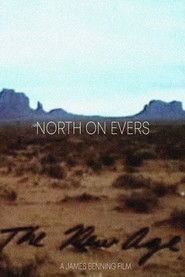
North on Evers
1992
star 7.2In NORTH ON EVERS James Benning takes the road movie seriously, making his circular trip across the U.S. a marvelously photographed, intensely felt, and disturbing portrait of contemporary America. In many ways, this recent film is a departure of Benning’s earlier films which are characterized, at times, by extremely long, carefully planned takes and a minimal narrative approach. In NORTH ON EVERS, the shots are kept short with a narrative that is direct and detailed, like a diary or a long series of postcards to a friend. What this work shares with the other films is a dry wit and a deep interest in the American social landscape.The House of Suh
2010
The House of Suh
2010
star 6.8The House of Suh” tells the story of Andrew and his sister Catherine, and how the values, conflicts, and dysfunctions of their Korean immigrant family led to the murder of Robert O’Dubaine. Eloquently narrated by Andrew, the documentary highlights issues of assimilation and the struggle between freedom and responsibility, raising questions about guilt, innocence, and the illusive gray area in-between.Being in the World
2009
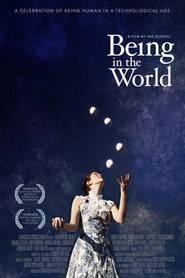
Being in the World
2009
star 5.6Being in the World is a celebration of human beings, and our ability, through the mastery of physical, intellectual and creative skills, to find meaning in the world around us. This film takes us on a gripping and surprising journey around the world meeting extraordinary people, showing how we go from following rules to proficiency, to becoming masters in the form artists, craftsmen, athletes, and, ultimately, unique human beings attuned to the sacred.Return to the Edge of the World
1978
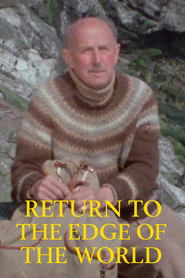
star 6.5Michael Powell makes a moving return trip to the remote island of Foula, forty years after he shot his first major feature there - 'The Edge of the World (1937)'.Rated X: A Journey Through Porn
1999
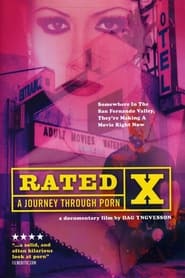
star 5.9Director Dag Yngvesson begins making a documentary about the porn industry, until he is asked by a desperate director to shoot film for his next adult movie. After agreeing, he is led deeper and deeper into the world of porn, speaking frankly with many of the industries most famous icons (Jeanna Fine, Bill Margold) and a 19-year-old newcomer named Selena who discusses her career choice on film with her mother. Viewers are invited into many areas of the industry previously not discussed including the private lives of its stars and the inner workings of the industry, in particular how directors go about casting their stars.You Are What You Eat
1968
You Are What You Eat
1968
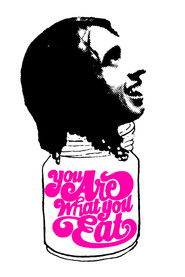
star 3.7A montage of the weird, a freak-out film that appeared when the expression was in fashion and in flower, along with the flower people. The film was one of the first exponents of the mobile camera-rock track-optical effect school of filmmaking, and it is much a document as it is a documentary. A repellent and fascinating depiction of the Sunset Strip in Hollywood, along with Haight-Ashbury in San Francisco and the East Village in New York. Tiny Tim amounts to something resembling a recurring motif and narrator.The Body
1970
The Body
1970
star 4A psychedelic documentary of the body electric, with music by Pink Floyd. The film was directed and produced by Roy Battersby. The film's narrators, Frank Finlay and Vanessa Redgrave, provide commentary that combines the knowledge of human biologists and anatomical experts. The film's soundtrack, Music from the Body, was composed by Ron Geesin and Roger Waters.Jan Saudek - Trapped By His Passions No Hope For Rescue
2007
star 4.1Jan Saudek, Czechoslovakia’s most famous living photographer, is the subject of this often-shocking kaleidoscopic biopic by friend and colleague Adolf Zika. With an unblinking eye, Zika chronicles the drama-filled life and work of a controversial artist who, though little-known in the United States, has enjoyed international acclaim throughout his fifty-year careerThe Path of the Dragon
1998
star 6.4Produced and directed by Walt Missingham who, in 1983, became the first non-Chinese to practice Kung Fu at the Shaolin Temple, this authoritative and informative programme uses rarely seen archive footage to trace both the history of martial arts and the phenomenal impact Bruce Lee had on this culture. Narrated by Lee's daughter, Shannon Lee Keasler.Belleville Baby
2013
Belleville Baby
2013
star 6.4A long distance call from a long lost lover makes her reminisce about their common past. She remembers the spring when they met in Paris, the riots, the vespa and the cat named Baby. A film about love, time and things that got lost along the way.Introduction to Arnold Schoenberg’s Accompaniment to a Cinematic Scene
1973
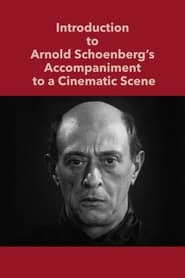
star 5.5This is a small, intense film based on Schoenberg’s opus of the same name with the subtitle “danger, fear, catastrophe”. It deals with emerging fascism and the persecution of Jews, as well as with their historical continuities.Fear and Loathing on the Road to Hollywood
1978
star 6.9Fear and Loathing on the Road to Hollywood, also known as Fear and Loathing in Gonzovision, is a documentary film produced by BBC in 1978 on the subject of Hunter S. Thompson, directed by Nigel Finch. The road trip/film pairs Thompson with Finch's fellow Briton the illustrator Ralph Steadman. The party travel to Hollywood via Death Valley and Barstow from Las Vegas, scene of the pair's 1971 collaboration. It contains interviews with Thompson and Steadman, as well as some short excerpts from some of his work.The History Of Iron Maiden - Part 2: Live After Death
2008
star 8.8Continuation of "The History Of Iron Maiden" documentary series, which began with The History of Iron Maiden – Part 1: The Early Days. Band members, crew, friends and associates talk about the period in the band's career which saw the writing, recording and release of the Powerslave album, the following World Slavery Tour and the recording of the Live After Death album.The Village Church
1947
Water from the Land
1946
Water from the Land
1946
star 6.4Sharply critical film about rural water pollution in the Jutland countryside district of medical officer Jens Jensen. Situations of everyday water use are illustrated by graphic representations of a well and surrounding soil layers. A new well is correctly constructed in the farmyard.The World of 'The Dark Crystal'
1983
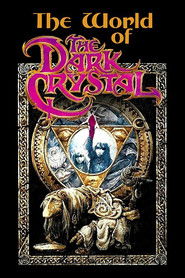
star 6.6A documentary which explores the making of Jim Henson and Frank Oz's 1982 fantasy film 'The Dark Crystal', which originally aired on PBS in the United States on January 9, 1983. This one-hour documentary details the technological innovations in the field of animatronics, art design, film making, and Henson's own brand of magic. Requiring 5 years of production, including over two years of pre-production, The Dark Crystal was inspired by the imagination of artist Brian Froud and conceived by scores of talented designers, builders, technicians, and performers. The World of the Dark Crystal shows how Jim Henson's Creature Shop in London and the Muppet Workshop in New York brought Brian Froud's art and Jim Henson's vision to life.180
2011
180
2011
star 4.3The film begins by showing images of the Holocaust, and stating that Hitler sanctioned the killing of 11 million people. This is followed by Comfort interviewing people about Adolf Hitler; their responses indicate a lack of historical knowledge, although he also finds a neo-Nazi who claims to love Hitler. Comfort proposes a hypothetical situation to his interviewees, asking if they would kill Hitler if they had the opportunity at that time in history. He asks more hypotheticals dealing with what his interviewees might do in other circumstances related to the Holocaust. He then switches his topic to make similar comparisons to abortion within the United States and the right to life, personalizing his arguments to make comparisons between the Holocaust and abortion in order to place the interviewees on the spot. The documentary concludes with Comfort stating that over 50 million abortions have occurred to date; he calls this the "American Holocaust".The Fight Against Cancer
1947
star 5.5A Danish PSA urging people to see the doctor before it's too late to cure their cancer.