Top Rated Documentary Movies on Pantaflix - Page 480
All Services
Free Services
 Netflix
 Amazon Prime Video
 Apple iTunes
 Apple TV Plus
 Disney Plus
 Google Play Movies
 Paramount Plus
 Hulu
Hulu
 HBO Max
 YouTube
 fuboTV
 Peacock
 Peacock Premium
 Amazon Video
 The Roku Channel
 AMC+
AMC on Demand
AMC+
AMC on Demand
 Kocowa
 Hoopla
 The CW
 Vudu
Vudu
 Starz
Starz
 Showtime
 PBS
PBS
 Pantaflix
 FXNow
FXNow
 Tubi TV
 Kanopy
 Comedy Central
 Crunchyroll
 Microsoft Store
 Redbox
 Sun Nxt
 ABC
ABC
 DIRECTV
 Crackle
 Fandor
 Plex
Plex
Netflix
Amazon Prime Video
Apple iTunes
Apple TV Plus
Disney Plus
Google Play Movies
Paramount Plus
Hulu
HBO Max
YouTube
fuboTV
Peacock
Peacock Premium
Amazon Video
The Roku Channel
AMC+
AMC on Demand
Kocowa
Hoopla
The CW
Vudu
Starz
Showtime
PBS
Pantaflix
FXNow
Tubi TV
Kanopy
Comedy Central
Crunchyroll
Microsoft Store
Redbox
Sun Nxt
ABC
DIRECTV
Crackle
Fandor
Plex

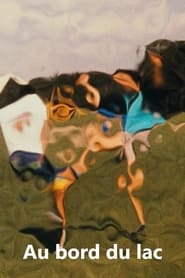
By the Lake
1994
By the Lake
1994
star 5.8Bokanowski returns to the complex - and mind-bending - optical array of pinholes, mirrors, prisms, and refractive substrates of his earlier film, La Plage to create the whimsical and playful Au bord du lac. The film is composed of mundane, everyday scenes of recreation and leisure on an idyllic, sunny day at a park that overlooks a lake - rowing a boat, playing a game of volleyball, rollerskating, bicycling, reading a newspaper, sunbathing, riding on horseback, or strolling on the promenade - shot through optical distortions to create fractured and knotted images that resemble embellished, gothic fairytale illustrations or appear to resolve into morphing, geometric patterns of fluid motion. Evoking the vibrant colors and sun-soaked palette of an invigorated Vincent van Gogh in Arles, Bokanowski transforms the quotidian into an infinitely mesmerizing dynamic kaleidoscope of shape-shifting textures and self-reconstituting objects of organic, abstract art.Happy Birthday to John
1997
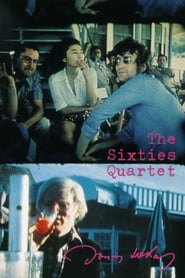
star 4.8On October 9, 1972, the Everson Museum of Art in Syracuse hosted an exhibition of John Lennon and Yoko Ono’s work, designed by Fluxus artist George Maciunas. That same day, friends including Ringo Starr, Allen Ginsberg, and Paul Krassner gathered to celebrate Lennon’s birthday. Jonas Mekas’s film records the event in both image and sound, capturing the spirit of the moment and the community around Lennon and Ono.Quiet Rage: The Stanford Prison Experiment
1992
star 6.9In the summer of 1971, Philip Zimbardo, Craig Haney, and Curtis Banks carried out a psychological experiment to test a simple question. What happens when you put good people in an evil place-does humanity win over evil, or does evil triumph? To explore this question, college student volunteers were pretested and randomly assigned to play the role of prisoner or guard in a simulated prison at Stanford University. Although the students were mentally healthy and knew they were taking part in an experiment, some guards soon because sadistic and the prisoners showed signs of acute stress and depression. After only six days, the planned two-week study spun out of control and had to be ended to prevent further abuse of the prisoners. This dramatic demonstration of the power of social situations is relevant to many institutional settings, such as the Abu Ghraib Prison in Iraq.Free Spirits
2013
Free Spirits
2013
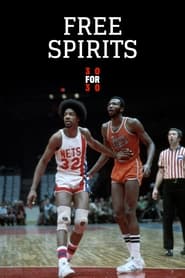
star 6.9Free Spirits tells the colorful story of the Spirits of St. Louis – an entertaining and at times controversial team featuring stars like Marvin "Bad News" Barnes and James "Fly" Williams with an upstart sportscaster named Bob Costas calling the play-by-play.The Volunteer
1944
The Volunteer
1944
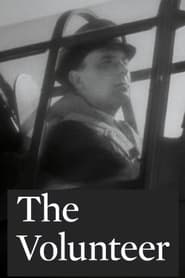
star 4.8After a masterful Shakespearean performance in a London theater, Ralph Richardson is sought for an autograph by Fred, his dresser. Later, Fred has joined the Fleet Air Arm (Fly Navy) and become a hero, rescuing a pilot from his burning plane. When Fred arrives at Buckingham Palace, it's Ralph's turn to ask for an autograph.Letters to Jackie: Remembering President Kennedy
2013
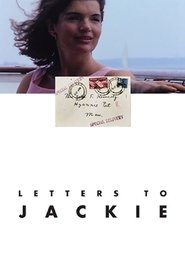
star 6.6Revisits President John F. Kennedy's presidential legacy through 21 of the more than 800,000 condolence letters written to Jackie Kennedy after JFK's assassination. Based on a book by Ellen FitzpatrickIntimate Interviews: Bela Lugosi
1931
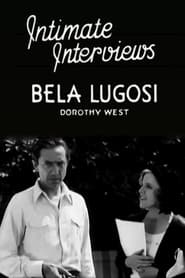
star 6.8Actor Bela Lugosi discusses his career, his social life, and his feelings about his most famous role, Count Dracula.Conspiracy of Silence
1993
star 9"Conspiracy of Silence" is a powerful, disturbing documentary revealing a nationwide child abuse and pedophilia ring that leads to the highest levels of government. Featuring intrepid investigator John DeCamp, a highly decorated Vietnam war veteran and 16-year Nebraska state senator, "Conspiracy of Silence" reveals how rogue elements at all levels of government have been involved in systematic child abuse and pedophilia to feed the base desires of key politiciansWake Up
2010
Wake Up
2010
star 6.4Jonas Elrod woke up one day with the ability to see and hear angels, demons and ghosts. Filmed over the course of three years, this documentary follows Jonas and his girlfriend as they try to understand the phenomenon.Through the Weeping Glass: On the Consolations of Life Everlasting (Limbos & Afterbreezes in the Mütter Museum)
2011
star 6.4A documentary on the subject of the collections of books, instruments and medical anomalies at The College of Physicians of Philadelphia and the Mutter Museum housed there. This short film represents the first to be made by the internationally recognized Quay Brothers in the United States. While not a stop-motion animation film, a form for which the Quays are best known, the entire film is vibrantly constructed and 'animated'. Musical score by composer Tim Nelson and voice-over provided by Derek Jacobi.Corey Haim: Me, Myself and I
1989
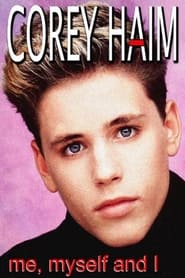
star 6.4Corey Haim wrote and starred in this exploitation movie, which is dedicated entirely to himself. Through the course of it, we are led on a tour of his "everyday life, " which includes a one-on-one hockey game with a middle aged man, him modelling the latest fashions, and several "heartfelt" talks about what a decent guy he is.Aspen
1991
Aspen
1991
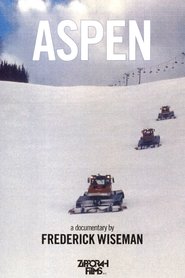
star 6.1A former mining town in Colorado’s Rocky Mountains, Aspen is now better known as a winter playground for wealthy holidaymakers. Against the majestic landscape, visitors relax while locals toil around them.Why Beauty Matters
2009
Why Beauty Matters
2009
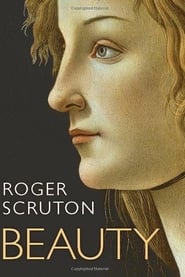
star 8.8Contemporary philosopher Roger Scruton presents a fascinating argument for the importance of beauty in our art and in our lives, and explores what truly is and is not beautiful, regardless of its beholder.A Defeated People
1946
A Defeated People
1946
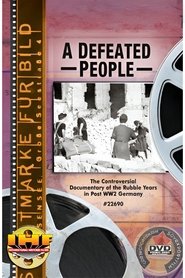
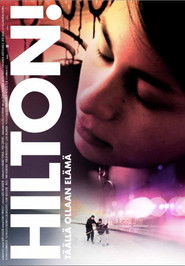
star 6.1A Defeated People is a 1946 British documentary short film made by the Crown Film Unit, directed by Humphrey Jennings and narrated by William Hartnell. The film depicts the shattered state of Germany, both physically and as a society, in the immediate aftermath of World War II. The narration explains what is being done – and what needs to be done – both by the occupying Allied forces and the German people themselves to build a better Germany from the ruins.Hilton!
2013
Hilton!
2013
star 4.4A roughly beautiful Hilton! gives the viewer a glimpse of life in a modern society, a life that young persons lead.One Direction: I Love One Direction
2013
star 7.7Documentary about the London-based pop quintet. Featuring footage and photographs taken by their fans, as well as input from their audience the world over who offer their opinions on the band and recount their experiences, the film explores the reasons behind One Direction's huge success. The program also includes interviews with the band members themselves.Major Fraud
2003
Major Fraud
2003
star 7.7Footage from the game show "Who Wants to Be a Millionaire" is examined to reveal how a contestant almost cheated his way to the jackpot.The Last Judgement
1987
The Last Judgement
1987
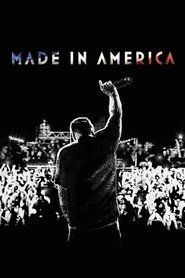
star 5.2A man is facing a trial for murdering a Latvian union leader, which more likely than not will end with a death sentence. A close-up look at his emotional journey through the trial, imprisonment and beyond.Made in America
2013
Made in America
2013
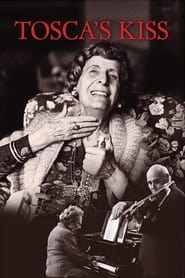
star 4.2Hip-hop artist Jay-Z organizes the "Budweiser Made In America" music festival.Tosca's Kiss
1984
Tosca's Kiss
1984
star 7.2Memoirs of the Italian Opera by the singers and musicians of the Casa Verdi, Milan, the world’s first nursing home for retired opera singers, founded by composer Giuseppe Verdi in 1896. This documentary, which has achieved cult-like status among opera and music lovers, features former singers who reminisce about their careers and their past operatic roles.