New Documentary Movies on Kanopy - Page 244
All Services
Free Services
 Netflix
 Amazon Prime Video
 Apple iTunes
 Apple TV Plus
 Disney Plus
 Google Play Movies
 Paramount Plus
 Hulu
Hulu
 HBO Max
 YouTube
 fuboTV
 Peacock
 Peacock Premium
 Amazon Video
 The Roku Channel
 AMC+
AMC on Demand
AMC+
AMC on Demand
 Kocowa
 Hoopla
 The CW
 Vudu
Vudu
 Starz
Starz
 Showtime
 PBS
PBS
 Pantaflix
 FXNow
FXNow
 Tubi TV
 Kanopy
 Comedy Central
 Crunchyroll
 Microsoft Store
 Redbox
 Sun Nxt
 ABC
ABC
 DIRECTV
 Crackle
 Fandor
 Plex
Plex
Netflix
Amazon Prime Video
Apple iTunes
Apple TV Plus
Disney Plus
Google Play Movies
Paramount Plus
Hulu
HBO Max
YouTube
fuboTV
Peacock
Peacock Premium
Amazon Video
The Roku Channel
AMC+
AMC on Demand
Kocowa
Hoopla
The CW
Vudu
Starz
Showtime
PBS
Pantaflix
FXNow
Tubi TV
Kanopy
Comedy Central
Crunchyroll
Microsoft Store
Redbox
Sun Nxt
ABC
DIRECTV
Crackle
Fandor
Plex

Revolution '67
2007
Revolution '67
2007
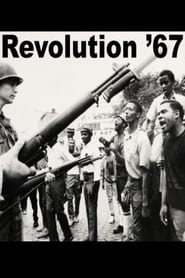
star 6Documentary - A focus on the six-day Newark, N.J. riots in July 1967: they began as spontaneous revolts against poverty and police brutality and ended as fateful milestones in America's struggles over race and economic justice. - Amiri Baraka, Carol Glassman, Tom HaydenThe Zen Mind
2007
The Zen Mind
2007
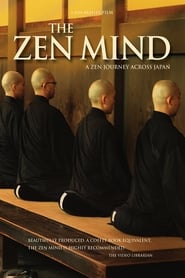
star 8In the last fifty years the culture of Zen has spread far beyond Japan. Zen centers and zen retreats have sprung up throughout America and Europe. When Dogen, the founder of Soto Zen, brought Zen to Japan from China 800 years ago, it quickly took root and became an integral part of Japanese life. Yet what do we know about zen practice in Japan today? The Zen Mind is a fascinating journey across Japan to explore zen in its natural habitat.Who's Afraid of Kathy Acker?
2007
star 7Documentary tracing the extreme life of outlaw writer, performance artist and punk icon, Kathy Acker. Through animation, archival footage, interviews and dramatic reenactments, director Barbara Caspar explores Acker's colorful history, from her well-heeled upbringing to her role as the scribe of society's fringe.American Crusaders
2007
American Crusaders
2007
Documentary - A harrowing exploration of the rapid rise of American religious fanaticism after 9/11. This film explores an emerging ultra Right Wing mass movement seeking dominion over all aspects of contemporary American society. The film weaves archival video, contemporary Christian Nationalist movement propaganda (recruiting videos, apocalyptic/military videogame imagery, etc.) and original investigative material) to create an intense examination of the totalistic mindset and its will to power.Cities of Light: The Rise and Fall of Islamic Spain
2007
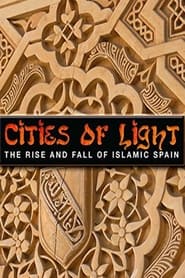
star 6Over a thousand years ago, the sun-washed lands of Southern Spain were home to Muslims, Christians, and Jews living together and flourishing. Their culture and beliefs intertwined and the ...Passion & Power: The Technology of Orgasm
2007
star 4.5This is the story of one simple invention, the vibrator, and its relationship to one complex human behavior, the female orgasm.Steal a Pencil for Me
2007
star 5.11943, The Netherlands is under total Nazi occupation. In Amsterdam, Jack, an unassuming accountant, first meets Ina at a birthday party - a 20-year-old beauty from a wealthy diamond manufacturing family who instantly steals his heart. But Jack's pursuit of love will be complicated; he is poor and married to Manja, a flirtatious and mercurial spouse. When the Jews are being deported, the husband, the wife and the lover find themselves at the same concentration camp; actually living in the same barracks. When Jack's wife objects to the "girlfriend" in spite of their unhappy marriage, Jack and Ina resort to writing secret love letters, which sustain them throughout the horrible circumstances of the war.Absolutely Safe
2007
Absolutely Safe
2007
Filmmaker Carol Ciancutti-Leyva offers this penetrating look at the bewildering array of questions, opinions and troubling safety concerns that face everyday women who are contemplating breast augmentation. Following the stories of two women -- one who chooses to have implants, another who has her implants removed -- the film chronicles how big business, media and the medical community influence the debate surrounding the controversial procedure.In Debt We Trust: America Before the Bubble Bursts
2007
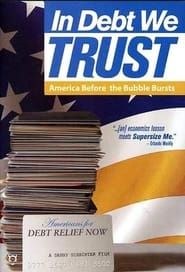
star 6.2Emmy-winning journalist Danny Schechter investigates America's mounting debt crisis in this latest hard-hitting expose. The film reveals the unknown cabal of credit card companies, lobbyists, media conglomerates and the Bush administration itself who have colluded to deregulate the lending industry, ensuring that a culture of credit dependency can flourish. Schechter exposes the hidden financial and political complex that allows the lowest wage earners to indebt themselves so heavily that even house repossessions are commonplace.God Grew Tired of Us
2006
God Grew Tired of Us
2006
star 7.2Filmmaker Christopher Quinn observes the ordeal of three Sudanese refugees -- Jon Bul Dau, Daniel Abul Pach and Panther Bior -- as they try to come to terms with the horrors they experienced in their homeland, while adjusting to their new lives in the United States.Matthew Barney: No Restraint
2006
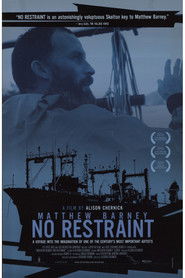
star 4How does artist Matthew Barney use 45,000 pounds of petroleum jelly, a factory whaling vessel and traditional Japanese rituals to create his latest art project? Barney plowed the waters off the coast of Nagasaki to film his massive endeavor, Drawing Restraint 9. The documentary Matthew Barney: No Restraint journeys to Japan with Barney and his collaborator Bjork, as the visual artist creates a "narrative sculpture" telling a fantastical love story of two characters that transform from land mammals into whales.The Collector: Allan Stone's Life in Art
2006
Documentary - Filmmaker Olympia Stone presents a cinematic portrait of her father, famed New York City gallery owner and art collector Allan Stone, in this fascinating documentary tracing his rise in the international art world from the 1950s to 2006. Regarded as a pioneering collector, Allan Stone was considered an expert on the work of Abstract Expressionists, particularly Willem de Kooning, Arshile Gorky, Barnett Newman and Franz Kline. -theEYE: Stuart Brisley
2006
Stuart Brisley is perhaps best-known for his disturbing physical performances which pushed his body to extremes. But his work as an artist over four decades has embraced sculpture and installation, films and fictions, large-scale participatory projects and, most recently, the Web. Illustrated with archive footage and photographs, this profile of the artist explores his understandings of collaboration and community, of politics and the market, of humour and failure. At the centre of his diverse work are the essential qualities of what it means to be human.theEYE: Karl Weschke
2006
theEYE: Karl Weschke
2006
Karl Weschke‘s impressive, complex paintings picture the human figure and the landscape, the everyday and the mythical. His subjects include dogs and drowned bodies, creatures from legends and, increasingly in recent years, the monumental ruins of ancient Egypt. For more than fifty years, he has explored the possibilities of painting and its relevance to an uncertain world. Produced alongside a retrospective at Tate St Ives, with additional paintings from British collections, this film profiles the artist in the Cornwall that has been his home since 1955. Filmed in and around his studio and in the coastal landscape that informs all of his work, Weschke speaks engagingly about his rich, remarkable life and about many of his most significant canvases. Like his work, the painter is serious, intense, spare – and yet also with an appealing streak of mischief.theEYE: Joe Tilson
2006
theEYE: Joe Tilson
2006
Since the 1960s, when he was associated with British Pop Art, Joe Tilson has enjoyed international acclaim for the individuality and originality of his paintings, constructions, prints and multiples. All of his playful, engaging work is informed with ideas from literature, philosophy, ethnography and alchemy. Tilson’s early work focussed on mass-market consumerism and politics. But he was soon disenchanted with mechanical methods of production and his art in the 1970s and 1980s employed hand-worked wood and metal in intriguing ways. Shot in and around the artist’s studio in Cortona, Italy, this film was produced alongside Joe Tilson’s first British retrospective at London’s Royal Academy of Arts.theEYE: Gereon Krebber
2006
Gereon Krebber’s proposal for a monumental and expensive aluminium object called Tin won the 2003 Jerwood Sculpture Prize. Shot over more than a year, this film follows the creation, casting and placing of the final sculpture. Sitting in the elegant country house garden at Ragley Hall, Tin suggests a kitchen container or a hamburger and yet is at the same time defiantly abstract. Krebber is a young sculptor from Germany who studied at the Royal College of Art and now works in London. The surprising range of his work, and the processes which create it, are revealed here as he talks engagingly about how to create “seriously flippant” objects. His art, made with diverse materials including balloons and Cling Film as well as traditional media, has a unique deadpan humour. Its effect, the artist hopes, is to make you ”smile and shiver at the same time”.theEYE: Dalziel + Scullion
2006
Artists Dalziel + Scullion have worked together since 1993, based in the remote north east of Scotland. Using photography, video, sculpture, sound and installation, they have created a collection of work that is recognised for its distinctive vision and sensitivity to its context and the environment. They are well known for their site-specific works, which include important public commissions, such as Horn, the giant stainless steel sculpture sited on the M8 motorway, which intermittently broadcasts poetry, music and voices at passing cars. They reflect on how these works illustrate the contradiction between the strange hybrid of wilderness and the high-tech, man-made industrial installations found in the remote landscapes of Scotland. The point at which nature and culture intersect is a continuing theme throughout their work, despite a more recent shift in geographical focus.theEYE: Hamish Fulton
2006
Hamish Fulton describes himself as a “walking artist”. For more than thirty years he has undertaken demanding walks in many parts of the world, and drawn on his experiences to create distinctive artworks using text, graphics and photographs. He aims to “leave no trace” in the landscape, and he acknowledges that his art cannot represent the experience of a walk. “What I’m interested in,” he explains, “is presenting a sort of skeleton of something, and then the viewer fills in what’s missing, maybe from your own experience.” Although they exhibit a striking consistency in their concerns, Hamish Fulton’s artworks can exist as large-scale wall paintings and as modest publications, as graphics to compete with advertising hoardings and as online animations. They are informed both by spiritual ideas and by political questions prompted by our uses of the environment and by specific issues such as land rights.The Singing Revolution
2006
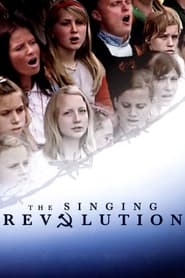
star 6Most people don't think about singing when they think about revolutions. But song was the weapon of choice when, between 1986 and 1991, Estonians sought to free themselves from decades of Soviet occupation. During those years, hundreds of thousands gathered in public to sing forbidden patriotic songs and to rally for independence. "The young people, without any political party, and without any politicians, just came together ... not only tens of thousands but hundreds of thousands ... to gather and to sing and to give this nation a new spirit," remarks Mart Laar, a Singing Revolution leader featured in the film and the first post-Soviet Prime Minister of Estonia. "This was the idea of the Singing Revolution." James Tusty and Maureen Castle Tusty's "The Singing Revolution" tells the moving story of how the Estonian people peacefully regained their freedom--and helped topple an empire along the way.This Filthy World
2006
This Filthy World
2006
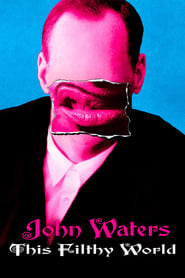
star 7.6In this filmed version of cult film director John Waters' popular one-man show, the Pink Flamingos and A Dirty Shame director takes the stage to discuss everything from his early influences, fondest career memories, and notorious struggles against the MPAA rating system. Part endearing memoir and part hilarious lecture, This Filthy World touches on everything from the insanity of contemporary pop culture to the director's unforgettable early collaborations with inimitable Pink Flamingos star Divine.